


Internet of Things data is the digital information collected by smart, connected devices like smartwatches, smart thermostats, and industrial sensors. These devices gather real-world data and send it across the internet to help us make smarter decisions. Ultimately, this data bridges the physical and digital worlds to automate tasks and improve our daily routines.
Imagine waking up on a cold winter morning. Your smart alarm goes off. Before you even get out of bed, your home heater turns on. In the kitchen, your coffee machine starts brewing a hot cup. These everyday miracles happen because your home devices talk to each other. They use a special digital language to share information and work together.
This digital language is the secret power behind modern technology. It allows devices to watch, listen, and learn. In this article, we will explore this topic in detail. We will look at how companies use Internet of Things data, how smart devices share information, and why it matters to you.
Key Takeaways
- Constant Collection: Smart devices gather real-world data 24/7 using built-in sensors.
- Seamless Sharing: This data travels over networks to the cloud for processing and storage.
- Actionable Insights: Analyzing this data helps people and machines make better choices.
- Wide Application: It powers smart homes, connected cities, modern farming, and factories.
- Security Risks: Protecting this data from hackers is a critical priority for users.
- Future Growth: As more devices connect, managing this massive flow of information will become even more vital.
📑 Table of Contents
Understanding the Basics of Smart Devices
To understand how these systems work, we must look at the devices themselves. Today, almost any object can connect to the web. These connected objects are part of a giant network. To learn more about this network, you can explore the Internet of Things definition on Wikipedia.
What Makes a Device “Smart”?
A normal device only does what you tell it to do. A smart device has sensors and chips. Sensors are like the eyes and ears of a machine. They can feel heat, see light, hear sound, or track movement. These sensors turn real-world actions into digital signals.
How Devices Share Information
Once a sensor collects information, the device must share it. It uses Wi-Fi, Bluetooth, or cellular networks. The device sends this information to other devices or to the cloud. You can read about how these devices talk in this guide to the Internet of Things on AWS.
The Core Types of Internet of Things Data
All smart devices do not collect the same information. The type of information depends on what the device is made to do. Here are three main types of Internet of Things data that devices gather every second.
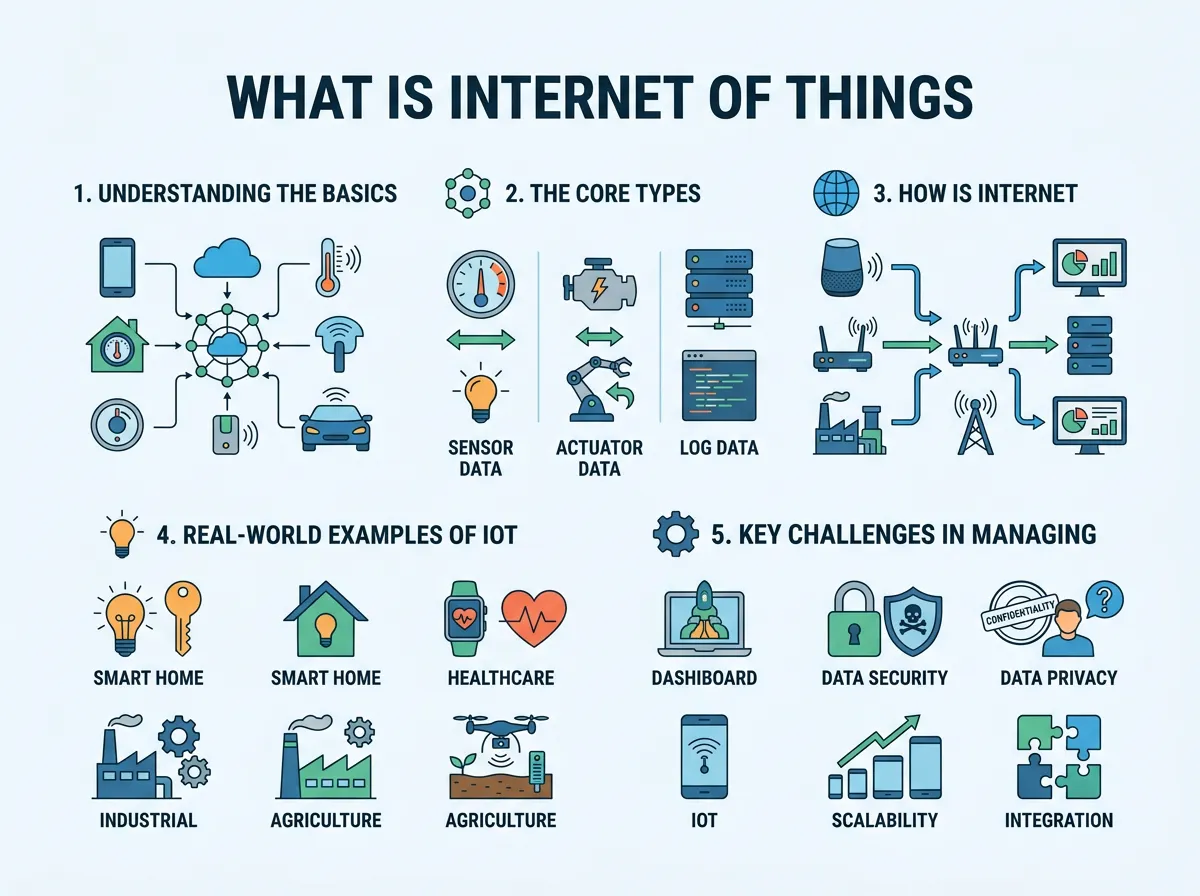
What Is Internet of Things Data? — key points at a glance
Status and State Data
This is the simplest type of information. It tells us if a device is on or off. For example, a smart light bulb shares its status. It tells your phone app if it is glowing or dark. This basic Internet of Things data is easy to send and store. It can also tell you if the device is broken or needs updates.
Location and Tracking Data
Many smart devices move around. Fitness bands track where you run. Delivery trucks have sensors to show their exact spot on a map. This kind of Internet of Things data is highly dynamic. It helps people track items in real time. It is very useful for shipping companies and online shopping.
Automation and Control Data
This information helps devices make choices on their own. For example, a smart thermostat learns when you are home. It collects temperature information and changes the heat to match your habits. By using this Internet of Things data, the device saves energy and makes your life easier.
How Is Internet of Things Data Processed and Analyzed?
Raw information from sensors is not very useful on its own. It is just a long list of numbers and codes. To be useful, this information must go through a journey.
From Sensor to the Cloud
First, the device sends the raw Internet of Things data to a central database. Often, this database lives in the cloud. In the cloud, powerful systems sort and clean the files. For a deeper look at this process, check out extracting insights from IoT data with Snowflake.
Making Sense of Big Data
Once the information is clean, smart computers look for patterns. This is called data analysis. We must analyze this Internet of Things data to make it useful. For example, a factory might analyze sensor data to see when a machine is getting too hot. This lets workers fix the machine before it breaks down. Learn more about how businesses handle this big task on SAS Internet of Things insights.
Real-World Examples of IoT Data in Action
Let us look at how Internet of Things data helps us in our everyday lives. You might be surprised by how many smart devices you use each day.
Smart Homes and Wearables
Many people wear fitness trackers. These trackers count your steps and check your heart rate. Your smart watch uses this Internet of Things data to help you stay healthy. At home, smart locks and security cameras keep your family safe.
Connected Cities and Smart Transport
Cities are getting smarter too. Streetlights can turn off when no one is around to save power. Trash cans can tell the city when they are full. Cities use this Internet of Things data to keep traffic moving. Traffic lights can change based on the number of cars on the road.
Industrial and Farming Systems
Farmers use smart sensors in their fields. These sensors check the moisture in the soil. This specialized Internet of Things data makes farming much more precise. It tells the watering systems exactly when to water the crops. This saves water and helps plants grow better. In factories, smart tools track how fast items are made.
Key Challenges in Managing Smart Device Data
While this technology is amazing, it also brings some tough problems. We must handle these issues to use technology safely.
Keeping Data Safe and Secure
When everything is connected, hackers have more ways to get in. If someone hacks your smart lock, they could enter your home. We must secure this Internet of Things data to protect our privacy. Companies must work hard to encrypt Internet of Things data. This means turning the information into a secret code that only the right devices can read.
The Struggle with Storage and Scale
Smart devices generate a massive amount of information. Every second, millions of devices send updates. Storing massive amounts of Internet of Things data can be very hard and costs a lot of money. Companies must decide which files to keep and which ones to throw away.
Simple Tips for Handling Your Own IoT Data
You do not need to be a tech expert to protect your smart devices. Here are some simple steps you can take today:
- Change default passwords: Always use strong, unique passwords for your smart devices.
- Keep software updated: Updates often fix security flaws that hackers might use.
- Turn off unused features: If you do not need location tracking on a device, turn it off.
- Use a secure network: Connect your smart home devices to a secure, private Wi-Fi network.
Conclusion
Now you know the answer to the big question. Internet of Things data is the fuel that powers our connected world. It turns normal machines into smart helpers. From tracking your steps to managing giant cities, this information makes our lives simpler and more efficient. As technology grows, we will see even more ways to use this digital language. By understanding and protecting this information, we can build a brighter, smarter future.
Frequently Asked Questions
What are some examples of Internet of Things data?
Common examples include temperature readings from smart thermostats, heart rate measurements from fitness trackers, and location coordinates from GPS devices. It also includes simple status updates, such as whether a smart bulb is turned on or off.
How is Internet of Things data collected?
It is collected using physical sensors built into smart devices. These sensors detect changes in the physical environment, such as heat, sound, motion, or light, and convert them into digital signals.
Why is Internet of Things data important?
This data is important because it allows devices to automate daily tasks and make smart decisions. It helps businesses reduce waste, helps cities manage traffic, and helps individuals live healthier and safer lives.
Is Internet of Things data secure?
Security varies depending on the device and its setup. While many companies use strong encryption to protect information, smart devices can be vulnerable to hacking if users do not change default passwords or update their software.
What is the difference between IoT data and regular data?
Regular data is often created directly by humans, such as typing a document or sending an email. Internet of Things data is generated automatically by machine sensors without requiring human input.
How do businesses use Internet of Things data?
Businesses use it to track inventory, monitor machine health, and understand customer behavior. This helps them cut costs, prevent machine breakdowns, and design better products.
