

The cheapest IoT data plans usually cost less than one dollar per month per device. These low rates are possible because smart devices use very little data and connect to low-power networks. To find the best deal, you should look for pay-as-you-go pricing and avoid hidden platform fees.
Imagine you want to build a smart garden. Or maybe you want to track your pet with a GPS collar. You buy all the parts and set them up. Then, you look for a way to connect them to the internet. You check standard mobile plans, and your jaw drops. The prices look just like your personal phone bill. If you have many devices, that cost adds up fast. It can quickly ruin your fun project or your small business.
You need a cheap way to keep your devices online. This is why many people ask: What Is the Cheapest IoT Data Plan? Finding the cheapest option is not just about picking the lowest price tag. It is about matching your project with the right type of network and billing plan.
In this guide, we will explore the best low-cost plans. We will look at how smart networks save you cash. We will also share tips to keep your data use as low as possible. By the end, you will know how to connect your world without spending a fortune.
Key Takeaways
- Low Data Usage: Smart devices need very little data, which keeps the plan costs very low.
- Specialized Networks: Networks like NB-IoT and LTE-M offer the absolute cheapest monthly rates.
- Pay-As-You-Go: Flexible billing options help you pay only for the exact bytes your devices use.
- Global SIM Cards: Multi-network SIMs prevent expensive roaming fees when devices move.
- Watch Hidden Costs: Always check for activation fees and minimum monthly charges before you buy.
📑 Table of Contents
Why IoT Data is Different From Your Phone
Small Data Needs
Your cell phone is a data hog. You watch videos, stream music, and browse the web. These tasks use gigabytes of data every single day. Smart devices do not work this way. A smart water sensor only sends a tiny text alert once a day. A pet tracker only sends small GPS coordinates every ten minutes.
Because of this, these devices use very little data. Most of them need less than one megabyte per month. Paying for a standard phone plan is a waste. You are paying for data you will never touch.
The Pay-As-You-Go Advantage
This is where specialized plans save the day. The best plans let you pay only for what you use. They charge you by the kilobyte instead of the gigabyte. This keeps your monthly bill incredibly low. If your device only sends a few alerts, you might pay just a few cents a month.
Top Contenders for the Cheapest IoT Data Plan
Global Providers with Low Rates
If you want to save money, global IoT brands are a great place to start. For example, Soracom is a very popular choice. To make things easy for beginners, Soracom introduced cheaper entry rates that help small businesses get online for less. They offer flexible pay-as-you-go options that work in many countries.
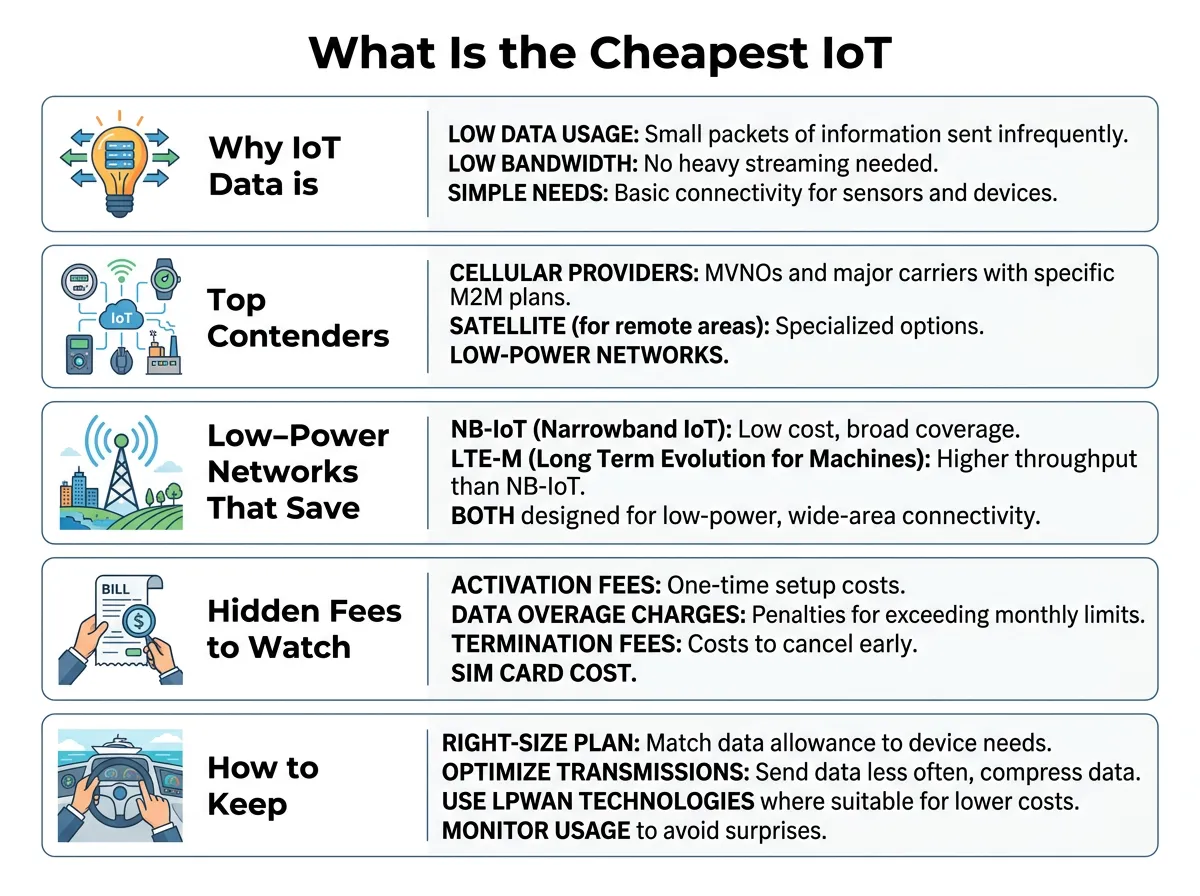
What Is the Cheapest IoT Data Plan? — key points at a glance
Another strong choice is Hologram. They offer SIM cards that connect to hundreds of carriers. You can check out a helpful cellular IoT provider guide to see how their network options compare. Hologram is great because you can start with just one SIM card and scale up as you grow.
Regional and Bundled Solutions
Sometimes, you want a simple flat rate instead of pay-as-you-go. For this, you can look at the melita.io global IoT SIM solutions. They offer clear, simple pricing with no surprises. These plans are perfect if you want to know exactly how much you will pay each month for your smart devices.
Low-Power Networks That Save You Cash
NB-IoT (Narrowband IoT)
To get the lowest possible price, you must choose the right network. NB-IoT is a special network built only for machines. It uses very little power and bandwidth. Because it does not slow down the carrier network, companies sell this data for very cheap. NB-IoT is perfect for things like soil sensors or smart parking meters. Plans for these can cost less than five dollars for a whole year.
LTE-M (Long Term Evolution for Machines)
LTE-M is another great option. It is slightly faster than NB-IoT. It also works better for moving devices, like trackers on trucks. It is still much cheaper than normal 4G or 5G. It is a smart pick if your device needs to send data while on the move.
Hidden Fees to Watch Out For
Activation and Setup Costs
When searching for what is the cheapest IoT data plan, do not just look at the monthly rate. Some companies show you a price of ten cents a month. But then, they charge you five dollars just to activate the SIM card. If you have hundreds of devices, this setup fee will hurt your budget. Always ask about upfront costs.
Platform and Dashboard Fees
Many providers make you use their cloud platform to manage your SIM cards. Sometimes the data is cheap, but the platform fee is high. Make sure the plan you choose includes free access to the dashboard. You should not have to pay extra just to see if your devices are online.
Minimum Monthly Charges
Some plans claim to be pay-as-you-go but have a catch. They might charge a minimum of fifty cents a month, even if you use no data. If your devices only work during the summer, you will still pay all winter. Look for plans with true zero-use fees if your project is seasonal.
How to Keep Your Data Bill Low
Pack Your Data Tight
The way you write your device code affects your bill. Do not send long text messages. Use simple codes instead. A message that says “The temperature is seventy degrees” uses many bytes. A message that just says “70” uses almost nothing. This simple trick can cut your data use in half.
Set Smart Send Times
Does your device need to send data every ten seconds? Probably not. Sending data once an hour uses much less power and data. If you only send updates when something changes, you will save a lot of money on your monthly bill.
Use Multi-Network SIMs
If a device has a bad signal, it will try harder to connect. This uses more power and can cause data errors. A multi-network SIM can connect to different carriers automatically. It finds the strongest signal. This keeps your connection stable and avoids extra costs.
What If You Need More Data?
High-Data IoT Devices
Most smart devices use very little data. But some use a lot. Think of security cameras or live video feeds. These devices need a different kind of plan. They can easily use gigabytes of data each month. If you use a low-data plan for a camera, you will face huge extra fees.
Finding Cheap High-Data Plans
For cameras and heavy users, look for flat-rate plans. Some companies offer plans made just for security cameras. These plans give you a set amount of high-speed data for a fixed monthly price. This keeps your bills predictable and safe.
Conclusion
So, what is the cheapest IoT data plan for you? It depends on your setup. If you are a hobbyist with one device, a global pay-as-you-go SIM is your best bet. You will likely spend less than a dollar a month. If you are a business with thousands of devices, you should look into bulk NB-IoT plans.
Always test your devices first. Buy a few different SIM cards to see how they perform. Check how much data they really use. With a little planning, you can connect your smart devices without spending a fortune.
Frequently Asked Questions
What is the average cost of an IoT data plan?
For low-data devices, plans usually cost between $0.50 and $2.00 per month. Some specialized networks can even cost less than $5.00 for a whole year. The price depends on how much data your device sends.
Can I use a normal phone SIM card for my IoT device?
Yes, but it is usually a bad idea because phone plans are made for high data usage and cost much more. IoT SIM cards are cheaper, support multiple networks, and offer better management tools for smart devices.
Is NB-IoT cheaper than standard LTE?
Yes, NB-IoT is much cheaper because it uses very little bandwidth and power. Carriers sell NB-IoT data at very low rates because it does not crowd their cell towers.
What are the hidden fees in cheap IoT plans?
Watch out for SIM activation fees, monthly portal management fees, and minimum monthly spend limits. Some plans look cheap on paper but add these extra fees to your bill.
How much data does a standard IoT device use?
Most simple smart devices like sensors or trackers use less than 1 megabyte of data per month. Only devices like video cameras or audio streaming gear require high-data plans.
Do IoT SIM cards work internationally?
Yes, many global IoT SIM cards can connect to multiple cellular networks across different countries. This prevents expensive roaming charges when your devices travel across borders.
