


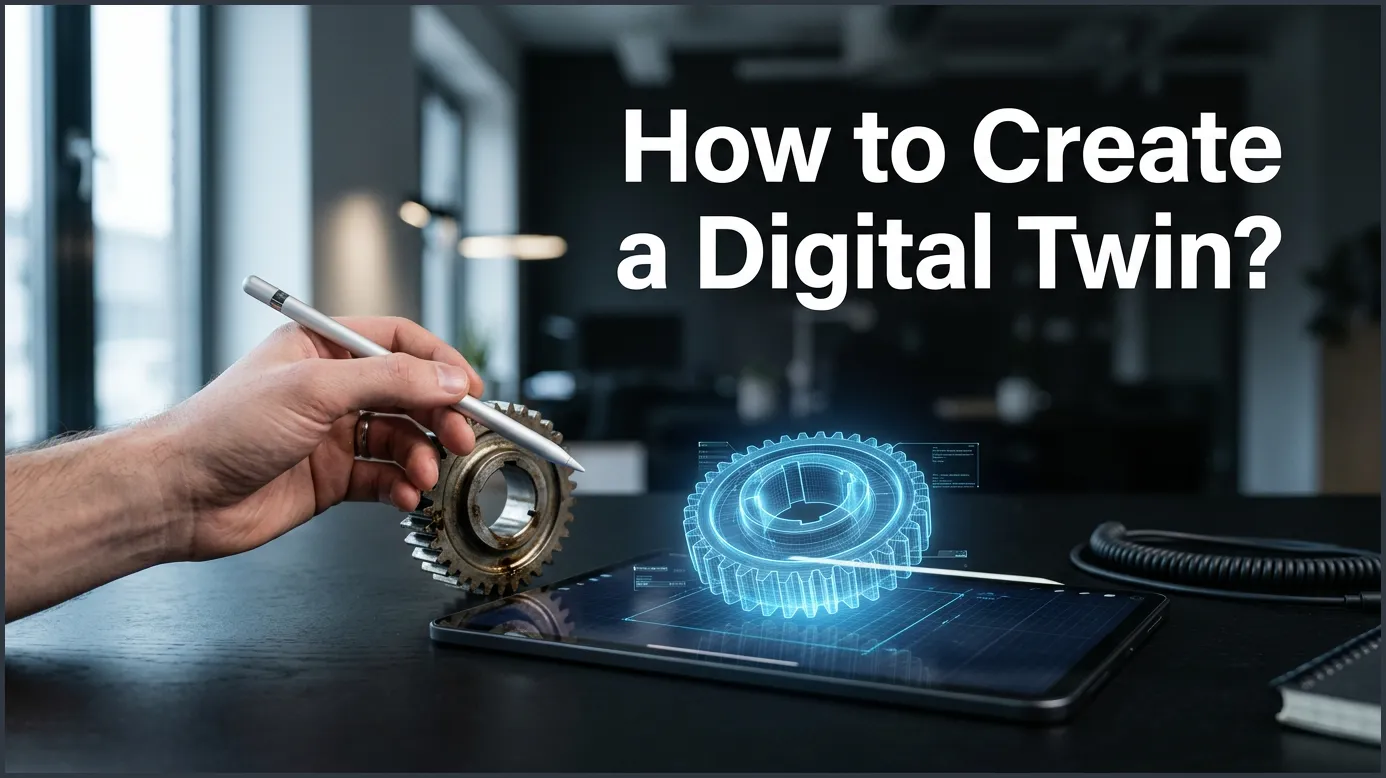
Creating a digital twin involves defining your goals, collecting real-time sensor data, and building a virtual model. By integrating continuous feedback loops, you can easily simulate real-world scenarios and predict maintenance needs. This powerful process connects physical assets to digital spaces to optimize performance and drive business growth.
Imagine having a perfect virtual clone of your physical office, factory, or machine. This clone sits on your computer screen. It updates in real time. It tells you exactly when a part is about to break. It lets you test changes safely without touching the real object. This is not science fiction. It is a digital twin. Today, businesses of all sizes want to know how to create a digital twin to save time, cut costs, and improve safety.
Building a virtual clone might sound complex. You might think it is only for rocket scientists or giant tech firms. But the truth is much simpler. With the right roadmap, any business can build one. In this guide, we will break down the entire process into easy steps. We will cover everything from planning to launching your first virtual model.
By the end of this article, you will have a clear path forward. You will understand the tools, the tech, and the steps needed to bring your physical assets into the digital world. Let us dive in and explore how to create a digital twin from scratch.
Key Takeaways
- Start with a Clear Goal: Define what you want to achieve before you write any code or buy any hardware.
- Data is Fuel: Accurate, real-time data from IoT sensors is vital to keep your digital twin active and accurate.
- Use the Right Tools: Choose robust software platforms for physics-based modeling and real-time 3D visualization.
- Build Feedback Loops: Ensure data flows both ways so your virtual model can send optimization commands back to the physical asset.
- Scale Up Gradually: Begin with a small, single asset prototype before modeling entire factories or systems.
📑 Table of Contents
What is a Digital Twin?
Before we build one, we must understand what it is. A digital twin is a virtual model of a physical object, process, or system. It is not just a static 3D drawing. Instead, it is a living model. It changes and reacts just like its physical counterpart does in the real world.
How does this happen? The physical object has sensors attached to it. These sensors collect data about temperature, pressure, speed, and vibration. This data goes straight to the digital twin. The twin uses this data to mimic the physical object in real time. If you want to learn more about the history and uses of this technology, you can read this IBM digital twin guide.
The Three Core Elements
Every digital twin has three main parts. First, there is the physical asset in the real world. Second, there is the virtual model in a software program. Third, there is the data connection that links them together. Without this continuous flow of data, you just have a 3D model, not a twin.
Step 1: Define Your Scope and Objectives
The first step in learning how to create a digital twin is planning. You must ask yourself a simple question: What problem am I trying to solve? If you do not have a clear goal, you will waste time and money.
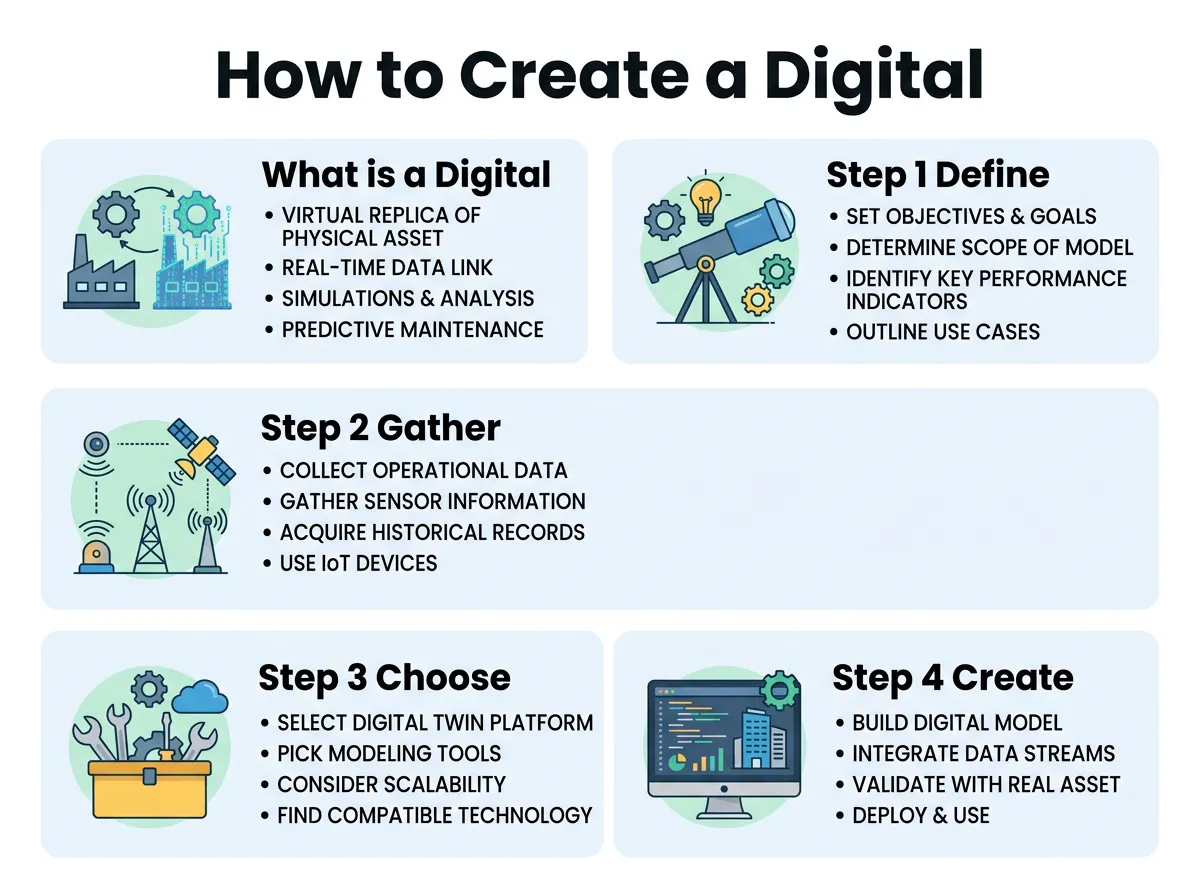
How to Create a Digital Twin? — key points at a glance
Do you want to predict when a factory machine will fail? Do you want to optimize energy use in a large building? Or do you want to track a fleet of delivery trucks? Your goal will decide what data you need to collect. It will also decide how complex your virtual model needs to be.
Start Small with a Prototype
It is wise to start small. Do not try to clone your entire factory on day one. Instead, choose one simple machine or one specific process. Build a prototype first. Learn from your mistakes, and then scale up. If you need inspiration, check out Hopara’s step-by-step guide to digital twin creation.
Step 2: Gather Your Physical Data
Once you have a goal, you need data. Your digital twin cannot work without it. You must find ways to capture information from the physical world. This is where Internet of Things (IoT) sensors come in.
You will need to install sensors on your physical asset. These sensors can measure many things:
- Temperature: To prevent overheating.
- Vibration: To detect loose parts or wear and tear.
- Humidity: To ensure safe environmental conditions.
- Energy Use: To find ways to save power.
You also need to gather existing data. This includes user manuals, 3D CAD drawings, and historical maintenance logs. All this information helps build a rich profile of your asset.
Step 3: Choose Your Modeling and Simulation Tools
Now you have your data. Next, you need a place to put it. You need software that can process this data and turn it into a working model. This is a critical stage when learning how to create a digital twin.
You will need two main types of software. First, you need a platform to handle the data flow. This platform connects your sensors to your computer systems. Second, you need simulation software. This software uses physics and math to predict how the physical asset will behave under different conditions.
Designing these models is much easier with professional tools. You can find excellent resources and platforms like the MathWorks simulation and modeling software. These tools help you build physics-based algorithms that react accurately to real-world inputs.
Cloud Computing and APIs
Most modern twins live in the cloud. Cloud platforms offer the storage and processing power needed to run complex simulations. You will also use Application Programming Interfaces (APIs). APIs act as bridges. They help different software systems talk to each other without errors.
Step 4: Create the 3D Virtual Model
Now comes the visual part. You need to create the visual representation of your asset. This is what you will actually see on your screen. It helps workers visualize the data easily.
You can start with existing Computer-Aided Design (CAD) files of your machine. If you do not have CAD files, you can use 3D scanners. These scanners take pictures of the physical object and turn them into a digital mesh. Once you have the shape, you can import it into a real-time rendering engine.
For high-fidelity visual representations, you can learn more from Unity’s guide to real-time 3D models. These engines allow you to interact with the model. You can rotate it, zoom in, and even see inside the machine while it runs.
Step 5: Establish the Feedback Loop and Analytics
A true digital twin does not just receive data. It also sends insights back to the real world. This is called a feedback loop. This loop is what makes the technology so valuable.
To do this, you need to apply smart analytics. You can use machine learning algorithms. These algorithms look at the incoming data and spot patterns. For example, the software might notice that a minor vibration always happens two days before a motor fails. The digital twin can then send an automatic alert to your maintenance team.
Automating Actions
In advanced setups, the twin can even make changes on its own. If the digital model detects that a pump is overheating, it can send a command to the physical pump to slow down. This keeps your system safe without any human intervention.
Best Practices for Success
Building a virtual model is an exciting journey. However, it requires care. Here are some simple tips to keep in mind:
- Focus on Data Quality: Bad data in means bad results out. Clean your data regularly.
- Keep Security in Mind: Your digital twin contains sensitive operational data. Protect it with strong passwords and encryption.
- Train Your Team: A tool is only useful if people know how to use it. Spend time teaching your staff how to read the digital twin.
- Update Regularly: If you modify the physical machine, you must update the virtual model too.
Conclusion
Learning how to create a digital twin may seem like a huge task. But by breaking it down, it becomes very manageable. You start with a clear goal. You gather your data. You select your software tools. You build your 3D model. Finally, you connect them with a strong feedback loop. This simple approach will help you transform your business operations. Start small today, and watch your physical assets thrive in the digital age.
Frequently Asked Questions
What is a digital twin?
A digital twin is a virtual model of a physical object or system that updates in real time using sensor data. It allows users to monitor performance, run simulations, and predict maintenance needs safely. It bridges the physical and digital worlds to improve efficiency.
How to create a digital twin?
To create a digital twin, you must first define your objectives and start with a small scope. Next, gather physical data using IoT sensors, choose robust simulation software, build a 3D model, and set up a real-time feedback loop. This connects your physical asset directly to its digital clone.
What industries use digital twins?
Many industries use digital twins, including manufacturing, aerospace, automotive, healthcare, and urban planning. They help factories optimize production, allow doctors to simulate surgeries, and assist city planners in managing traffic. The technology is highly versatile and growing rapidly.
Do I need coding skills to build a digital twin?
While basic coding skills are very helpful, many modern low-code and no-code platforms exist today to simplify the process. Engineering and data science teams usually handle the complex coding, while business users interact with user-friendly dashboards. There are tools available for every skill level.
What is the difference between a 3D CAD model and a digital twin?
A 3D CAD model is a static representation of an object’s design that does not change on its own. A digital twin is a living model connected to real-time sensors that continuously update to reflect the physical object’s exact state. The dynamic data connection is the key difference.
How much does it cost to build a digital twin?
The cost of building a digital twin varies widely depending on the complexity of the asset and the software used. A simple prototype for a single machine can be very affordable, while a massive twin of an entire factory can cost thousands of dollars. Starting small is the best way to manage your budget.
