


Automotive IoT connectivity from a Mobile Network Operator (MNO) typically costs between $6 and $60 per SIM per year, depending on data usage, geographic coverage, and fleet size. Basic telematics and tracking plans occupy the lower end of this range, while high-bandwidth infotainment systems drive costs to the higher end. Securing volume discounts and negotiating multi-year contracts are the most effective ways to lower these recurring annual expenses.
Imagine driving a brand-new car off the dealership lot. You press a button on the dashboard, and a live map appears. Music streams effortlessly through the speakers. Behind the scenes, the car is quietly sending diagnostic reports back to the manufacturer. This magic happens because of a tiny piece of hardware: an IoT SIM card. Connected cars are no longer a dream of the future. They are on our roads today, and they rely heavily on cellular networks.
When planning these high-tech fleets, managers always ask one major question: How Much Does Automotive IoT Connectivity Cost per SIM per Year From an MNO? Today, we will break down the answer. We will look at real-world pricing, explore the factors that drive these rates up or down, and show you how to get the most value for your budget. Let’s dive in.
Key Takeaways
- Average Price Range: MNO rates generally span from $0.50 to $5.00 per month ($6 to $60 per year) per SIM.
- Data Volume Matters: Simple telematics require very little data, keeping costs low, while infotainment requires high bandwidth and costs more.
- Scale Brings Discounts: Large fleets and auto manufacturers can negotiate volume discounts that slash per-SIM costs significantly.
- MNO vs. MVNO: Direct MNO contracts offer robust infrastructure, but MVNOs might provide better multi-network roaming options.
- Hidden Costs Exist: Overage fees, roaming charges, and platform access fees can quickly inflate your annual connectivity budget.
- Optimization is Key: Regular auditing of data consumption and choosing flexible data pools can save thousands of dollars annually.
📑 Table of Contents
Understanding the Baseline: What Are the Average Costs?
The short answer is that it varies. For most businesses, the price ranges from $6 to $60 per SIM per year. This broad range exists because cars use data in very different ways. A basic tracking device uses very little data. On the other hand, a modern connected car with video streaming uses a massive amount of data.
Low-Data Telematics vs. High-Data Infotainment
If you look at the basic telematics segment, you will see very low prices. Many operators offer rates around $0.50 to $1.00 per month. This adds up to $6 to $12 per year. This package works perfectly for simple GPS tracking. It is also great for sending simple health diagnostics from the vehicle to a central server.
But what if you need more? High-end consumer vehicles offer Wi-Fi hotspots and live navigation. They also stream music and video. These activities require much larger data plans. For these use cases, you can expect to pay anywhere from $2.00 to $5.00 per month. This means you will spend $24 to $60 per SIM per year. In some cases, premium plans with unlimited data can cost even more. For a deeper look at these pricing structures, you can read about fleet and automotive IoT connectivity costs to understand how volume changes these numbers.
Key Factors That Drive Automotive IoT Pricing
Data Consumption and Bandwidth
Your data plan is the biggest factor in your total bill. MNOs price their services based on how many megabytes (MB) or gigabytes (GB) you use. A simple fleet tracker might only need 5 MB per month. A connected camera system might need 5 GB per month. The difference in price between these two is massive. It is important to know exactly what data your vehicles will send. For instance, basic telemetry data is tiny. Video files are huge.
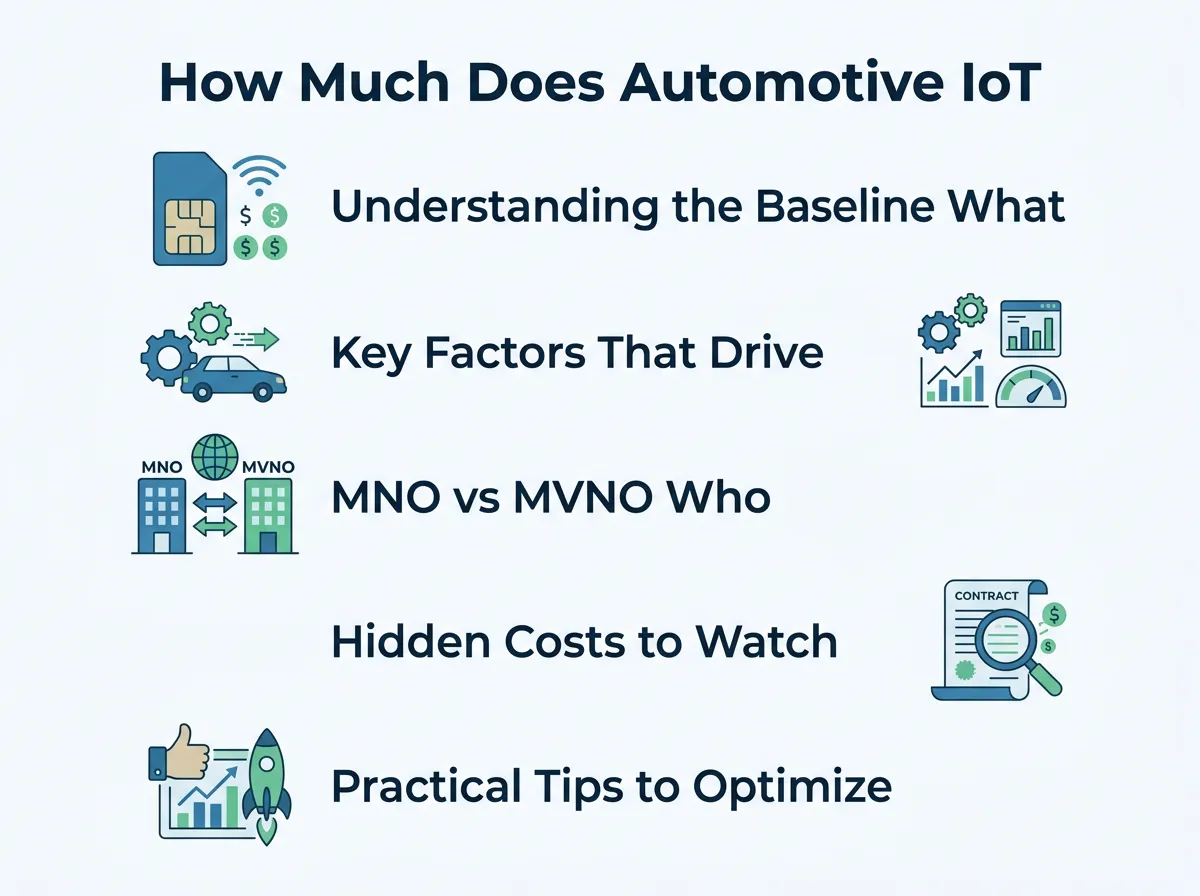
How Much Does Automotive IoT Connectivity Cost per SIM per Year From an MNO? — key points at a glance
Geographic Reach and Roaming Fees
Vehicles move. Sometimes, they cross state lines or international borders. When a vehicle leaves its home network, it roams. Roaming can quickly double or triple your connectivity bills. MNOs charge extra for routing data through partner networks. If your fleet travels internationally, you need a global SIM. These SIMs are designed to reduce roaming fees, but they still cost more than local plans. For detailed insights into how these vehicles interact with global networks, check out automotive and telematics IoT challenges and solutions.
MNO vs. MVNO: Who Offers the Best Value?
Direct MNO Partnerships
When you buy connectivity, you can go to a Mobile Network Operator (MNO) or a Mobile Virtual Network Operator (MVNO). An MNO owns the physical cell towers. They have complete control over their network quality. Working directly with an MNO can be very reliable. They often offer great rates if you buy in bulk. However, they can be rigid with their contracts. They might also charge high fees if you need to use another network in a coverage dead zone.
The MVNO Alternative
An MVNO does not own physical towers. Instead, they buy cellular capacity in bulk from multiple MNOs. They then resell this capacity to businesses. MVNOs are often more flexible than MNOs. They can offer SIM cards that jump from one network to another to find the best signal. This is very useful for vehicles that travel long distances. If you are comparing your options, you can read this guide on benchmarking IoT mobile operator pricing to see how MNOs stack up against MVNOs. Often, MVNOs can match or even beat MNO pricing for smaller fleets.
Hidden Costs to Watch Out For
Overage Charges and Setup Fees
When you sign a contract, look closely at the fine print. Many companies get surprised by overage fees. If your vehicle goes over its monthly data limit, the MNO will charge you a very high rate for the extra data. These fees can easily ruin your budget. You should also ask about setup fees. Some MNOs charge a one-time fee to activate each SIM card. This fee might only be $1 to $5, but if you have a thousand cars, it adds up fast.
Lifecycle and Suspension Costs
Cars are not always on the road. A rental car might sit in a parking lot for months. A construction vehicle might only work during the summer. Can you pause your data plan? Some MNOs charge a fee to suspend a SIM card. Others keep charging you the full monthly rate even if the SIM uses zero data. Always ask how the MNO handles inactive SIMs. You want a partner that lets you pause your service without heavy penalties.
Practical Tips to Optimize Your Connectivity Budget
Pool Your Data Packages
One of the best ways to save money is to use pooled data. Instead of giving each SIM its own strict limit, you combine all your data into one big pool. For example, if you have 100 cars with 10 MB each, you have a 1,000 MB pool. If one car uses 15 MB and another uses 5 MB, they balance each other out. This prevents expensive overage fees and saves you money.
Negotiate Multi-Year Commitments
MNOs love predictable revenue. If you can commit to a three-year or five-year contract, they will often reward you with lower prices. Do not accept the first price they offer. Always negotiate, especially if you have a large fleet. You should also ask for tier-based pricing. This means your per-SIM cost goes down automatically as you add more vehicles to your fleet.
Final Thoughts on Automotive Connectivity Costs
Investing in vehicle connectivity is no longer optional. It is a vital part of running a modern automotive business or fleet. While the exact answer to How Much Does Automotive IoT Connectivity Cost per SIM per Year From an MNO? depends on your specific needs, planning ahead can keep these costs manageable. By understanding your data usage, choosing the right partner, and avoiding hidden fees, you can build a highly efficient and cost-effective connected vehicle program.
Frequently Asked Questions
What is the average annual cost of an automotive IoT SIM?
The average annual cost ranges from $6 to $60 per SIM. Basic telematics sit at the lower end of this range, while data-heavy infotainment plans sit at the higher end.
Do MNOs charge extra for international roaming?
Yes, standard MNO plans often charge high roaming fees when a vehicle crosses international borders. To avoid this, businesses should look for global SIM cards with pre-negotiated roaming rates.
Can I pause my SIM connectivity during off-seasons?
Many MNOs allow you to suspend your SIM cards, but some may charge a suspension fee. It is important to discuss lifecycle management terms before signing a contract.
What is the difference between an MNO and an MVNO for automotive IoT?
MNOs own the physical cellular networks and towers, offering reliable direct access. MVNOs rent network space from multiple MNOs, offering greater flexibility and multi-network roaming.
How does pooled data help reduce IoT costs?
Pooled data combines the limits of all SIMs into a single shared resource. This prevents overage charges by allowing lower-use vehicles to offset those that consume more data.
Are there setup fees for automotive IoT SIM cards?
Yes, most providers charge a small one-time activation or setup fee per SIM. This fee typically ranges from $1 to $5 depending on your contract and fleet size.
