

Finding the right cellular connectivity for smart devices is crucial for global business operations. The best IoT eSIM options combine seamless multi-network coverage, robust security, and over-the-air profile management. Top-tier providers like Soracom, Pelion, and Things Mobile lead the market by offering scalable data plans and easy device management.
Imagine deploying thousands of smart environmental sensors across the globe. Some sit in busy cities, while others monitor remote farm fields. Halfway through your project, your network provider raises its rates. In the past, you would have to send technicians to physically swap out thousands of tiny plastic cards. This tedious task would cost a fortune and take months to finish.
Today, smart businesses use modern cellular technology to avoid this headache. With the right setup, you can update your network settings through the cloud in seconds. This brings us to a vital question for modern tech teams: What Are the Best IoT eSIM Options for keeping devices connected efficiently?
This guide will explore the top options on the market. We will look at key features, compare top providers, and show you how to choose the right fit for your business.
Key Takeaways
- Global Roaming: Top eSIM options allow your devices to connect to multiple networks worldwide without physical card swaps.
- Over-the-Air Updates: Remote provisioning lets you change network profiles on thousands of devices with a single click.
- Cost Efficiency: Flexible pay-as-you-go plans help prevent unexpected data overage charges.
- Carrier Independence: Using an eSIM prevents vendor lock-in, giving you leverage to negotiate better rates.
- Enhanced Security: Advanced IoT eSIMs offer private APNs and VPN features to protect sensitive sensor data.
📑 Table of Contents
Understanding IoT eSIM Technology
Before diving into the top providers, it helps to know how this technology works. An embedded SIM, or eSIM, is not just a smaller SIM card. It is a smarter way to manage cellular connections.
What is an eSIM?
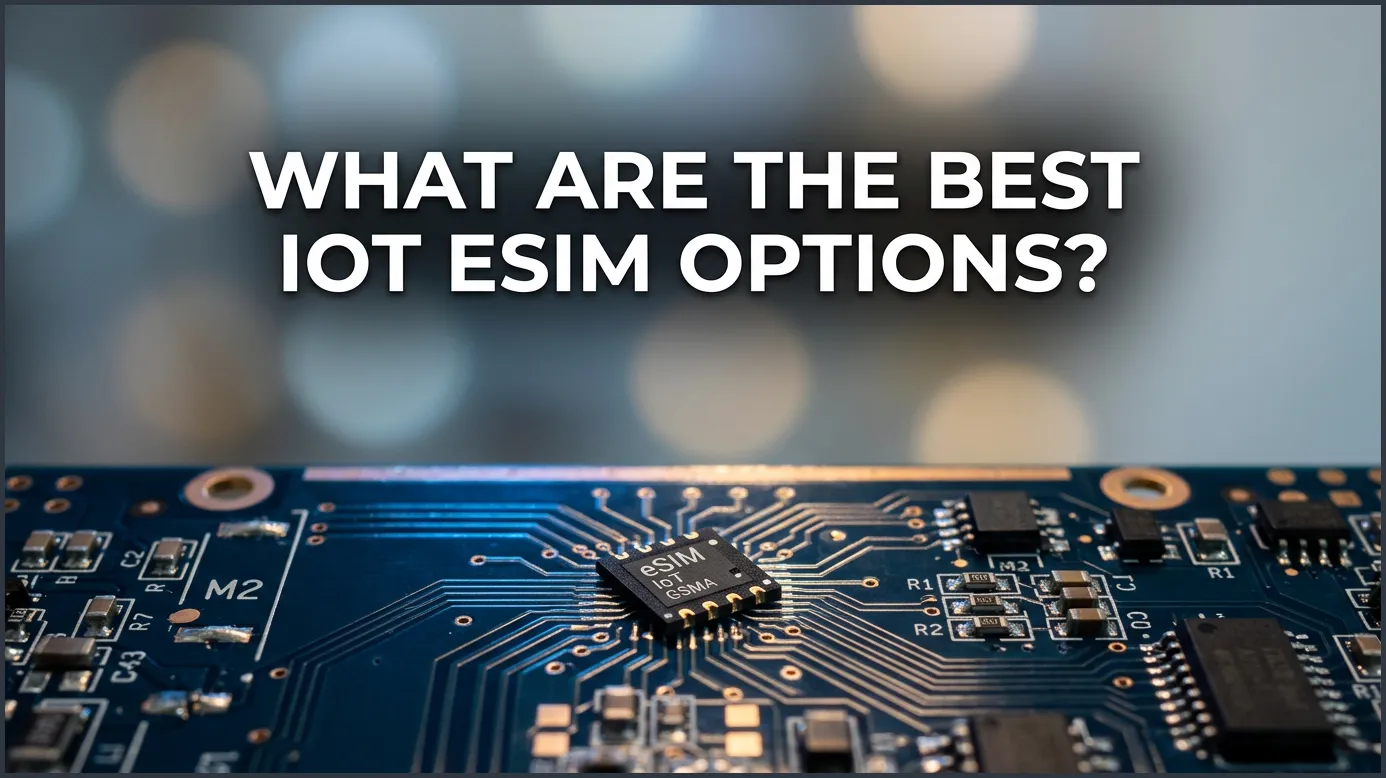
An eSIM is a tiny chip soldered directly onto a device’s circuit board. Unlike old plastic cards, you do not swap it out when you change carriers. Instead, you download new operator profiles over the air. If you want a deep dive into the basics, you can learn more about what an eSIM actually is and how it changes device design.
eSIM vs Traditional SIMs
Traditional SIM cards tie your device to one specific carrier. If that carrier has poor coverage in a certain area, your device goes offline. An eSIM solves this issue. It can hold multiple profiles and switch networks automatically. For a detailed breakdown of these differences, check out this comparison of traditional and modern SIM options for connected projects.
Key Features to Look For in an IoT eSIM
Not all eSIMs are created equal. When researching What Are the Best IoT eSIM Options, you should look for specific features that make management easy.
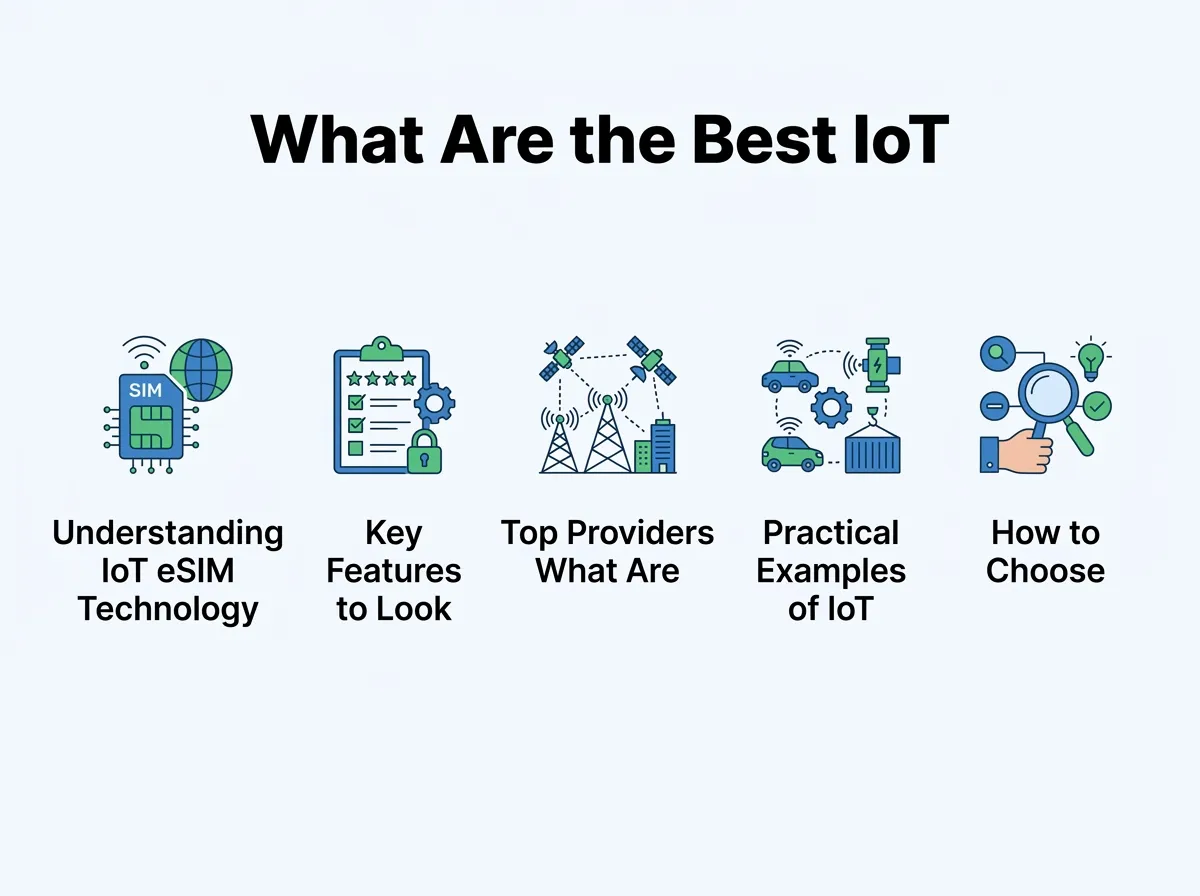
What Are the Best IoT eSIM Options? — key points at a glance
Global Coverage and Multi-IMSI
Your devices need to stay online wherever they travel. The best eSIMs use Multi-IMSI technology. This feature allows the chip to store multiple network identities. If one network fails, the device switches to another partner network instantly.
Over-the-Air (OTA) Provisioning
OTA provisioning is the superpower of eSIMs. It lets you send software updates to your SIM cards through the cellular network. You can add new carrier profiles, update security keys, or change data limits remotely. This saves your team from making expensive on-site visits.
Security and Lifecycle Management
Connected devices are common targets for hackers. Look for eSIM options that offer private APNs, static IP addresses, and secure VPN tunnels. A good management platform also lets you lock a SIM to a specific device. This prevents people from stealing your SIM card and using your data.
Top Providers: What Are the Best IoT eSIM Options?
Several companies stand out in the crowded market. Let’s look at three top providers that offer great service and reliable tools.
Soracom: The Developer Favorite
Soracom is highly popular among software developers and startup teams. They offer amazing cloud integration tools. You can connect your device data directly to AWS, Azure, or Google Cloud. Their platform makes it simple to manage one device or one million devices from a clean dashboard.
Pelion: Scalable Enterprise Solutions
Pelion is perfect for large enterprise deployments. They offer deep device management tools and robust global coverage. Pelion works with hundreds of network partners to ensure your devices stay online. If you want to compare their services with others, read through some comprehensive guides on top providers to see how they match up.
Things Mobile: Flexible Pay-As-You-Go
If you want simple pricing without long contracts, Things Mobile is a fantastic choice. They offer excellent coverage across more than 165 countries. You can buy low-cost plans tailored for sensors that only send small amounts of data. To learn more about their business plans, check out the Things Mobile business solutions page.
Practical Examples of IoT eSIMs in Action
To see why these options matter, let’s look at how real businesses use them every day.
Smart Logistics and Asset Tracking
A shipping company puts trackers on cargo containers. These containers travel across oceans, through ports, and onto trains. With a standard SIM, the tracker would lose connection at every border. By using a top-tier eSIM, the tracker switches networks smoothly as it crosses borders, keeping the company updated on cargo location.
Agricultural Sensors and Smart Farming
A farmer installs moisture sensors across thousands of acres of land. Some sensors sit in valleys with poor coverage from major carriers. An eSIM allows each sensor to connect to the strongest local network, even if it is a small regional carrier. This keeps vital water data flowing to the farmer’s tablet.
How to Choose the Right Plan for Your Fleet
Selecting the best option requires looking closely at your project goals. Here is a simple checklist to guide your decision.
Assessing Data Needs
Do your devices send simple temperature readings once an hour? Or do they stream live video feeds? Simple sensors only need a few kilobytes of data each month. Video cameras need gigabytes. Choose a provider that offers tiered pricing so you only pay for what you actually use.
Evaluating Hidden Costs
Some providers tempt you with low monthly rates but charge high fees for activation, roaming, or platform access. Always read the fine print. Ask about costs for downloading new profiles over the air. Make sure you understand the total cost of ownership before signing a contract.
Conclusion
Finding the right connectivity does not have to be a headache. When you ask yourself, “What Are the Best IoT eSIM Options?”, the answer depends on your scale, your data needs, and where your devices travel. Providers like Soracom, Pelion, and Things Mobile offer the flexibility and security modern businesses need. By choosing a reliable eSIM solution, you future-proof your project and ensure your devices stay connected, no matter where they go.
Frequently Asked Questions
What is the main advantage of an IoT eSIM over a standard SIM card?
The main advantage is remote management. You can change network profiles over the air without physically swapping the physical card out of your devices.
Can I use an IoT eSIM in any country?
Yes, most top IoT eSIM providers have roaming agreements with hundreds of carriers worldwide. This allows your devices to connect to local networks in almost any country.
Are IoT eSIMs more secure than traditional SIM cards?
Yes, they offer better security. You can lock an eSIM to a specific device, use private APNs, and manage encryption keys remotely to protect your data.
Do I need a contract to use an IoT eSIM?
Not always. Many modern providers offer flexible pay-as-you-go plans, while others offer monthly subscriptions tailored to your specific fleet size.
How do I update network profiles on an eSIM?
You can update profiles remotely using an online management platform. The provider sends the new network data to your devices over the cellular connection.
What types of devices use IoT eSIMs?
They are used in many devices, including smart utility meters, GPS asset trackers, agricultural sensors, health monitors, and connected vehicles.
