


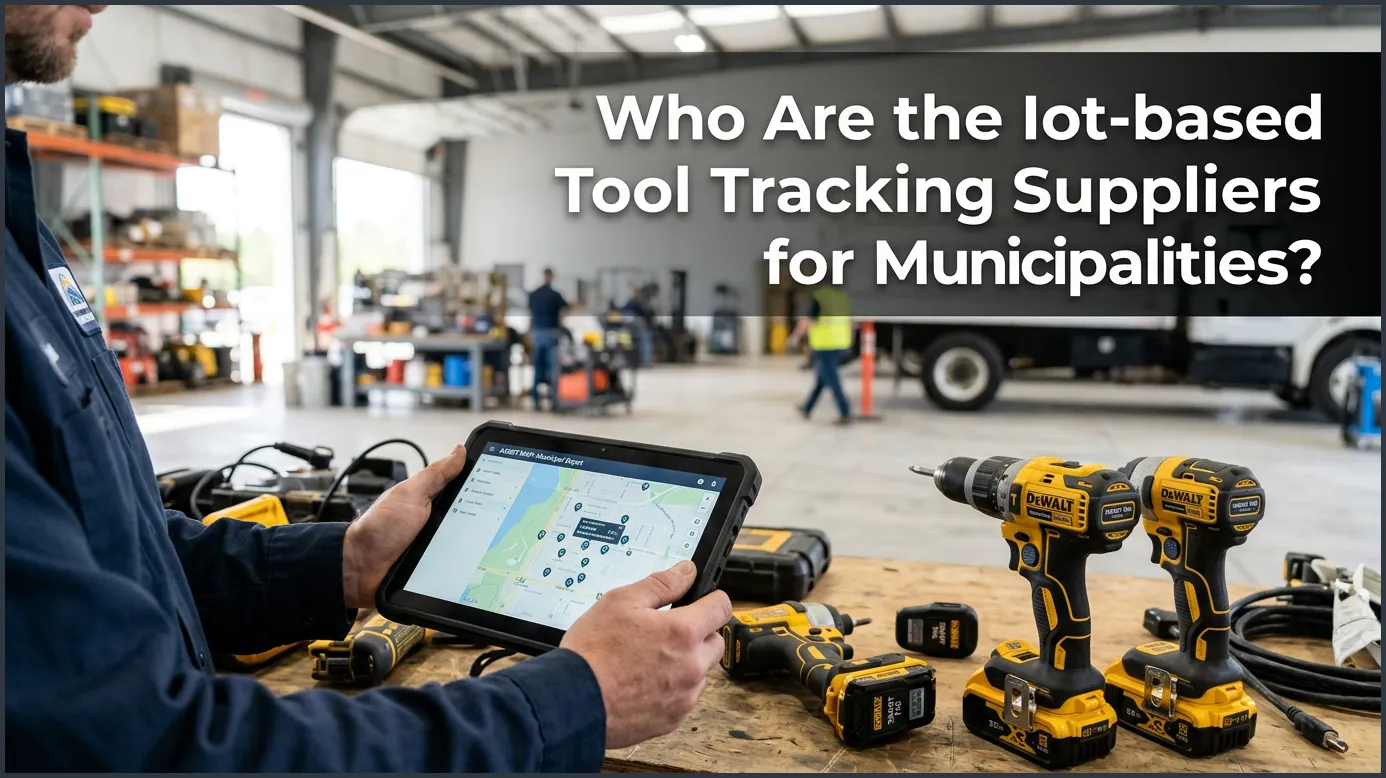
Municipalities lose thousands of dollars each year due to misplaced, lost, or stolen tools. Leading IoT-based tool tracking suppliers like Hilti, Milwaukee, Samsara, and Tenna offer specialized solutions to solve this issue. By using Bluetooth, GPS, and cellular tracking, these companies help cities monitor their assets in real-time, boost crew accountability, and protect taxpayer dollars.
Imagine a busy morning in your city. A water main breaks down a main street, and the public works crew rushes to the scene. They jump out of their trucks, roll up their sleeves, and get to work. But halfway through the job, they realize a vital piece of gear is missing. Nobody knows who used it last. Was it left at the workshop, or did it get dropped at yesterday’s job site?
This frustrating scenario happens in local governments every single day. Municipal departments manage thousands of tools. They have everything from simple drills to highly specialized pipe locators. When these items vanish, work grinds to a halt. Taxpayer money is wasted on quick replacements, and public trust can slip away. This is why city managers are turning to smart technology for help.
If you are looking to secure your city’s assets, you are likely asking: Who Are the IoT-Based Tool Tracking Suppliers for Municipalities? In this guide, we will break down the top suppliers in the market today. We will also look at the technology they use and show you how to choose the best fit for your local government.
Key Takeaways
- Loss Prevention: IoT tool tracking helps cities stop losing expensive equipment on active job sites.
- Top Industry Suppliers: Major brands like Hilti, Milwaukee, Samsara, and Tenna lead the municipal tracking market.
- Flexible Technology: Providers use a mix of Bluetooth tags, GPS trackers, and cellular networks to locate tools.
- Improved Accountability: Digital check-ins make it clear which worker or crew is using a specific tool.
- Better Maintenance: Smart software tracks tool usage to remind municipal managers when service is due.
- Taxpayer Savings: Reducing tool replacement costs frees up vital funds for other critical public projects.
📑 Table of Contents
Why Do Municipalities Need IoT-Based Tool Tracking?
Municipal departments face unique challenges. Unlike private companies, cities must answer to the public for every dollar spent. They also operate across many different sectors, including parks, water treatment, public safety, and road repair.
The High Cost of Lost Tools
Small tools are very easy to lose. A worker might leave a pair of expensive crimpers in a grassy park. Another might forget a diagnostic scanner on a truck bumper. Over a single fiscal year, these small losses add up to giant bills. IoT tracking tags make tools visible on a digital map, so workers can find them before driving away.
Accountability Across Teams
In a city government, many different hands touch the same tools. Without a system in place, it is hard to know who is responsible for what. IoT tracking systems log who checked out a tool and when they returned it. This creates a culture of care and accountability among crew members.
The Top IoT-Based Tool Tracking Suppliers
Several major companies supply smart tool tracking systems. Each provider offers different strengths, depending on what your municipality needs.
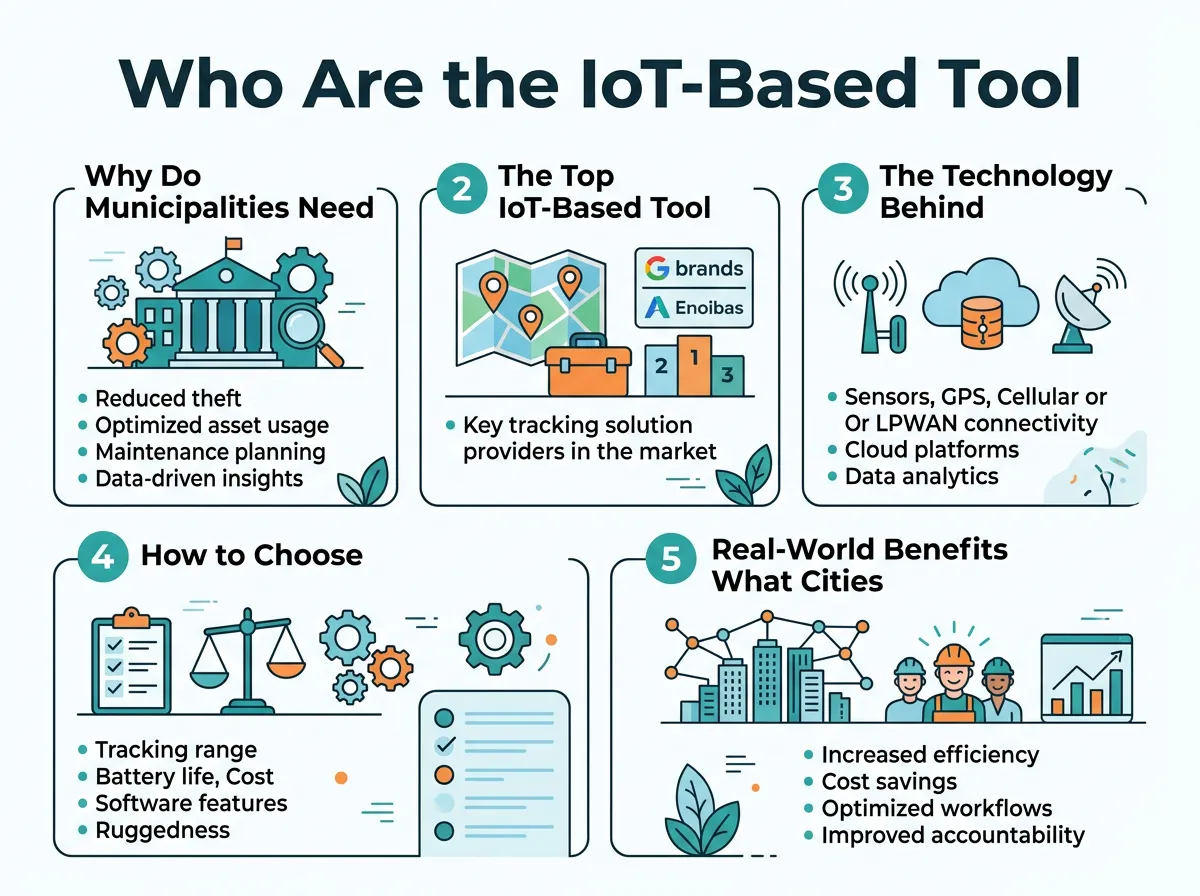
Who Are the IoT-Based Tool Tracking Suppliers for Municipalities? — key points at a glance
1. Milwaukee ONE-KEY
Milwaukee is a massive name in the tool world. Their ONE-KEY system is one of the most popular tracking options. Many Milwaukee tools come with ONE-KEY tracking chips built right into them. For older tools or other brands, they offer small, durable Bluetooth tags called “TICK” trackers.
The ONE-KEY app lets crew leaders manage inventory from a smartphone. If a tool goes missing, the system uses a community-based mesh network to find it. When any phone with the ONE-KEY app passes near the tool, its location is updated on your map.
2. Hilti ON!Track
Hilti is famous for heavy-duty construction gear. Their ON!Track system is built specifically for tough environments. It uses smart RFID tags, Bluetooth active tags, and barcode labels. This allows cities to track everything from a massive jackhammer to a simple ladder.
ON!Track is highly rated for its software. It does more than just find lost tools. It also tracks safety certifications, employee training, and scheduled tool maintenance. This is highly useful for public works departments that must meet strict safety standards.
3. Samsara
Samsara is a leader in fleet management, but they also excel at tool and asset tracking. If your city already uses Samsara to track its fleet vehicles, adding their tool tracking is a smart move. Samsara uses industrial IoT gateways and Bluetooth tags to monitor tools in real-time.
By using IoT for remote asset monitoring, Samsara links tools directly to the trucks they belong in. If a truck drives away from a job site without its assigned tools, the driver gets an instant alert on their phone. This prevents tools from being left behind in the first place.
4. Tenna
Tenna is a supplier built for construction and physical asset management. They offer a deep range of tracking hardware. This includes GPS trackers, cellular tags, Bluetooth beacons, and QR codes. Tenna is a great fit for municipalities that want to track both heavy road-building machinery and hand tools on a single screen.
5. Bosch Bluehound
Bosch Bluehound is another cloud-based asset tracking solution. It uses robust Bluetooth tags that attach to any tool, regardless of the brand. The software is very clean and easy to use. It helps managers see where tools are, who has them, and which projects they are currently assigned to.
The Technology Behind the Tracking
To pick the right supplier, it helps to understand how these little trackers talk to the cloud. Most suppliers use a combination of three main technologies.
Bluetooth Low Energy (BLE)
BLE tags are small, cheap, and have long battery lives. They send out a signal that smartphones or vehicle gateways can detect. They are perfect for hand tools and smaller equipment. However, they rely on a nearby phone or gateway to upload their location to the internet.
GPS and Cellular Tracking
GPS trackers are larger and require more battery power. They talk directly to satellites to get highly accurate location data. They then use cellular networks to send that data to your office. This is the best choice for high-value assets, like generators or utility trailers.
LoRaWAN and LPWAN
Some advanced municipalities are setting up their own smart city networks. By combining LoRaWAN and GPS IoT technologies, cities can track assets over long distances without paying monthly cellular fees. This is highly cost-effective for large cities with existing smart infrastructure.
How to Choose the Best Supplier for Your City
Every city has different goals and budgets. Here are a few tips to help you choose the right partner.
Assess Your Tool Inventory
Look at what you actually need to track. If your crews mostly use Milwaukee power tools, then ONE-KEY is a natural choice. If you have a highly diverse mix of brands and heavy machinery, a platform like Hilti ON!Track or Tenna might be better.
Think About Your Fleet
Your tools travel inside your vehicles. If you already have GPS tracking on your city trucks, ask your current fleet supplier if they offer tool tracking. Integrating your tools with your fleet management software will save your staff from switching between different apps.
Match the System to Your Staff’s Skills
A tracking system only works if your crews actually use it. Choose a supplier that offers a simple, user-friendly mobile app. The process for checking tools in and out should take only a few seconds. If the software is too complex, workers will find ways to bypass it.
Consider Public Safety Needs
Police, fire, and rescue departments have highly specialized gear. Using dedicated IoT solutions for public safety ensures that life-saving rescue tools are always in the right vehicle and ready for action. Ensure your chosen supplier can meet these critical demands.
Real-World Benefits: What Cities Stand to Gain
When a municipality rolls out a smart tool tracking system, the benefits show up quickly.
- Less Downtime: Crews spend their mornings working, not digging through the warehouse for a missing wrench.
- Longer Tool Lifespans: Tracking software keeps a digital record of tool health. Regular maintenance keeps tools working safely for years.
- Lower Insurance Costs: Some insurance companies offer lower rates to cities that actively track and secure their high-value equipment.
- Clear Audits: When the city council asks where taxpayer money went, managers can show exact digital records of all physical assets.
Conclusion
Securing municipal assets does not have to be a guessing game. IoT-based tool tracking suppliers like Hilti, Milwaukee, and Samsara offer powerful, easy-to-use systems that fit any budget. By investing in the right tracking technology, your city can prevent theft, improve daily workflows, and keep projects running on schedule. It is a smart, simple way to protect both your tools and your community’s bottom line.
Frequently Asked Questions
What is IoT tool tracking?
IoT tool tracking uses small electronic tags attached to tools. These tags send location data to a cloud-based software system via Bluetooth, GPS, or cellular networks, allowing managers to see where tools are in real-time.
Do these systems work on tools from different brands?
Yes, most top suppliers offer universal tags. You can stick or rivet these tags onto any piece of equipment, regardless of who manufactured the tool.
How do tool trackers help prevent theft?
Trackers show the last known location of a tool on a map. Some systems also feature geofencing, which sends an instant alert if a tool leaves a designated municipal yard or job site.
How long do the batteries last in tracking tags?
Most Bluetooth tracking tags use small coin-cell batteries that last between one and three years. Larger GPS-based trackers often have rechargeable batteries or run on the power of the vehicle they are mounted to.
Is tool tracking software hard for workers to learn?
No, modern tracking apps are designed to be very simple. Most workers can learn to scan, search, and check tools in or out with just a few minutes of basic training.
Can tool tracking integrate with municipal fleet tracking?
Yes, many suppliers like Samsara combine fleet tracking with tool tracking. This allows you to monitor your trucks and the tools inside them on a single, unified map.
