


Building a digital twin involves five core steps: defining your goals, collecting real-time data with IoT sensors, designing the virtual model, integrating your systems, and implementing real-time analytics. By following this roadmap, businesses can easily optimize performance, predict maintenance issues, and run risk-free simulations.
Imagine having a magic mirror. This mirror does not show your face. Instead, it shows your factory floor, your commercial office building, or even a jet engine. It does not just show a static picture, either. It shows how the machine works in real time. It tells you when a part is about to break. It lets you test changes before you touch the real equipment. This is not science fiction. This is the power of a digital twin.
Many business owners want to use this cutting-edge technology. They know it can save money and prevent costly mistakes. But starting the process can feel overwhelming. You might wonder where to begin. What Are the Steps to Build a Digital Twin? Let’s break down this complex process into simple, easy-to-follow steps.
In this guide, we will walk you through the entire journey. You will learn how to plan your project, gather your data, build your model, and start seeing real results. Let’s dive in.
Key Takeaways
- Define Clear Goals: Always start with a small, focused project to ensure a quick return on investment.
- Gather Real-Time Data: Use smart IoT sensors to feed live data from physical assets to the virtual model.
- Build a High-Fidelity Model: Create a 3D digital replica that accurately mirrors physical dimensions and physics.
- Integrate Your Systems: Use middleware to connect the live sensor data to your digital visualization software.
- Apply Analytics: Add AI and machine learning algorithms to predict future maintenance needs and run simulations.
- Maintain the Twin: Regularly update the digital model to ensure it always matches physical changes.
📑 Table of Contents
Why Digital Twins Matter Today
Before we look at the exact process, let’s understand why this tool is so powerful. When asking What Are the Steps to Build a Digital Twin?, you first need to know why they are valuable. A digital twin is a dynamic model of a physical system. It links the real world with the digital world. By doing this, it helps you see things you could never see before.
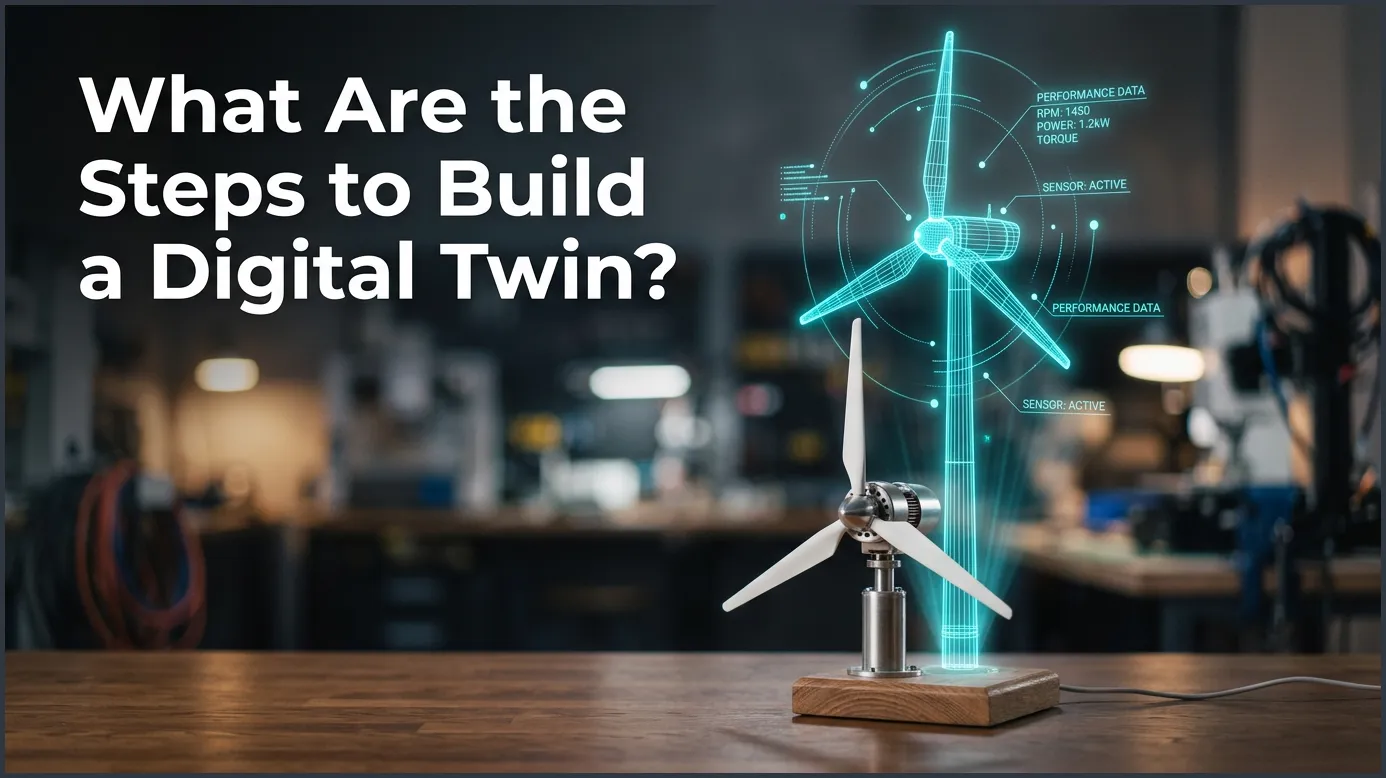
For instance, imagine you run a wind farm. A wind turbine is high in the air. It is hard to check every single part every day. With a digital twin, you can monitor the turbine right from your desk. You can see how fast the blades spin and check the temperature of the gears. You can learn more about how digital twins work and how they run simulations to protect expensive assets.
In short, these tools help you make better decisions. They reduce downtime. They save money on repairs. They also help your team work safer and faster.
What Are the Steps to Build a Digital Twin?
Building a virtual replica requires careful planning. You cannot just build one overnight. It is a step-by-step journey. If you wonder, What Are the Steps to Build a Digital Twin? here is the proven framework to guide your team.
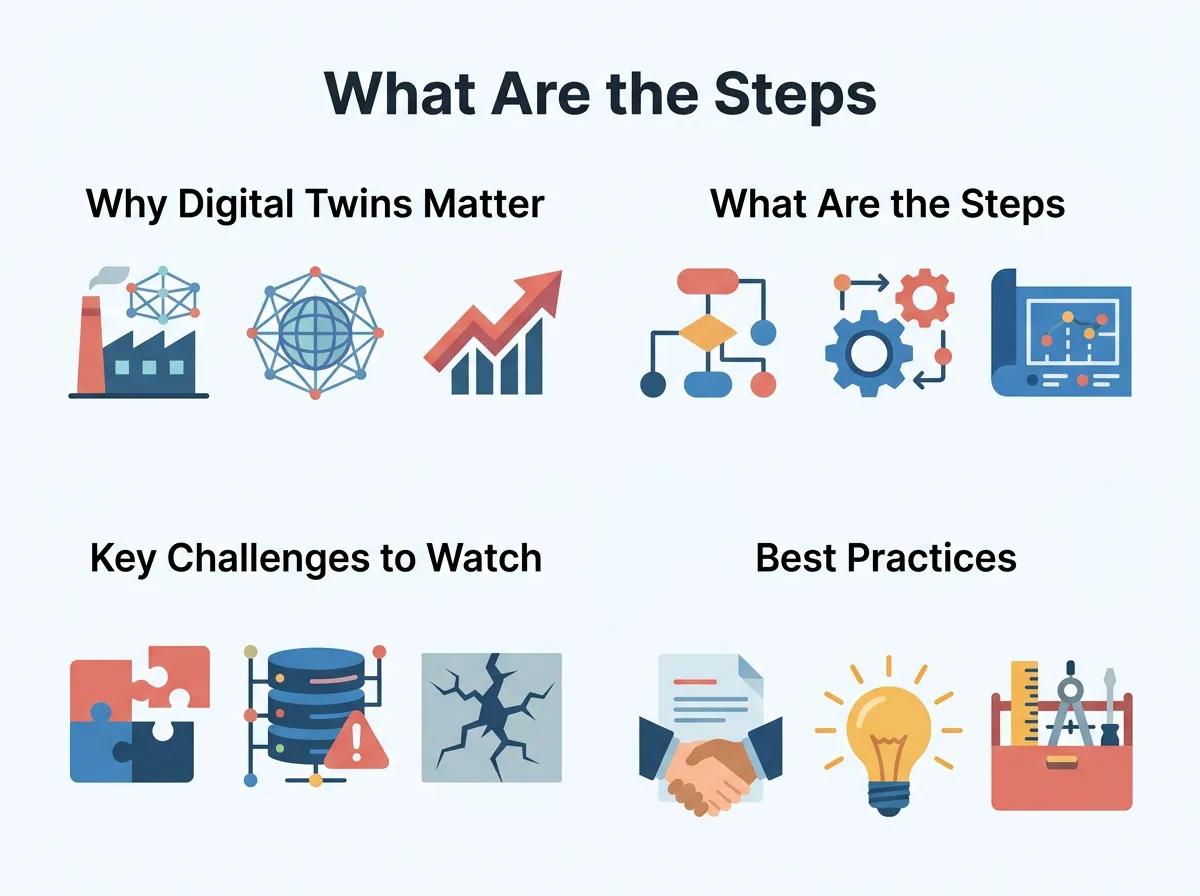
What Are the Steps to Build a Digital Twin? — key points at a glance
Step 1: Define the Scope and Business Goals
Every good project starts with a plan. You must ask yourself what you want to achieve. Do you want to reduce energy use? Do you want to stop machine breakdowns? Or do you want to train your staff safely?
Do not try to build a model of your whole factory at once. Start small. Pick one machine or one process. This is called a proof of concept. According to McKinsey’s guide on building your first twin, starting with a narrow focus helps you get quick wins. It also helps you secure more funding for larger projects later.
Step 2: Gather Data and Set Up Sensors
A digital twin needs information to live. This information comes from data. You need to gather historical data first. This includes original design files, user manuals, and past maintenance records.
Next, you need real-time data. To get this, you must install smart sensors on your physical asset. These sensors are part of the Internet of Things (IoT). They measure things like heat, pressure, vibration, and speed. They send this data to the cloud every second. Without sensors, your virtual model is just a static drawing.
Step 3: Design the Virtual Model
Now comes the fun part. You must create the digital replica. This is often a 3D computer model. Engineers use computer-aided design (CAD) software to build it.
The model must look and act like the real thing. It needs to show the exact size and shape of the physical asset. If you are new to this, you might want to read a beginner’s guide to digital twin creation. It will help you understand how to match the physics of the real world with your digital code.
Step 4: Connect Systems and Integrate Data
Your virtual model is ready. Your sensors are sending data. Now, you must connect them. This step is all about integration.
You need to feed the sensor data into your virtual model. This requires special software called middleware. This software acts as a bridge. It takes raw data and translates it so the virtual model can understand it. At this stage, your model should start moving and changing based on what the real machine is doing.
Step 5: Implement Analytics and Run Simulations
Now your digital twin is alive. But how do you make it smart? You do this by adding analytics and artificial intelligence (AI).
You can write algorithms to look for patterns. For example, if the temperature rises while the speed slows down, the AI can flag a potential problem. You can also run “what-if” simulations. What happens if we run the machine 20% faster? Will it break? You can test this in the virtual world without risking your real equipment.
Key Challenges to Watch Out For
Building a digital twin is exciting. However, the road has a few bumps. Knowing these challenges helps you prepare.
Data Quality Issues
Your model is only as good as your data. If your sensors are cheap or dirty, they will send bad data. Bad data leads to bad decisions. Always invest in good sensors and keep them clean.
Security Risks
A digital twin holds a lot of sensitive data. It shows exactly how your business operates. This makes it a target for hackers. You must protect your data. Use encryption and secure passwords. Limit who can access the system.
High Initial Costs
Buying software, sensors, and hiring experts can be expensive. This is why you must prove the value early on. Start with a small project to show that the investment is worth it.
Best Practices for a Successful Project
To get the most out of your investment, follow these simple tips:
- Involve your team early: Talk to the operators who use the physical machines. They know the equipment best. Their input is priceless.
- Keep it simple: Do not add features you do not need. A simpler model is easier to maintain and update.
- Update regularly: If you change a part on the physical machine, update the digital model too. They must always match.
- Train your staff: A great tool is useless if no one knows how to use it. Spend time teaching your team how to read the twin’s data.
Conclusion
We have answered the big question: What Are the Steps to Build a Digital Twin? The process starts with clear goals. Next, you collect data, design your model, connect your systems, and add smart analytics.
It might seem like a lot of work, but the rewards are huge. You will gain a clear view of your operations. You will stop problems before they start. Best of all, you will set your business up for a smart, digital future. Start small, stay focused, and watch your business grow.
Frequently Asked Questions
How long does it take to build a digital twin?
It typically takes anywhere from a few weeks to several months. A simple proof of concept can be built quickly, while a complex system-wide replica requires more time for data integration and testing.
Do I need coding skills to build one?
Yes, creating a functional digital twin usually requires a team with skills in 3D modeling, software development, and data analysis. However, many modern platform tools offer user-friendly dashboards that make management much easier for non-technical users.
What industries use digital twins the most?
They are highly popular in manufacturing, aerospace, healthcare, construction, and energy. Any industry that relies on expensive physical assets or complex operations can benefit from this technology.
What is the difference between a CAD model and a digital twin?
A CAD model is a static 3D design of an object. A digital twin is a living model that connects to real-time sensor data, allowing it to change and react just like the physical object.
Can small businesses build digital twins?
Yes, small businesses can build them by starting with a very narrow focus. Creating a virtual replica of a single critical machine or process is highly affordable and yields great returns.
How much does it cost to build a digital twin?
The cost varies greatly depending on the complexity of the project. A basic model using existing sensors can cost a few thousand dollars, while enterprise-grade systems can run into hundreds of thousands of dollars.
