


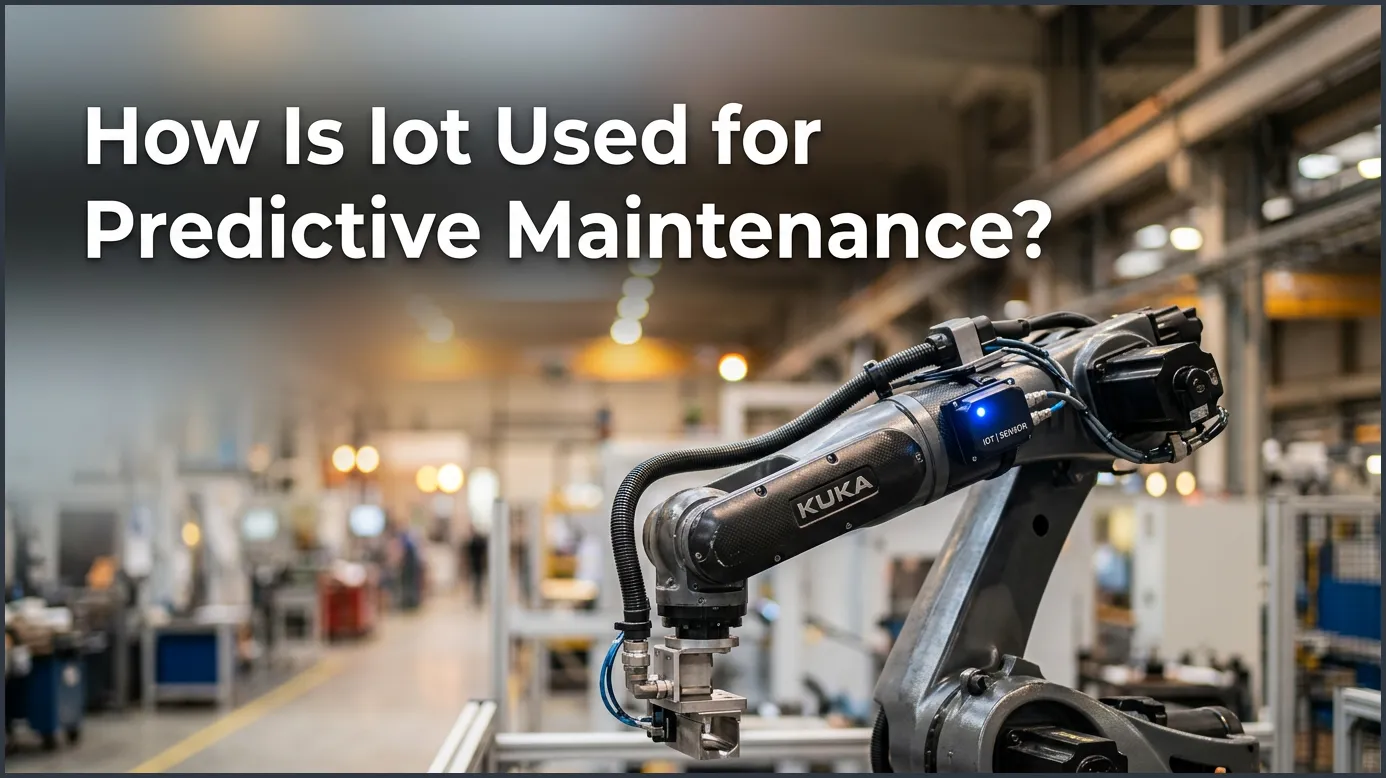
The Internet of Things (IoT) revolutionizes maintenance by using smart sensors to monitor equipment health in real time. By analyzing live data like vibration and temperature, systems can predict machine failures before they happen. This proactive approach helps businesses eliminate unexpected downtime, reduce maintenance costs, and extend machinery lifespan.
Imagine a busy factory floor. Suddenly, a giant conveyor belt stops. The motor is dead. Workers stand around with nothing to do. The manager panics as orders pile up. This nightmare scenario happens every day to businesses around the world. For decades, companies had to wait for things to break before fixing them. This old way of working is stressful and very expensive.
But what if machines could tell you they are about to break? What if they could warn you weeks in advance? Today, this is not science fiction. It is a reality, thanks to smart technology. This is where the Internet of Things, or IoT, comes into play. It changes how we look after our tools and machines. It turns surprise breakdowns into planned, easy fixes.
In this guide, we will explore this exciting shift. We will answer the big question: how is IoT used for predictive maintenance? We will look at how sensors work, the money you can save, and how to start using this technology today. Let us dive into the world of smart maintenance.
Key Takeaways
- Real-Time Monitoring: IoT sensors continuously track equipment health.
- Cost Reduction: Preventing failures before they happen saves millions in repairs.
- Extended Lifespan: Regular, precise care keeps machinery running longer.
- Data-Driven Decisions: Analytics replace guesswork with accurate forecasts.
- Safety Improvements: Mitigating catastrophic failures protects workers on the job.
📑 Table of Contents
The Shift From Reactive to Predictive Maintenance
For a long time, businesses used two ways to fix things. The first was reactive maintenance. This means you run a machine until it breaks, then you fix it. It is simple, but it is also very costly. The second was preventive maintenance. This means you service machines on a set schedule, like changing your car oil every six months.
Both of these older ways have big flaws. Reactive maintenance causes sudden, costly stops. Preventive maintenance often wastes money because you replace parts that are still perfectly fine. That is why smart businesses are moving to a new approach.
So, how is IoT used for predictive maintenance to solve these issues? It uses real-time data to find the exact moment a machine needs care. Instead of guessing, you know. According to research on predictive maintenance systems, using live data helps factories avoid unplanned downtime almost completely.
The Inner Workings: How Is IoT Used for Predictive Maintenance?
To truly understand this technology, we need to look under the hood. The system is like the human nervous system. It has senses, a brain, and pathways to send signals. Here is how the three main parts work together.
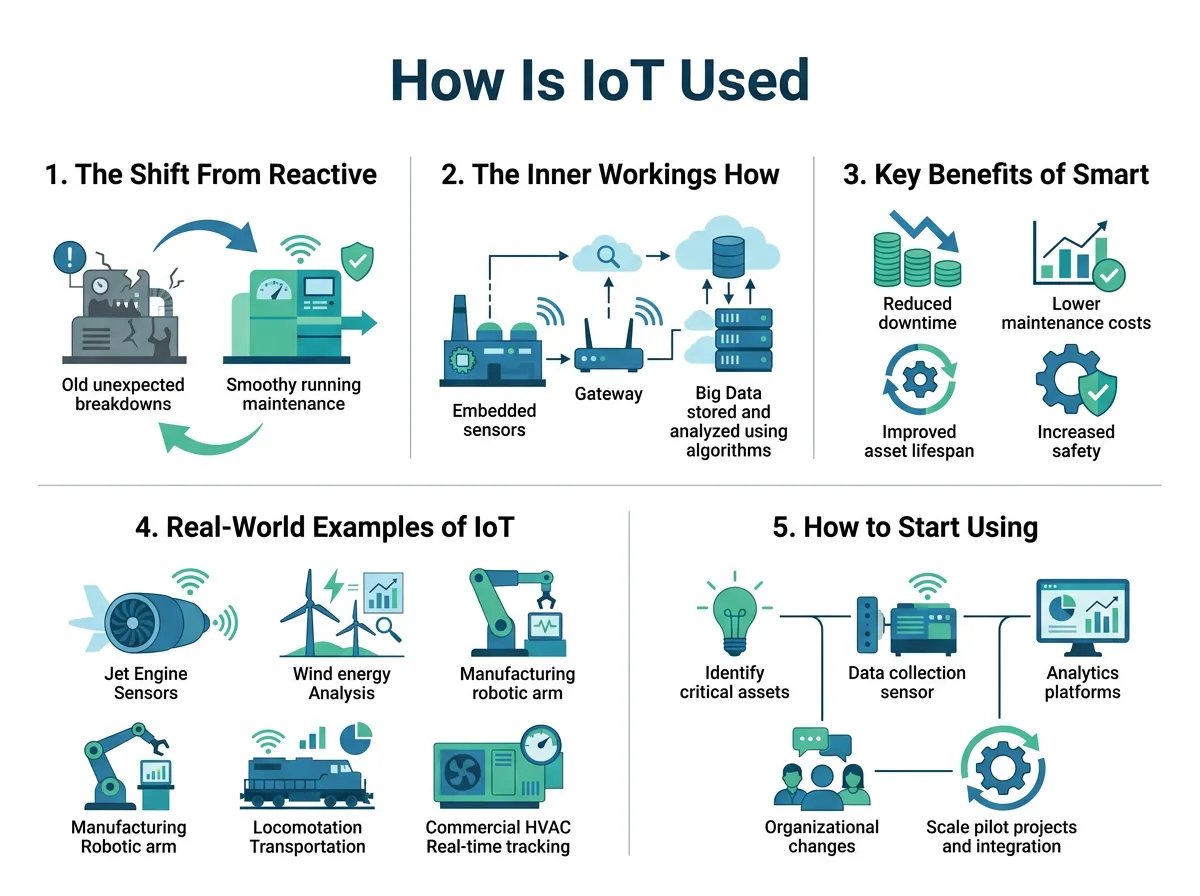
How Is IoT Used for Predictive Maintenance? — key points at a glance
Smart IoT Sensors
The process starts with small devices called sensors. You attach these sensors directly to your machines. They act like eyes and ears. They measure vibration, heat, sound, and pressure. For example, a hot motor might mean a part is rubbing. A strange shaking might mean a bolt is loose. The sensors catch these tiny changes long before a human could.
Real-Time Data Transmission
Sensors do not just collect data. They also share it. They use wireless networks to send this data to the cloud instantly. This means you do not have to walk around the factory floor with a clipboard. The data flows by itself, day and night, keeping a constant watch on your assets.
Advanced Cloud Analytics
Once the data is in the cloud, smart software takes over. The computer analyzes the data using special formulas. It looks for patterns of wear and tear. If the software spots a tiny rise in temperature, it alerts the team. You can learn more about how IoT and predictive maintenance work together to keep things running. The software acts as an early warning system, giving you plenty of time to plan a fix.
Key Benefits of Smart Maintenance
When we ask how is IoT used for predictive maintenance, we must look at the benefits. Why should a business invest in this smart technology? The benefits are clear and affect the bottom line.
Massive Cost Savings
Fixing a broken machine is very costly. You have to pay for rushed shipping on parts. You have to pay technicians overtime to work during the night. Most importantly, you lose money while production stops. Predictive maintenance helps you avoid these costs. You only fix things when they actually need it. For a deeper look at this financial impact, check out IBM’s guide on predictive maintenance benefits.
Maximized Operational Efficiency
When machines run smoothly, your business runs smoothly. You can schedule maintenance during planned breaks, like nights or weekends. This keeps your workflow steady. It also makes your machines last much longer because you protect them from major wear and tear.
Enhanced Workplace Safety
When machines break down suddenly, they can be dangerous. Flying parts, steam leaks, or electrical fires can hurt your team. By fixing issues early, you keep your workers safe. A safe workplace is a happy and productive workplace.
Real-World Examples of IoT Maintenance
To understand how is IoT used for predictive maintenance, it helps to see real examples. Let us look at some practical ways different industries use this smart technology today.
Manufacturing and Factory Floors
In a modern car factory, robotic arms do the heavy lifting. If one arm fails, the whole line stops. Sensors on these arms track how much power they use. If an arm starts drawing too much electricity, it may mean the joints need grease. The system alerts a technician before the arm freezes up.
Transportation and Fleet Management
Delivery trucks travel thousands of miles. Fleet managers use IoT to track engine health remotely. Sensors can spot a failing battery or low tire pressure. This allows the driver to pull over at a service station before getting stranded on a lonely highway.
Energy and Wind Turbines
Wind turbines are often high up or out in the sea. Sending a worker to check them is hard and costly. Sensors on the turbine blades can detect tiny cracks using sound waves. This lets operators plan repairs before the blade breaks off in a storm.
How to Start Using IoT for Maintenance
You do not need to change your whole business overnight. You can start small and grow. Here is a simple guide to get you started.
Identify Critical Assets
Do not put sensors on every single machine at first. Start with the most important ones. Ask yourself: “Which machine would cause the biggest disaster if it broke down?” Start with that one machine.
Choose the Right Sensors
Different machines need different sensors. A fan might need a vibration sensor. A boiler will need a temperature sensor. Work with an expert to find the right tool for the job.
Start with a Pilot Project
Test the system on one or two machines first. This helps your team learn how to use the data. Once you see the savings, you can expand the system to the rest of your business.
Wrapping Up: The Future is Predictive
So, how is IoT used for predictive maintenance? It is used to connect machines to the cloud, listen to their needs, and stop problems before they start. It moves us away from the old stress of sudden breakdowns. Instead, it gives us peace of mind and saves money.
As sensors get cheaper and smarter, more businesses will use this technology. Do not wait for your machines to break. Listen to what they are telling you today.
Frequently Asked Questions
What is the main difference between preventive and predictive maintenance?
Preventive maintenance happens on a set schedule, whether the machine needs it or not. Predictive maintenance uses live sensor data to fix machines only when they show actual signs of wear.
What kinds of sensors are used in IoT maintenance?
Common sensors include thermal sensors for heat, vibration sensors for movement, and acoustic sensors for sound. They can also measure pressure, humidity, and electrical current.
Is IoT predictive maintenance expensive to set up?
While there is an initial cost for sensors and software, it saves money quickly. Most businesses get their money back by preventing just one major breakdown.
Can small businesses use IoT for maintenance?
Yes, small businesses can start small by placing sensors on their single most important machine. As they see the benefits, they can scale up slowly.
How does machine learning fit into this process?
Machine learning learns how a machine normally behaves. It then points out abnormal data patterns, which helps predict exactly when a part will fail.
What industries benefit the most from this technology?
Manufacturing, energy, transportation, and healthcare benefit the most. Any industry that relies on expensive machinery can use IoT to save money.
