


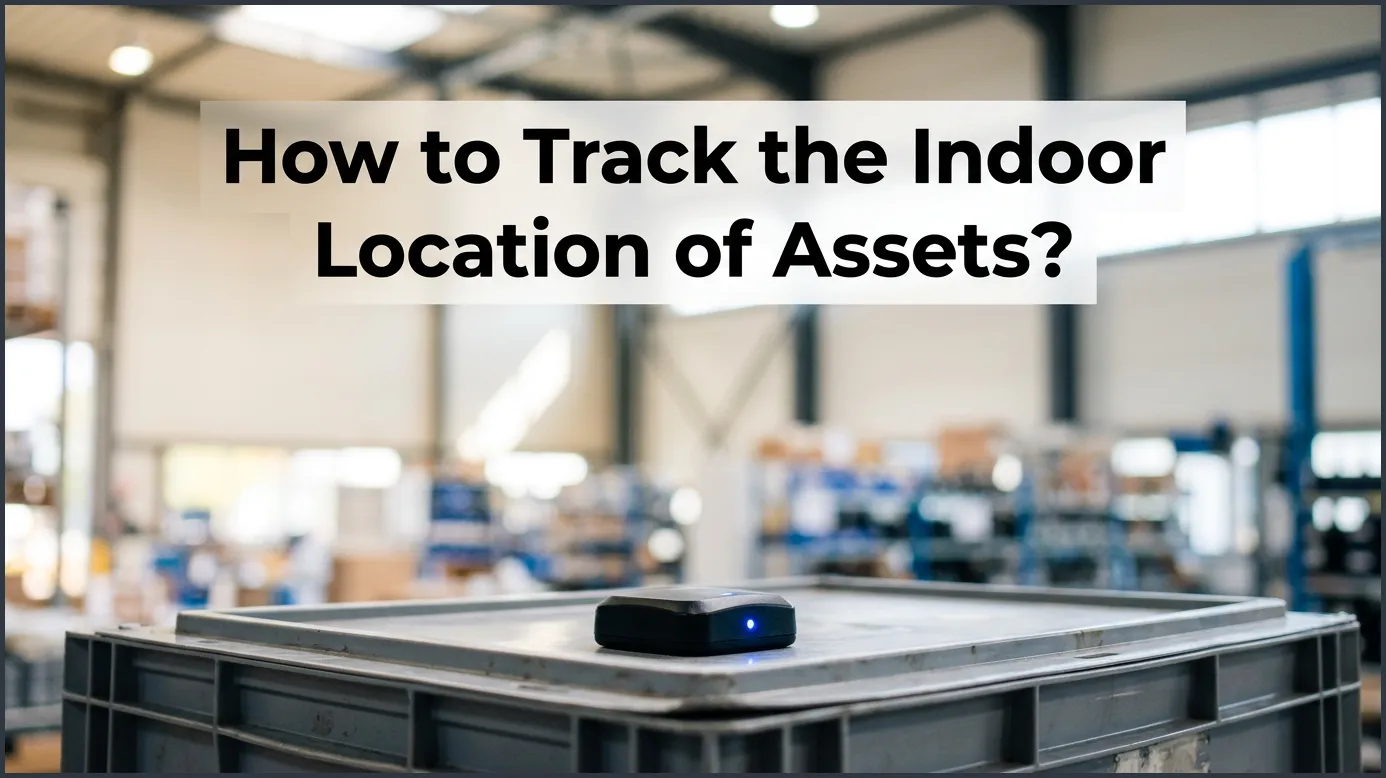
Tracking indoor assets requires a smart mix of hardware tags and software platforms. By using technologies like Bluetooth, Ultra-Wideband (UWB), or Wi-Fi, businesses can pinpoint equipment location in real time. This system helps reduce loss, cut down search times, and boost overall workflow efficiency.
Imagine walking into a huge warehouse. You need to find a single box of high-value tools. You look around, but the room is the size of two football fields. The clock is ticking, and a client is waiting. You check your phone, but your GPS app is completely blank. This is because GPS signals cannot pass through thick roofs or walls.
This frustrating scene happens every single day in warehouses, hospitals, and factories. Valuable tools, medical gear, and inventory vanish into thin air. Workers spend hours wandering down long hallways just to find a single item. Fortunately, there is a simple solution to this common headache.
In this helpful guide, we will show you exactly how to track the indoor location of assets? with ease. We will look at the best tech options, how to set them up, and how they can save you time. Let us dive in and explore the power of indoor tracking.
Key Takeaways
- Choose the right technology: Bluetooth Low Energy (BLE) offers an excellent balance of cost and accuracy for most indoor tracking needs.
- Install anchors and tags: Hardware tags attach to assets while receivers or anchors map the signal strength to find physical locations.
- Integrate with software: A central dashboard displays real-time maps and alerts to help your team find items instantly.
- Boost operational speed: Reducing search times for tools or medical devices directly increases daily productivity.
- Set up virtual boundaries: Geofencing alerts you immediately when a tracked asset enters or leaves a designated safe zone.
- Keep it scalable: Start with a small pilot project and expand your system as your company grows.
📑 Table of Contents
Understanding Indoor Positioning Systems
Before we jump into the setup, let us look at how these systems work. An indoor positioning system (IPS) is like a mini-GPS designed specifically for inside spaces. Instead of using satellites in space, an IPS uses small devices placed inside your building. These devices work together to pinpoint the exact location of your objects. Learning how to track the indoor location of assets? is the first step to saving money and improving safety.
These systems rely on two main physical parts. The first part is a tag. A tag is a tiny device that you stick or screw onto your asset. The second part is an anchor or receiver. Anchors are placed on walls or ceilings. They listen for the signal sent by the tag. When a tag gets close, the anchor reads its signal and tells the software where it is. Using indoor positioning platform tools, you can see this live data on a digital map.
The Difference Between GPS and IPS
GPS is fantastic for outdoor tasks. It helps you drive across the country or track a delivery van. However, GPS signals are weak. They struggle to get past concrete, steel, and wood. An IPS uses stronger, short-range signals that easily bounce around rooms. This makes it perfect for finding things inside closed spaces.
The Best Technologies for Indoor Tracking
There are many ways to build an indoor system. The right choice depends on your budget and how much detail you need. Let us look at the most popular ways to solve the question of how to track the indoor location of assets? using modern tech.
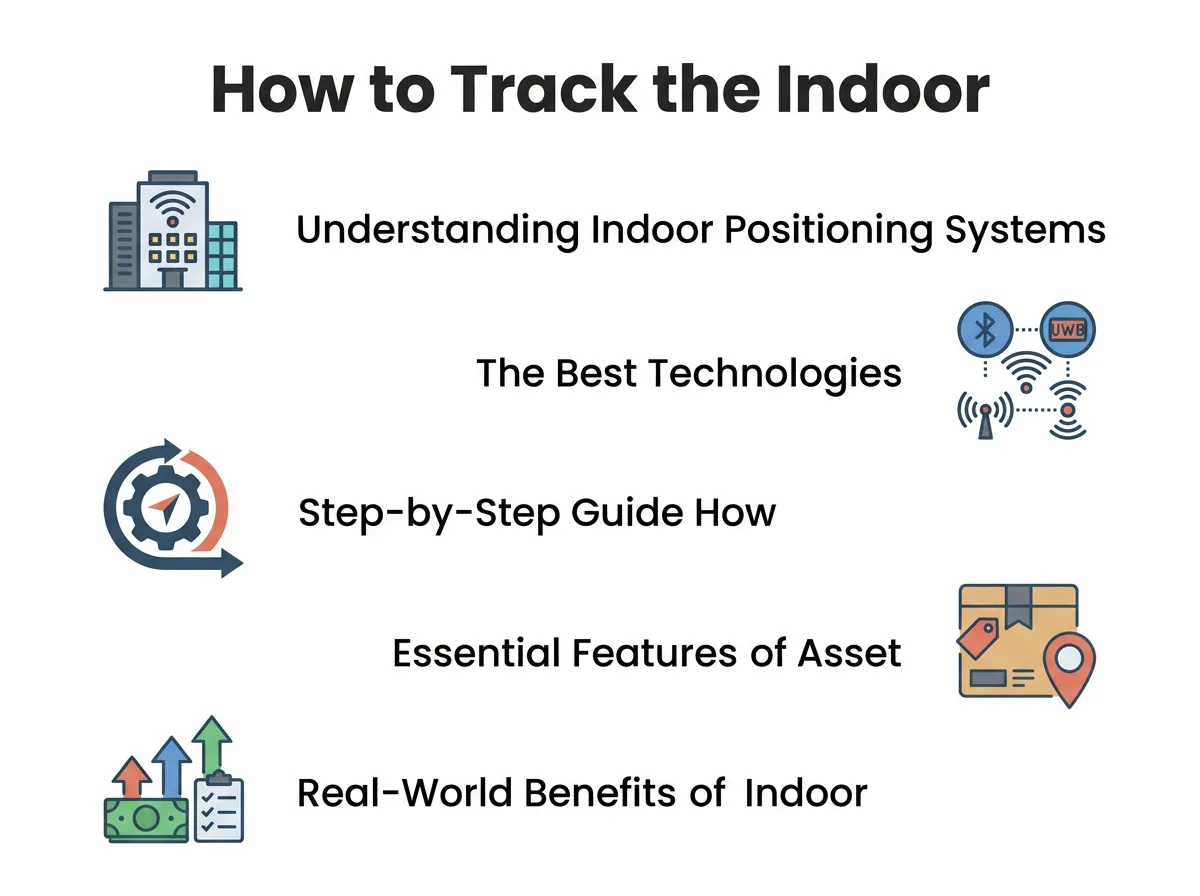
How to Track the Indoor Location of Assets? — key points at a glance
Using BLE: How to Track the Indoor Location of Assets? on a Budget
BLE is currently the most popular choice for indoor tracking. It uses small, cheap beacons that send out signals. Your existing Wi-Fi routers or special BLE readers pick up these signals. BLE is great because the batteries in the tags can last for years. It is also cheap to buy and simple to set up. It can locate items within a few meters, which is plenty of detail for most businesses.
Ultra-Wideband (UWB)
If you need extreme accuracy, ultra-wideband technology is the gold standard. UWB sends out fast radio pulses. It can find an asset within a few centimeters. This is perfect for factories where you need to know exactly which shelf or workbench a tool is on. While UWB is highly accurate, it does cost more than Bluetooth.
Wi-Fi and RFID
You can also use your existing Wi-Fi network to track items. This is a great way to save money on hardware. However, Wi-Fi tracking is not always precise. Active RFID is another good choice. It uses tags that send out signals to readers. RFID is fantastic for tracking items as they pass through specific doorways or gates.
Step-by-Step Guide: How to Track the Indoor Location of Assets?
Setting up your system does not have to be scary. Let us look at a simple, step-by-step path on how to track the indoor location of assets? in your facility.
Step 1: Map Out Your Building
First, take a look at your floor plan. Identify the key areas where your assets travel. This helps you figure out where to place your anchors. If you want to know how to track the indoor location of assets? successfully, you must start with a clear map. Note any metal structures or thick walls that might block signals.
Step 2: Choose Your Hardware
Next, pick the right tags and anchors. For small tools, buy tiny sticker tags. For heavy machinery, you will need rugged, waterproof tags. You should review the best indoor tracking technologies to find the best match for your environment. Once you choose, buy enough anchors to cover your entire floor plan.
Step 3: Install the Anchors and Tags
Now it is time to install the hardware. Mount your anchors high on the walls or ceilings. This gives them a clear line of sight to the tags. Next, stick the tags onto your assets. Make sure to link each tag’s unique ID number to the specific item in your software database.
Step 4: Connect to Software
Finally, open your tracking software. Upload your floor plan and mark the locations of your anchors. Turn on your tags and watch them appear on your digital screen. You can now see your assets move in real time!
Essential Features of Asset Tracking Software
The hardware is only half the battle. You also need good software to make sense of the data. When you are planning how to track the indoor location of assets?, look for software with these key features.
Real-Time Live Maps
Your software should show a live, interactive map of your facility. You should be able to type in the name of a tool and see its exact spot instantly. This saves your staff from running around the building searching for gear.
Geofencing and Alerts
Geofencing allows you to draw virtual borders on your digital map. For example, you can draw a border around your exit doors. If a high-value tool crosses that line, the system sends an instant alert to your phone. This is a game-changer for preventing theft.
History and Analytics
Good software keeps a history of where your assets have been. This helps you see which tools are used the most. It also helps you find lost items by showing you where they were last seen.
Real-World Benefits of Indoor Asset Tracking
Why should you invest in this technology? The rewards are huge for businesses of all sizes. Let us look at how learning how to track the indoor location of assets? can help your bottom line.
Save Time with Indoor Asset Tracking
Employees waste hours every week looking for equipment. With a live tracking system, they can find what they need in seconds. This lets your team focus on their actual work, boosting overall productivity.
Reduce Lost Equipment
Replacing lost tools and machinery is highly expensive. When you know where everything is, loss rates drop to almost zero. You can check out various indoor asset tracking options to find a system that fits your budget and prevents costly replacements.
Improve Maintenance Schedules
Some tools need regular safety checks. Tracking systems can log how many hours a machine has been running. This helps you schedule maintenance before the machine breaks down.
How to Choose the Right Setup for Your Business
There is no single best option for everyone. When deciding how to track the indoor location of assets?, consider your physical environment. The right choice depends on your specific goals. Here are three quick questions to help you decide.
- How accurate does it need to be? If you only need to know which room an item is in, BLE is perfect. If you need centimeter accuracy, go with UWB.
- What is your budget? BLE is highly affordable for small businesses. UWB offers top performance but requires a larger investment.
- What are you tracking? Small medical tools need lightweight tags. Large shipping pallets need heavy-duty, long-range tags.
Conclusion
Knowing how to track the indoor location of assets? is no longer a luxury. It is a vital tool for running a smart, efficient business. By choosing the right combination of tags, anchors, and software, you can eliminate the stress of lost equipment. Start small with a simple pilot project, test the results, and enjoy the peace of mind that comes with total visibility.
Frequently Asked Questions
Can I use GPS to track assets indoors?
No, standard GPS signals struggle to penetrate solid building materials like concrete and steel. For indoor spaces, you need to use specialized technologies like Bluetooth, Wi-Fi, or Ultra-Wideband. These tools are designed specifically to work inside closed environments.
How accurate is indoor asset tracking?
The accuracy depends on the technology you choose. Bluetooth Low Energy (BLE) can track items within a few meters, which is great for most rooms. Ultra-Wideband (UWB) offers extreme precision down to a few centimeters.
How long do asset tracking tag batteries last?
Most active tracking tags use low-power options like BLE, which can last between two to five years. The actual lifespan depends on how often the tag transmits its location. Some systems allow you to adjust transmission rates to save battery power.
Is indoor asset tracking expensive to set up?
The cost varies based on the size of your facility and the accuracy you need. BLE systems are very cost-effective and easy to install using existing Wi-Fi networks. High-precision systems like UWB cost more but offer incredible accuracy for complex industrial settings.
What is geofencing in indoor tracking?
Geofencing allows you to set up virtual boundaries on a digital map of your facility. If a tracked asset moves outside this specified safe zone, the system triggers an automatic alert. This feature is highly useful for preventing theft and managing secure zones.
Can I track assets across multiple facilities?
Yes, modern cloud-based tracking software allows you to monitor assets across different locations from a single dashboard. You simply need to install anchors and tags at each facility. The software will automatically organize and display the data for all your buildings.
