

A global data pool for IoT SIMs is a shared data plan that lets all your connected devices draw from a single, collective bucket of data across multiple countries. Instead of paying for separate plans on every single device, this smart solution aggregates your usage to prevent wasteful overage fees. It helps businesses scale their IoT fleets efficiently without worrying about individual device data limits.
Imagine you run a business with thousands of smart tracking devices. They are spread across several countries, working day and night. Some of these devices are active all day, constantly sending data back to your servers. Other devices sit in a warehouse, completely silent and using no data at all.
At the end of the month, you receive your mobile bill, and it is a total mess. Some devices have huge fees because they went over their data limits. Other devices did not use any data, but you still had to pay for their monthly plans. This is a very common headache for many modern business owners. If you are struggling with this issue, you might ask yourself: What Is a Global Data Pool for IoT SIMs?
Today, we will explore this smart cellular solution. We will look at how it works, why it saves businesses thousands of dollars, and how it helps your business grow. Let us dive in and demystify the world of shared IoT data.
Key Takeaways
- Cost Efficiency: Businesses save money by pooling data instead of paying for unused megabytes on individual SIMs.
- No Overage Shock: High-use devices balance out low-use devices to prevent expensive billing surprises.
- Global Coverage: Devices can move across borders seamlessly while drawing from the same central data allowance.
- Simplified Management: Managing one large data contract is much easier than tracking thousands of separate device plans.
- Scalable Deployments: It makes adding new sensors, trackers, or smart devices to your fleet quick and stress-free.
📑 Table of Contents
The Evolution of IoT Connectivity
Why Old Data Plans Fail
In the past, connecting devices to the internet was hard. Companies bought standard mobile plans for each machine, much like buying a plan for a personal phone. This worked fine when a company only had a few devices. However, it failed completely when fleets grew into the hundreds or thousands. Imagine buying five thousand separate phone plans. It would be a total nightmare to manage, and you would waste hours checking every bill.
The Rise of Specialized IoT SIM Cards
To solve this, tech companies made special IoT SIM cards for machines. These cards are tough and built to last. They fit into small sensors, cars, shipping containers, and smart meters. They send small bits of data over cellular networks. Yet, even with these smart cards, pricing remained a major issue for growing companies. Businesses needed a better way to buy and share data across their entire fleets.
Defining the Concept: What Is a Global Data Pool for IoT SIMs?
How the Shared Bucket Works
Let us answer the core question: What Is a Global Data Pool for IoT SIMs? In simple terms, it is a single, shared bucket of data. Instead of buying individual plans for every device, you buy one large plan for your whole fleet. All of your connected devices draw from this same central bucket, no matter where they are located in the world.
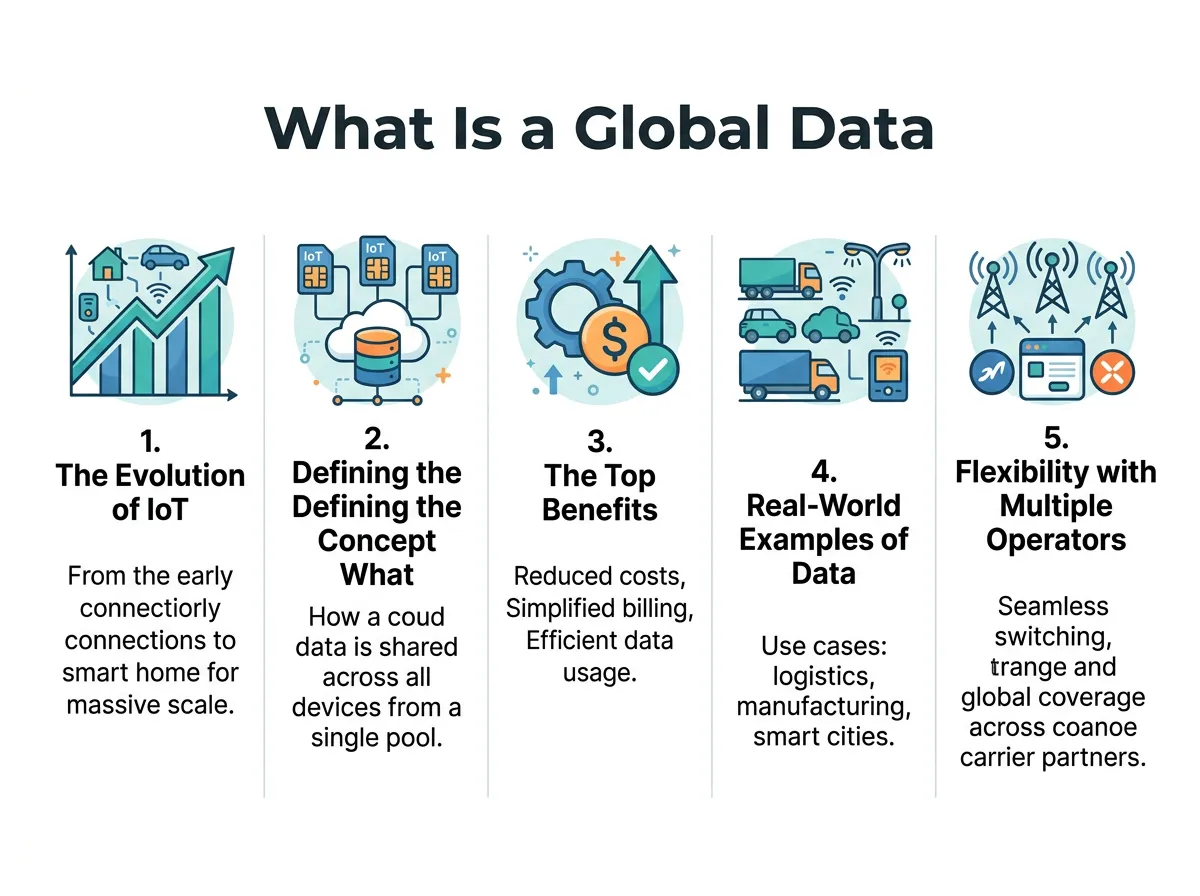
What Is a Global Data Pool for IoT SIMs? — key points at a glance
For example, say you have 100 devices. Each device needs about 10 megabytes of data per month. In a standard setup, you would buy 100 plans of 10 megabytes each. If one device uses 12 megabytes, you pay a penalty fee. If another uses only 1 megabyte, you lose the extra 9 megabytes you paid for. This is highly inefficient.
The Power of Group Data
With a global pool, you buy 1,000 megabytes in total for the group. It does not matter how much data each single device uses. One device can use 50 megabytes, and another can use zero. As long as the total use of all devices stays under 1,000 megabytes, you pay no extra fees. This concept is often called m2m data pooling, and it saves companies a lot of money and stress.
The Top Benefits for Your Business
Zero Waste and Cost Control
The biggest benefit of a data pool is cost control. You only pay for what you actually use as a group. This stops you from wasting money on quiet devices. It also protects you from high overage fees when a few devices run hot. Your monthly bill becomes highly predictable, which makes budgeting easy.
Easy Global Roaming
What if your devices cross borders? Many trackers move between countries on cargo ships, trains, or trucks. A true global IoT SIM works on many networks worldwide. With a global pool, your devices can cross borders without changing plans. They still draw from the same central bucket of data. This makes international shipping simple and smooth.
Real-World Examples of Data Pools in Action
Smart Shipping and Logistics
Think about a shipping company. They place temperature sensors on food trucks. Some trucks travel through areas with no signal, so they do not send data for days. Other trucks drive through city centers with perfect coverage, constantly streaming data. By pooling their data, the shipping company keeps costs low and steady, regardless of each truck’s route.
Smart Cities and Rental Scooters
Think about electric rental scooters in a busy city. In summer, people ride them all day long. In winter, most of them sit in storage. A shared data pool allows the scooter company to pay the same rate all year. The active summer scooters use the data left over by the winter storage scooters. The company never has to change plans or adjust individual SIMs.
Flexibility with Multiple Operators
Avoiding Carrier Lock-in
No single network covers the entire world. Some areas have great signals from one carrier, while other areas rely on a different provider. To get the best coverage, your devices must be able to connect to different networks. In the past, this meant signing contracts with multiple mobile operators, which was expensive and confusing.
The Power of Combined Networks
Some top providers now offer combined data pools across multiple operators. This means your devices can switch carriers automatically to get the best signal. Yet, they still draw from the same single pool of data. You get the best network coverage without managing multiple bills or contracts. It is the ultimate flexibility for global fleets.
How to Choose Your Data Pool Partner
Look for Transparency and Control
When choosing a provider, ask about their software portal. You need a simple dashboard that is easy to read. This portal should let you see your total data use in real time. It should also let you set alerts when your pool runs low, so you can add more data before you run out.
Check the Fine Print
Ask if you can easily add or remove SIM cards from your pool. A good provider makes it easy to scale. You should be able to drop new SIM cards into your pool with a few clicks. Also, make sure there are no hidden fees for setup or cancellation. Keep your contract simple and clear.
Powering Your IoT Future
Running a global fleet of smart devices is a big challenge. But managing your data bills should not be hard. By using a global data pool, you gain complete control over your costs and your connectivity. It allows you to focus on growing your business instead of worrying about mobile bills. With the right partner, you can connect your devices anywhere in the world with total peace of mind.
Frequently Asked Questions
What is a global data pool?
It is a shared data plan where multiple IoT devices draw from a single, collective bucket of data. This allows active devices to use extra data left over by inactive devices. It helps businesses avoid paying for unused data on individual SIM cards.
How does a global data pool save money?
It saves money by eliminating wasteful spending on quiet devices and preventing high overage fees on busy ones. You only pay for the collective data your entire fleet uses. This makes your monthly telecommunications bills predictable and easy to manage.
Can I use pooled data in multiple countries?
Yes, a global data pool is designed to work across multiple countries and networks. Your devices can roam internationally and still draw from the same central data bucket. This is ideal for tracking assets that cross national borders.
What happens if my fleet exceeds the pooled data limit?
If your fleet goes over the limit, most providers will charge an overage rate, or allow you to top up the pool. Many modern platforms let you set up automatic alerts when your pool reaches a certain percentage. This helps you manage your usage before any extra charges occur.
Is it easy to add new SIM cards to an existing pool?
Yes, most providers offer management portals where you can add new SIM cards instantly. The new cards will immediately start drawing from the shared pool of data. This allows you to scale your business operations without signing new contracts.
What types of devices use global data pools?
They are used by any device that relies on cellular IoT connectivity. Common examples include GPS fleet trackers, smart utility meters, environmental sensors, and shared rental scooters. It is the standard choice for any business with a growing fleet of connected assets.
