

The leading Internet of Things (IoT) companies include global tech giants like Microsoft, Amazon Web Services (AWS), and Cisco, alongside specialized hardware and software innovators. These industry leaders provide the essential cloud infrastructure, smart sensors, and secure connectivity networks that power our modern connected world. Understanding these key players helps businesses and consumers navigate the rapidly growing smart technology landscape.
Imagine waking up in the morning. Your alarm goes off, and your bedroom blinds gently slide open to let in the sunlight. In the kitchen, the coffee maker starts brewing your favorite roast. Your hallway thermostat adjusts itself to the perfect temperature. This is not a scene from a science fiction movie. It is happening right now in millions of homes around the globe. This seamless world of connected devices is called the Internet of Things, or IoT.
Behind every smart light bulb, connected factory machine, and fitness tracker is a team of brilliant engineers. If you are curious about how this technology works, you might find yourself asking: What Are the Top Internet of Things Companies? It is a great question to ask. The market is growing incredibly fast, and a few key players are leading the charge. In this article, we will look at the global leaders making our world smarter.
We will break down the top companies into easy categories. We will cover the cloud giants who provide the digital brainpower. We will look at the hardware heroes who build the physical chips. We will also explore the smart home brands we use every day and the industrial giants changing how factories work. Let us dive in and meet the companies shaping our future.
Key Takeaways
- Cloud Leadership: Giants like AWS and Microsoft Azure dominate IoT software by providing the massive backend infrastructure needed to manage billions of devices.
- Hardware Backbone: Hardware leaders like Intel, Qualcomm, and Cisco create the chips, processors, and network routers that keep devices physically connected.
- Consumer Innovators: Consumer IoT is led by household names like Apple, Google, and Samsung, making daily life easier through smart home integration.
- Industrial IoT Focus: Industrial automation giants like Siemens and GE Digital are transforming factories, energy grids, and supply chains using smart sensors.
- Security Priority: Leading companies are investing heavily in end-to-end encryption to protect sensitive user data from growing cyber threats.
📑 Table of Contents
The Cloud Giants Powering the IoT Ecosystem
Have you ever wondered where all your smart device data goes? It does not just stay on your device. Instead, it travels through the air to the cloud. The cloud acts as the massive brain of the IoT world. Without cloud platforms, our smart devices would not be able to process data, learn our habits, or talk to each other. When discussing what are the top internet of things companies, we have to start with the cloud leaders.
Amazon Web Services (AWS) IoT
Amazon is famous for online shopping, but it is also a giant in cloud computing. AWS offers an amazing suite of tools designed specifically for smart devices. Their platform, called AWS IoT Core, lets billions of devices connect easily and securely. It handles billions of messages every day without breaking a sweat. AWS is popular because it easily grows with a business. Whether you have two smart devices or two million, AWS can handle them all.
Microsoft Azure IoT
Microsoft is another massive player in this space. Their platform, Azure IoT, is highly famous for its top-notch security features. Microsoft helps businesses build smart factories, track shipments across the ocean, and manage energy grids. Many large brands trust Microsoft because they make security a top priority. They help prevent hackers from taking control of connected systems. To learn more about how these cloud services rank against other tech giants, you can check out this list of highly-rated IoT companies in the tech world today.
Hardware and Connectivity Leaders
Software and the cloud are great, but we still need physical things to make IoT work. We need microchips, sensors, and routers to send data through the air. This is where hardware companies step in. They build the physical backbone of the smart world. Without these physical components, our devices would be totally silent.
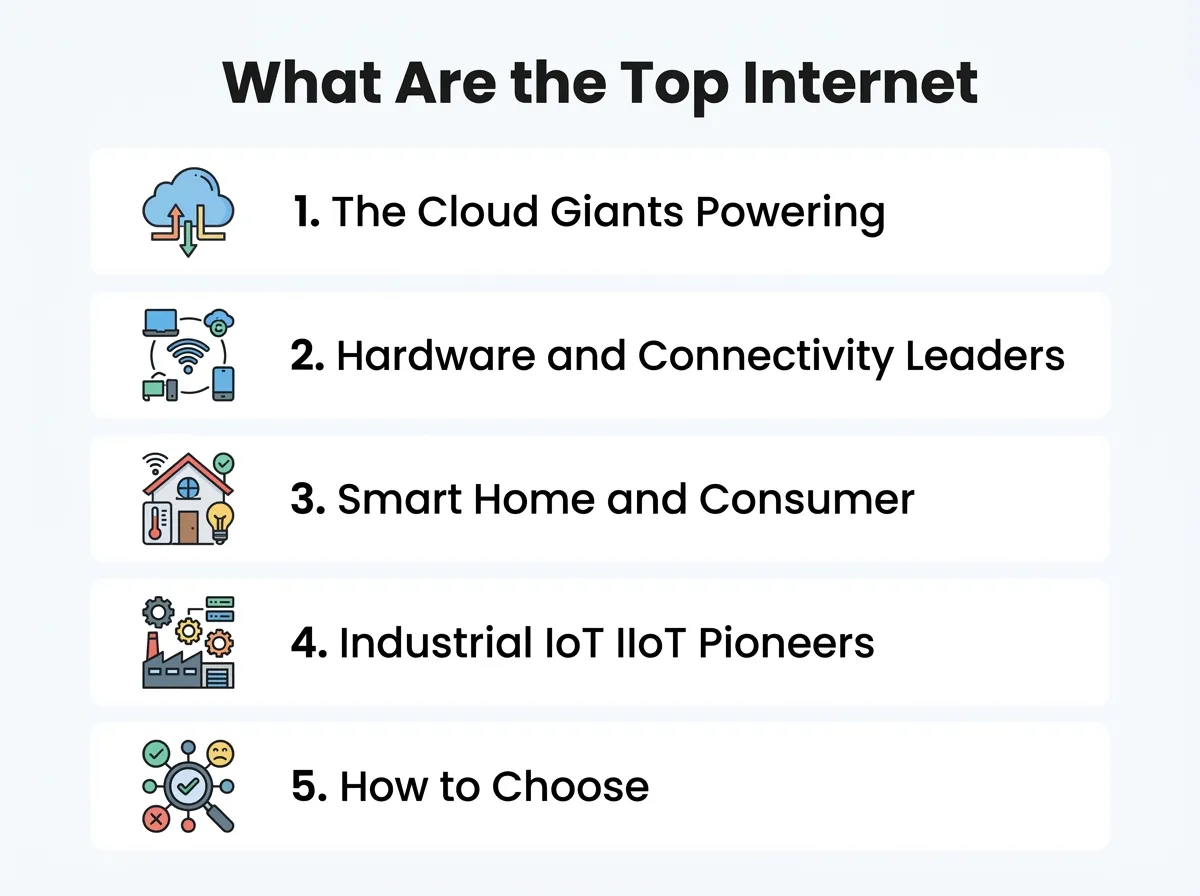
What Are the Top Internet of Things Companies? — key points at a glance
Cisco Systems
Cisco is the undisputed king of computer networking. They make the heavy-duty routers and switches that connect factories, offices, and cities to the internet. Cisco helps companies manage all their connected devices from one central screen. They make sure the data flowing from your smart devices actually reaches its destination safely and quickly.
Qualcomm and Intel
These two tech giants make the tiny brains that sit inside your smart devices. Qualcomm is famous for making energy-efficient chips for mobile phones, smartwatches, and smart cars. Intel, on the other hand, builds powerful processors for heavy-duty industrial machines and smart retail systems. These hardware leaders make up some of the largest IoT enterprises by market value today.
Smart Home and Consumer IoT Innovators
Now, let us talk about the gadgets you can actually buy at your local store. These are the smart devices we use in our daily lives. When average people think about what are the top internet of things companies, they usually think of these smart home pioneers.
Google and Nest
Google bought Nest several years ago, and it was a match made in heaven. Today, Google Nest makes beautiful smart thermostats, security cameras, and smoke detectors. They connect seamlessly with Google Assistant. This allows you to control your entire home using just your voice. You can ask Google to turn down the lights or lock the front door without ever getting off the couch.
Apple and HomeKit
Apple is famous for its sleek design and focus on user privacy. Apple HomeKit lets you control your smart lights, locks, and plugs using your iPhone or Apple Watch. Apple is very strict about security. Every device that wants to work with HomeKit must pass tough security tests. This gives users peace of mind that their smart home is safe from prying eyes.
Samsung SmartThings
Samsung makes almost every appliance you can think of, from TVs to refrigerators. Their SmartThings platform connects all these devices together. What makes Samsung special is how open their platform is. SmartThings works with thousands of devices made by other brands. It is one of the most flexible smart home systems on the market today.
Industrial IoT (IIoT) Pioneers
The Internet of Things is not just for homes. It is also completely changing how we build and manufacture things. Factories, farms, and power plants use smart sensors to work faster and safer. This sector is known as the Industrial Internet of Things.
Siemens
Siemens is a German engineering powerhouse. They build smart factories that can detect problems before they even happen. For example, a smart sensor on a factory machine can tell if a part is getting too hot or vibrating too much. It can alert workers to fix the part before the machine breaks down. This prevents costly shutdowns and keeps factories running smoothly.
General Electric (GE) Digital
GE Digital focuses on big industries like energy, aviation, and manufacturing. They help airlines track the health of jet engines in real-time. They also help power companies manage electric grids to prevent blackouts. Their smart software keeps the modern world moving safely. If you are interested in investing in these industrial giants, you should look into publicly traded IoT stocks to see how they perform over time.
How to Choose the Right IoT Partner
Are you thinking of bringing smart technology into your own business? Choosing the right partner can feel overwhelming because there are so many options. Here are three simple tips to help you make the right choice.
- Look for Strong Security: Because smart devices connect to the internet, they can be targets for hackers. Always choose a partner that uses end-to-end encryption. They should also offer regular, automatic software updates to keep your data safe.
- Check for Compatibility: Your new smart devices need to talk to your existing systems. Choose companies that use open standards. This makes it easy to add new technology in the future without having to start over from scratch.
- Focus on Scalability: Start small, but plan for the future. Your chosen partner should be able to support ten devices today and ten thousand devices tomorrow without slowing down.
The Future of the Internet of Things
The IoT world is moving incredibly fast. Over the next few years, we will see even more exciting changes. We will see the rise of the Artificial Intelligence of Things, or AIoT. This is where smart devices do not just collect data; they actually use AI to make smart decisions on their own.
We will also see the growth of edge computing. This means devices will process data locally instead of sending everything to the cloud. This will make devices react much faster. Combined with super-fast 5G networks, our smart devices will connect instantly with zero lag.
Conclusion
The world of connected devices is growing larger every single day. From the massive cloud servers of Amazon to the smart bulbs in your bedroom, this technology is here to stay. Now you know what are the top internet of things companies driving this massive global revolution. Whether you are a business owner looking to improve efficiency or a tech fan wanting a cooler home, keeping an eye on these industry leaders will help you stay ahead of the curve. The future is connected, and it is happening right now.
Frequently Asked Questions
What is the Internet of Things?
The Internet of Things, or IoT, refers to billions of physical devices around the world that are connected to the internet. These devices collect and share data using sensors, chips, and wireless networks. Examples include smart thermostats, fitness trackers, and connected industrial machines.
What are the top Internet of Things companies?
The top IoT companies include cloud giants like Amazon Web Services (AWS) and Microsoft, networking leaders like Cisco, and smart home innovators like Apple and Google. In the industrial sector, companies like Siemens and GE Digital lead the way. These firms provide the software, hardware, and networks that power connected devices.
How do IoT companies make money?
IoT companies make money in several different ways. Some sell physical hardware like smart sensors, routers, and microchips. Others charge monthly subscription fees for cloud storage and data analysis software. Many companies also make money by offering consulting and setup services to businesses.
Is IoT technology safe to use?
IoT technology is generally safe, but it does come with security risks if not managed properly. Because these devices connect to the internet, they can be targets for hackers. To stay safe, always buy devices from trusted companies, use strong passwords, and keep your software updated.
What is the difference between IoT and IIoT?
IoT refers to general connected devices used by consumers, like smart TVs and smartwatches. IIoT stands for the Industrial Internet of Things, which focuses on heavy industries. IIoT uses smart sensors to monitor factory machines, power grids, and shipping fleets to improve safety and efficiency.
What is the future of IoT?
The future of IoT includes the integration of Artificial Intelligence, which will allow devices to make decisions on their own. We will also see the spread of 5G networks, which will make data transfer much faster. Additionally, edge computing will allow devices to process data locally without always relying on the cloud.
