

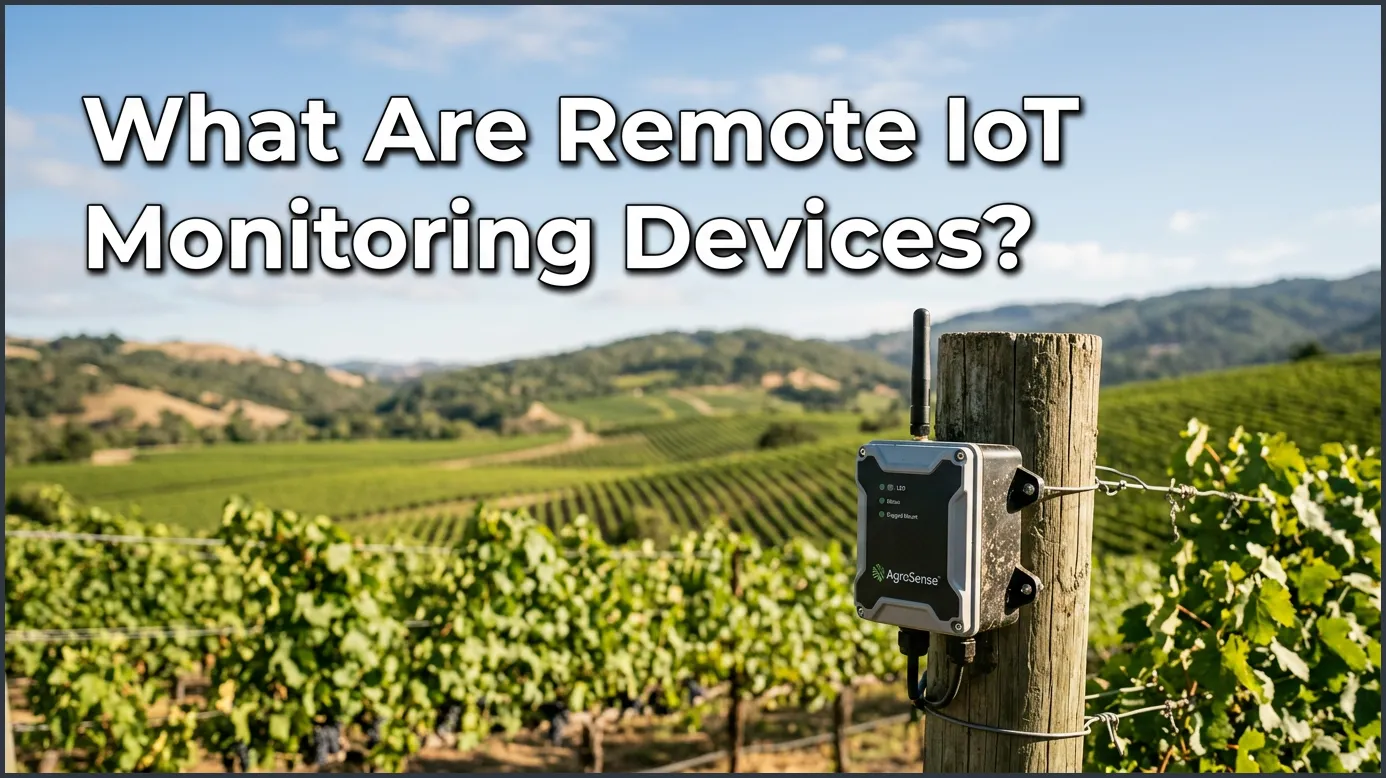
Remote IoT monitoring devices are smart, internet-connected sensors and hardware that collect real-time data from physical assets and send it to a central system. These tools allow businesses and individuals to track performance, detect issues, and manage operations from anywhere in the world without being physically present. By bridging the gap between physical objects and digital networks, they save time, cut costs, and prevent costly breakdowns.
Imagine leaving your office for the weekend. Suddenly, a pipe bursts in the basement. Or think about a cold storage room holding thousands of dollars of medicine. If the power goes out, everything ruins. In the past, you would only find out about these disasters when you walked through the door on Monday morning. By then, it was too late and the damage was already done.
Today, technology keeps us connected to our physical spaces like never before. We no longer have to guess if our equipment is working. Instead, we can use smart tools to check on our assets from anywhere. This brings us to a very common question: what are remote IoT monitoring devices, and how can they help you protect your assets?
In this guide, we will explore these smart tools in simple terms. We will look at how they work, where they are used, and how they make our daily lives much easier and more secure.
Key Takeaways
- Definition: Remote IoT monitoring devices are connected sensors and controllers that collect and send asset data over the internet.
- Real-Time Tracking: They provide instant updates on temperature, pressure, location, and other critical metrics.
- Cost Savings: These devices lower operational costs by predicting maintenance needs before equipment fails.
- Versatile Uses: They are used in many fields, including healthcare, farming, manufacturing, and home automation.
- Easy Management: Users can view data and control equipment from anywhere using cloud dashboards and mobile apps.
📑 Table of Contents
What Are Remote IoT Monitoring Devices?
To understand these tools, let us break down the name. IoT stands for the Internet of Things. This term refers to everyday objects that connect to the internet. When we add smart sensors to these objects, they can share data. Therefore, remote IoT monitoring devices are smart gadgets that track conditions and send that information to your phone or computer.
These devices can track almost anything. They can measure temperature, humidity, movement, vibration, pressure, and even light. They work like quiet security guards that never sleep. They watch over your homes, farms, factories, and offices all day and night.
Instead of manual checks, these tools do the work for you. They collect data and send it through the cloud. This means you do not need to stand next to a machine to know if it is running well. You can see everything on a digital screen from miles away. It is like having a remote control for your entire business or home.
How Do These Smart Devices Work?
The way these systems work is simple but highly effective. It is like a team of messengers working together to deliver important news. We can break the process down into three simple steps.
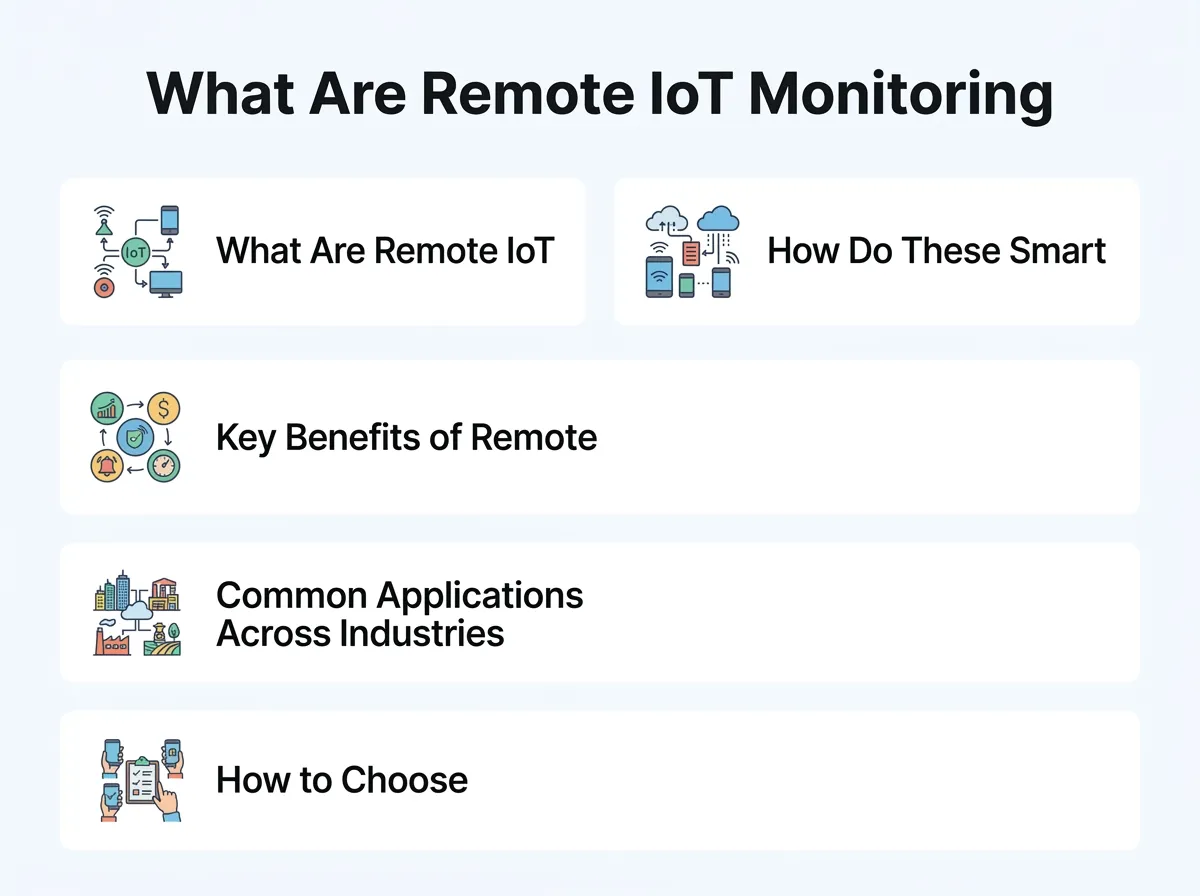
What Are Remote IoT Monitoring Devices? — key points at a glance
Step 1: Data Collection (The Sensors)
Every remote IoT monitoring device has sensors built into it. These sensors act like human eyes and ears. They detect changes in the environment around them. For example, a temperature sensor detects when a room gets too hot. A water sensor detects a tiny drop of moisture on the floor. These sensors constantly take readings, sometimes many times every second.
Step 2: Data Transmission (The Connection)
Once the sensor gathers the data, it needs to send it to you. This is where wireless technology comes in. The device uses network protocols like Wi-Fi, cellular networks, Bluetooth, or satellite signals to send the data. Having a strong connection is vital. Businesses need reliable remote IoT connectivity to ensure their devices never go offline in critical moments.
Step 3: Data Processing and Visualization (The Dashboard)
Finally, the data arrives at a central system, often called a cloud platform. The system processes the raw data and displays it on a user-friendly dashboard. You can open a mobile app or a web browser to see clear charts and numbers. If something is wrong, the system instantly sends you a text message or email alert. This alert lets you act fast before a small issue turns into a big problem.
Key Benefits of Remote IoT Monitoring
Why are so many businesses and homeowners investing in these tools? The answer lies in the huge advantages they offer. Let us look at some of the top benefits.
1. 24/7 Real-Time Awareness
You cannot be in two places at once, but your smart sensors can. These devices give you constant updates. You will always know the exact state of your assets, whether you are at home, on vacation, or asleep. This round-the-clock monitoring removes the guesswork from asset management.
2. Lower Maintenance Costs
Fixing a broken machine is expensive. On the other hand, fixing a small issue before it causes a breakdown is cheap. Learning how IoT makes remote monitoring more efficient helps businesses move from reactive repairs to predictive maintenance. This shift saves a lot of money and prevents downtime.
3. Better Decision Making
When you have months of accurate data, you can spot trends. You can see when your machines run slow or when your energy use spikes. This historical data helps you make smart choices for the future. You can plan upgrades based on facts rather than guesses.
Common Applications Across Industries
Remote IoT monitoring devices are not just for tech companies. They are used in almost every industry you can think of. Here are a few great examples of how they make a difference every day.
Smart Agriculture and Farming
Farmers use smart sensors to track soil moisture, weather conditions, and livestock health. Instead of watering a whole field, they can water only the dry spots. This saves water and helps crops grow better. It also helps farmers keep an eye on distant fields without driving miles every day.
Healthcare and Medical Storage
In hospitals, keeping vaccines and medicines at the right temperature is a matter of life and death. Smart sensors monitor medical fridges constantly. If the temperature rises by even one degree, the staff gets an immediate alert. This protects precious medicine and keeps patients safe.
Manufacturing and Industrial Plants
Factories use heavy machines that must run smoothly. Vibration sensors can detect if a motor is starting to wobble. This tiny shake is invisible to the human eye, but the sensor catches it early. This allows workers to fix the part before the whole assembly line stops. It keeps production moving and keeps workers safe.
Smart Homes and Building Management
For everyday people, these devices offer peace of mind. Smart thermostats adjust the heat when you leave the house to save energy. Smart water detectors warn you of a leak under your kitchen sink. It makes managing a home simple and stress-free. You can lock your doors and check your security cameras from your phone.
How to Choose the Right IoT Monitoring System
If you are ready to start using these tools, here are a few practical tips to keep in mind as you shop around:
- Check the battery life: Some sensors need to last for years on a single battery. Look for low-power options that do not need constant battery changes.
- Look for easy software: Make sure the app or dashboard is easy to read. You should not need a computer science degree to understand your data.
- Think about scalability: Start with a few devices. Make sure you can easily add more sensors as your needs grow over time.
- Calculate the value: Before buying, look at the potential savings. Many companies find that calculating the return on investment of these systems proves they pay for themselves very quickly by preventing major disasters.
Is Your Data Safe? IoT Security Explained
With so many devices connected to the internet, you might worry about safety. This is a very common and smart concern. After all, you do not want strangers looking at your data or controlling your devices.
Good IoT devices use strong encryption. This means they scramble the data so that only you can read it. It is also important to change default passwords as soon as you set up a new device. Keeping your software updated is another simple way to keep your system safe. When you follow these simple steps, your remote monitoring system stays secure and private.
Conclusion
So, what are remote IoT monitoring devices? They are your eyes and ears when you are not there. They turn quiet, physical assets into smart, talking devices that keep you informed. By using these tools, you can protect your assets, save money, and enjoy peace of mind.
Whether you want to protect your home from water damage or keep a large factory running smoothly, remote IoT devices are the key to a safer, more efficient future. They make our world more connected and much easier to manage.
Frequently Asked Questions
What are remote IoT monitoring devices?
These are smart, internet-connected sensors and hardware that track physical conditions like temperature or pressure from a distance. They collect real-time data and send it directly to your phone or computer dashboard. This allows you to manage and protect your assets without being physically present.
Do these devices require a Wi-Fi connection?
While many devices use Wi-Fi, they do not always require it. Many systems use cellular networks, Bluetooth, or even satellite connections to send data. This flexibility allows them to work in remote areas like farms or deep industrial sites.
How long do the batteries last in these sensors?
Battery life depends on the device and how often it sends data. Many low-power sensors can last between 5 to 10 years on a single charge. Devices that send massive amounts of real-time video or data will need more frequent charging or a direct power source.
Can I monitor multiple locations at the same time?
Yes, one of the best features of these systems is their ability to centralize data. You can connect hundreds of sensors across different cities or countries to a single online dashboard. This gives you a complete overview of all your locations in one place.
Are remote IoT monitoring devices secure?
Yes, modern devices use strong encryption and secure communication protocols to protect your data. To keep your system safe, always change default passwords and keep your software updated. These simple steps prevent unauthorized access to your network.
What industries benefit the most from IoT monitoring?
Almost every industry benefits, but healthcare, agriculture, manufacturing, and logistics see the biggest impact. They use these devices to monitor temperature-sensitive goods, track soil quality, and predict machine failures before they happen. Homeowners also use them for smart security and energy savings.
