


The best temperature and humidity sensor depends on your specific needs. For smart homes, the Govee WiFi Hygrometer is the top choice due to its easy app alerts and budget-friendly price. For DIY makers and industrial environments, dedicated digital probes offer the highest precision and reliability.
Imagine waking up in a freezing room. Or think about walking into your basement and feeling a heavy, damp chill. We all want our homes to feel cozy and safe. We also want to protect our plants, musical instruments, and wooden floors from damage. Excess moisture can cause toxic mold to grow, while dry air can ruin your sleep.
Knowing the exact state of your indoor air is the first step to fixing these problems. That is why many people find themselves asking: What Is the Best Temperature and Humidity Sensor? With so many models on the store shelves, the choice can feel overwhelming.
In this guide, we will break down the top options for every situation. We will look at smart home monitors, budget choices, and DIY parts. By the end, you will know exactly which sensor fits your home, hobby, or business budget.
Key Takeaways
- Smart Homes: The Govee WiFi sensor offers the best balance of price, wireless range, and app alerts.
- DIY Projects: The DHT22 and BME280 are cheap, reliable, and easy to connect to Arduino boards.
- Smart Ecosystems: Look for Matter or Zigbee compatibility to connect your sensor to Apple Home, Alexa, or Google Home.
- Industrial Settings: High-precision wall transmitters are required for commercial HVAC and cleanrooms.
- Battery Life: E-ink screens and Bluetooth sensors offer the longest battery life, often lasting over a year.
📑 Table of Contents
The Best Smart Home Sensors for Daily Use
If you want to track your home climate from anywhere, a wireless model is your best bet. You can read more about the top models in this guide to the best WiFi temperature sensor options. These smart devices connect directly to your phone. They send alerts if the air gets too dry or too hot.
Govee WiFi Hygrometer Thermometer
Govee makes some of the most popular sensors on the market today. This small device connects to both WiFi and Bluetooth. It has a bright LCD screen that shows the current readings. The Govee app is very easy to use. It stores your data for two years for free. You can set safe zones, and the app will ping your phone if the air goes out of bounds.
Ecobee SmartSensor
If you already own an Ecobee smart thermostat, these sensors are a perfect match. They do not just measure the air near your thermostat. You can place them in bedrooms, kitchens, or basements. They tell your HVAC system when a specific room gets too hot or cold. This helps balance the temperature across your entire house.
Why Connectivity Standards Matter
When searching for What Is the Best Temperature and Humidity Sensor?, you must think about how the device talks to your phone. Different wireless protocols have different strengths. Choosing the right one will save you a lot of battery life and headache.
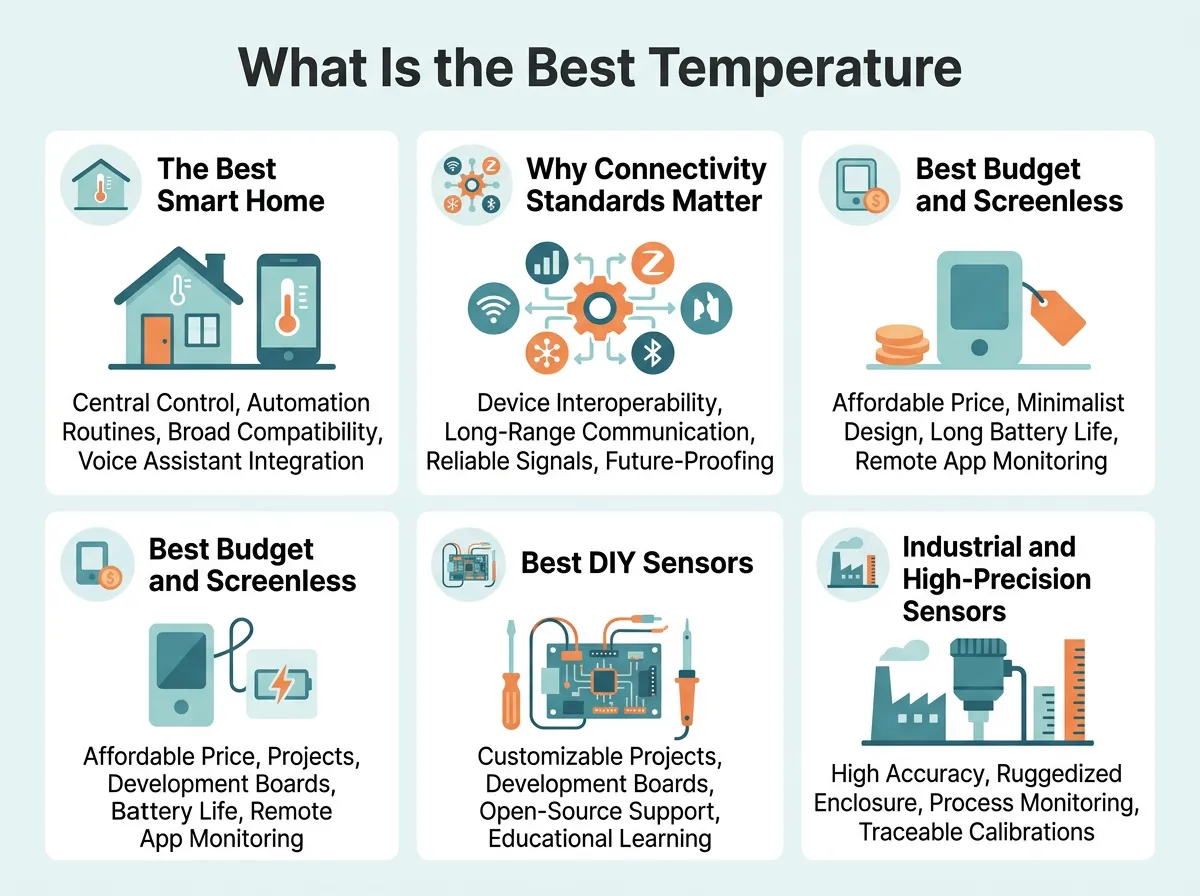
What Is the Best Temperature and Humidity Sensor? — key points at a glance
WiFi vs. Bluetooth
WiFi sensors connect directly to your home router. You can check your indoor climate even when you are away on vacation. However, WiFi uses a lot of power. These sensors need frequent battery changes. Bluetooth sensors use very little power. Their batteries can last for a whole year. The downside is that you can only read them when you are close to the device.
Zigbee and Matter Protocols
Newer devices use advanced smart standards. If you are building a modern smart home, you might want to look for gadgets that support the latest Matter temperature sensor protocols for easy setup. Zigbee and Matter sensors do not overload your WiFi router. They talk to a central hub instead. This keeps your smart home fast and responsive.
Best Budget and Screenless Options
You do not need to spend a fortune to get accurate readings. Many great options cost less than twenty dollars. These are perfect if you want to place a sensor in every room of your house.
Xiaomi Mijia Bluetooth Thermometer
If you ask What Is the Best Temperature and Humidity Sensor? on a tight budget, the Xiaomi Mijia is a top contender. It is tiny and uses a clear digital screen. It connects via Bluetooth to your phone. It runs on a single coin cell battery that lasts for months. It is simple, clean, and highly affordable.
SwitchBot Thermometer and Hygrometer
SwitchBot makes a great screenless sensor. It is very small and light. You can stick it inside a guitar case, a cigar humidor, or a reptile cage. It stores local data for up to thirty days. If you pair it with the SwitchBot Hub, you can control your air conditioner or humidifier automatically.
Best DIY Sensors for Makers and Hobbyists
Maybe you do not want a pre-made consumer product. Perhaps you want to build your own smart greenhouse, weather station, or automated fan. For makers, there are many Arduino compatible temperature sensors that cost only a few dollars.
The DHT22 (AM2302) Sensor
The DHT22 is a classic choice for beginners. It has a basic digital output. It can measure humidity from zero to one hundred percent. It is very easy to wire up to a Raspberry Pi or an Arduino. While it is not the fastest sensor, it is highly reliable for simple home projects.
The BME280 Sensor
If you want more than just temperature and humidity, the BME280 is amazing. This tiny chip also measures barometric pressure. This extra data lets you predict the weather or measure altitude. It is highly precise and communicates using fast digital protocols.
Industrial and High-Precision Sensors
For commercial buildings, the question of What Is the Best Temperature and Humidity Sensor? changes completely. Regular home sensors are not tough enough. Offices, hospitals, and server rooms need heavy-duty tools.
Wall-Mounted Transmitters
In cleanrooms or commercial offices, professionals rely on heavy-duty HVAC humidity sensors to maintain air quality standards. These devices are hardwired into the building’s electrical system. They have tough outer shells to protect them from dust and water. They offer highly accurate readings that do not drift over time.
Duct-Mounted Probes
These sensors sit directly inside the heating and cooling ducts. They measure the air as it moves through the building. This helps the HVAC system react quickly to changing weather. They are essential for keeping large offices comfortable and energy-efficient.
How to Choose Your Perfect Sensor
To find the absolute best match for your needs, keep these simple tips in mind before you buy.
- Check the Accuracy Range: Look for sensors with an accuracy of plus or minus 0.5 degrees. Cheap sensors can sometimes be off by several degrees.
- Look at the Display: Do you want to read the numbers on the wall? Or do you only want to look at your phone? Screenless sensors are smaller and have better battery life.
- Think About Placement: Keep your sensor away from direct sunlight, drafty windows, and heating vents. These spots will give you false readings.
Conclusion
So, What Is the Best Temperature and Humidity Sensor? for your home? If you want an easy, smart experience, the Govee WiFi sensor is hard to beat. It is cheap, accurate, and sends great alerts. If you love DIY projects, grab a BME280 chip. For businesses, a dedicated wall transmitter is worth the investment. No matter which option you choose, tracking your air quality is a smart step toward a healthier, more comfortable life.
Frequently Asked Questions
What is the ideal indoor humidity level?
The ideal indoor humidity level is between 30% and 50%. Keeping your home in this range prevents mold growth and keeps your skin comfortable. You can easily track this with any basic digital sensor.
Do I need a WiFi sensor or a Bluetooth sensor?
Choose WiFi if you want to check your home’s air while you are away. Choose Bluetooth if you only care about reading the data while you are inside the house. Bluetooth sensors also have much longer battery life.
Where is the best place to put a humidity sensor?
Place your sensor on an interior wall at eye level. Keep it away from radiators, air vents, direct sunlight, and wet areas like kitchen sinks. This ensures you get an accurate reading of the room’s average air.
How often should I calibrate my sensor?
Basic home sensors rarely need calibration and should last for years. However, high-end industrial sensors should be checked and calibrated once a year. This keeps the readings highly accurate for sensitive environments.
Can these sensors help me save money on energy bills?
Yes, they can save you money if you link them to a smart thermostat. By monitoring cold or hot spots, your heating system can run more efficiently. This prevents you from wasting energy on empty rooms.
What is the difference between DHT11 and DHT22 DIY sensors?
The DHT22 is much more accurate and has a wider measuring range than the cheaper DHT11. The DHT22 can measure below-freezing temperatures and up to 100% humidity. It is worth the tiny extra cost for any DIY project.
