


Finding the right connectivity for smart devices is crucial for modern businesses. The best eSIM solutions for IoT combine global coverage, robust remote management, and advanced security to keep your devices online. Choosing a reliable provider will simplify deployment and help you scale your network effortlessly.
Imagine you need to deploy thousands of smart water meters across different states. Or picture a fleet of shipping trucks crossing international borders every day. In the past, managing the cellular connections for these devices was a logistics nightmare. If a network provider changed its pricing or went out of business, you had to send a technician to physically swap out every plastic SIM card. This process was costly, slow, and prone to human error.
Today, smart businesses have a better option. Embedded SIM technology, or eSIM, changes the game for connected hardware. By soldering a tiny chip directly onto a device circuit board, companies can manage connections from a computer screen. But with so many network vendors out there, how do you find the right fit? In this guide, we will look closely at what are the best eSIM solutions for IoT applications and how they can help your business grow.
Key Takeaways
- Seamless Global Roaming: Top eSIM solutions offer multi-carrier support to prevent single points of network failure.
- OTA Remote Management: Over-the-air updates let you change carrier profiles on thousands of devices instantly.
- Enhanced Security: eSIMs provide hardware-grade security to protect sensitive business data.
- Cost-Effective Scaling: Eliminating physical SIM swaps saves time, labor, and long-term operational costs.
- Industrial Durability: M2M eSIMs can withstand extreme temperatures and vibration better than plastic cards.
📑 Table of Contents
What is an eSIM for IoT?
An eSIM is not just a smaller SIM card. It is a smart chip that is built directly into a device during the manufacturing phase. The term eSIM refers to the physical chip, which is often called an eUICC (embedded Universal Integrated Circuit Card). Unlike old SIM cards that only hold one network profile, an eSIM can hold multiple profiles at the same time.
How eSIMs Differ from Traditional SIMs
Traditional SIM cards are locked to one carrier. If you want to change carriers, you have to buy new plastic cards and slide them into each device. This is highly impractical for smart devices that are sealed inside waterproof cases, buried underground, or high up on utility poles. An eSIM solves this issue by allowing you to download new carrier settings through the air. You can learn more about how this works by reading the Kigen eSIM uses white paper, which explains real-world deployment cases.
Crucial Features of Top-Tier IoT eSIM Solutions
Not all eSIM platforms are created equal. When looking for the best system for your company, you should focus on a few vital features. These features will ensure your devices stay online without driving up your monthly bill.
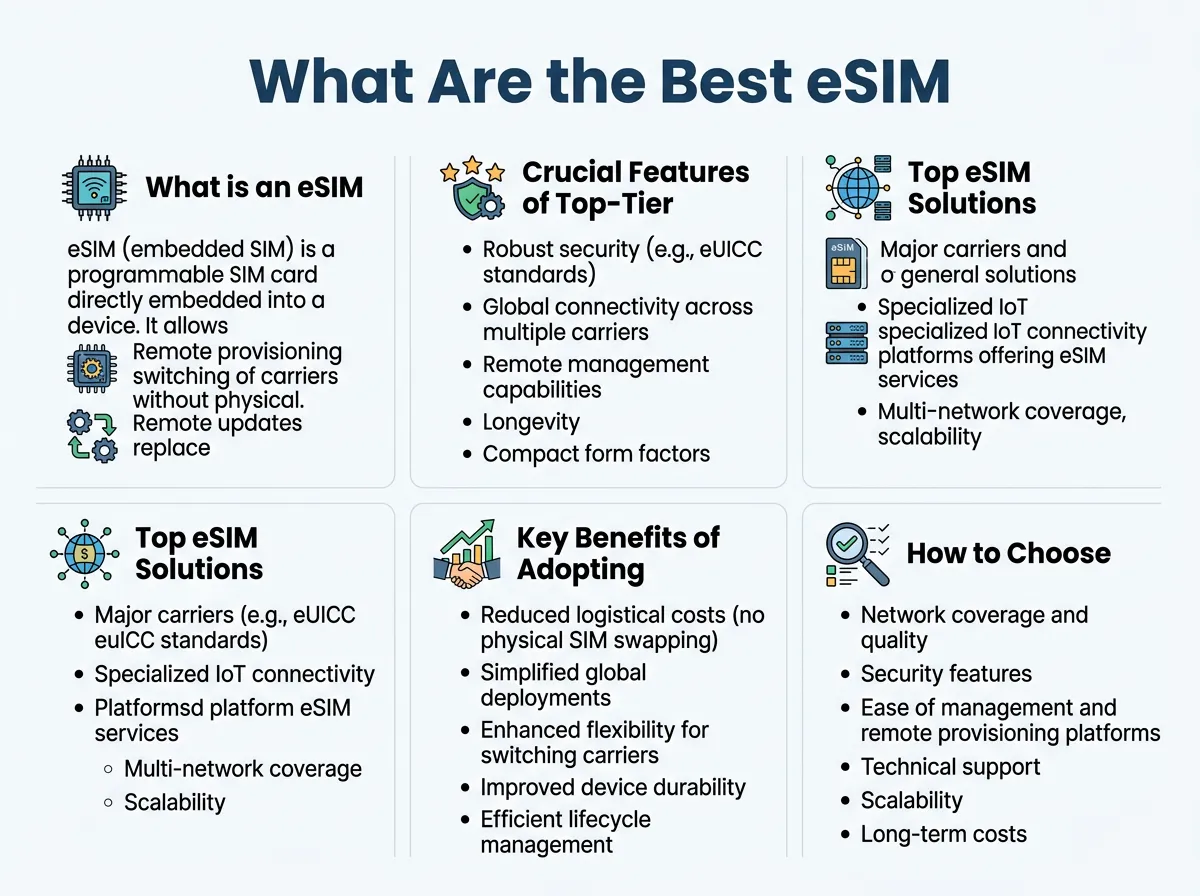
What Are the Best eSIM Solutions for IoT Applications? — key points at a glance
Remote Over-the-Air (OTA) Provisioning
This is the most important feature of any eSIM. OTA provisioning allows you to send new network profiles, software updates, and security patches to your devices remotely. You do not need to touch the physical device. This is a lifesaver if your devices are scattered across different cities or countries.
Multi-Carrier Auto-Switching
Smart devices often move around. A delivery truck might drive through areas where one network has a weak signal but another network is strong. The best eSIM solutions can detect a weak signal and automatically switch to a stronger local network. This keeps your data flowing without interruption.
Rugged Hardware Standards
Consumer eSIMs in smartphones are delicate. IoT devices, however, often operate in harsh environments. They might face extreme heat, freezing cold, or constant shaking. Look for eSIM chips designed to withstand these tough conditions. These are often called industrial-grade or M2M (machine-to-machine) eSIMs.
Top eSIM Solutions on the Market Today
Finding the right provider depends on your business scale and industry. Here are some of the most reliable eSIM solutions available today.
IDEMIA eSIM Solutions
If security is your top concern, IDEMIA is a strong choice. They offer robust connectivity solutions tailored for automotive, utilities, and smart home tech. Their platforms make it easy to manage keys and protect device data from hackers. You can explore the IDEMIA eSIM IoT offerings to see how they handle global scaling and strict security protocols.
Hologram IoT
Hologram is a favorite for startups and growing enterprises. They provide a user-friendly dashboard that lets you see all your active devices in one place. Hologram operates on a global network, meaning their eSIMs can connect to hundreds of carriers worldwide. This is perfect for fleet tracking and logistics companies that need seamless coverage.
Soracom
Soracom focuses on cloud integration. If your business relies heavily on Amazon Web Services (AWS) or Microsoft Azure, Soracom makes it simple to send your device data directly to your cloud databases. They offer flexible pay-as-you-go pricing, which is great for small projects that want to start small and grow later.
Kigen
Kigen works closely with security leaders and chip makers. They focus on making eSIM tech simple and secure. Their software fits onto very small chips, which is ideal for tiny smart sensors that run on small batteries. This makes Kigen a top pick for smart agriculture and environmental monitoring.
Key Benefits of Adopting eSIM for Smart Networks
Switching to eSIM technology can transform how your business operates. Here are the main benefits you can expect.
Reduced Operational Overhead
Think about the cost of labor. Sending a worker to change a SIM card takes time and money. With eSIM, a single IT worker can update thousands of devices from an office desk. This saves massive amounts of money as your business grows.
Future-Proofing Smart Assets
Smart devices are meant to last for years. A smart water meter might stay in the ground for a decade. Over ten years, carrier rates and technologies will change. An eSIM ensures that your hardware can adapt to future networks without needing to be replaced.
How to Choose the Perfect eSIM Partner for Your Project
With so many great choices, picking the best one can feel tough. It helps to follow a simple checklist to narrow down your options. First, look at where your devices will be. Make sure the provider offers strong coverage in those specific regions. Second, test the user dashboard. It should be clean, easy to read, and simple to use.
Finally, read guides on how to choose the best eSIM solution for your IoT device. This will help you avoid common mistakes, such as choosing a plan with hidden data fees or poor customer support.
Evaluate the Cost Structure
Some providers charge a flat monthly fee per device. Others charge based on the exact amount of data you use. For devices that only send small text updates once a day, a pay-as-you-go plan is usually best. For video cameras, a high-data flat-rate plan is a better choice.
Conclusion
Finding the right connection is the secret to a successful smart device network. The best eSIM solutions for IoT applications remove the headaches of physical SIM cards. They keep your devices online, protect your data, and save you money. By choosing a reliable partner like IDEMIA, Hologram, or Kigen, you can focus on growing your business while your devices stay connected around the world.
Frequently Asked Questions
Can I use a normal consumer eSIM for IoT devices?
No, consumer eSIMs are not ideal for IoT applications. Consumer eSIMs are made for smartphones and tablets, whereas IoT eSIMs are ruggedized to handle harsh temperatures, vibrations, and remote management for years.
What does OTA stand for in eSIM tech?
OTA stands for Over-the-Air. This technology allows you to update carrier profiles, change networks, and push security updates to your devices remotely without physical contact.
Is an eSIM more secure than a physical SIM card?
Yes, eSIMs are highly secure because they are soldered directly onto the device circuit board. This prevents thieves from removing the SIM card to steal data or use your cellular plan on another device.
How many carrier profiles can an eSIM hold?
Most modern eSIMs can hold up to eight different carrier profiles at the same time. However, only one profile can be active and in use at any given moment.
Do eSIMs save money for businesses?
Yes, they save money by reducing the labor costs of manual SIM swaps. They also prevent roaming charges by allowing devices to switch automatically to cheaper local networks.
Which industries benefit the most from IoT eSIMs?
Industries like fleet tracking, smart agriculture, utility metering, and micromobility benefit the most. Any business with devices spread over large or remote areas will find eSIMs highly useful.
