


Finding the right connectivity partner is vital for modern device networks. The best smart eSIM internet service providers for IoT offer global coverage, flexible data plans, and seamless remote management. Leading choices like FloLIVE, Pelion, and Onomondo stand out for their robust security, carrier-agnostic networks, and ease of scaling.
Imagine you are building a smart city project. You have to install ten thousand smart streetlights across a major region. Each light needs a constant internet connection to report energy use. Now, think about the old way of doing things. You would have to insert a small plastic SIM card into every single light. What happens if you need to change your network provider next year? Sending workers to climb ten thousand poles would cost a fortune.
This is where smart eSIM technology comes to the rescue. It changes how we connect machines to the internet. Instead of swapping physical cards, you can change network profiles through software. But with so many options out there, how do you choose? In this guide, we will answer: Who Are the Best Smart eSIM Internet Service Providers for IoT? We will look at top features, look at the best providers, and share tips to help you choose the right one for your business.
Key Takeaways
- Easy Updates: Smart eSIMs allow you to update network profiles remotely over the air.
- Global Reach: Top providers offer access to hundreds of networks worldwide on a single SIM.
- Auto-Switching: Devices can switch carriers automatically to maintain the best signal.
- Lower Latency: Providers with local packet gateways offer much faster response times.
- Better Security: Advanced platforms secure your data with private networks and VPNs.
- Future-Proofing: eSIM technology prevents vendor lock-in and extends device lifespan.
📑 Table of Contents
- What Makes an eSIM “Smart” for IoT?
- Consumer eSIM vs. IoT eSIM: What Is the Difference?
- Who Are the Best Smart eSIM Internet Service Providers for IoT?
- What to Consider When Comparing Providers
- Practical Examples: eSIMs in Action
- Tips for a Successful eSIM Deployment
- Finding Your Perfect IoT Partner
What Makes an eSIM “Smart” for IoT?
An eSIM is not just a smaller SIM card. It is a smart chip built directly into your device. It is also known as an eUICC. This technology lets you download new profiles over the air without touching the hardware.
Over-the-Air (OTA) Updates
You do not need to physically touch your devices to change carriers. You can update thousands of devices at once with a click. This saves huge amounts of time and money. It also keeps your devices running without interruption.
Multi-Network Auto-Switching
A smart eSIM knows when a network signal is weak. It can switch to a stronger local network automatically. This keeps your devices online, no matter where they travel. It is perfect for tracking cargo or running sensors in remote areas.
Consumer eSIM vs. IoT eSIM: What Is the Difference?
It is easy to get confused about eSIMs. You might already have an eSIM in your smartphone. However, an IoT eSIM is very different from a consumer eSIM.
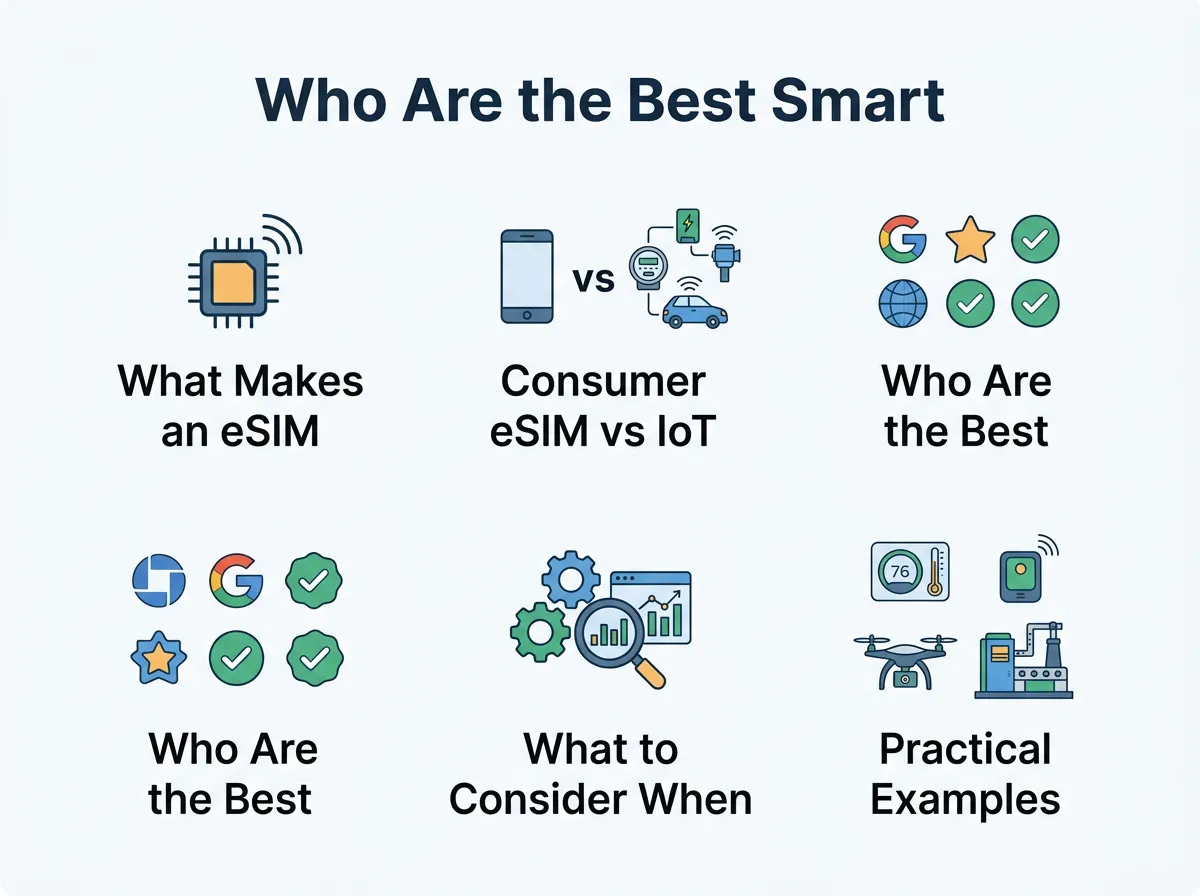
Who Are the Best Smart eSIM Internet Service Providers for IoT? — key points at a glance
Consumer eSIM
A consumer eSIM is made for one user. You scan a QR code to download a plan. It connects your phone to a single carrier. You manage it directly on your device screen. It is simple, but it does not scale.
IoT eSIM
An IoT eSIM is built for thousands of devices. It does not use QR codes. Instead, it uses a central platform. This platform lets you push profiles to all devices at once. It also must work in harsh environments. IoT eSIM chips can handle extreme heat, freezing cold, and constant vibrations.
Who Are the Best Smart eSIM Internet Service Providers for IoT?
Now, let’s explore the leading names in the industry. These companies help businesses stay connected everywhere.
FloLIVE
FloLIVE provides a unique approach to global connection. They have built a huge local network of networks. They use local core networks in many countries. This means your devices get local connectivity wherever they go. It reduces data delays and helps you follow local laws. If you want to see how they rank against others, you can check out some of the recommended IoT connectivity solutions available today.
Pelion
Pelion is a great choice for businesses that want a simple setup. They offer a single contract for global coverage. This means you do not have to negotiate with multiple carriers. Their platform makes it easy to manage devices. They are highly recognized as one of the top IoT eSIM providers because of their solid device management tools.
Onomondo
Onomondo does things differently. They redesigned the core cellular network for the cloud. This removes unnecessary steps in data transfer. As a result, your devices use less power. This can make a huge difference for battery-powered sensors. They are widely regarded as one of the best connectivity options for large fleets that travel across borders.
Emnify
Emnify offers a cloud-native platform. It integrates easily with your existing cloud tools. They focus heavily on security. They provide private networks to keep your data safe. Their pay-as-you-go pricing model is also great for growing startups.
1oT
1oT is known for its excellent user interface. Their platform, called 1oT Terminal, is very clean. It gives you full control over your SIM cards. You can lock carriers, check data limits, and swap profiles easily. They are perfect for small to medium businesses.
What to Consider When Comparing Providers
When searching for the right partner, you must look past the price tag. Here are some hidden factors that can make or break your deployment.
Local Regulations and Permanent Roaming
Some countries do not allow permanent roaming. This means a foreign SIM cannot stay on their network forever. Brazil and Turkey are good examples of this rule. A smart eSIM provider must have local profiles. This lets your device switch to a local profile to stay compliant with local laws.
API Access and Integration
You do not want to log into another website to check your devices. You want the data in your own software. A good provider offers powerful APIs. This allows your systems to talk directly to the eSIM platform.
Customer Support
IoT networks run 24/7. If a network goes down, you need help right away. Look for providers that offer round-the-clock support. Check reviews to see how fast they respond to issues.
Practical Examples: eSIMs in Action
Let’s look at how smart eSIMs solve real-world problems today.
Smart Agriculture
Imagine placing soil sensors across miles of farmland. These sensors monitor water levels. They run on small batteries. A smart eSIM ensures they use the best network with the lowest power. This keeps the batteries alive for years.
Global Cargo Tracking
A cargo container travels from Asia to Europe. It crosses many countries. With a normal SIM, it might lose signal at borders. With a smart eSIM, the container switches networks smoothly. You never lose sight of your shipment.
Tips for a Successful eSIM Deployment
To make your transition smooth, follow these simple steps.
- Choose the Right Form Factor: eSIMs come in different shapes. Some are removable plastic chips. Others are soldered directly onto the circuit board. Solderable eSIMs are much more secure and durable.
- Plan Your Data Usage: Know how much data your devices will use. Some sensors only send a few bytes a day. Other devices, like security cameras, use gigabytes. Choose a plan that fits your exact needs.
- Secure Your Devices: Never use default passwords on your devices. Use your eSIM provider’s private network features to hide your devices from the public internet.
- Start with a Pilot: Run a small test first. Put ten devices in the field for a month. This helps you spot any software or signal issues early.
Finding Your Perfect IoT Partner
Choosing the right provider can feel overwhelming. There are many great options. But by focusing on your specific needs, you can find the perfect match. Remember to test a few devices before making a big purchase. A good smart eSIM provider will be happy to help you set up a trial. Once you find the right fit, you can scale your IoT business with confidence.
Frequently Asked Questions
What is an eSIM for IoT?
An IoT eSIM is a smart chip built into devices that allows remote network provisioning. It lets you change carrier profiles over the air without replacing physical SIM cards. This is essential for managing large fleets of connected devices.
Can I switch carriers on an IoT eSIM?
Yes, you can switch carriers remotely using a central management platform. The provider sends a new profile to the device over the air. This makes it easy to change networks when you find better rates or coverage.
How does permanent roaming affect IoT eSIMs?
Some countries ban devices from roaming on foreign networks permanently. A smart eSIM provider solves this by downloading a local network profile to the device. This keeps your deployment compliant with local laws.
Are IoT eSIMs more expensive than physical SIMs?
While the initial cost of an eSIM chip can be slightly higher, it saves money in the long run. You avoid the costs of shipping and manually replacing plastic SIM cards. It also reduces downtime by offering better network reliability.
Is eSIM secure for IoT?
Yes, eSIMs are highly secure. They are soldered onto the device board, making them nearly impossible to steal or tamper with. Many providers also offer private networks and secure VPNs to protect your data.
Can I use a consumer eSIM for IoT devices?
No, consumer eSIMs are designed for single users and manual setup via QR codes. IoT eSIMs are built for mass deployment, industrial environments, and remote management through centralized platforms.
