


Finding the best multi-network SIM for IoT depends on your coverage needs, device mobility, and scaling plans. While eUICC eSIMs offer the ultimate flexibility by allowing you to switch carriers over the air, leading providers like Hologram, Things Mobile, and EMnify offer robust global networks. Choosing a SIM with auto-steering capabilities ensures your devices always connect to the strongest available signal.
Imagine you just shipped one thousand smart tracking devices to customers across the country. They leave your warehouse, cross state lines, and pass through deep valleys. Suddenly, half of your devices go silent. They entered a zone where your primary cellular carrier has zero coverage. This is a nightmare scenario for any business. It highlights why relying on a single network is a major risk. To keep your fleet online, you need a solution that hops from network to network seamlessly.
This challenge brings us to a vital question. What is the best multi-network SIM for IoT deployments? The answer is not the same for everyone. It depends on where your devices go, how much data they use, and how you want to manage them. In this guide, we will break down how these smart SIMs work. We will also look at the top choices on the market to help you make the right choice for your project.
Whether you run a fleet of rental scooters, smart utility meters, or farm sensors, you need reliable uptime. Let us dive into the world of multi-carrier connectivity and find the perfect match for your business.
Key Takeaways
- No Single Network Rules: Multi-network SIMs prevent downtime by letting your devices switch to another carrier when one signal drops.
- Auto-Steering is Vital: Look for SIM cards that automatically find and connect to the strongest network without manual work.
- eUICC Adds Future-Proofing: Using eUICC-enabled SIMs allows you to update carrier profiles over the air without changing physical cards.
- Watch Out for Latency: Some global SIMs route data through distant servers, which can slow down real-time tracking.
- Flexible Pricing Matters: Choose vendors that offer shared data pools to avoid heavy fees when some devices use more data than others.
📑 Table of Contents
What Is a Multi-Network SIM and Why Do You Need It?
A standard SIM card in your smartphone links to one cellular company. If that company has a dead zone, you lose your connection. For a consumer, this is a minor annoyance. For a business with automated machines, it is a costly disaster. A multi-network SIM card can connect to many different cellular networks using a single chip.
The Problem with Single-Carrier SIMs
If you deploy devices globally, using single-carrier SIMs is a logistics headache. You would have to buy different SIM cards for different countries. You would have to manage multiple bills. Even within one country, local coverage varies. A network that works great in the city might fail completely in the countryside. Managing these gaps manually is almost impossible when you scale up.
How Multi-Network SIMs Solve the Coverage Gap
A multi-network SIM acts like an open passport. When a device boot up, the SIM looks for available signals. If Carrier A is weak, the SIM connects to Carrier B. This process happens in seconds. Your device stays online, and your data keeps flowing. This setup saves you from sending technicians into the field just to swap out dead SIM cards.
Key Features to Look For in an IoT SIM
Not all multi-carrier SIMs are built the same way. Some are smart and fast, while others might get stuck on weak networks. Here are the key features you must check before making a purchase.
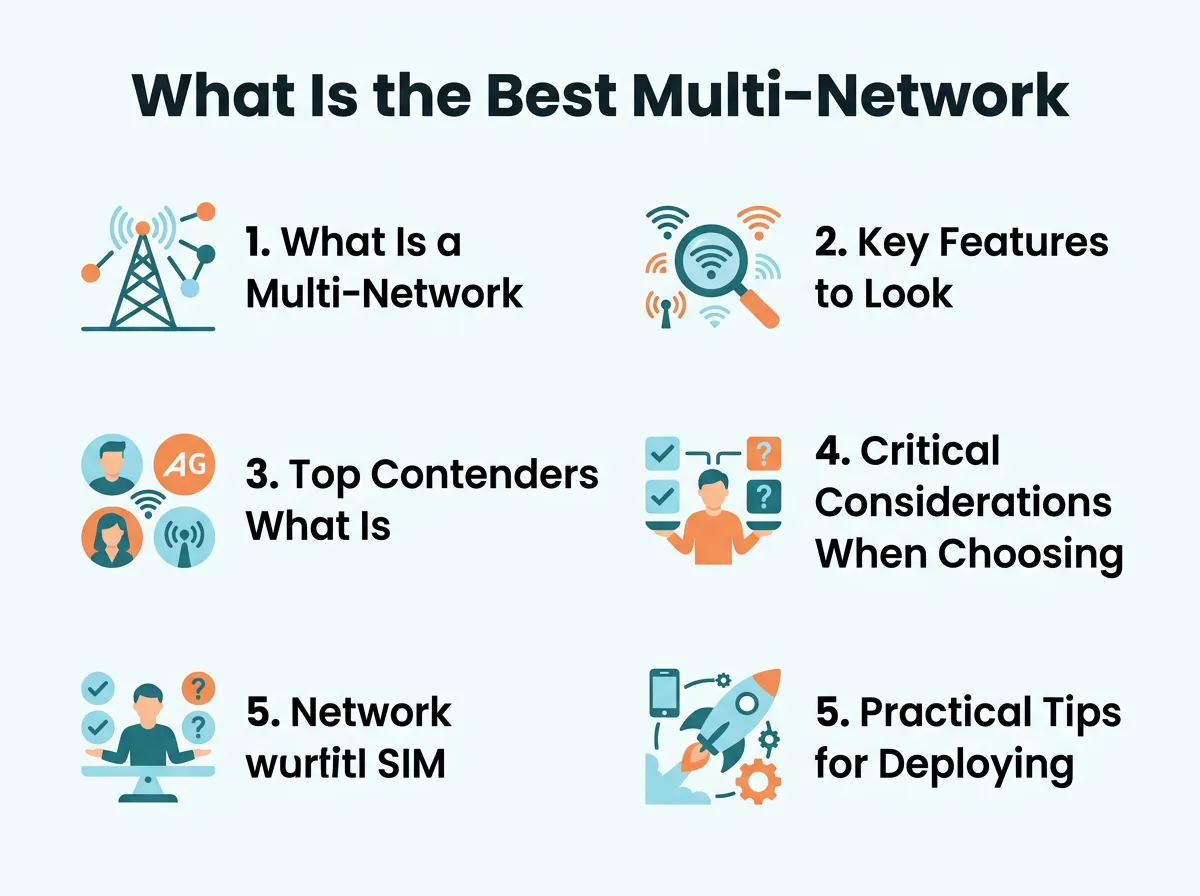
What Is the Best Multi-Network SIM for IoT? — key points at a glance
Network Steering: Active vs. Passive
Network steering is how a SIM decides which network to join. Passive steering lets the device connect to any network on its approved list. Active steering forces the SIM to connect to a preferred partner network first. Be careful here. Sometimes, active steering forces a device to stay on a weak network because it is cheaper for the vendor. You want a SIM with smart auto-steering that prioritizes signal strength over vendor cost.
eUICC and eSIM Technology
If you want to future-proof your setup, look for eUICC technology. But what does this mean? Standard SIMs lock you into one vendor forever. If you want to change vendors, you have to physically swap the plastic cards. An eUICC SIM allows you to change your network provider over the air. You can learn more about how this works by reading about eSIM, eUICC, and global SIMs to see which fits your specific application best.
Top Contenders: What Is the Best Multi-Network SIM for IoT?
Many providers claim to offer the ultimate connectivity. Let us look at three of the top choices that stand out for reliability, platform quality, and ease of use.
Hologram: The Developer’s Choice
Hologram is a very popular name in the IoT space. They offer a global SIM card that works on more than 470 carriers worldwide. Their dashboard is clean and easy to use. It is simple to activate cards, check data usage, and set up alerts. Hologram also offers great APIs. This makes it a top pick for developers who want to integrate data into their own software systems.
Things Mobile: Best for Small to Medium Deployments
If you are just starting out, Things Mobile is a fantastic option. They offer pay-as-you-go rates with no fixed monthly fees. This is perfect if your devices only send small bits of data once a day. They have coverage in over 165 countries and connect to hundreds of local partners. Their portal is simple and helps you manage costs without any hidden surprises.
EMnify: The Cloud-Native Champion
EMnify is built for businesses that need deep integration with cloud services like AWS or Azure. Their network is virtualized in the cloud. This means your data does not have to travel through old physical network hubs. This virtual setup reduces lag and boosts security. If you need secure, real-time data for industrial machines, EMnify is hard to beat.
Critical Considerations When Choosing Your Vendor
Choosing a vendor is about more than just comparing price per megabyte. You must look at how the vendor operates behind the scenes. Here are some critical points to keep in mind.
Global Coverage and Roaming Agreements
Some vendors claim global coverage but rely on cheap roaming agreements. This can cause issues. When a device roams on a local network, its traffic might get deprioritized during busy hours. Before you sign a contract, make sure to check the specific carriers your vendor partners with. It is wise to review essential considerations for global IoT SIMs to understand how roaming and carrier relations impact your actual uptime.
Platform Management and API Integration
You do not want to manage thousands of devices using a clunky, slow website. A great vendor provides a smooth management platform. You should be able to pause SIMs, set data limits, and diagnose connection errors from a single screen. Good APIs are also crucial. They let your team automate tasks, such as turning on a SIM the moment a customer buys your product. Planning this early is key, and learning how to plan, test, and deploy multi-network SIMs will save you from major head scratching later.
Practical Tips for Deploying Multi-Network SIMs
Once you choose a provider, your job is not done. You need a solid plan to deploy your devices without a hitch. Here are a few practical tips to keep in mind.
Start with a Pilot Test
Never buy thousands of SIMs without testing them first. Buy five or ten test SIMs. Put them in your devices. Send them to different locations where you know coverage is tricky. Watch how they switch networks. Check if the latency is low enough for your needs. This small test can save you thousands of dollars in the long run.
Monitor Data Usage Closely
Smart devices can sometimes go rogue. A software bug might cause a device to upload the same data packet over and over. If you do not have limits set, this can result in a massive phone bill. Always set up automated alerts in your management dashboard. Set a hard cap on data so that a rogue device shuts off before it drains your budget.
Conclusion: Making the Smart Choice for Your Fleet
So, what is the best multi-network SIM for IoT? There is no single winner that fits every project. If you want a developer-friendly platform with global reach, Hologram is a stellar choice. If you want a simple, low-cost option for a small project, look at Things Mobile. If you need deep cloud integration and top-tier security, EMnify is the way to go.
The key is to focus on your specific needs. Look at where your devices will travel, how much data they will send, and how much control you need over the connection. By choosing a high-quality multi-network SIM, you protect your business from dead zones and keep your valuable data moving day and night.
Frequently Asked Questions
What is a multi-network IoT SIM card?
A multi-network IoT SIM card is a cellular card designed for smart devices that can connect to multiple carrier networks. Instead of locking onto one carrier, it automatically switches to the strongest available signal in the area. This ensures your devices stay online even in remote locations or during local carrier outages.
How does a multi-network SIM choose a network?
The SIM card uses built-in software to scan for available cellular signals when the device turns on. It evaluates the signal strength of nearby towers and connects to the best option. High-quality SIMs use unbiased auto-steering to always choose the strongest connection rather than the cheapest network partner.
Can I update carrier profiles on a multi-network SIM over the air?
Yes, you can do this if your multi-network SIM uses eUICC (eSIM) technology. This feature allows you to download new carrier profiles and update network configurations remotely. It saves you from having to manually retrieve your devices and physically swap out their SIM cards.
Do multi-network SIM cards cost more than single-carrier SIMs?
While the initial cost per megabyte might be slightly higher, multi-network SIMs usually save you money over time. They prevent expensive truck rolls to fix disconnected devices and eliminate the need to manage multiple carrier bills. They also offer shared data pools that balance out the usage costs across your entire fleet.
Is a multi-network SIM secure?
Yes, multi-network SIMs are highly secure and often use private Access Point Names (APNs) and Virtual Private Networks (VPNs) to shield your data. Many top-tier providers also manage their networks in secure cloud environments. This protects your device communications from public internet threats and unauthorized access.
Will a multi-network SIM work internationally?
Yes, most multi-network SIMs are built specifically for international use and have roaming agreements in hundreds of countries. They allow your devices to cross borders seamlessly without losing their cellular connection. Always check your provider’s coverage map to ensure support for your specific target countries.
