


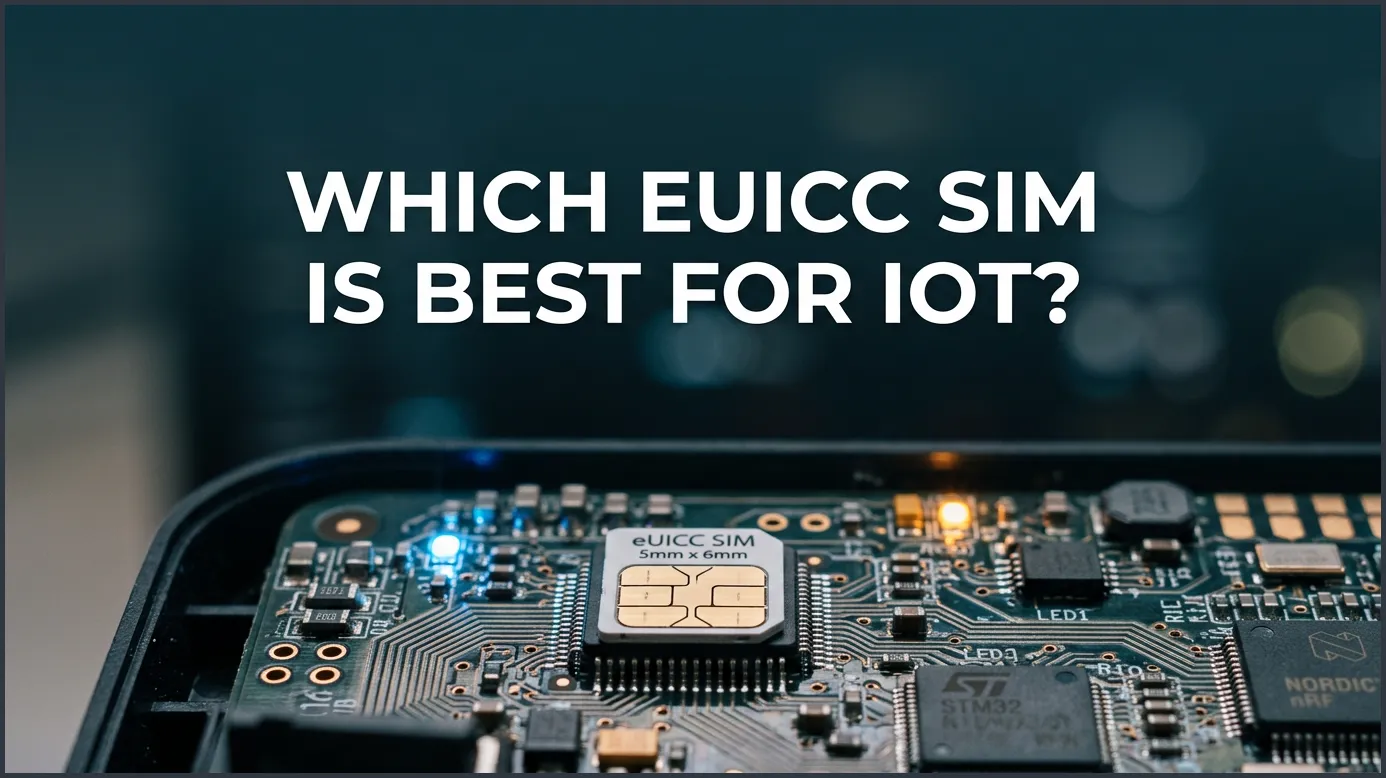
Finding the right eUICC SIM for your IoT project depends on your coverage needs, hardware compatibility, and deployment scale. The best choice is a card that offers seamless multi-carrier switching, robust security, and an easy-to-use platform for over-the-air profile management. By focusing on these features, you can ensure reliable global connectivity for all your smart devices.
Imagine you just deployed a thousand smart sensors across the country. They measure soil moisture on farms, track cargo trucks, or monitor medical gear in hospitals. Everything works great until your cellular provider suddenly changes its rates. Or worse, their network coverage drops in a key region. In the old days, you had to send a technician to manually swap out every single physical SIM card. That meant high costs, lost time, and major headaches.
Today, technology gives us a better way to stay connected. With embedded Universal Integrated Circuit Card (eUICC) technology, you can change your network operator remotely. You do this with a few clicks on a computer screen. But with so many options on the market, you might wonder: Which eUICC SIM Is Best for IoT?
This guide will help you navigate the complex world of smart connectivity. We will look at key features, physical formats, and provider options. By the end, you will know exactly how to choose the right fit for your business.
Key Takeaways
- Flexibility is key: eUICC technology allows remote carrier updates without physical card swaps.
- Hardware matters: Select form factors like MFF2 solderable chips or plug-in SIMs based on your device design.
- Multi-IMSI synergy: Combine eUICC with multi-IMSI technology for the ultimate global fallback connection.
- Management tools: Choose a provider with a robust platform for seamless over-the-air (OTA) updates.
- Future proofing: Invest in eUICC early to avoid carrier lock-in as your business scales.
📑 Table of Contents
What Exactly Is an eUICC SIM?
To find out which eUICC SIM is best for IoT, we must first understand what it is. Many people confuse eSIM with eUICC. They are related, but they are not the same thing. Think of eSIM as the physical chip soldered onto a circuit board. On the other hand, eUICC is the software that runs on that chip. This software allows the card to hold multiple carrier profiles at the same time.
This technology is a game-changer for businesses. It means your devices are no longer locked to a single telecom company. If a carrier goes out of business or raises prices, you can download a new profile over the air (OTA). This keeps your devices online without physical intervention. It saves money and future-proofs your entire network.
When planning your rollout, you must ask: Which eUICC SIM is best for IoT devices in my specific industry? The answer depends heavily on how you manage your data and where you send your devices.
Crucial Features of the Best eUICC SIMs
Not all smart SIMs are created equal. When evaluating your options, you need to look at specific features that guarantee long-term success.
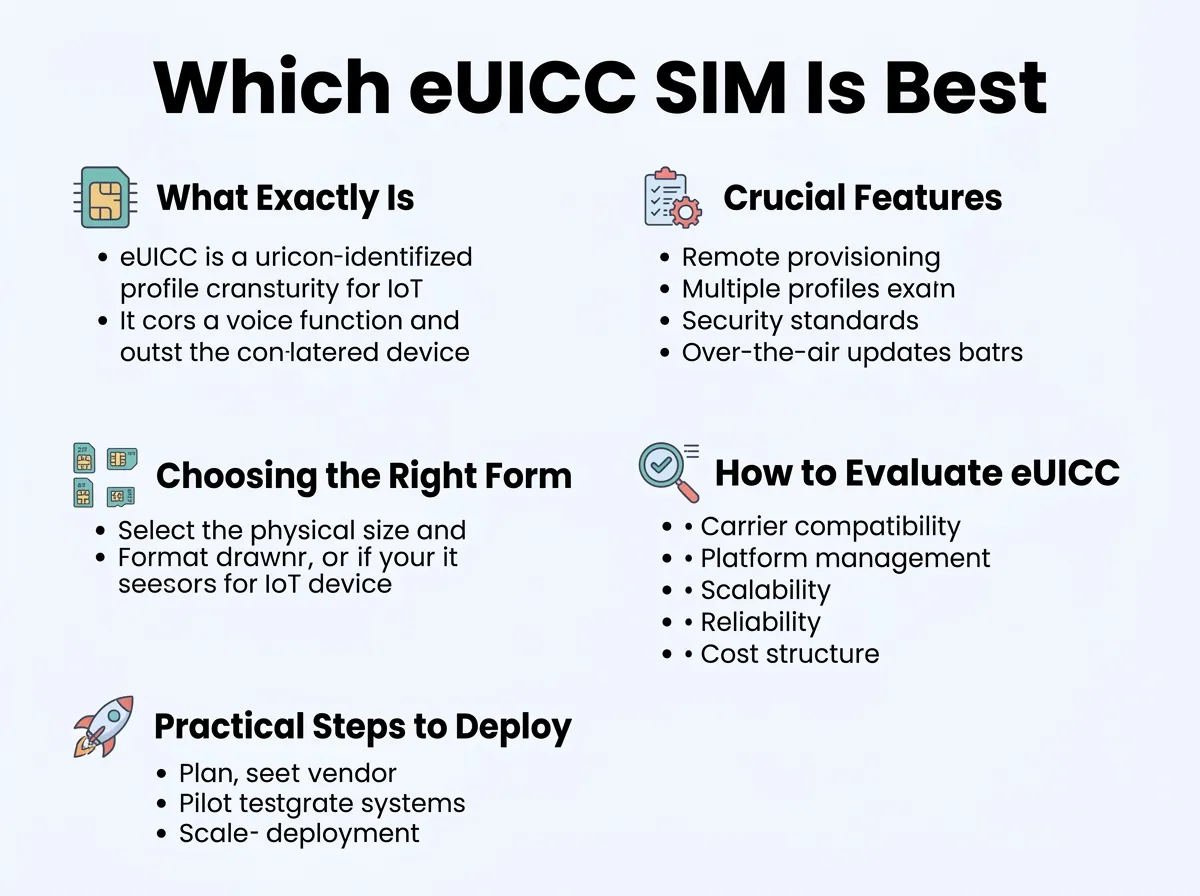
Which eUICC SIM Is Best for IoT? — key points at a glance
Remote Provisioning Capability
The main benefit of eUICC is remote provisioning. This is the ability to send new carrier profiles to your devices over the air. Make sure your provider supports standard GSMA provisioning rules. This guarantees that your hardware remains compatible with global network changes. Without this, your smart SIM is just a standard, locked plastic card.
Multi-IMSI Integration
Some of the best solutions combine eUICC with multi-IMSI features. An IMSI is a unique number that identifies a cellular user. By combining multi-IMSI and eUICC technology, your devices can switch networks instantly if they lose a signal. This gives you double the backup. The multi-IMSI handles local network drops, while the eUICC handles long-term carrier contract changes.
Robust Security Standards
IoT devices are frequent targets for hackers. The best eUICC SIMs offer advanced security features. Look for cards that support secure keys, data encryption, and private APNs. These features keep your data safe as it travels from your device to the cloud. You should never compromise on security when choosing your connectivity partner.
Choosing the Right Form Factor for Your Device
Once you know the software features you need, you must look at the hardware. Which eUICC SIM is best for IoT physical designs? That depends on where and how you deploy your devices.
Plug-In SIM Cards
These look like the classic SIM cards you put in your smartphone. They come in triple-cut formats, including Mini (2FF), Micro (3FF), and Nano (4FF). They are great for devices that have a standard slot. They are easy to install during early testing phases. However, they can shake loose in vibrating machinery.
Solderable MFF2 Chips
For rugged environments, solderable chips are the way to go. These tiny chips are soldered directly onto the device board during manufacturing. They resist extreme heat, moisture, and heavy vibrations. They also make your device more secure because no one can steal the SIM card out of the unit. When selecting your hardware, always check for compatible IoT hardware designs to ensure a smooth assembly process.
How to Evaluate eUICC SIM Providers
Choosing the hardware is only half the battle. You also need to select the right partner to manage your connectivity. Here is how to judge them.
Platform Usability
A great eUICC SIM is useless without a good management platform. You need a portal that shows all your devices in one place. It should let you monitor data use, track locations, and push profile updates with ease. If the platform is too complex, you will waste valuable time trying to manage your fleet. Check out modern IoT eSIM options that offer clean, API-first management tools.
Transparent Pricing
Watch out for hidden fees. Some providers charge extra every time you download a new profile. Others charge high monthly active fees even if your devices send very little data. Look for companies that offer flat-rate pricing or pay-as-you-go models. This makes it much easier to predict your expenses as your business grows.
Global Coverage and Roaming Agreements
Your devices might travel across borders. If you track shipping containers, they need to work in Europe, Asia, and the Americas. Ask providers about their roaming agreements. The best providers have partnerships with hundreds of local carriers worldwide. This ensures your devices never lose contact with home base, no matter where they go. Many businesses find that choosing the best IoT SIM card comes down to the quality of global coverage.
Practical Steps to Deploy Your eUICC Solution
Are you ready to make the switch? Here is a simple plan to help you deploy your new smart SIMs without any downtime.
Start with a Small Pilot Program
Never deploy thousands of devices at once. Start with a test batch of ten to twenty units. Place them in real-world scenarios. Monitor their data usage and network switching behavior. This pilot phase helps you spot any software bugs before you scale up.
Set Up Automated Switching Rules
Configure your management platform to switch networks automatically. For example, if Carrier A drops below a certain signal strength, the SIM should automatically swap to Carrier B. This prevents manual intervention and keeps your systems running 24/7. If you are still wondering which eUICC SIM is best for IoT deployments, look at your long-term roadmap and choose a partner that grows with you.
Which eUICC SIM Is Best for IoT?
So, which eUICC SIM is best for IoT? The truth is, there is no single card that fits every single project. The best option is the one that aligns with your specific goals. If you run a fleet of moving vehicles, you need a rugged MFF2 chip with multi-IMSI features for ultimate coverage. If you are building a smart home product, a standard plug-in eUICC SIM with flat-rate pricing might be your best bet.
Focus on flexibility, security, and a user-friendly management platform. When you partner with a provider that offers these three pillars, you set your IoT project up for massive success. Take your time, test your devices, and enjoy the peace of mind that comes with true cellular freedom.
Frequently Asked Questions
What is the difference between eSIM and eUICC?
eSIM refers to the physical chip soldered onto a circuit board, while eUICC is the software technology running on it. The eUICC software allows the SIM to store and switch between multiple network profiles over the air.
Can I use an eUICC SIM in any IoT device?
Yes, as long as your device’s cellular module supports the correct frequency bands and the eUICC standard. Most modern IoT hardware is fully compatible with eUICC technology.
How does over-the-air (OTA) provisioning work?
OTA provisioning uses secure cellular networks to send new carrier profiles directly to your device. You can trigger this update remotely through your provider’s management platform without touching the hardware.
Is eUICC more expensive than standard SIM cards?
The initial cost of an eUICC SIM can be slightly higher than a traditional SIM card. However, it saves you significant money over time by avoiding physical replacements and allowing you to negotiate better data rates.
Does eUICC support 5G networks?
Yes, eUICC technology is fully compatible with 5G networks as well as 4G LTE, LTE-M, and NB-IoT. This makes it an excellent choice for future-proofing your long-term deployments.
What happens if my device loses cellular signal?
If you use a smart eUICC SIM with multi-IMSI backup, the device will automatically search for and connect to another available network. This keeps your device online even in remote or patchy coverage areas.
