


The best IoT SIM card in the UK depends on your project’s specific scale, coverage needs, and data usage. Multi-network roaming SIMs from providers like Eseye, Onomondo, and Hologram offer the most reliable uptime by automatically switching to the strongest local network. For localized, high-speed needs, major UK carriers like EE provide excellent single-network alternatives.
Imagine you are launching a fleet of smart rental bikes across London. Or maybe you are setting up remote weather sensors in the Scottish Highlands. Suddenly, you face a big technical question. How do these smart devices talk to the internet without breaking the bank? You need a reliable, cost-effective way to keep them online. This is where finding the right cellular link becomes your top priority.
Choosing the right connection is not as simple as buying a standard phone plan. Smart devices have very different needs compared to humans. They send tiny bits of data at odd hours, often from places with weak signals. If you are asking yourself, what is the best IoT SIM card in the UK, you are in the right place. We will guide you through the complex world of cellular internet of things (IoT).
In this article, we will break down the top options on the market. We will explore how multi-network roaming works, why security matters, and how to choose the right provider. By the end, you will have a clear path forward for your smart project, no matter how big or small it is.
Key Takeaways
- Multi-Network Roaming is Crucial: Multi-network SIMs prevent downtime by automatically switching to the strongest available signal in the UK.
- Industrial Durability Matters: Standard plastic SIMs can fail in harsh conditions; industrial MFF2 embedded SIMs offer much better resilience.
- Data Pooling Cuts Costs: Look for providers that allow your devices to share a single pool of data to avoid surprise overage fees.
- Security is a Priority: Choose SIM cards that offer private APNs and VPN support to keep your smart device data safe from hackers.
- Test Before You Scale: Always use cheap developer trial kits to test network performance before buying hundreds of SIM cards.
📑 Table of Contents
Understanding Your IoT Connectivity Options in the UK
Before looking at specific brands, it helps to understand the types of SIMs available. Not all SIM cards are built the same way. Selecting the wrong type can lead to high costs or lost connections when your devices go out into the field.
Single-Network vs. Multi-Network Roaming SIMs
A single-network SIM connects to just one mobile network, like EE or O2. If your device moves to an area with no signal from that provider, it goes offline. This can be a huge problem for mobile devices like delivery vans. On the other hand, a multi-network roaming SIM can connect to several networks. If one signal drops, the SIM automatically switches to another available network. This ensures your devices stay online almost anywhere.
Standard SIMs vs. Rugged Industrial SIMs
You might think about using a cheap plastic SIM card from a local shop. However, standard SIM cards cannot handle harsh environments. They can crack in extreme cold or melt in hot weather. Industrial IoT SIMs are built with tough materials. They can survive extreme temperatures, high vibrations, and wet conditions. They also come in different shapes, such as tiny embedded chips (MFF2) that are soldered directly onto your device’s circuit board.
The Contenders: Top IoT SIM Providers in the UK
Now let us look at the top players in the market. Several companies offer excellent coverage and management tools. Choosing the right one depends on where your devices will travel and how much data they will use. For a deeper look at the top options, you can read Eseye’s UK IoT SIM guide to compare specific network metrics.
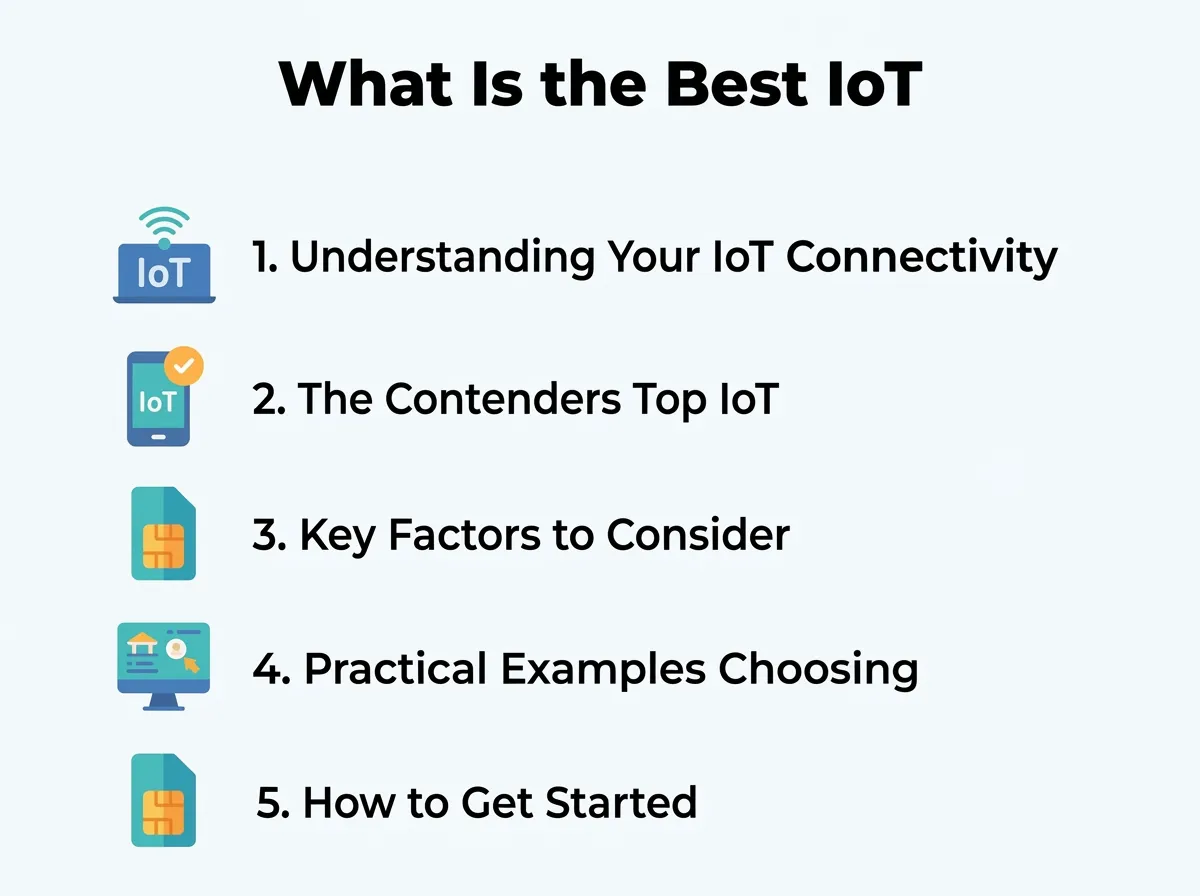
What Is the Best IoT SIM Card in the UK? — key points at a glance
Multi-Network Giants
Some of the most popular choices come from global roaming providers. These companies do not own physical cell towers in the UK. Instead, they partner with all the major UK networks to give you seamless coverage.
For instance, companies like Onomondo offer brilliant cross-border capabilities. If you want a deep dive into how these roaming options compare, check out Onomondo’s comparison of UK IoT SIMs. Their virtual SIM technology helps reduce battery drain by avoiding slow network handshakes. Another strong choice is Hologram. Their platform makes managing thousands of devices simple with a clean dashboard. You can read more in Hologram’s UK cellular IoT guide to see how they handle local network switching.
Local Network Specialists
If your devices will stay in one fixed spot with good coverage, a local network operator might be best. The major UK mobile networks have dedicated business divisions for smart devices. For example, you can look at EE’s IoT SIM solutions. EE has some of the fastest 4G and 5G speeds in the country. Their plans are perfect if your devices need to transmit high-definition video or large data files quickly.
Key Factors to Consider When Choosing a SIM
Finding the best IoT SIM card in the UK requires looking at more than just the price. You must think about how the SIMs will perform over several years. Here are the key factors you should keep in mind.
Data Requirements and Pricing Structures
Unlike personal mobile plans, smart devices often use very little data. A smart water meter might only send a few kilobytes of data once a day. You do not need a massive 10GB plan for this. Look for providers that offer pooled data plans. This means all your devices share one big bucket of data. If one device uses more than usual, another device’s unused data covers the cost. This prevents surprise bills at the end of the month.
Security Features and VPN Support
Smart devices are common targets for hackers. If a hacker gains access to your device, they could access your entire business network. The best IoT SIM card in the UK should offer strong built-in security. Look for features like Private APNs (Access Point Names) and VPN (Virtual Private Network) support. These features create a secure, private tunnel for your data, keeping it safe from prying eyes on the public internet.
Practical Examples: Choosing for Real-World Projects
Let us look at how different businesses choose their SIM cards. These real-world scenarios can help you decide which path to take for your own project.
Smart Agriculture and Remote Monitoring
Imagine you run a farm in Wales. You have soil sensors spread across hundreds of acres of hilly land. Some sensors are in deep valleys where the signal is poor. For this project, you need a multi-network SIM that can use any network available. High speed is not important, but reliable coverage is crucial. A low-power, wide-area network (LPWAN) SIM would be ideal here. It keeps battery usage low so your sensors can run for years without a battery change.
Fleet Tracking and Micromobility
Now, imagine you manage a fleet of delivery vans traveling across the entire UK. They constantly cross from city centers to remote country roads. They need to send GPS location data in real time. For this, a multi-network roaming SIM is the best choice. It ensures the tracker stays connected as the van moves between different network coverage zones. It also prevents any dead zones from interrupting your tracking dashboard.
How to Get Started with Your IoT SIM Deployment
Once you narrow down your choices, it is time to take action. Do not buy thousands of SIMs right away. Take a slow, careful approach to ensure success.
Testing with Development Kits
Most top providers offer cheap trial kits. These kits usually come with a few SIM cards and some free data. Use these to test your devices in real-world conditions. Take your device to areas with weak signals. See how fast the SIM connects and how much battery power it uses. This testing phase will save you from making costly mistakes later.
Scaling Up Your IoT Fleet
Once you are happy with the test results, you can start buying in bulk. Make sure your provider offers a good management portal. As your business grows, you will need an easy way to activate, pause, and monitor your SIM cards. A good platform lets you set up automatic alerts if a device starts using too much data. This keeps you in total control of your costs.
Conclusion
There is no single answer to the question of what is the best IoT SIM card in the UK. The right choice depends entirely on your project’s unique needs. If you need ultimate reliability across different regions, a multi-network roaming SIM is your best bet. If you need fast speeds in a fixed location, a local carrier like EE might be perfect. Take your time, test your options with a trial kit, and choose a partner that can scale with your business. With the right connection, your smart devices will perform beautifully for years to come.
Frequently Asked Questions
What is a multi-network IoT SIM?
A multi-network IoT SIM is a smart card that can connect to multiple cellular networks instead of just one. In the UK, it can switch between EE, O2, Vodafone, and Three depending on which network has the strongest signal in that specific location. This ensures maximum uptime and reliability for your smart devices.
Can I use a standard mobile SIM card for IoT?
While you can physically fit a standard consumer SIM into an IoT device, it is not recommended. Standard SIMs lack the rugged physical design of industrial SIMs, do not offer data pooling options, and often violate carrier terms of service if used for automated machines. They also lack security features like private APNs.
How much data does an IoT SIM card need?
Most IoT devices use very little data, often between 1MB and 50MB per month. Devices like smart meters or trackers only send small text-based data packets. However, if your device streams video or large files, you may need a high-bandwidth plan that offers several gigabytes of data.
What is an eSIM for IoT?
An eSIM, or embedded SIM, is a chip that is soldered directly onto your device’s motherboard during manufacturing. It allows you to download network profiles over the air without having to physically swap out a plastic card. This is highly useful for large deployments where physical access to devices is difficult.
Does 5G matter for IoT devices in the UK?
5G is only important if your IoT devices require ultra-low latency or need to transmit large amounts of data very quickly, such as autonomous vehicles or live video feeds. For most standard IoT applications like smart meters or basic GPS tracking, 2G, 3G, or 4G LTE-M networks are more than sufficient and much cheaper.
How do I manage multiple IoT SIM cards?
You can manage multiple SIMs using a Connectivity Management Platform (CMP) provided by your SIM vendor. These online dashboards allow you to activate new SIMs, monitor data usage in real-time, set up security alerts, and temporarily pause lines that are not in use to save money.
