


Internet of Things (IoT) product development is the multi-stage process of building smart, connected devices that gather and share data over the internet. It combines physical hardware design, software development, cloud integration, and security protocols to create a functional system. Understanding this process helps businesses build user-focused, scalable tech solutions.
Key Takeaways
- Hardware-Software Balance: Successful IoT products require seamless integration between physical components and digital code.
- Security by Design: Protection against data breaches must be built into the device from the very first stage of development.
- Prototyping Saves Costs: Creating a simple proof of concept early helps identify flaws before moving to mass production.
- Over-the-Air Updates: Designing devices to receive wireless updates ensures they remain secure and functional over time.
- User-Centric Focus: The best smart products prioritize simple setup processes and clean user interfaces.
📑 Table of Contents
Understanding the Smart Device Revolution
Imagine waking up in the morning. Your alarm clock rings. It instantly sends a signal to your coffee machine. By the time you walk into the kitchen, a hot cup of coffee is waiting for you. While you drink your coffee, your smart thermostat adjusts the temperature of your home based on the weather outside. This is not a scene from a science fiction movie. This is our daily life today, thanks to smart technology.
But have you ever paused to think about how these amazing tools are created? They do not just appear on store shelves by chance. Behind every smart device is a detailed, careful process. This process blends physical parts with digital code. We call this entire journey Internet of Things product development.
In this guide, we will break down what Internet of Things product development is all about. We will look at what makes up a smart device, the stages of bringing one to life, the challenges you might face, and the best ways to ensure your product succeeds. Whether you are an entrepreneur with a great idea or just curious about how things work, this guide is for you.
What Is the IoT Product Ecosystem?
Before we dive into the steps of building a device, we need to understand what we are actually building. A smart product is much more than a simple gadget. It is a complex system that relies on several moving parts working together. The history and definition of the Internet of Things show us that connectivity is just one piece of the puzzle. An IoT product is made of three core elements.
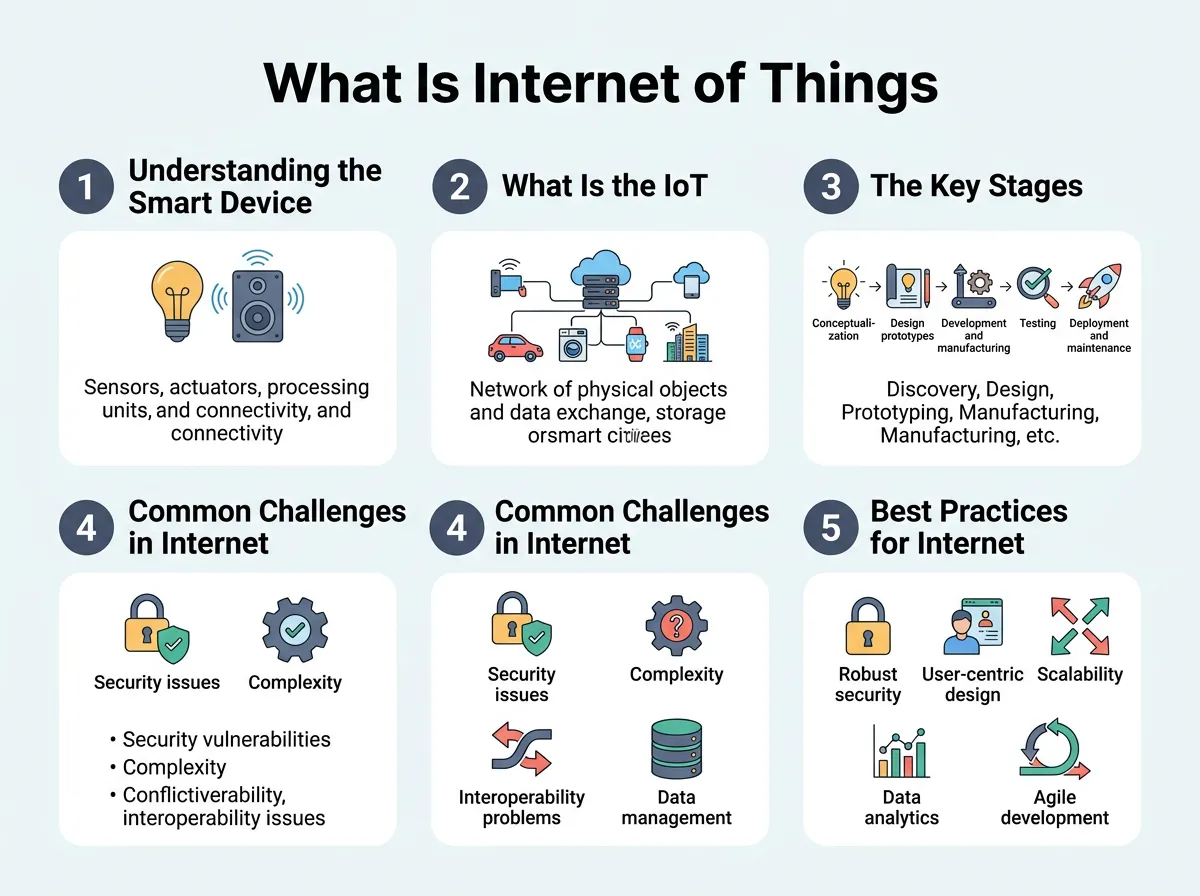
What Is Internet of Things Product Development? — key points at a glance
1. The Physical Hardware
The hardware is the body of your device. It is the physical object that you can see and touch. This includes the outer plastic or metal shell, which protects the inner parts. Inside, you will find printed circuit boards, microchips, and batteries. You will also find sensors that gather data from the world. For example, a temperature sensor measures heat, while a motion sensor detects movement. There are also actuators, which perform physical actions, like turning a valve or spinning a motor.
2. The Software Layers
The software is the mind of your device. It tells the hardware what to do. There are three main types of software in this process. First is firmware, which is the code written directly onto the device’s microchips. Second is the cloud software, which processes and stores data on remote servers. Third is the user application, which is usually a mobile app or a web dashboard. This is what the user interacts with to control the device.
3. The Connectivity Network
The network is the voice of your device. It is how the physical object talks to the digital world. Devices can use many different ways to connect. Some use Wi-Fi, which is great for homes but uses a lot of power. Others use Bluetooth, which is perfect for short distances. For long distances, devices might use cellular networks or specialized low-power radio waves. Choosing the right network is a critical choice during Internet of Things product development.
The Key Stages of Internet of Things Product Development
Building a connected device is very different from building a normal software app. With software, you can fix bugs and release updates instantly. With physical hardware, once you make a million devices, you cannot easily change them. That is why a structured path is so important. Successful design and development of IoT products follows a series of clear steps.
Stage 1: Research and Strategy
Every great device starts with a simple question: What problem are we solving? You must spend time researching your users. You need to know if they want your product and how much they will pay for it. During this stage, you also define the basic features of your device. It is best to keep it simple. Focus on doing one thing really well before trying to add too many features.
Stage 2: Prototyping and Proof of Concept
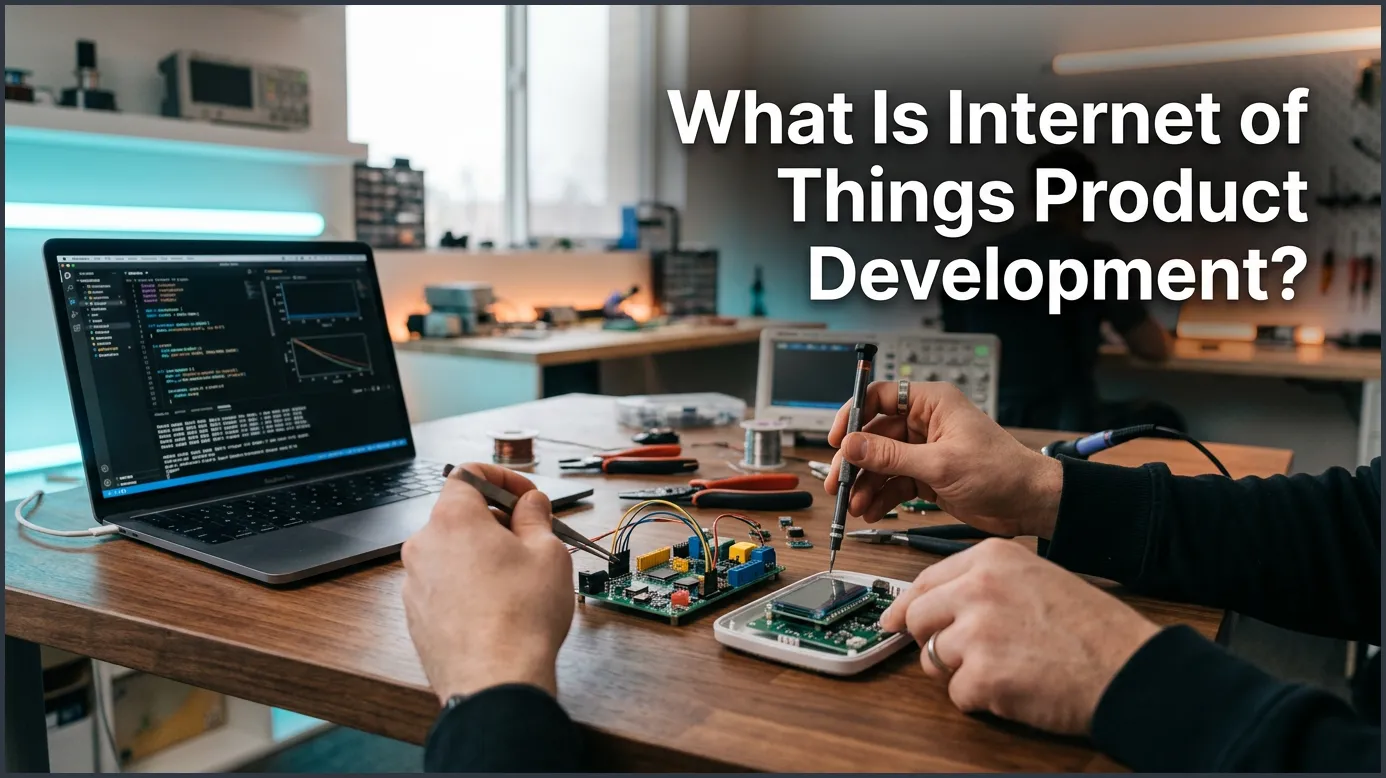
Once you have a solid idea, you need to prove that it can work. You do not want to spend thousands of dollars on custom parts yet. Instead, you build a quick prototype using cheap, off-the-shelf parts. You can use simple boards like an Arduino or a Raspberry Pi. The goal here is to make a rough version of the product that proves the core idea is possible. It might look ugly, but it should work.
Stage 3: Detailed Engineering Design
This is where the real work begins. Your engineering team will design custom circuit boards that fit perfectly inside your device. Industrial designers will create 3D models of the outer shell. They will focus on how the device looks and feels. At the same time, software developers will start writing the firmware and building the cloud database. All these teams must talk to each other daily so everything fits together.
Stage 4: Testing and Validation
Before you send your design to a factory, you must test it thoroughly. This stage is about finding every possible bug and flaw. You will drop the device to see if it breaks. You will test it in hot and cold rooms. You will also test the battery life to make sure it lasts as long as promised. You will also need to get official certifications. These safety and wireless tests are required by law before you can sell your product.
Stage 5: Manufacturing and Launch
The final step is mass production. You will work with a factory to set up assembly lines. This is a very complex stage. You need to make sure the factory can build thousands of devices with the same high quality. Once the first batch is ready, you can finally ship them to your customers. Your Internet of Things product development journey is now complete, and your product is live in the world.
Common Challenges in Internet of Things Product Development
The road to launching a smart device is not always smooth. In fact, hardware development is famously difficult. Here are some of the biggest hurdles you will face along the way.
Keeping Devices Secure
Security is the biggest challenge in Internet of Things product development. Every smart device is a doorway into a user’s home or office. If your device is not secure, hackers can steal personal data or take control of the machine. You must design security into your product from the very start. This means encrypting all data, requiring strong passwords, and making sure your software is free of bugs.
Power and Battery Management
Many smart devices need to run on batteries for months or even years. If a user has to change the battery every week, they will soon stop using your product. Developers must find clever ways to save power. You can write software that puts the device into a deep sleep when it is not active. You can also choose microchips that use very little power.
The High Cost of Hardware
With software, your main cost is time. With hardware, you have to buy physical materials. Creating molds for plastic parts can cost tens of thousands of dollars. Buying microchips in bulk requires a large upfront investment. If you make a mistake in your design, fixing it can be very expensive. That is why careful testing in the early stages is so important for saving money.
Best Practices for Internet of Things Product Development
How do you ensure your product stands out in a crowded market? Here are some simple, practical tips to guide you as you embark on building smart products that users love.
Focus on a Simple User Experience
No matter how smart your device is, it will fail if it is too hard to use. The setup process should take less than five minutes. The mobile app should have a clean, simple layout. Users should not need to read a long manual to figure out how to turn the device on or connect it to their Wi-Fi network.
Plan for Wireless Updates
Your product is never truly finished. Even after you sell it, you will want to add new features or fix security bugs. You must build an over-the-air (OTA) update system. This allows you to send software updates to your devices through the internet. It keeps your products modern and secure without forcing customers to buy new hardware.
Work with Experienced Partners
Building a smart device requires many different skills. You need experts in hardware, software, security, and design. If you try to do everything yourself, you might get overwhelmed. It is often wise to work with established experts. Partnering with professional IoT product development services can help you avoid common mistakes and get your product to market much faster.
Conclusion: Shaping the Connected Future
Internet of Things product development is a challenging but deeply rewarding path. It is the art of giving everyday physical objects a digital voice. By blending physical hardware design with smart software, you can create products that solve real problems, save time, and bring joy to users. Remember to start with a clear plan, build quick prototypes, focus heavily on security, and keep the user at the center of everything you do. The future is connected, and your next big idea could be the next device that changes how we live.
Frequently Asked Questions
What is the main difference between software development and IoT product development?
Software development deals only with digital code that runs on existing computers or phones. IoT product development requires building both the physical hardware device and the software that controls it. This makes the process much more complex, as you must manage physical parts, factory manufacturing, and wireless signals.
How much does it cost to build a custom IoT product?
The cost varies greatly depending on the complexity of your device. A simple smart home gadget might cost tens of thousands of dollars to design and prototype, while complex industrial equipment can cost hundreds of thousands of dollars. Major costs include custom circuit design, plastic molds, software creation, and government safety certifications.
Why is security so important when designing smart products?
Smart products gather personal data and connect directly to private networks, making them prime targets for hackers. If a device has weak security, hackers can gain access to a home network, steal data, or render the device useless. Building security into the hardware and software from day one protects both your business and your users.
What programming languages are commonly used in IoT development?
For writing the firmware that runs on the physical device, developers usually use C or C++ because they run fast and use very little memory. For cloud systems and web apps, developers often use Python, Java, or Node.js. Mobile apps are typically built using Swift, Kotlin, or cross-platform tools like Flutter.
How long does it take to bring an IoT device to market?
On average, the process takes anywhere from 9 to 24 months. The timeline depends heavily on the complexity of the hardware design, how many prototypes you need to build, and how fast you can pass government certification tests. Working with an experienced design partner can help shorten this timeline.
Can I build an IoT prototype on my own using basic electronics?
Yes, you can easily build a simple proof-of-concept prototype using cheap, off-the-shelf electronics. Popular boards like Arduino, Raspberry Pi, and ESP32 are great for testing ideas and writing early code. However, these basic boards are not suitable for mass production, which requires custom-designed circuit boards.
