


The Internet of Things (IoT) unlocks massive business opportunities by connecting physical devices to the cloud, allowing real-time data collection and automation. Companies can leverage these technologies to streamline operations, launch predictive maintenance, and build new subscription-based business models. Embracing IoT is no longer a luxury but a vital step toward long-term digital transformation and competitive advantage.
Imagine waking up to a world where your coffee maker starts brewing the moment your alarm goes off. Outside, delivery trucks navigate traffic smoothly because smart sensors plan their routes. In a nearby factory, machines quietly tell engineers they need a quick fix before they ever break down. This is not science fiction anymore. It is the everyday reality of a highly connected world.
At the heart of this change is a vast network of smart devices. Every day, more leaders ask themselves: What Are the Internet of Things Business Opportunities? They want to know how this wave of tech can help their companies grow, save money, and beat the competition.
In this guide, we will explore the most promising paths for businesses looking to dive into the IoT world. We will look at real-world examples, smart strategies, and clear steps you can take today to get ahead.
Key Takeaways
- Operational Efficiency: IoT sensors automate tracking, reducing manual errors and saving valuable company time.
- Predictive Maintenance: Real-time alerts let businesses fix equipment before it breaks, preventing costly downtime.
- New Revenue Streams: Companies can transition from selling physical products to offering continuous, data-driven services.
- Improved Customer Experience: Smart devices provide personalized customer data, allowing highly tailored solutions.
- Enhanced Safety: Wearable and environmental IoT sensors keep workers safe in hazardous environments.
- Data-Driven Decisions: Rich data analytics remove guesswork, helping leaders make faster, smarter strategic choices.
📑 Table of Contents
Smart Manufacturing and Industry 4.0
Let us start on the factory floor. Manufacturing has changed rapidly over the last decade. IoT devices turn traditional factories into smart, self-monitoring systems.
Predictive Maintenance
Think about the cost of a broken machine. It stops production, delays shipments, and costs a fortune to fix. IoT sensors solve this. They monitor heat, vibration, and sound on machinery. When a part starts to wear down, the sensor sends a warning. This allows teams to fix the machine during planned downtime. This simple shift saves companies millions of dollars every year.
Real-Time Supply Chain Tracking
Knowing where your goods are is vital. IoT trackers do much more than basic GPS. They can monitor the temperature of food, the humidity of medicine, and the exact location of a shipment. To understand how this works, we can look at the basic definition of this technology. According to IBM’s overview of the Internet of Things, these connected systems create a bridge between the physical and digital worlds, giving businesses complete visibility over their logistics.
Smart Homes and Connected Consumer Products
Consumers love convenience. The market for smart home devices is booming, and it shows no signs of slowing down. When we look closely at consumer trends, we see a goldmine. What Are the Internet of Things Business Opportunities in the consumer market? They lie in convenience and automation.
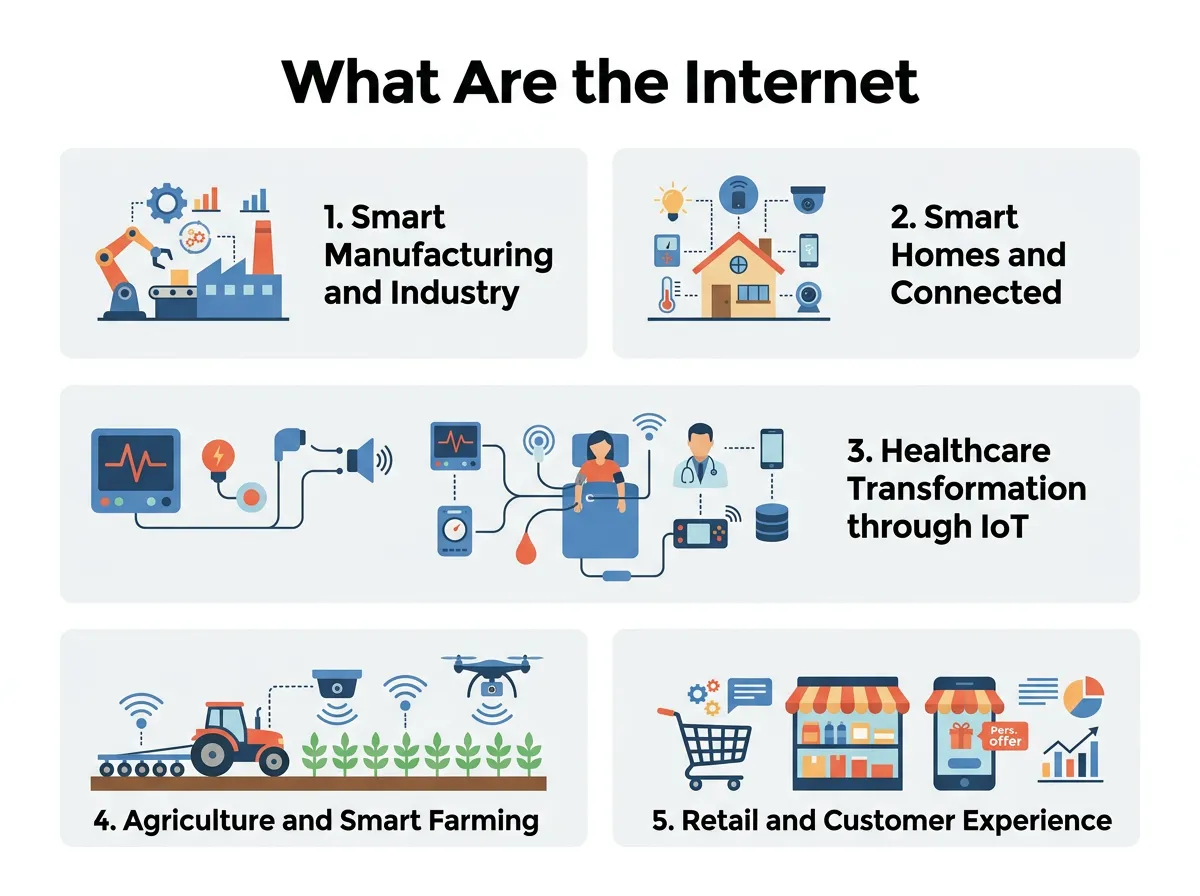
What Are the Internet of Things Business Opportunities? — key points at a glance
Consumer Electronics and Home Automation
From smart thermostats to connected security cameras, people want control at their fingertips. Businesses can tap into this by creating easy-to-use smart appliances. The big opportunity here is not just selling the hardware. It is about the software updates and subscriptions that come after. This creates a steady stream of recurring revenue.
Smart Energy Management
Energy bills are rising, and eco-friendly choices are popular. Smart plugs and appliances can turn off automatically when energy prices peak. Businesses that build energy-efficient IoT solutions will find a very eager market. If you are looking for fresh inspiration in this space, you can check out this curated list of top IoT business ideas to spark your next project.
Healthcare Transformation through IoT
Healthcare is another field where IoT is saving lives and cutting costs. Connected medical devices are changing how doctors treat patients.
Remote Patient Monitoring
Patients do not always need to stay in a hospital bed to be monitored. Smart wearables can track heart rate, blood pressure, and oxygen levels from home. Doctors receive this data in real time. If something looks wrong, they can act quickly. This frees up hospital beds and keeps patients comfortable in their own homes.
Smart Asset Tracking
Hospitals are huge places. Staff often waste valuable time searching for clean wheelchairs, heart monitors, or mobile X-ray machines. IoT tags can track these assets instantly. This saves time and ensures critical equipment is always ready when needed.
Agriculture and Smart Farming
Farming might seem traditional, but it is quickly becoming one of the most tech-savvy industries.
Precision Farming
Farmers must manage weather, soil quality, and pests. IoT sensors placed in the soil can measure moisture levels, nutrient content, and temperature. This data tells farmers exactly when to water or fertilize. It prevents waste and increases crop yields.
Livestock Management
Smart collars can track the health and location of cattle. If a cow gets sick or strays from the herd, the farmer gets an alert. This level of care keeps herds healthy and reduces labor costs.
Retail and Customer Experience
Retailers face tough competition from online stores. Retail is another space where the answer to What Are the Internet of Things Business Opportunities? becomes clear through physical-digital integration. IoT helps physical stores fight back by improving the shopping experience.
Smart Shelves and Inventory
No shopper likes to find empty shelves. Smart shelves use weight sensors to know when stock is low. They can automatically alert stockroom workers or place orders with suppliers. This keeps shelves full and customers happy.
Personalized In-Store Marketing
Imagine walking past a display and receiving a discount code on your phone for that exact product. Bluetooth beacons can detect when a customer is nearby. This allows retailers to send highly personalized offers, boosting sales on the spot.
Strategic Steps to Seize IoT Opportunities
Knowing the opportunities is just the start. You also need to know how to capture them. When thinking about What Are the Internet of Things Business Opportunities?, you must also consider the practical path to implementation.
Start Small and Test
Do not try to connect your entire business overnight. Start with one small problem. For example, add sensors to your most critical machine. Learn from the data, adjust, and then scale up.
Focus on Data Security
More connected devices mean more entry points for hackers. Security must be a priority from day one. Protect your customer data and device networks to build trust.
Partner with Experts
You do not have to build everything from scratch. There are many platforms and experts ready to help. Partnering with experienced developers can save you time and costly mistakes.
Study the Broader Impact
Before launching, look at how other industries have adapted. Learning how these systems fit together is vital. For a deeper look, read about exploring IoT in business to see how different sectors adopt these tools. You can also explore how the Internet of Things has impacted business operations globally to avoid common pitfalls.
Conclusion
The world is becoming smarter every day. The opportunities in IoT are vast, spanning manufacturing, healthcare, retail, and beyond. By focusing on solving real problems for your customers and streamlining your operations, you can unlock incredible value.
Now is the time to act. Take a look at your current business processes. Where are the bottlenecks? Where are you losing time? Chances are, there is an IoT solution ready to help you grow. Start your journey today and secure your place in the smart business future.
Frequently Asked Questions
What is the main benefit of IoT for small businesses?
The main benefit is automation and efficiency. Small businesses can track inventory automatically and monitor equipment to reduce manual tasks and save money. This lets them compete with much larger companies.
Is implementing IoT expensive?
It can be, but you do not have to start big. Many businesses begin with cheap sensors and scale up as they see results. This keeps initial costs low and manageable.
How does IoT improve customer service?
IoT provides real-time data about how customers use your products. This lets you offer proactive support, predict when a customer needs help, and customize features to their habits.
What industries benefit the most from IoT?
Manufacturing, healthcare, logistics, agriculture, and retail see the biggest impacts. However, almost any business with physical assets can benefit from smart connectivity.
What are the security risks of IoT?
Every connected device is a potential entry point for hackers. If devices are not secured, they can lead to data breaches or system shutdowns. Strong encryption and regular updates are essential.
How do I choose the right IoT platform?
Look for a platform that integrates easily with your current software. It should be scalable, secure, and offer clear data visualization tools. Reading reviews and testing small trials will help you decide.
