


The Internet of Things (IoT) is transforming how we live and work, opening up massive opportunities for entrepreneurs. From smart home automation and remote healthcare monitoring to precision agriculture, the potential for new ventures is vast. By launching an IoT-based business, you can solve real-world problems with connected, data-driven solutions.
Imagine waking up in the morning. Your alarm clock rings, and it instantly tells your coffee maker to start brewing a fresh pot. As you walk into the kitchen, the room temperature adjusts to your preference. Your smart fridge reminds you that the milk is about to expire. This is not a scene from a science fiction movie. This is the everyday reality of the Internet of Things (IoT).
Today, billions of physical devices around the world are connected to the internet. They collect, share, and act on data without human intervention. This massive web of connected devices is changing our world at a rapid pace. For creative entrepreneurs, this technology presents a golden opportunity. If you want to start a business, you might ask yourself: What Are Some IoT-Based Business Ideas?
In this guide, we will explore some of the most exciting, profitable, and accessible IoT business concepts. Whether you are a tech expert or a beginner, these ideas can help you launch a successful modern business.
Key Takeaways
- Smart Home Tech is Booming: Automated energy and security systems are highly sought after by modern homeowners.
- Healthcare IoT Saves Lives: Remote patient monitoring tools are revolutionizing medicine and offer high profit margins.
- Agriculture is Going Digital: Smart farming tools help farmers save water, monitor soil, and track livestock efficiently.
- Logistics Need Smart Tracking: Businesses want real-time data on their cargo, especially for cold chain goods.
- Security is Crucial: Any successful IoT startup must prioritize data privacy and robust cybersecurity from day one.
📑 Table of Contents
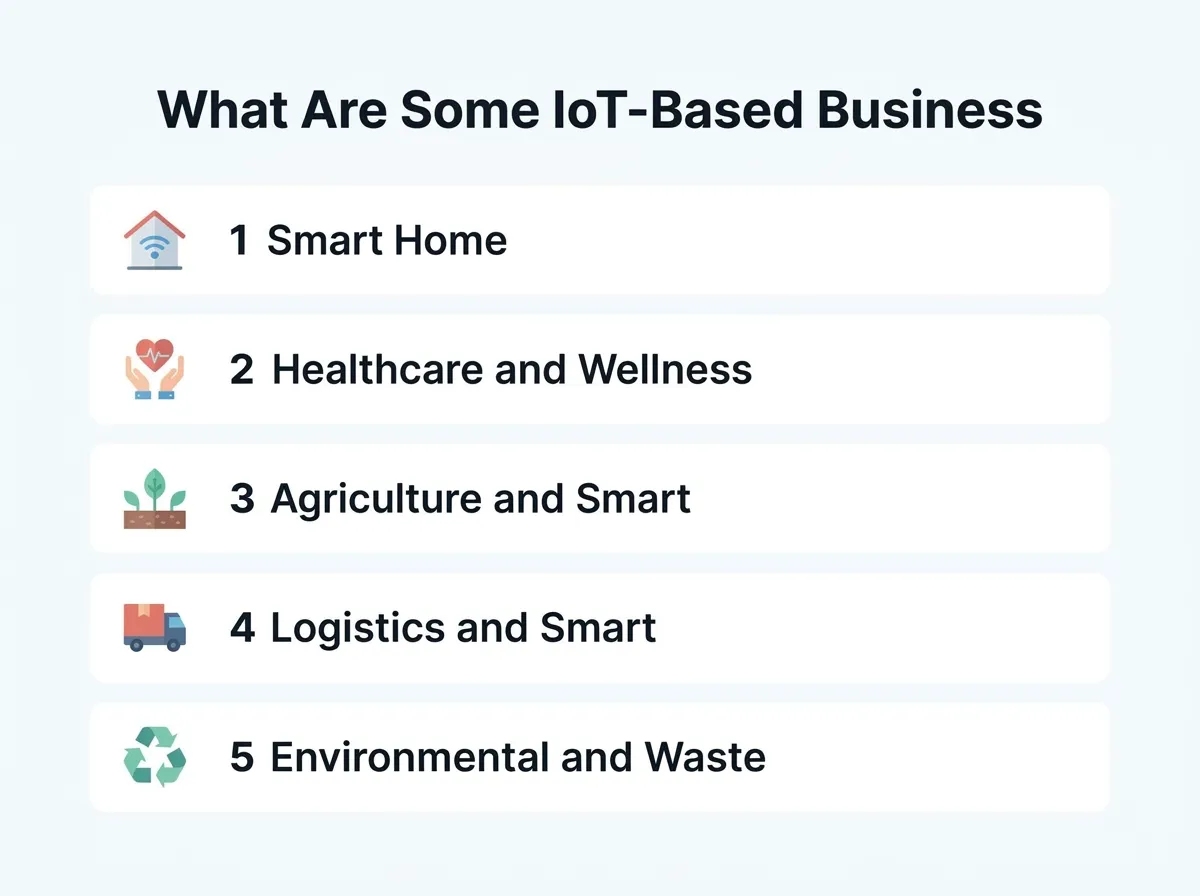
1. Smart Home and Domotics Solutions
The home automation market is growing fast. People want their homes to be safer, more comfortable, and highly energy-efficient. You can build a successful business by offering niche smart home products or installation services.
Smart Energy Management Systems
With utility bills rising, homeowners want to save money on power. You can design or install smart energy monitors. These devices connect to a home’s electrical panel. They track electricity use in real-time. Through a simple phone app, users can see which appliances consume the most power. This helps them cut down on waste and lower their monthly bills.
Automated Home Security and Safety
Traditional alarm systems are reactive. Smart security systems, however, are proactive. You can build a business around advanced smart security. This includes connected door locks, smart doorbells with facial recognition, and water leak detectors. If a pipe leaks under the sink, the system can automatically turn off the main water valve. This prevents costly water damage and gives homeowners peace of mind.
2. Healthcare and Wellness IoT (IoMT)
The Internet of Medical Things (IoMT) is saving lives and reducing hospital visits. If you are asking what are some IoT-based business ideas in the medical field, the answers are highly rewarding.
What Are Some IoT-Based Business Ideas? — key points at a glance
Remote Patient Monitoring (RPM)
Doctors need to monitor patients with chronic conditions like diabetes or heart disease. You can develop wearable devices that track vital signs. These devices send heart rate, blood pressure, and oxygen levels directly to a doctor’s office. This allows for early treatment if something goes wrong. It also helps elderly people live independently in their homes for longer.
Smart Fitness and Wellness Trackers
The fitness world is always looking for the next big thing. Beyond basic step counters, you can create niche wearable tech. For example, consider smart posture correctors. These small devices stick to the user’s back and vibrate gently when they slouch. Other ideas include smart water bottles that track daily hydration and sync with a user’s phone.
3. Agriculture and Smart Farming
Farmers face many challenges, from unpredictable weather to water scarcity. IoT technology helps them grow more food with fewer resources. If you wonder what are some IoT-based business ideas for rural areas, smart farming is the answer.
Precision Soil Monitoring
Watering a large field can be wasteful. Soil monitoring sensors solve this issue. These sensors are placed in the ground to measure moisture, temperature, and nutrient levels. They send this data to a farmer’s smartphone. The farmer then knows exactly when and where to water the crops. This saves water, cuts costs, and improves crop health.
Automated Livestock Tracking
Keeping track of hundreds of cows or sheep is difficult. Smart collars can solve this. These collars use GPS to track the location of each animal. They also monitor the animal’s body temperature and activity levels. If a cow wanders off or gets sick, the farmer receives an instant alert on their phone.
4. Logistics and Smart Retail
Businesses always look for ways to cut costs and improve delivery times. IoT offers powerful tools to make logistics and retail smoother.
Real-Time Asset Tracking
When high-value goods travel across the country, businesses want to know they are safe. Simple GPS is no longer enough. Modern IoT trackers can monitor temperature, humidity, and shocks. This is vital for shipping food or medicines. If a refrigerated truck breaks down, the sensor alerts the driver before the food spoils. This saves companies thousands of dollars in lost inventory.
Smart Inventory Shelves
In retail stores, keeping shelves stocked is a daily chore. Smart shelves use weight sensors and RFID tags to track stock levels. When a product runs low, the shelf automatically alerts the stockroom or places an order with the supplier. This ensures that stores never run out of popular items, keeping customers happy.
5. Environmental and Waste Management
Eco-friendly businesses are highly popular today. Many governments and cities are willing to pay for green technology.
Smart Trash Bins
Traditional trash trucks follow set routes every day, even if some bins are empty. Smart trash bins use sensors to measure how full they are. This data goes to a central system that plans the best route for the trash trucks. The trucks only stop at bins that actually need emptying. This saves fuel, reduces traffic, and lowers air pollution in cities.
Air Quality Monitors
Air pollution is a major health concern. You can build small, affordable air quality monitors for schools, offices, and homes. These devices track dust, pollen, and harmful gases. They warn users when air quality drops. This helps people make better decisions about when to open windows or turn on air purifiers.
6. How to Turn Your IoT Idea into a Reality
Starting an IoT business is exciting, but it requires careful planning. Here are a few tips to help you get started on the right foot.
Start with a Specific Problem
Do not build a device just because the technology is cool. Find a real problem that people face. Talk to your potential customers. Ask them about their daily struggles. Your IoT device should make their lives easier, safer, or cheaper.
Focus on Security and Data Privacy
Since IoT devices collect sensitive data, they are targets for hackers. Make sure your devices use strong encryption. Update your software regularly to patch any security holes. If your customers trust you with their data, your business will grow.
Choose the Right Business Model
Selling hardware is great, but selling services is even better. Consider a subscription-based business model. For example, you can sell a device for a low price but charge a small monthly fee for the app and cloud storage. This gives your business a steady, predictable income stream.
Conclusion
The Internet of Things is no longer a technology of the future. It is here today, and it is reshaping every industry on the planet. If you were wondering what are some IoT-based business ideas to launch, you now have a wide range of options to explore. From smart homes to modern farming, the opportunities are endless. Find a problem, build a connected solution, and take your place in the digital future.
Frequently Asked Questions
What is an IoT-based business?
An IoT-based business uses physical devices connected to the internet to gather data and automate tasks. These businesses create smart products or services that solve everyday problems for consumers or companies.
Are IoT businesses profitable?
Yes, IoT businesses can be highly profitable because they offer valuable data-driven solutions. Many of these businesses use subscription models, which generate reliable recurring monthly revenue.
What are some IoT-based business ideas for beginners?
Beginners can start with smart home installation services or local asset tracking for small businesses. These ideas require less technical development compared to building complex medical hardware from scratch.
How do IoT devices communicate with each other?
IoT devices communicate using wireless networks like Wi-Fi, Bluetooth, Zigbee, and cellular data. They send the collected information to cloud servers, where it is processed and shown on user apps.
What are the main challenges of starting an IoT business?
The main challenges include high initial hardware development costs and managing complex data privacy laws. Additionally, keeping devices secure from cyber threats is a constant and vital task.
Do I need to be a programmer to start an IoT business?
No, you do not need to be a programmer to start an IoT business. You can partner with hardware developers and software engineers to bring your product ideas to life.
