



The leading Internet of Things (IoT) solution providers include tech giants like Microsoft Azure, AWS, and Google Cloud, alongside specialized industrial players like Siemens and PTC. These companies offer robust cloud platforms, hardware integration, and advanced analytics to help businesses connect and manage smart devices. Choosing the right provider depends on your industry, scale, and specific software needs.
Imagine waking up to a world where everything just works. Your coffee machine starts brewing the moment your morning alarm goes off. The streetlights in your city dim when nobody is around to save energy. Factories fix their own heavy machines before they even break down. This is not science fiction. It is the power of the Internet of Things (IoT).
Connected devices are changing how we live and work. But setting up these systems is not easy. It takes a lot of software, hardware, and network power to make it happen. If you want to build a smart network, you need a strong partner. You might wonder: Who Are the Top Internet of Things Solution Providers?
In this guide, we will break down the biggest names in the industry. We will look at cloud giants, industrial experts, and niche creators. You will learn what makes each provider unique and how to pick the best one for your goals.
Key Takeaways
- Tech Giants Lead: Amazon Web Services (AWS) and Microsoft Azure dominate the cloud-based IoT platform market with vast toolsets.
- Industrial Specialists Matter: Companies like PTC and Siemens offer highly specialized tools tailored for manufacturing and industrial automation.
- Scalability is Crucial: The best providers allow your smart network to grow from a few dozen devices to millions without performance issues.
- Security First: Top-tier vendors prioritize end-to-end encryption, device identity management, and regular security updates.
- Hybrid Solutions Exist: Many organizations combine cloud giants with niche system integrators to build the perfect custom ecosystem.
📑 Table of Contents
The Heavy Hitters of the Cloud
Most smart devices need a home in the sky. This is where cloud providers come in. They offer the raw power to store and read massive amounts of data.
Microsoft Azure IoT
Microsoft is a giant in the business world. Their Azure IoT platform is perfect for companies that already use Microsoft tools. It is very secure and easy to scale. They offer pre-made templates for smart factories and smart cities. This means you do not have to build your system from scratch.
Amazon Web Services (AWS) IoT
AWS is the biggest cloud player on the planet. Their IoT Core service allows billions of devices to connect to the cloud at the same time. AWS is great if you want to use artificial intelligence (AI). It has built-in tools that help your devices learn and make decisions on their own.
Industrial IoT (IIoT) Specialists
Sometimes, you need more than just cloud storage. You need software that understands heavy machinery. These specialists focus on factories, power grids, and supply chains.
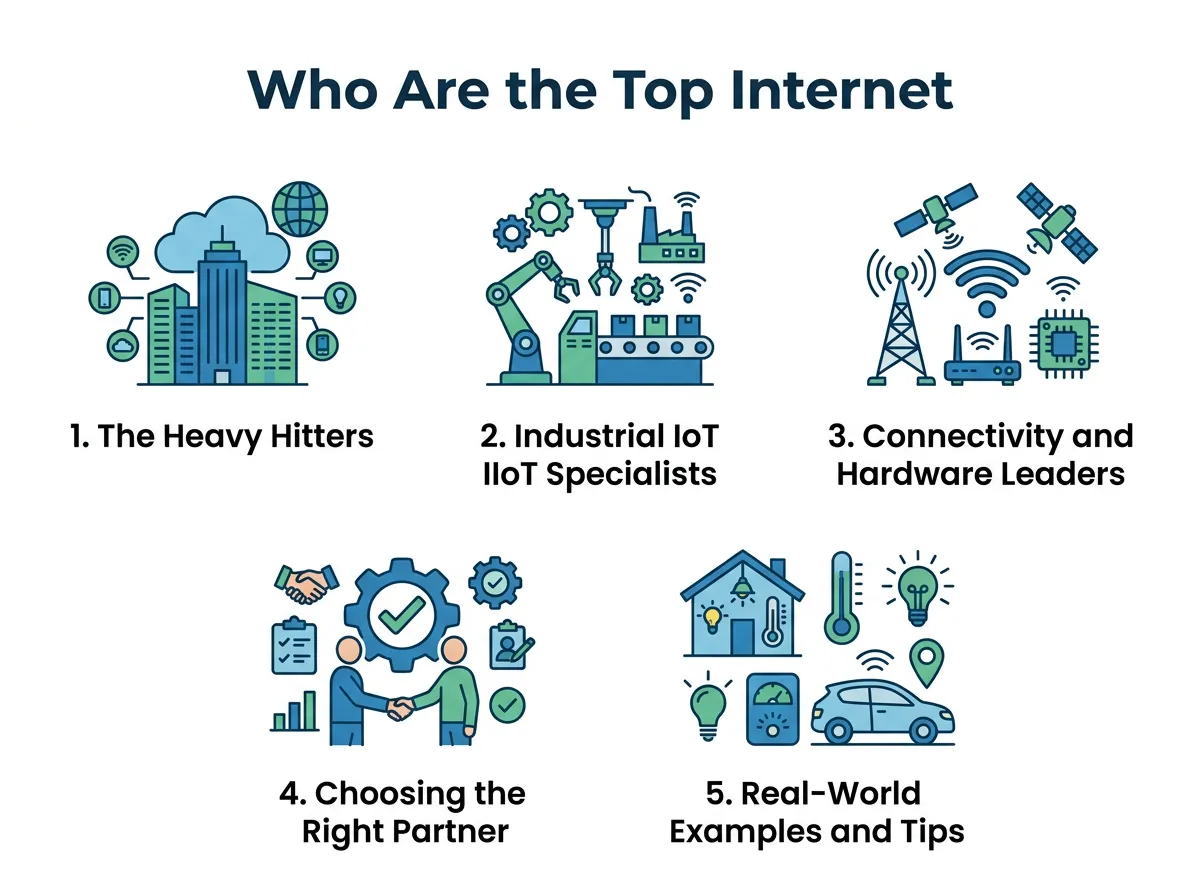
Who Are the Top Internet of Things Solution Providers? — key points at a glance
PTC ThingWorx
PTC is a leader in the industrial space. Their platform, ThingWorx, helps factories connect old machines to modern software. It has amazing tools for augmented reality (AR). This lets workers see live machine data just by looking through smart glasses.
Siemens MindSphere
Siemens is a historic name in manufacturing. Their digital tools help plants run smoothly. They focus on digital twins. A digital twin is a digital copy of a real machine. You can test changes on the digital copy before you touch the real machine. It saves time and prevents costly mistakes.
Connectivity and Hardware Leaders
A smart device is useless if it cannot talk to the network. Some providers focus on the wires, chips, and routers that keep things connected.
Cisco IoT
Cisco is famous for building the backbone of the internet. They bring this same power to the IoT world. They focus on edge computing. This means your data is processed close to the device, rather than traveling to a far-away cloud. It makes your smart systems react much faster.
To explore how companies rate these different options, you can check out the Gartner peer reviews of IoT service providers. These reviews offer real feedback from business leaders who use these tools every day.
Choosing the Right Partner for Your Business
When trying to answer Who Are the Top Internet of Things Solution Providers? for your specific company, you must look at your own goals. No single provider is perfect for everyone.
Assess Your Technical Needs
Do you need a simple app to track delivery trucks? Or do you need to manage a whole factory? If you need heavy data processing, look at AWS or Azure. If you need custom software and deep technical guidance, look for specialized software teams. Working with leading IoT development and service providers can help you design a system that fits your exact needs.
Budget and Scale
Think about the future. Your system might start with ten smart sensors. But what happens when you have ten thousand? Look for a provider with clear pricing. Some charge per device, while others charge by the amount of data you use.
You should also think about setup help. Many businesses hire outside experts to put all the pieces together. Researching the most common IoT system integration services can help you find a partner to connect your hardware, software, and cloud systems seamlessly.
Real-World Examples and Tips
Let us look at how these solutions work in real life. These examples show how different companies use these providers.
Smart Agriculture
A large farm wants to save water. They place moisture sensors in the soil. These sensors send data to AWS IoT Core. The system reads the data. If the soil is dry, the system turns on the sprinklers. If rain is coming, the system keeps the sprinklers off. This saves water and money.
Smart Healthcare
Hospitals use smart tags to track medical gear. Nurses do not have to waste time looking for wheelchairs or pumps. They can see the location of every item on a digital screen. This system uses Cisco routers and custom tracking software to keep patient care moving fast.
Quick Tips for IoT Success
- Start small: Test your ideas with a tiny pilot project first.
- Focus on security: Change default passwords on every single device.
- Keep it simple: Do not collect data you do not need. It only adds cost.
- Train your team: Make sure your staff knows how to use the new smart tools.
Conclusion
The world is getting smarter every day. Connecting your business to the web can help you work faster, save money, and keep customers happy. Asking Who Are the Top Internet of Things Solution Providers? is the first step toward transforming your business operations.
Whether you go with a cloud giant like Microsoft, an industrial expert like PTC, or a custom development team, the key is to plan ahead. Focus on security, start with a clear goal, and choose a partner that can grow with you. The future is connected, and your business can be too.
Frequently Asked Questions
Who is the largest IoT solution provider?
Amazon Web Services (AWS) is widely considered the largest IoT solution provider due to its massive cloud market share. AWS IoT Core allows billions of devices to connect and transmit data securely. It is favored by global brands for its scale, AI tools, and reliability.
What is the difference between IoT and IIoT?
IoT refers to general smart devices like smart home thermostats, wearables, and connected appliances. IIoT stands for Industrial Internet of Things, which focuses on high-stakes industries like manufacturing, energy, and logistics. IIoT systems require higher precision, rugged hardware, and specialized software.
How secure are IoT solutions?
Security depends heavily on how the system is set up and the provider you choose. Top-tier providers offer end-to-end encryption, regular software updates, and secure device registries. However, users must also follow best safety practices, such as changing default passwords and restricting device access.
Can small businesses afford IoT solutions?
Yes, many IoT solutions are highly affordable because they offer pay-as-you-go pricing models. Small businesses can start with just a few sensors and a basic cloud plan. This allows companies to test the technology and scale up only when they see clear benefits.
What industries benefit most from IoT?
Manufacturing, logistics, healthcare, and agriculture see the biggest benefits from smart technology. These industries use sensors to track assets, monitor equipment health, and automate routine tasks. It leads to lower operating costs and fewer human errors.
Do I need a custom developer for IoT?
Not always, as many providers offer pre-built templates for common tasks like asset tracking. However, if your business has highly specific needs or legacy hardware, a custom software partner can help. They ensure your new smart devices talk to your old systems without issues.
