


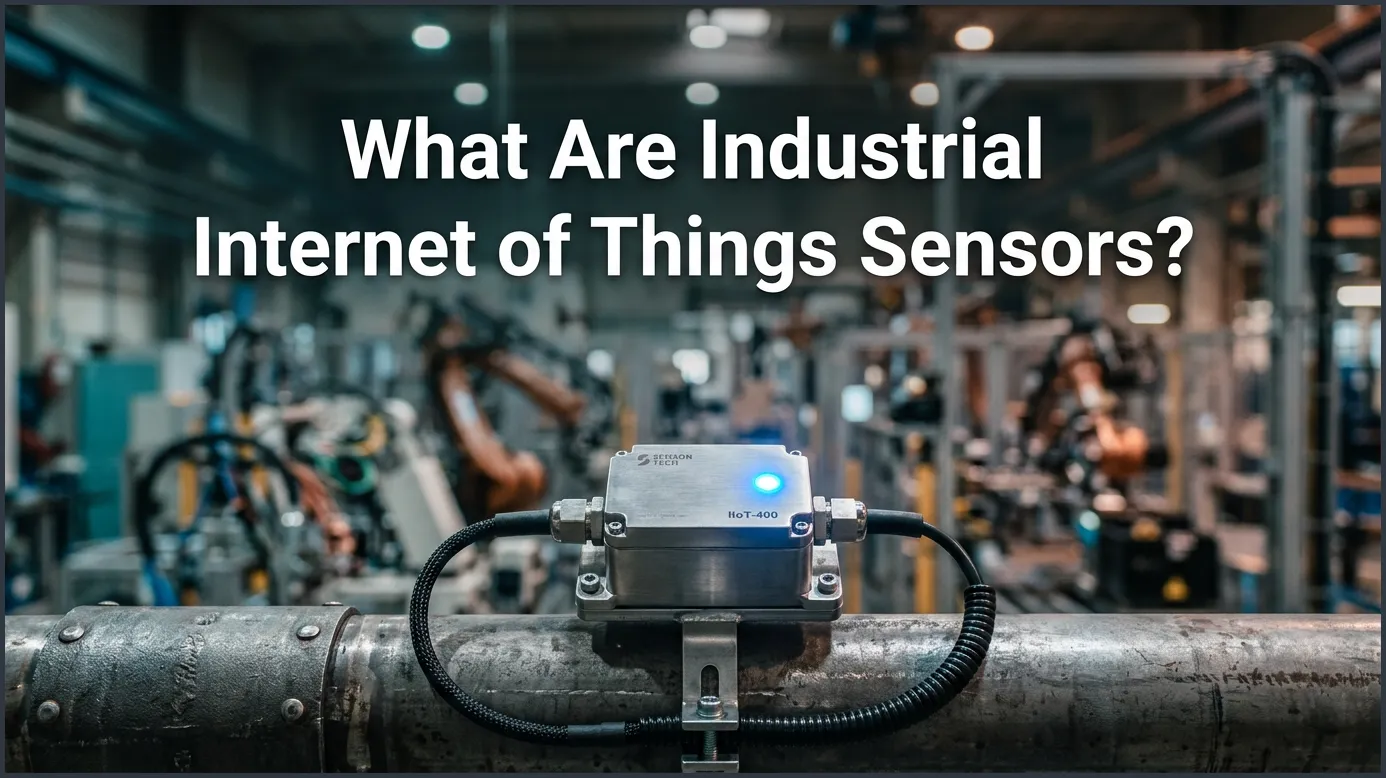
Industrial Internet of Things (IIoT) sensors are smart devices that track physical conditions like temperature, pressure, and vibration in factories. They send real-time data to central systems to prevent machine failures and boost productivity. These sensors form the digital foundation of modern smart manufacturing.
Imagine walking into a massive manufacturing plant. The hum of heavy machinery fills the air. Suddenly, a vital conveyor belt screeches to a halt. Work stops, workers wait, and money slips away by the minute. This is every plant manager’s worst nightmare. But what if the machine could have told you it was going to break three days ago? This is where modern technology steps in to save the day.
If you have ever wondered, “What Are Industrial Internet of Things Sensors?” you are in the right place. In this article, we will explore how these tiny devices work, why they are changing the face of manufacturing, and how they keep modern industries running smoothly. Let’s dive in.
Key Takeaways
- The Foundation of Smart Factories: IIoT sensors convert physical conditions like heat or vibration into digital data.
- Predictive Maintenance: They help businesses fix machines before they break, saving millions in downtime.
- Diverse Types: Common types include temperature, pressure, vibration, and gas sensors.
- Real-Time Decisions: Continuous monitoring allows operators to make instant, data-driven choices.
- Cost Efficiency: Installing these sensors reduces manual checks and lowers overall operational costs.
📑 Table of Contents
Understanding the Basics: What Are Industrial Internet of Things Sensors?
Let’s break down the name first. The “Internet of Things” (IoT) refers to everyday objects connected to the internet. Think of smart lightbulbs or smart thermostats in your home. When we add the word “Industrial” (IIoT), we shift our focus to factories, power plants, warehouses, and refineries.
So, what are Industrial Internet of Things sensors? In simple terms, they are hardware devices designed to detect and measure physical changes in an industrial setting. They track things like temperature, pressure, vibration, moisture, and sound.
According to Yokogawa’s digital infrastructure guide, these smart tools are the actual foundation of modern industrial environments because they bridge the physical and digital worlds. Instead of a human worker walking around with a clipboard to check a dial, these sensors do the job automatically, second by second. They translate physical raw data into digital signals that computers can read and analyze.
How Do IIoT Sensors Work?
Now that we know what they are, let’s look at how they operate. It is not just about taking a measurement; it is about what happens to that measurement. To understand the bigger picture, it helps to look at Cisco’s explanation of industrial IoT as a whole, which connects machines, analytics, and people. Here is a simple step-by-step breakdown of how these sensors function in that larger ecosystem.
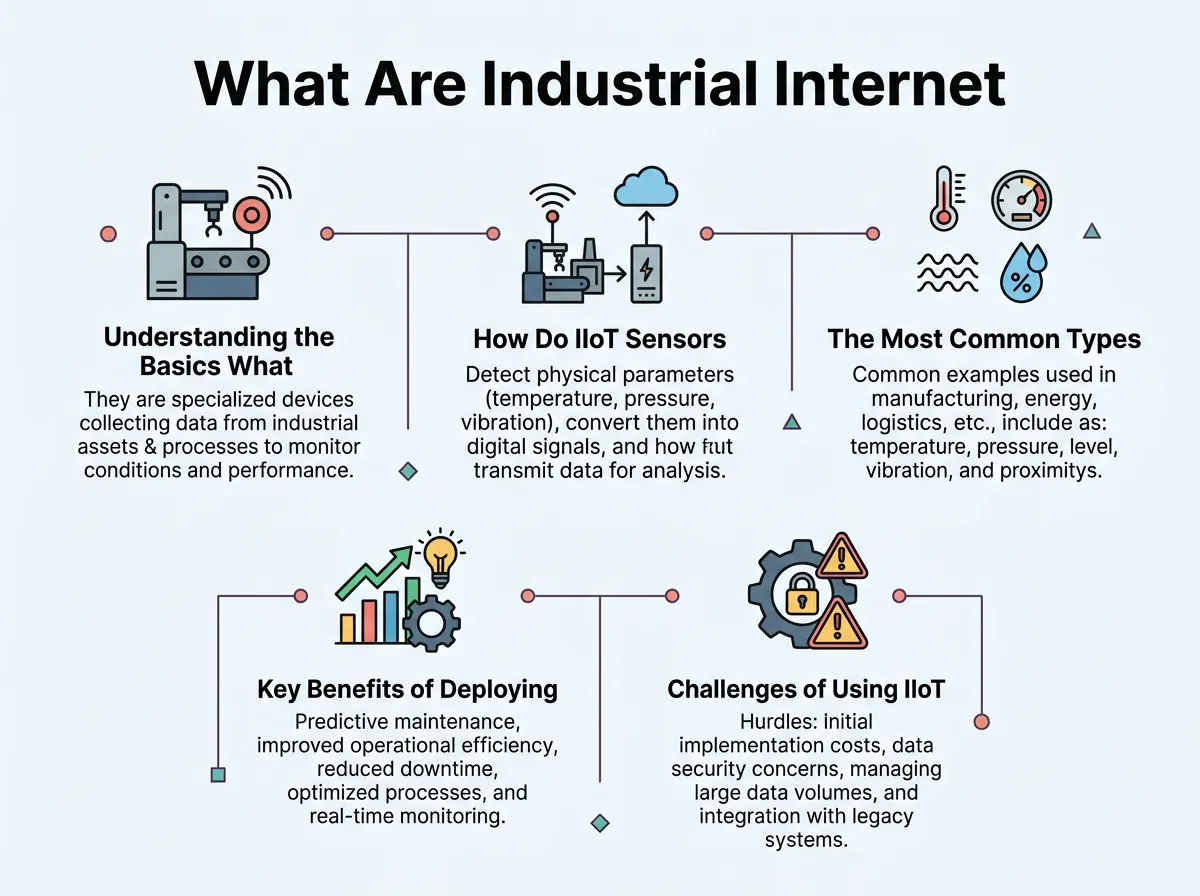
What Are Industrial Internet of Things Sensors? — key points at a glance
Step 1: Gathering the Data
First, the sensor detects a change in its environment. For example, a temperature sensor attached to an electric motor notices that the motor is getting unusually hot. This physical change is the starting point.
Step 2: Sending the Signal
Once the sensor collects this information, it needs to share it. Traditional sensors used long cables to send data to a local screen. IIoT sensors, however, use wireless networks. They send the data over Wi-Fi, Bluetooth, or cellular networks to a central hub or gateway.
Step 3: Analysis and Action
The gateway sends the data to a cloud platform or local software. Here, smart algorithms look at the numbers. If the motor’s temperature rises above a safe limit, the system instantly alerts the maintenance team. In some cases, the system can even tell the machine to shut down automatically to prevent a fire.
The Most Common Types of IIoT Sensors
Not all machines are the same, which means we need different tools for different jobs. Let’s look at the most common sensors you will find on a modern factory floor.
Temperature Sensors
Heat is the enemy of machinery. If a machine gets too hot, parts can melt or warp. Temperature sensors keep a close eye on engines, boilers, and cooling systems. They make sure everything stays within safe operating limits.
Vibration Sensors
Every machine vibrates a little bit when it runs. However, if a bearing is wearing out or a shaft is misaligned, the vibration pattern changes. Vibration sensors can detect these tiny changes long before human ears can hear them. Many companies use them for predictive maintenance, a strategy detailed by Upkeep’s resource on IIoT sensors, which helps businesses save thousands on repairs.
Pressure Sensors
These sensors are vital for systems that use liquids or gases. They monitor the pressure inside pipes, tanks, and hydraulic systems. A sudden drop in pressure could mean there is a leak, while a sudden spike could lead to a dangerous blowout.
Proximity and Level Sensors
Proximity sensors detect how close an object is to the sensor without making physical contact. They are perfect for assembly lines to count products. Level sensors, on the other hand, measure how full a tank or silo is, ensuring that liquids or grains never overflow.
Key Benefits of Deploying IIoT Sensors
Why are companies investing millions of dollars in these devices? The answer lies in the incredible benefits they bring to daily operations.
Preventing Unplanned Downtime
When a machine breaks unexpectedly, production stops. This costs money. By using smart sensors, teams can spot issues early. They can schedule maintenance during planned breaks instead of dealing with sudden emergencies.
Improving Worker Safety
Some industrial areas are dangerous for humans. They might be too hot, too high, or filled with toxic gases. Placing wireless sensors in these zones means human workers do not have to put themselves in harm’s way just to take a reading.
Boosting Energy Efficiency
Sensors can tell you exactly how much power a machine is using. If a machine is drawing too much energy, it might need maintenance. By optimizing how and when machines run, factories can drastically cut down on their electric bills.
Challenges of Using IIoT Sensors
While these sensors are highly beneficial, installing them is not always simple. Companies face a few common hurdles when upgrading their factories.
Data Security Concerns
Because these sensors connect to the internet, they can be vulnerable to cyber threats. If hackers get access to the network, they could disrupt production. This is why strong encryption and security protocols are essential.
High Initial Setup Costs
Buying and installing hundreds of smart sensors can be expensive. For instance, highly specialized TE Connectivity industrial IoT sensors are designed to withstand extreme vibration and pressure in harsh environments, making them a significant investment. However, most companies find that the sensors pay for themselves quickly by preventing expensive breakdowns.
Dealing with Too Much Data
Sensors generate a massive amount of data every second. If a factory does not have the right software to filter this information, managers can feel overwhelmed. It is important to focus on the data that actually helps you make decisions.
Tips for Choosing and Installing IIoT Sensors
If you are ready to bring smart sensing to your business, keep these practical tips in mind:
- Start small: Do not try to connect your whole factory at once. Choose one critical machine or one common problem area, like a troublesome pump. Install sensors there first, learn how to use the data, and then expand.
- Know your environment: Ensure your sensors match the environment they will live in. If they are going near high heat, water, or dust, look for sensors with high Ingress Protection (IP) ratings.
- Focus on battery life: Wireless sensors are convenient, but they run on batteries. Choose sensors with long battery lives—some can last up to ten years—to avoid spending all your time changing batteries.
Conclusion
At their core, Industrial Internet of Things sensors are the eyes and ears of the modern factory. They turn silent, isolated machines into smart, chatty assets that can tell us exactly how they feel. By tracking temperature, pressure, vibration, and more, these devices keep workers safe, save energy, and stop expensive breakdowns before they even start. If you are looking to bring your business into the digital age, these sensors are the perfect place to begin. The transition might seem daunting, but the long-term rewards of a safer, more efficient, and highly profitable workspace are well worth the effort.
Frequently Asked Questions
What is the difference between IoT and IIoT sensors?
IoT sensors are used in consumer products like smart homes, while IIoT sensors are designed for harsh industrial settings like factories. IIoT sensors are much more durable, highly accurate, and focus on machine health and process safety rather than consumer convenience.
Do IIoT sensors need a constant internet connection?
No, they do not always need a continuous direct internet connection. Many sensors send data to a local gateway or edge computer first, which can temporarily store the data and upload it to the cloud once a connection is available.
How long do the batteries in wireless IIoT sensors last?
Most wireless IIoT sensors are built for low energy use, allowing their batteries to last anywhere from 3 to 10 years. The actual lifespan depends on how often the sensor takes readings and transmits data.
Are IIoT sensors expensive to install?
While the initial cost of the sensors and software can be high, they are highly cost-effective in the long run. By preventing a single major equipment breakdown, a sensor setup can easily pay for itself in a matter of days.
Can IIoT sensors work on older machines?
Yes, you can easily attach IIoT sensors to older machines to bring them into the digital age. This process, called retrofitting, allows companies to get modern smart features without buying brand-new equipment.
What industries use IIoT sensors the most?
They are widely used in manufacturing, oil and gas, power generation, water treatment, and logistics. Any industry that relies on heavy machinery, pipelines, or precise climate controls can benefit from using them.
