

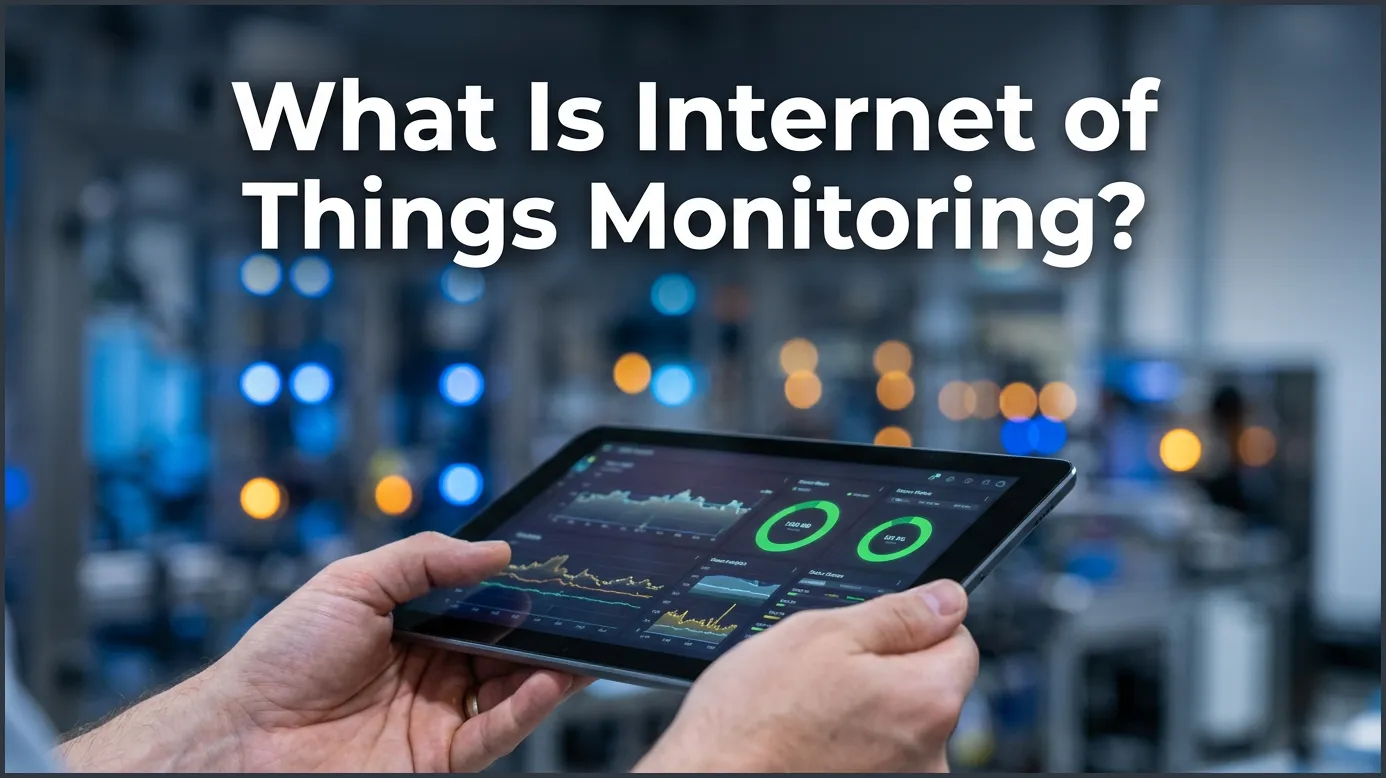
Internet of Things (IoT) monitoring is the process of tracking, analyzing, and managing the health and performance of connected smart devices in real time. By gathering continuous data from sensors, this technology helps businesses and homeowners spot issues before they cause costly downtime or system failures. It serves as the essential digital eyes and ears of any modern smart ecosystem.
Imagine waking up to a warm cup of coffee that brewed itself the moment your morning alarm went off. Your thermostat has already adjusted the bedroom temperature to your perfect setting. In the background, a manufacturing plant miles away is running without a single hiccup because the machines are whispering updates to a central system. All of this is possible thanks to the magic of connected devices. But what happens when one of those smart devices stops working? How do we keep track of thousands of tiny gadgets scattered across a building, a city, or a factory floor?
This is where a vital piece of modern technology comes into play. While we love the sheer convenience of smart gadgets, we need a reliable way to make sure they actually do their jobs. We need to check their battery levels, track their performance, and fix errors before they cause major disruptions. Today, we will explore this helpful technology in simple terms, showing you how it works, why it matters, and how it is shaping our daily lives.
In this guide, we will break down the inner workings of this system. We will share practical examples of how it is used in different industries, look at the key benefits, and highlight some simple best practices for getting started. Whether you are a tech enthusiast or a business owner looking to scale up, you will find plenty of easy-to-understand insights right here.
Key Takeaways
- Continuous Tracking: IoT monitoring watches your connected smart devices 24/7 to ensure they run smoothly.
- Predictive Maintenance: It catches tiny operational changes early so you can fix minor issues before they become major breakdowns.
- Smarter Decisions: The system gathers real-world sensor data that helps you optimize energy use, track assets, and plan budgets.
- Enhanced Security: Constantly watching device activity makes it much easier to detect unusual behavior and block potential cyber threats.
- Versatile Uses: This tech is helpful in almost every industry, from smart home appliances to heavy construction sites and factories.
📑 Table of Contents
What Is Internet of Things Monitoring?
To put it simply, Internet of Things monitoring is like having a digital doctor on duty day and night. It is the active practice of tracking, viewing, and managing all the smart devices connected to your network. These gadgets can range from simple temperature sensors in a greenhouse to giant, complex robotic arms on a modern factory assembly line.
The Core Concept of Connected Tracking
Think of each smart device as a player on a sports team. To win the game, the coach needs to know how each player is doing. Is anyone tired? Is anyone hurt? IoT monitoring acts as that coach. It collects small bits of data from every single device. This includes details like operating temperature, battery life, processing speed, and error codes. All of this information travels to a central dashboard where you can see the health of your entire system at a glance.
Why We Need It Now More Than Ever
With billions of new smart gadgets joining the global network every year, checking each one by hand is impossible. We need automated systems to do the heavy lifting for us. This technology does not just wait for a machine to break down. Instead, it actively looks for warning signs. For example, in terms of safety, understanding the cybersecurity objectives of IoT systems helps us see how monitoring keeps our private data secure from hackers. It ensures that every gadget does its job safely without exposing our networks to risks.
How Does IoT Monitoring Actually Work?
You might wonder how a tiny sensor on a water pipe can talk to a computer screen miles away. It is actually a very simple step-by-step process. The system relies on four basic stages to keep you informed.
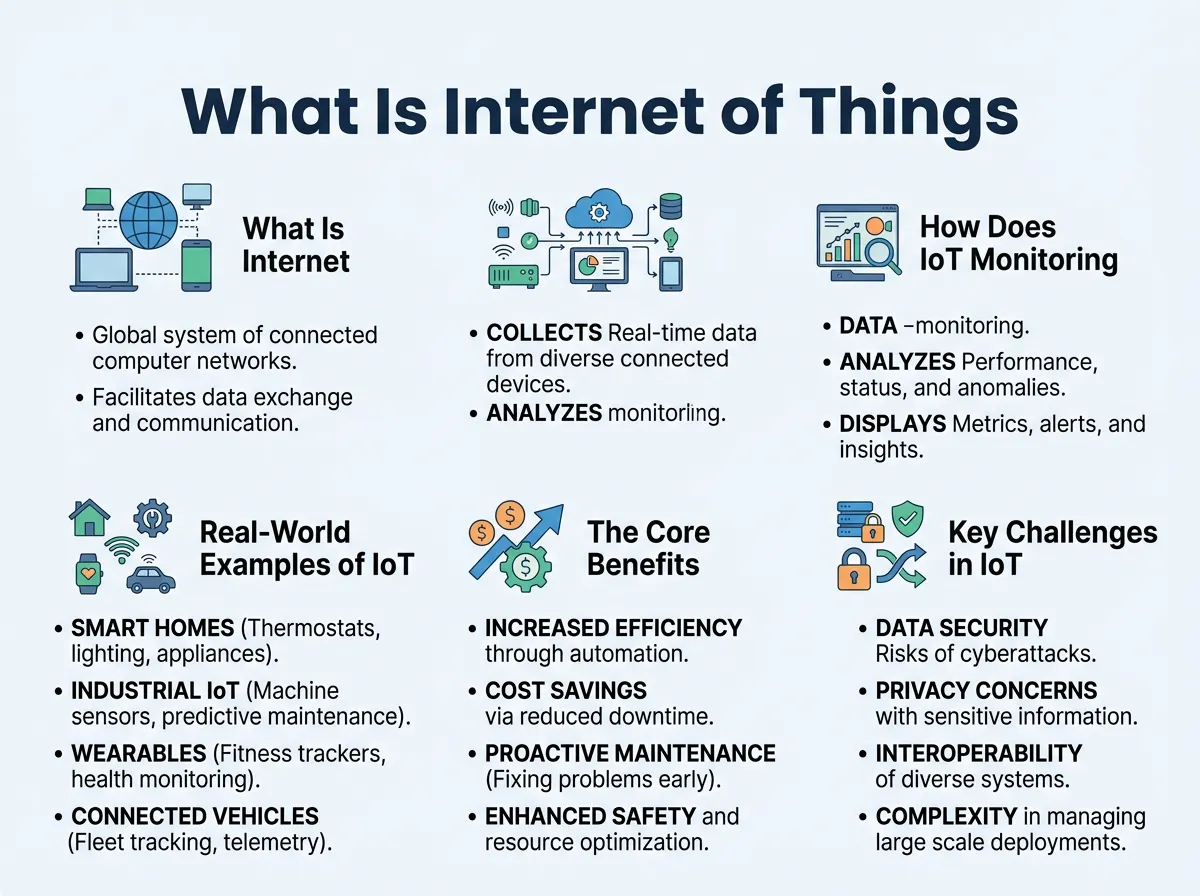
What Is Internet of Things Monitoring? — key points at a glance
Step 1: Data Collection (Sensors)
It all starts with physical sensors. These are the eyes and ears of the system. Sensors measure real-world things like heat, light, movement, humidity, or electrical current. For instance, a sensor placed inside a grocery store delivery truck might track how cold the freezer compartment stays during a long drive.
Step 2: Transmission (Networks)
Once the sensor gathers the data, it needs to send it somewhere useful. It uses wireless networks to do this. This could be Wi-Fi, Bluetooth, cellular networks, or special long-range radio waves. The data travels through the air to a central hub, which is usually located in the cloud.
Step 3: Analysis (The Brains)
Once the data arrives in the cloud, smart software takes over. This software analyzes the incoming numbers and looks for patterns. If a machine in a factory starts spinning too quickly or getting too hot, the software notices the change instantly.
Step 4: Action (Alerts and Automation)
This is the most exciting part of the process. When the software finds an issue, it takes immediate action. It might send a text message alert to a technician. In some cases, it can trigger an automatic fix, such as shutting down a machine to prevent a fire.
Real-World Examples of IoT Monitoring
This technology is not just for advanced tech companies. It is quietly changing almost every industry you can think of. Let us look at a few practical examples that show it in action.
Smart Homes and Appliances
Have you ever wanted to control your entire house with your phone? Many people now use mobile-controlled appliances with online tracking to manage their smart lights, security cameras, and ovens. This setup alerts you if you left the oven on by mistake or if a window is opened while you are away from home.
The Construction Industry
On busy building sites, safety and timing are everything. Project managers use smart sensors to track heavy equipment, watch concrete curing times, and monitor worker safety in real time. Reading about IoT applications in the construction industry reveals how these sensors keep projects on budget and keep workers out of harm’s way.
Smart Energy Grids
Utility companies use smart meters to track how much electricity people use throughout the day. This helps them balance the power grid and prevent blackouts during hot summer days. It also helps homeowners see exactly where they are wasting energy.
The Core Benefits of IoT Monitoring
Why are businesses investing so much time and money into these systems? The answers are simple: it saves time, reduces stress, and cuts down on costs.
Reduced Downtime and Maintenance Costs
Imagine a water pump in a city’s main water system. If it breaks suddenly, thousands of people lose water, and the emergency repairs are very expensive. With continuous tracking, the city can see if the pump is vibrating too much. They can fix a loose bolt today instead of replacing the entire pump next week.
Better Energy Efficiency
Saving energy is great for the planet and your wallet. By using a smart energy monitoring and management setup, factories and office buildings can turn off unused lights and cooling units automatically. This reduces waste and lowers utility bills without requiring any human effort.
Improved Safety and Compliance
In dangerous workplaces like mines or chemical plants, tracking environmental conditions is life-saving. Sensors can detect gas leaks or structural shifts instantly, giving workers plenty of time to evacuate safely. It also helps companies prove they are following safety laws.
Key Challenges in IoT Monitoring
While this technology is amazing, it does come with a few hurdles. Setting up a perfect system takes careful planning and attention.
Security and Privacy Risks
Every single connected device is a potential doorway for hackers. If you do not secure your smart cameras or locks, someone could gain access to your private space. That is why strong passwords, encryption, and regular software updates are absolutely vital.
Data Overload
Thousands of sensors can generate a massive amount of data every second. If you try to look at every single data point, you will get overwhelmed quickly. The challenge is filtering out the noise and focusing only on the numbers that actually matter to your business.
Best Practices for Setting Up Your System
If you want to start tracking your own smart devices, here are a few simple tips to help you succeed.
- Start Small and Scale Up: Do not try to connect every device at once. Start with one or two key areas, like tracking the temperature in your server room. Once you feel comfortable, you can add more sensors.
- Choose a Clean Dashboard: You need a simple, easy-to-read software dashboard. Look for tools that send clear alerts and do not require a computer science degree to understand.
- Keep Your Systems Updated: Just like your smartphone, smart devices need regular software updates. These updates patch security gaps and make the devices run smoother. Turn on automatic updates whenever you can.
Conclusion
Internet of Things monitoring is no longer a futuristic concept. It is a powerful, everyday tool that helps us manage our increasingly connected world. By keeping a close eye on our smart devices, we can prevent major failures, save energy, and keep our spaces secure. Whether you are managing a large factory or just trying to keep your smart home running smoothly, this technology offers the ultimate peace of mind. As our world continues to grow smarter, the systems we use to watch over it will only become more essential.
Frequently Asked Questions
What is the main purpose of Internet of Things monitoring?
The main purpose is to track the performance and health of connected devices in real time. This allows users to spot operational issues, prevent system failures, and keep everything running efficiently without manual checks.
Can I use IoT monitoring at home?
Yes, homeowners use it to manage smart thermostats, security cameras, smart lights, and connected kitchen appliances. It helps you control these devices through mobile apps and alerts you if there is an issue like a water leak.
What industries benefit most from this technology?
Industries like manufacturing, healthcare, logistics, agriculture, and construction benefit greatly. It helps them track valuable equipment, monitor environmental conditions, and automate routine tasks to save money.
How does IoT monitoring improve security?
It improves security by constantly watching how devices behave on your network. If a smart camera or sensor suddenly starts sending data to an unknown address, the system alerts you so you can block the threat.
Is IoT monitoring expensive to set up?
The cost depends on the size of your system, but starting small with a few basic sensors and free or low-cost dashboard software is quite affordable. As your business grows, you can invest in more advanced tools.
What is the difference between IoT monitoring and traditional monitoring?
Traditional monitoring often requires manual checks or physical wired connections to read device data. IoT monitoring uses wireless networks to collect and analyze data automatically from anywhere in the world.
