

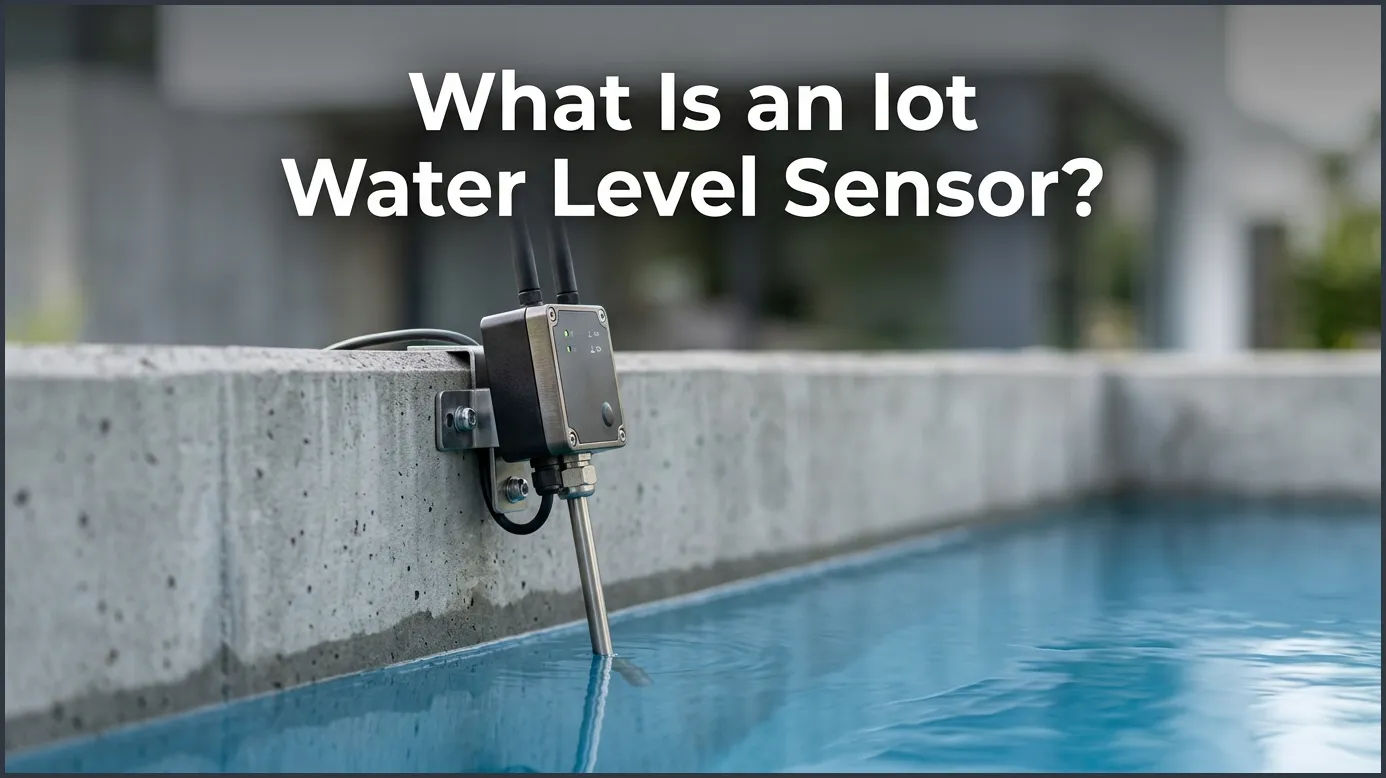
An IoT water level sensor is a smart, connected device that measures fluid levels in real time and sends this data to the cloud. By using wireless networks, these sensors allow users to monitor water levels remotely, prevent costly floods, and automate water pumps. They are crucial tools for smart homes, agriculture, industrial operations, and modern city management.
Imagine waking up in the middle of the night to the sound of rushing water. You step out of bed, only to splash right into a freezing puddle in your hallway. Your basement is flooded, and your water heater is ruined. It is a absolute nightmare that costs thousands of dollars to fix. Or think about a farmer who has to drive miles every single day just to check if the irrigation tanks are full. These are everyday struggles that people have faced for decades.
Luckily, modern technology now gives us a simple way to watch over our water. We no longer have to guess or check water levels manually. Instead, we can use smart devices that talk to our phones. If you want to protect your home or business, you might ask yourself: What Is an IoT Water Level Sensor? This guide will explain how these tiny devices work, why they are so helpful, and how you can choose the best one for your needs.
We will cover the simple technology behind these devices. We will also show you real-world ways they can make your life much easier. You do not need to be a tech expert to understand or use them.
Key Takeaways
- Real-Time Alerts: These smart sensors track water levels constantly and send live updates directly to your phone or computer.
- Damage Prevention: They send instant alerts when water rises too high, helping you stop costly leaks and floods before they start.
- Easy Automation: You can link these sensors to smart pumps to fill or empty tanks automatically without any manual effort.
- Diverse Technology: Sensors use different smart methods to measure water, including sound waves, pressure, and radar.
- Saves Time and Money: By checking water levels remotely, you save on travel costs and prevent expensive water waste.
📑 Table of Contents
What Is an IoT Water Level Sensor?
At its heart, an IoT water level sensor is a smart tool that measures how high or low water is in a specific spot. The “IoT” part stands for the Internet of Things. This means the sensor does not just show a reading on a screen. It connects to the internet to send that data straight to your smartphone, tablet, or computer. You can find detailed overviews on how a water tank level monitoring system functions to keep your home or business safe.
These devices consist of two main parts. The first part is the physical sensor itself, which sits in or near the water. The second part is a tiny computer chip that connects to the internet. Together, they watch the water for you. They work day and night, even when you are fast asleep or miles away on vacation.
How the IoT Connection Works
To truly understand what is an IoT water level sensor, you must look at how it communicates. The sensor reads the water level and turns that reading into a digital signal. Then, it uses a wireless network to send this signal to the cloud. You can use different types of networks depending on where the sensor is. For example, a home sensor might use your local Wi-Fi network. A sensor out in a farm field might use cellular data or a long-range network like LoRaWAN. Once the data reaches the cloud, you can see it on a clean dashboard or get instant text alerts if things go wrong.
The Different Types of IoT Water Level Sensors
Not all water sensors work the same way. Different situations call for different technologies. Understanding how they measure liquid can help you choose the right one for your project.
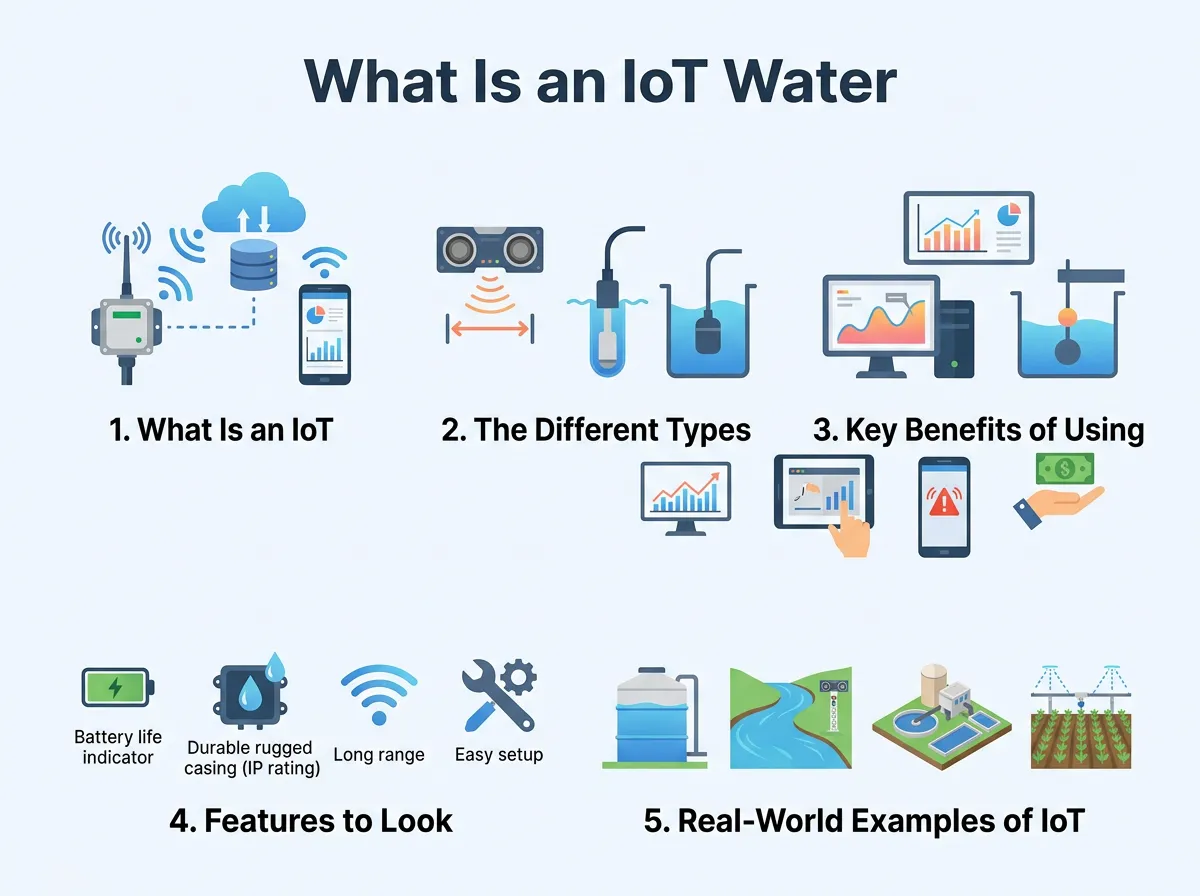
What Is an IoT Water Level Sensor? — key points at a glance
Ultrasonic Water Level Sensors
Ultrasonic sensors are very popular because they do not have to touch the water to measure it. Instead, they sit at the top of a tank or well and point downward. They send out high-frequency sound waves that human ears cannot hear. These waves bounce off the surface of the water and travel back to the sensor. By timing how long the sound takes to return, the sensor calculates the exact distance to the water. These sensors are clean, easy to install, and require very little maintenance, which makes them a popular topic in scholarly research on water level monitoring.
Submersible Pressure Sensors
These sensors work by going deep underwater. They sit at the bottom of a tank, well, or river. They measure the weight of the liquid pressing down on them. Since water pressure increases at a steady rate with depth, the sensor can calculate the exact height of the water above it. These sensors are tough and work well in deep wells where ultrasonic waves might get lost.
Radar and Optical Sensors
Radar sensors work similarly to ultrasonic ones, but they use radio waves instead of sound waves. This makes them highly accurate, even in dusty or hot environments. Optical sensors, on the other hand, use light beams. When the water touches the sensor tip, it changes the way light bends inside the device. This triggers an alert. Each type has its own strengths depending on the environment.
Key Benefits of Using IoT Water Sensors
Why should you care about these connected devices? They offer major advantages over old-school, manual float switches. They turn a passive system into an active, smart shield for your property.
Preventing Floods and Costly Damage
Water damage can ruin walls, floors, and personal items in minutes. An IoT sensor acts as an early warning system. If water starts to rise in your basement, the sensor alerts your phone immediately. This quick warning gives you time to turn off the main water valve or fix a broken pump before real damage occurs. Governments also use these tools in a flood monitoring system to keep entire cities safe from rising rivers and heavy storms.
Automating Your Water Management
With smart home tech, you can link your sensor to other devices. For example, if your garden water tank gets too low, the sensor can tell your smart pump to turn on. Once the tank is full, the sensor tells the pump to stop. This keeps your system running smoothly without you ever having to press a button. It is a fantastic way to save water and energy.
Saving Time and Travel Costs
In the past, checking water levels meant driving to remote tanks, climbing ladders, or peering down dark wells. This takes a lot of time and can be dangerous. With an IoT sensor, you can check twenty different tanks across a massive farm in just five seconds using your phone. This keeps you safe and saves a huge amount of fuel and time.
Features to Look for When Choosing a Sensor
If you are looking to buy one, you will find many options on the market. You can read reviews on the best iot water level sensors for global buyers to see what is popular. Here are a few vital features to keep in mind.
Connectivity and Range
Make sure the sensor can talk to your network. If you are placing it in your basement, a simple Wi-Fi sensor is perfect. If you need to monitor a well in a deep forest or a rural farm, look for cellular, NB-IoT, or LoRaWAN options. These networks can send data over miles without using much power.
Battery Life and Power Source
You do not want to change batteries every week. Look for sensors that use low-power networks and have a long battery life. Many high-quality IoT sensors can run for five to ten years on a single set of batteries. Some industrial models even use small solar panels to stay powered forever.
IP Rating and Durability
Since these devices work around water, they must be tough. Check the IP (Ingress Protection) rating of the device. For submersible sensors, you need an IP68 rating, which means they are completely waterproof. For outdoor non-contact sensors, a high IP65 or IP66 rating will protect them from heavy rain, snow, and dust.
Real-World Examples of IoT Water Sensors
Let us look at how different people use these smart tools in their daily lives. They are not just for high-tech factories; they are for everyone.
Smart Homes
Many homeowners place small, battery-powered sensors near their washing machines, water heaters, and sump pumps. If a pipe bursts while you are at work, you get an alert. Some systems can even talk to a smart main valve to shut off your home’s water automatically when a leak is found.
Smart Agriculture
Farmers use them to manage water for crops and livestock. They can monitor the water levels in large feeding troughs for cattle. This ensures the animals never go thirsty. They also use them to track water levels in irrigation reservoirs, making sure crops get the exact amount of water they need to grow strong.
Smart Cities and Infrastructure
Cities use IoT water sensors inside sewer lines and under bridges. During heavy rain, these sensors track how fast the water is rising. The city can use this data to close flooded roads, redirect traffic, and warn citizens before a disaster strikes. This technology saves lives and keeps public transport moving safely.
Conclusion
So, what is an IoT water level sensor? It is a simple, smart, and highly effective tool that keeps watch over your water. Whether you want to protect your home basement from floods, manage water tanks on a farm, or monitor sewer levels for a city, these devices make it easy. They take the guesswork out of water management and replace it with real-time, accurate data. By investing in this smart technology, you can save water, protect your property, and enjoy true peace of mind. The future of water management is connected, and it is available right now.
Frequently Asked Questions
How long do batteries last in an IoT water level sensor?
Most IoT water level sensors are designed to be highly energy-efficient. Depending on the network they use and how often they send data, their batteries can last anywhere from 3 to 10 years. Some models even use solar panels to stay powered indefinitely.
Can these sensors measure liquids other than water?
Yes, many IoT water level sensors can measure other liquids like fuel, oil, chemicals, or milk. However, you must choose a sensor made of materials that can withstand those specific liquids without corroding. It is always best to check the manufacturer guidelines before using them with harsh chemicals.
Do IoT water level sensors work without Wi-Fi?
Yes, many models do not require Wi-Fi to function. They can use cellular networks, satellite connections, or long-range low-power networks like LoRaWAN to send data. This allows them to work perfectly in remote farm fields, deep forests, or industrial sites.
Are IoT water level sensors expensive?
The cost of these sensors varies widely based on their technology and accuracy. Simple home Wi-Fi sensors can cost as little as twenty to fifty dollars. Professional, industrial-grade sensors with long-range cellular connections and high durability can cost several hundred dollars.
How do these sensors handle freezing winter weather?
High-quality outdoor sensors are built to withstand extreme temperatures, often ranging from far below freezing to very hot. Submersible sensors might need to be removed if the water freezes completely solid to prevent crushing. Non-contact sensors, like ultrasonic or radar models, can easily measure ice or liquid level changes from above.
Can I connect an IoT water level sensor to a smart water pump?
Absolutely, this is one of their best uses. You can set up automation rules through a smart home hub or cloud platform to turn a pump on or off based on the sensor’s readings. This prevents your water tanks from ever running dry or overflowing.
