



Data analytics keeps industrial machinery running smoothly by processing real-time sensor data to spot early signs of wear and tear. This smart technology allows companies to fix equipment right before it breaks, saving money and preventing sudden shutdowns. By turning raw operational data into clear actions, businesses can extend machine lifespans and work much more safely.
Imagine you are managing a busy factory floor. Dozens of massive machines are humming all around you. Suddenly, a key conveyor belt grinds to a screeching halt. The room goes quiet. Production stops instantly. Every single minute of this unplanned downtime costs your business thousands of dollars. You have to wait hours for a technician to arrive, find the broken part, and fix it.
For decades, this was just how businesses operated. Companies either fixed machines after they broke, or they spent fortunes servicing perfectly good machines on a rigid schedule. Today, things are changing fast. Smart factories do not guess when a machine will break. Instead, they let the machines tell them when they need help. This is where advanced data tools come into play. But exactly how is data analytics used in predictive maintenance to make this possible?
Let us take a deep dive into how data analytics transforms modern maintenance. We will look at how sensors, software, and algorithms work together to save time, money, and stress.
Key Takeaways
- Early Failure Warning: Analytics tools find hidden patterns in machine data to warn workers of failures before they happen.
- Cost Savings: Fixing machines only when needed reduces the high costs of both over-maintenance and unexpected breakdowns.
- Sensor-Driven Insights: Internet of Things (IoT) sensors constantly track temperature, vibration, and sound to feed analytical models.
- Machine Learning Role: Advanced algorithms learn from past failures to make highly accurate predictions about future machine health.
- Better Safety: Predicting asset failures before they occur keeps factory floors and workspaces much safer for human operators.
📑 Table of Contents
- The Magic Behind the Screen: What is Predictive Maintenance?
- How Is Data Analytics Used in Predictive Maintenance?
- The Three Types of Data That Matter Most
- Key Steps in the Data Analytics Process
- Real-World Examples and Practical Benefits
- Tips for Getting Started with Predictive Maintenance Analytics
- Conclusion: The Future is Predictable
The Magic Behind the Screen: What is Predictive Maintenance?
To understand the role of data, we must first look at the concept of maintenance itself. In the past, companies used reactive maintenance. This meant running a machine until it broke down completely. It was simple but very expensive. Later, companies moved to preventive maintenance. This is like changing your car oil every six months. You do it on a schedule, whether the car needs it or not. This is safer, but it often wastes good parts and valuable time.
Predictive maintenance is different. It uses live data to schedule repairs at the exact right moment. We can define predictive maintenance as a method that monitors the actual condition of equipment to decide when maintenance should occur. The goal is to perform work only when it is truly necessary.
This method relies heavily on the Internet of Things (IoT). Small, cheap sensors are placed all over a machine. These sensors measure physical changes. They act like the machine’s eyes and ears. However, sensors alone cannot do the job. They just collect numbers. To make sense of those numbers, we need data analytics.
How Is Data Analytics Used in Predictive Maintenance?
So, how is data analytics used in predictive maintenance to keep everything running? At its core, data analytics acts as the brain of the operation. It takes the mountain of raw numbers from the sensors and turns them into clear instructions for human workers.
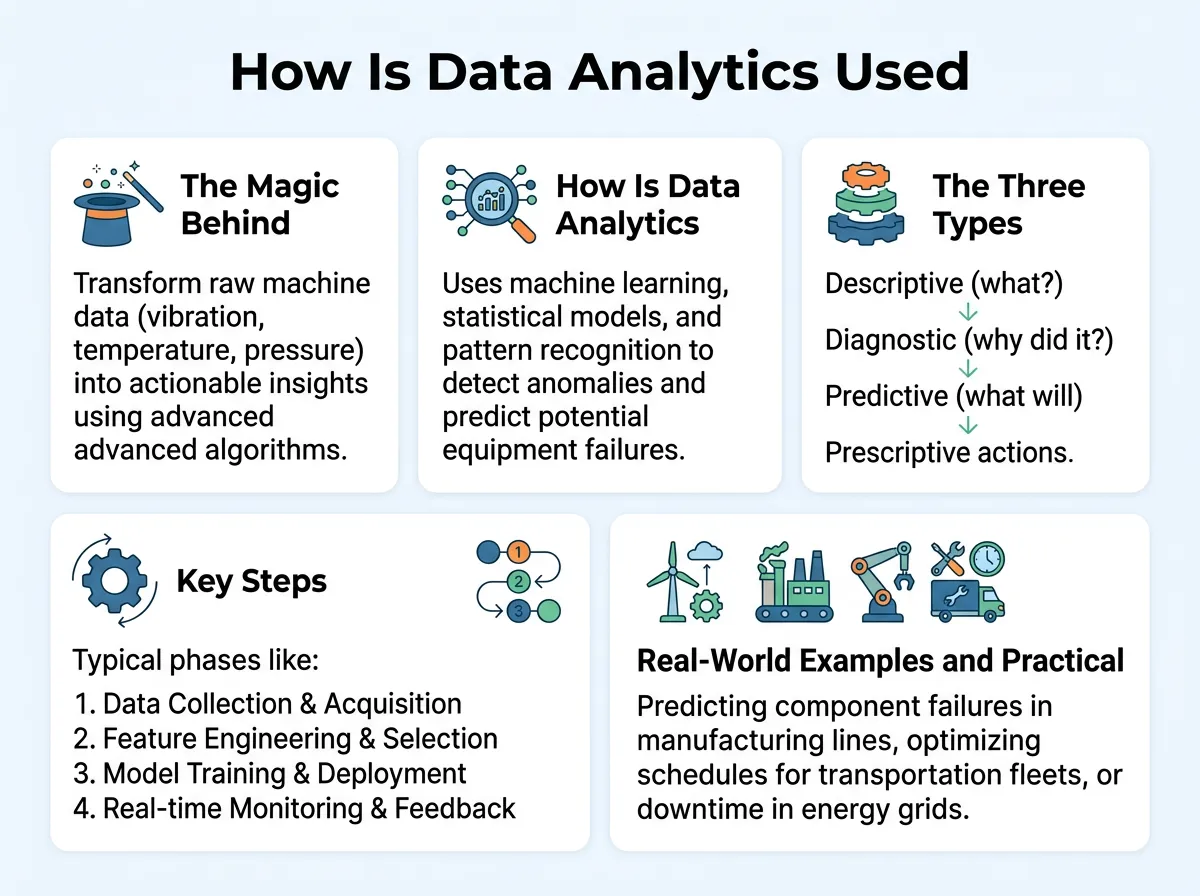
How Is Data Analytics Used in Predictive Maintenance? — key points at a glance
Without analytics, sensor data is just a long, confusing list of temperatures and vibration speeds. Analytics tools organize this data. They search for tiny trends that human eyes would easily miss. For example, a motor might get one degree warmer every day for a week. A human operator might not notice this tiny change. But an analytics program will spot it instantly. It will compare this change to past data and realize the motor is about to fail.
According to IBM’s overview of predictive maintenance, utilizing these analytical insights helps companies reduce asset downtime and extend the life of their equipment. By using data, companies stop guessing and start knowing.
The Three Types of Data That Matter Most
Data analytics does not rely on just one type of information. It combines different data streams to build a complete picture of a machine’s health.
1. Real-Time Sensor Data
This is the most exciting type of data. Sensors track the live vital signs of a machine. They measure heat, pressure, vibration, sound, and electrical current. If a machine spins too fast or gets too hot, the sensor records it immediately.
2. Historical Maintenance Logs
To predict the future, you must understand the past. Analytics programs look at old records. They learn what happened right before past breakdowns. Did the machine vibrate wildly three hours before it broke last year? If yes, the software learns to watch out for that specific pattern.
3. Environmental and Contextual Data
Machines do not work in a vacuum. The air temperature, humidity, and even the skill level of the machine operator can affect how a machine performs. Analytics tools pull in this extra data to make their predictions much more accurate.
Key Steps in the Data Analytics Process
Understanding how data analytics is used in predictive maintenance requires looking at the step-by-step process. Data goes on quite a journey before it helps a technician make a repair.
Data Collection and Cleaning
First, sensors gather millions of data points every second. This raw data can be messy. It might have missing values or errors. The first job of the analytics software is to clean this data. It removes the “noise” so only the true signals remain.
Pattern Recognition and Machine Learning
Next, the clean data goes into machine learning models. These models are trained to spot normal behavior. Once they know what “normal” looks like, they can spot anomalies. This pattern recognition is the heart of predictive maintenance. Over time, these smart models get better and better at their jobs.
Alerts and Actionable Insights
Once the system finds a problem, it does not just keep it a secret. It sends an automatic alert to the maintenance team. This alert often tells the technician exactly what the problem is, what parts are needed, and how urgent the repair is.
Real-World Examples and Practical Benefits
Let us look at how this works in real life. Consider a large wind farm. The wind turbines are located in remote areas, often high on hills or out at sea. Sending a technician to climb a turbine just to check on it is dangerous and expensive.
By using data analytics, the wind farm operator can monitor the vibration of the turbine blades from miles away. If the blades start to vibrate in an unusual way, the analytics software flags it. The company can schedule a repair before the blade breaks off. This saves millions of dollars in repair costs.
In manufacturing, data analysis in modern machinery helps prevent sudden line stops. Factories can keep fewer spare parts in storage because they know exactly when they will need them. This reduces storage costs and improves cash flow.
Furthermore, big data technologies enhance maintenance capabilities by allowing companies to scale these systems across thousands of machines worldwide. A multinational company can monitor all of its global factories from a single dashboard.
Tips for Getting Started with Predictive Maintenance Analytics
Are you thinking about using data analytics for your own business equipment? You do not need to install sensors on every machine overnight. Here are some simple tips to start small and grow safely:
- Start with your most critical asset: Pick the one machine that would cause the biggest headache if it broke down today. Focus your efforts there first.
- Ensure data quality: Make sure your sensors are calibrated correctly. Bad data in means bad predictions out. Keep your data clean.
- Train your team: Technology is only as good as the people using it. Teach your maintenance staff how to read and trust the data alerts.
- Choose the right software: Look for user-friendly platforms that integrate easily with your existing business systems.
Conclusion: The Future is Predictable
The days of waiting for things to break are quickly coming to an end. Data analytics has turned maintenance from a reactive chore into a strategic advantage. By listening to the quiet whispers of machinery, businesses can stop failures before they even start.
As sensor technology becomes cheaper and machine learning gets smarter, predictive maintenance will become the standard for every industry. Embracing this data-driven approach keeps your business moving forward, saves money, and ensures your team stays safe. It is time to let your data do the heavy lifting!
Frequently Asked Questions
How does data analytics improve predictive maintenance?
Data analytics improves predictive maintenance by finding hidden patterns in sensor data that show when a machine is starting to wear out. This allows teams to fix the machine before a costly breakdown occurs. It also helps companies avoid wasting money on unnecessary scheduled maintenance.
What types of sensors are used to collect maintenance data?
Common sensors used in this process measure physical changes like temperature, vibration, acoustic sound, and pressure. Other sensors track electrical currents or analyze the chemical makeup of engine oil. These sensors provide the continuous stream of data needed for accurate analysis.
Do you need machine learning for predictive maintenance?
While you can use simple rules and thresholds, machine learning makes predictive maintenance much more accurate. Machine learning models can analyze complex, overlapping data streams to spot very subtle warning signs that humans would miss. They also continuously learn and improve their predictions over time.
What is the difference between preventive and predictive maintenance?
Preventive maintenance happens on a strict, pre-set time schedule, much like changing your car oil every six months regardless of mileage. Predictive maintenance uses live sensor data to check the actual health of the machine, scheduling repairs only when the data shows a failure is close. This prevents both unexpected breakdowns and wasted maintenance tasks.
Is predictive maintenance expensive to set up?
Setting up predictive maintenance requires an upfront investment in sensors, software, and staff training, which can be costly. However, most companies quickly recover this cost by drastically reducing unplanned downtime and extending the lifespan of their expensive machinery. Starting small with one critical machine can keep initial costs low.
Which industries benefit most from data-driven maintenance?
Industries with high-value assets and high costs for downtime benefit the most from this technology. This includes manufacturing, oil and gas, aviation, wind energy, and transport logistics. Any business that relies heavily on continuous machinery can see massive savings from data-driven maintenance.
