


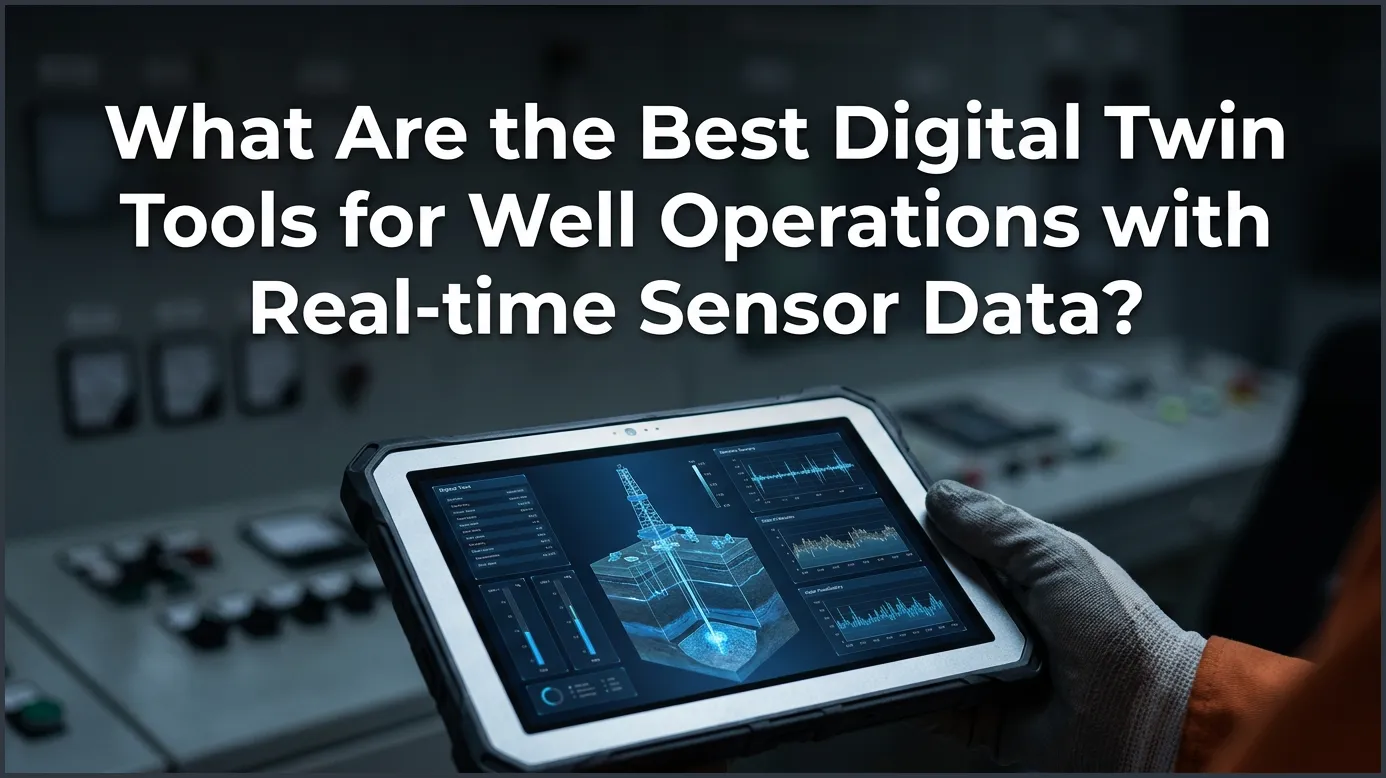
Finding the right software to manage your oil and gas assets can be a game-changer. The best digital twin tools for well operations with real-time sensor data include Schlumberger’s DrillOps, Halliburton’s DecisionSpace, and Siemens gPROMS. These platforms turn live stream data into smart actions, helping you prevent downtime and boost well safety instantly.
Imagine sitting in a comfortable office miles away from a deep-water oil rig. Deep underground, a drill bit twists through hard rock. You need to know if the pressure is rising or if a tool is about to fail. In the past, you had to wait for daily reports or rely on gut feelings. Today, technology gives us a living, breathing virtual copy of that exact well.
This virtual copy is called a digital twin. It takes live data from sensors on the rig and shows the well on a screen. But with so many options out there, you might ask: What Are the Best Digital Twin Tools for Well Operations With Real-Time Sensor Data? Finding the right fit can feel overwhelming.
In this guide, we will look at the top tools for well operations. We will explain how they handle live data, what makes them special, and how to pick the right one for your team. Let’s dive in!
Key Takeaways
- Real-Time Integration: Streaming live data from downhole sensors is key to preventing dangerous pressure spikes.
- Industry Leaders: Schlumberger and Halliburton offer the most complete and robust tools for well modeling.
- Predictive Analytics: Physics-based models help teams see tool failures before they actually happen.
- Cloud Connection: Modern twins link edge devices to cloud databases for easy remote collaboration.
- Cost Savings: Digital twins reduce downtime, which saves operators millions of dollars per well.
📑 Table of Contents
Why Well Operations Need Real-Time Digital Twins
Wells are complex and expensive. A single mistake can cost millions of dollars. That is why oil and gas companies use digital models to watch over their wells. These models are not just static drawings. They are active systems that update every second.
The Power of Live Sensor Data
Modern wells have sensors everywhere. These sensors measure pressure, temperature, flow rates, and vibration. A good digital twin connects directly to these sensors. It takes the raw numbers and builds a visual model. This helps engineers spot problems instantly.
By connecting digital twins and real-time cloud data, teams can work together from anywhere. An engineer in Houston can see the exact same well status as a driller on a platform in the North Sea. This keeps everyone on the exact same page.
Preventing Costly Downtime
When a drill bit breaks, work stops. Lost time means lost money. A digital twin helps you see failures before they happen. The software looks for tiny changes in vibration or pressure. It warns you to fix the tool before it breaks down completely.
Top Digital Twin Software for Oil and Gas Wells
So, What Are the Best Digital Twin Tools for Well Operations With Real-Time Sensor Data? Let us look at the top industry choices that field teams trust.
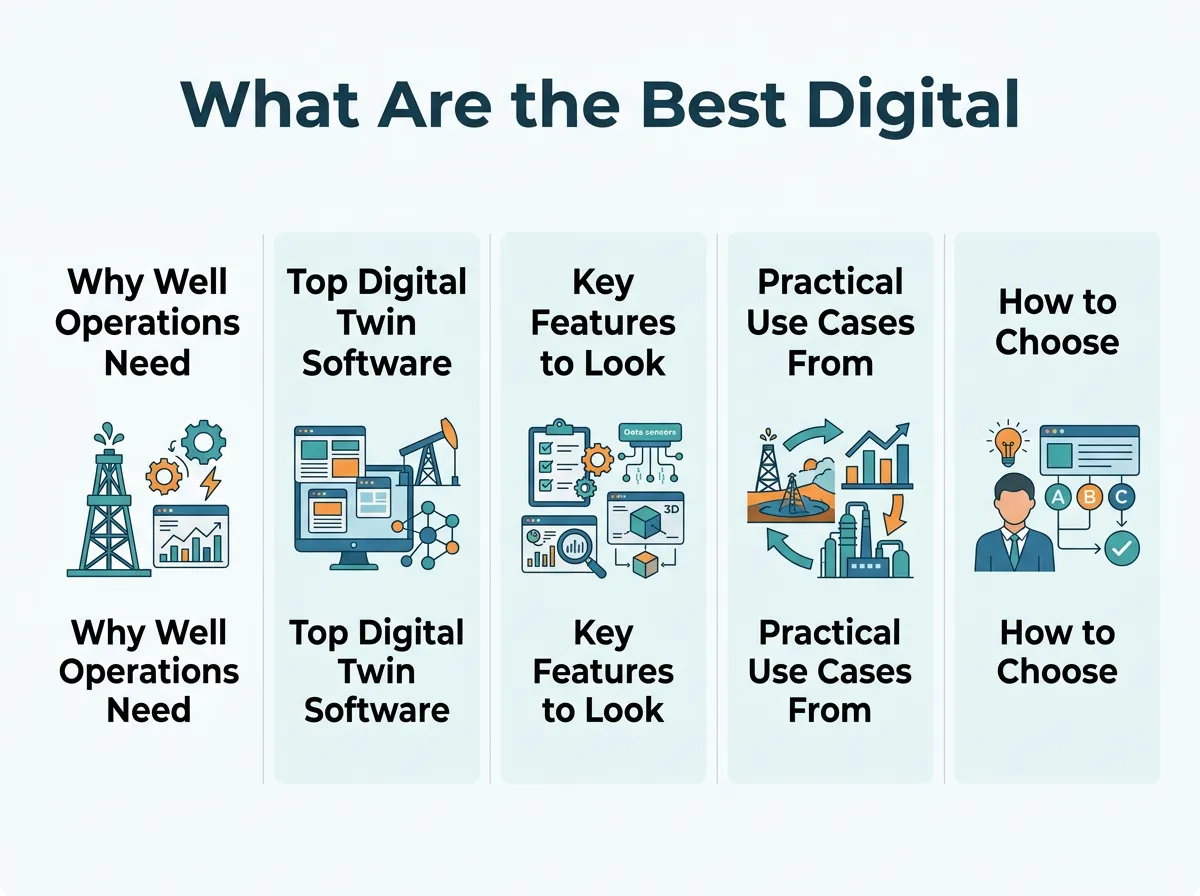
What Are the Best Digital Twin Tools for Well Operations With Real-Time Sensor Data? — key points at a glance
1. Schlumberger (SLB) DrillOps and Agora
SLB is a giant in the oilfield services world. Their DrillOps platform is built for high-speed drilling. It uses smart math models to guide the drilling process. DrillOps links up with Agora, which is an edge computing platform. This combo lets you process sensor data right at the wellsite. It is incredibly fast and highly reliable.
2. Halliburton DecisionSpace
Halliburton offers DecisionSpace, which is a very powerful suite of tools. It helps you design, drill, and monitor wells in one place. DecisionSpace uses real-time data to update reservoir models. This means you can see how your drilling affects the oil reservoir instantly. It is perfect for large teams that need to share big data files.
3. Baker Hughes JewelSuite
JewelSuite is another great option. It focuses on precise subsurface modeling. The tool takes live data and builds clear 3D images of the wellbore. This helps teams avoid drilling into dangerous pressure zones. It is highly flexible and works well with other third-party software.
4. Siemens gPROMS and MindSphere
Siemens brings strong industrial expertise to the table. Their gPROMS software uses deep physics equations to model well fluids. When you connect it to MindSphere, their cloud platform, you get a powerful real-time tool. It is excellent for tracking chemical changes and flow rates inside the well.
Key Features to Look for in a Well Digital Twin Tool
Not all digital twins are created equal. Some are great for planning, while others excel at live monitoring. When looking at What Are the Best Digital Twin Tools for Well Operations With Real-Time Sensor Data, you must focus on key features.
High-Frequency Data Streaming
Sensors send data fast. Your software must be able to keep up. Look for tools that handle high-frequency data streams. The system should update in milliseconds, not minutes. Any lag can lead to late decisions and costly errors.
Physics-Based Predictive Modeling
Good software does not just show you what is happening now. It predicts what will happen next. It does this by combining live data with physics laws. Understanding how digital twins work in well control is vital here. A good physics model tells you if a sudden pressure spike is normal or a sign of a blowout.
User-Friendly Visuals
Raw numbers are hard to read. Your team needs clear, simple charts and 3D maps. The best tools have clean dashboards. They highlight problems in bright colors so you can spot them in a split second.
Practical Use Cases: From Safety to Production Optimization
How do these tools actually help in the field? Let’s look at some real-world uses. These examples show how digital twins save time and protect workers.
Live Scenario Analysis
What happens if you increase the pump speed? In the past, you had to try it and pray nothing broke. Now, you can run a test on the digital twin first. Performing real-time scenario analysis during well construction lets you try different drilling speeds safely. You see the results on your screen before you make any changes in the real world.
Optimizing Production Flow
Once a well is drilled, the goal is to get oil out smoothly. Digital twins help monitor production. They track fluid levels and pump health. By studying these trends, teams can find the best pumping speed to get the most oil without wearing out the gear. There are many great applications of digital twins in oil and gas that focus purely on keeping production high and costs low.
How to Choose the Best Tool for Your Team
Every oil and gas company has different needs. To pick the right tool, you must ask a few key questions.
Does It Work with Your Current Gear?
You probably already have sensors and databases in place. Your new digital twin must connect to them easily. Look for open software that plays nice with others. You do not want to buy all new hardware just to use a new software tool.
Is It Easy to Learn?
The best software is useless if your crew refuses to use it. Pick a tool with a gentle learning curve. Look for vendors who offer good training and support. A simple tool that everyone uses is much better than a complex tool that sits idle.
What Is Your Budget?
Digital twin software can be expensive. Think about the total cost of ownership. This includes setup fees, monthly cloud costs, and training. Balance the cost against how much money the tool will save you by preventing downtime.
Conclusion
Digital twins are no longer a futuristic dream. They are essential tools for modern well operations. By streaming live sensor data into a virtual model, you can drill safer, faster, and cheaper. Whether you choose SLB DrillOps, Halliburton DecisionSpace, or another platform, the key is to connect your live data with smart, predictive models. Start small, train your team well, and watch your operational efficiency soar.
Frequently Asked Questions
What is a digital twin in well operations?
A digital twin is a virtual 3D copy of a physical oil or gas well. It updates in real time using sensor data from the actual rig. This helps engineers monitor drilling, predict equipment failures, and make safer decisions from anywhere.
How do sensors help a digital twin?
Sensors measure critical well data like pressure, temperature, and vibration. This data is streamed directly to the digital twin software instantly. Without these live updates, a digital twin would just be a static model instead of an active tool.
Which software is best for real-time well control?
Schlumberger’s DrillOps and Halliburton’s DecisionSpace are widely considered the top options. They offer robust physics-based modeling and integrate directly with real-time edge devices. Siemens gPROMS is also excellent for modeling complex fluids.
Can digital twins prevent oil rig accidents?
Yes, they can significantly improve safety by warning crews about dangerous pressure spikes before they cause blowouts. Teams can also run virtual safety tests on the software without risking actual lives. This makes well control much safer and more predictable.
Are digital twin tools expensive to set up?
Yes, setting up digital twin systems can require a large upfront investment. This includes purchasing licenses, upgrading sensors, and training your crew. However, they quickly pay for themselves by preventing costly equipment failures and drilling delays.
Can digital twins work offline at remote wellsites?
Most advanced systems use edge computing devices to process data locally without an active internet connection. This ensures that well operators can still access critical models even in remote offline locations. Once a connection is found, the data syncs with the main cloud server.
