


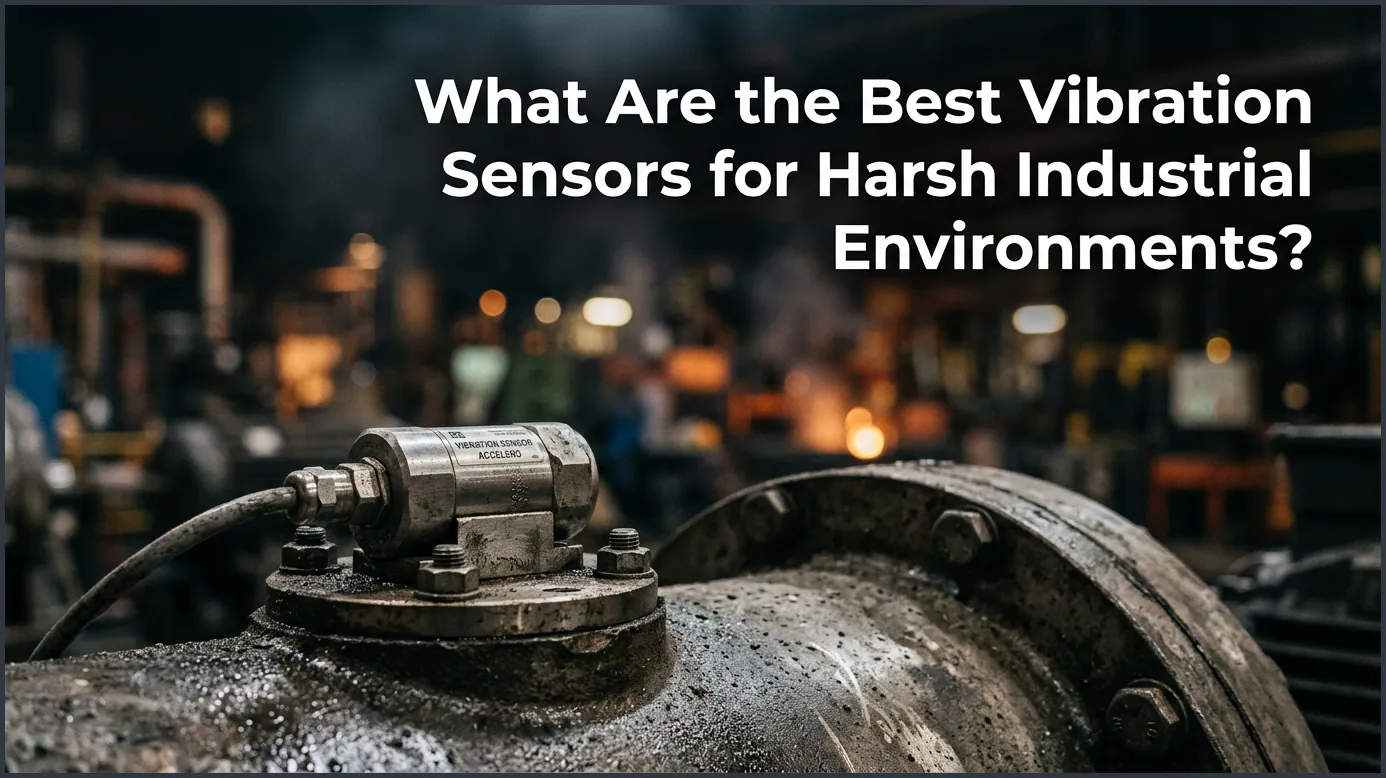
Finding the right monitoring tools for extreme factory settings can be tough. The best options for hot, wet, or dusty areas are hermetically sealed piezoelectric accelerometers and rugged wireless smart sensors with high IP ratings. These tough devices keep your machinery safe by spotting early signs of damage before a costly breakdown occurs.
Imagine standing inside a giant steel mill. The floor shakes, steam rises from the pipes, and sparks fly from the furnace. In the middle of this chaos, a massive water pump works non-stop. If that pump fails, the entire plant stops, costing thousands of dollars every minute. To prevent this, engineers use special tools to listen to the pump’s heartbeat. But how do you choose a tool that can survive such a brutal place?
Finding the right tool for the job is not always easy. Many standard devices break down quickly when exposed to extreme heat, dirt, or moisture. To keep your plant running smoothly, you need to know: What Are the Best Vibration Sensors for Harsh Industrial Environments? In this guide, we will break down the top options, look at the key features you need, and share tips on how to keep your gear working for years to come.
Key Takeaways
- Extreme Durability Matters: Harsh environments require sensors made of stainless steel with glass-to-metal seals.
- Piezoelectric Sensors Lead: These sensors are the industry standard for high heat and high-frequency needs.
- IP Ratings Are Critical: Look for IP68 or IP69K ratings to keep out water, mud, oil, and dust.
- Wireless is Growing: Modern wireless sensors reduce cable clutter but must have robust casings.
- Correct Mounting is Key: Stud mounting offers the best data accuracy in heavy-duty setups.
📑 Table of Contents
Understanding Harsh Industrial Environments
Before we look at the sensors themselves, we need to understand what makes an industrial environment so tough. Factories, mines, and mills are very different from clean office spaces. They present unique challenges that can quickly destroy delicate electronic devices.
High Heat and Extreme Cold
Extreme temperatures are common in manufacturing. Steam pipes, smelting furnaces, and heavy motors generate intense heat. On the other end of the spectrum, outdoor oil rigs and food processing freezers operate in freezing cold. A standard sensor will fail if the temperature goes too far in either direction. You need specialized hardware that can handle these wide temperature swings without losing accuracy.
Moisture, Dust, and Chemicals
Water is the enemy of electronics. In food plants, machines are blasted with high-pressure hot water and harsh chemicals every night. In mines, fine rock dust covers everything. If dust or moisture gets inside a sensor, it will short-circuit. Choosing the right casing and seals is the only way to keep the inner electronics safe.
The Top Vibration Sensor Types for Tough Spots
There are many ways to measure movement, but only a few technologies can survive in extreme conditions. Let us look at the most reliable types of sensors used today.
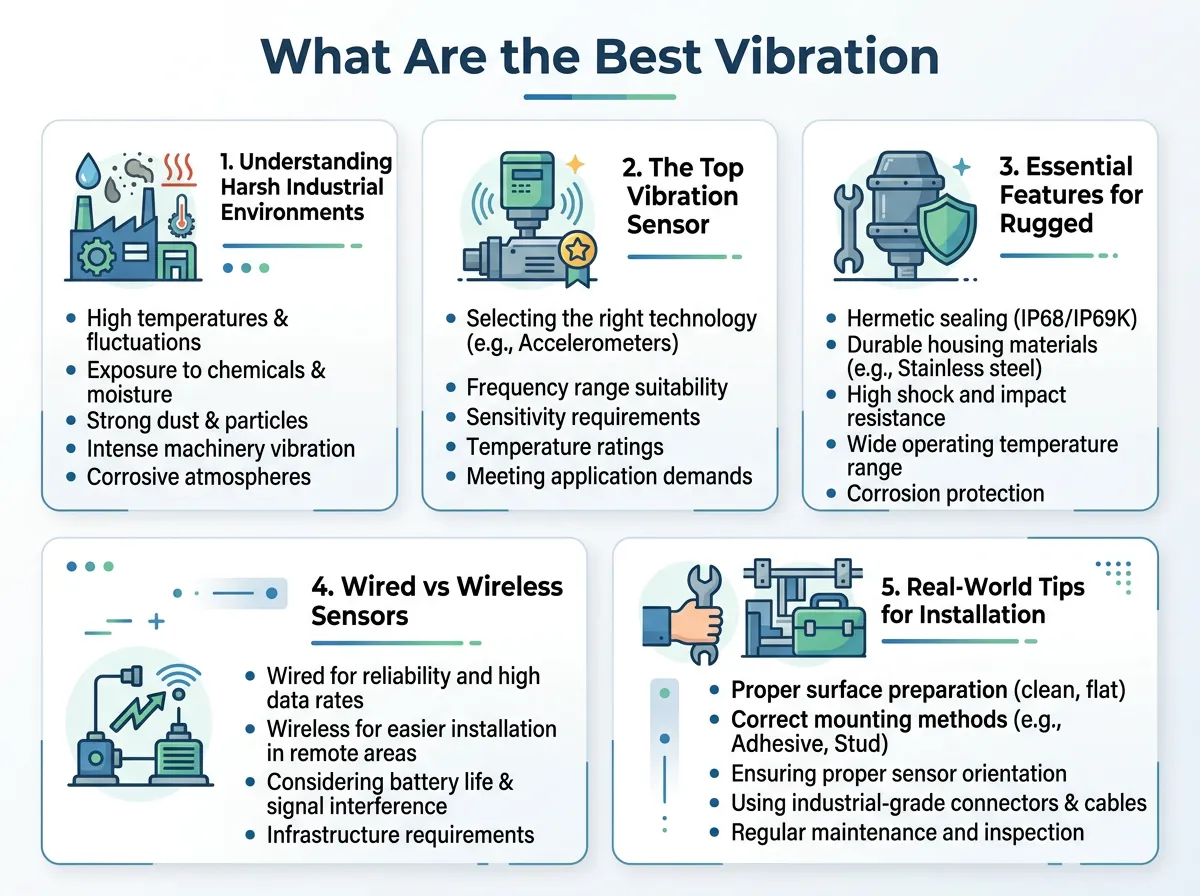
What Are the Best Vibration Sensors for Harsh Industrial Environments? — key points at a glance
Piezoelectric Accelerometers
These are the undisputed champions of the industrial world. They use special crystals that generate a tiny electric signal when they are shaken. Because they do not have moving parts, they are incredibly tough. If you want a deep dive into how these devices work, check out this guide on industrial vibration sensors. They can handle very high temperatures and measure a wide range of frequencies, making them perfect for fast-spinning gear like turbines and gearboxes.
MEMS Sensors
Micro-Electro-Mechanical Systems, or MEMS, are tiny sensors built on silicon chips. They are the same kind of sensors found inside your smartphone. While they used to be too delicate for heavy industry, modern MEMS sensors are now built inside super-tough outer shells. They are great for low-frequency monitoring, such as slow-moving conveyor belts, and they use very little power.
Essential Features for Rugged Protection
When you are shopping for a sensor, you cannot just look at the technical specs on paper. You have to look at how the physical device is built. Here are the features that separate cheap sensors from heavy-duty ones.
Hermetic Sealing and IP Ratings
The term “hermetic” means completely airtight. The best sensors use glass-to-metal seals or are fully welded shut. This prevents any air, gas, or moisture from getting inside. You also need to look at the Ingress Protection (IP) rating. For tough spots, you should look for an IP68 or IP69K rating. This ensures the device can survive being underwater or sprayed with high-pressure clean-up hoses. For more details on these specifications, read about sensors for harsh industrial environments and how they are tested.
Housing Materials
Plastic housings will not last long in a tough plant. They crack under heat and melt when exposed to chemicals. The best rugged sensors are housed in 316L stainless steel. This metal is highly resistant to rust, salt water, and acids. It can also take physical hits from falling debris without breaking.
Wired vs. Wireless Sensors in Hard Conditions
A major decision you will face is how to send the data from the machine to your computer. Both wired and wireless systems have their place in harsh plants.
The Case for Wired Sensors
Wired systems are incredibly reliable. They do not suffer from signal blockages caused by thick metal walls or concrete floors. However, the cables themselves can be a weak point. In a tough plant, cables can be crushed, melted, or chewed by pests. If you go with a wired system, make sure the cables are armored with stainless steel mesh or Teflon coatings.
The Power of Wireless Smart Sensors
Wireless sensors have improved dramatically over the last few years. They are easy to install because you do not have to run hundreds of feet of expensive cable. Many modern plants use these devices to boost safety, as workers do not have to climb into dangerous areas to collect data. To learn more about how these smart tools improve factory operations, read about vibration sensor applications for increased productivity. The main challenge with wireless is battery life, so look for models with smart power-saving modes.
Real-World Tips for Installation and Use
Even the best sensor will fail or give bad data if it is installed incorrectly. Follow these simple tips to get the most out of your investment.
- Use Stud Mounting: Whenever possible, drill and tap a hole directly into the machine frame to screw the sensor in. This creates the most solid connection and gives the cleanest vibration readings.
- Avoid Magnetic Mounts in Hot Areas: Magnets lose their strength when they get too hot. If you use a magnetic mount on a hot motor, the sensor might fall off.
- Route Cables Safely: If you use wires, run them through protective metal conduits. Keep them away from high-voltage power lines to avoid electrical noise.
- Keep It Clean: Even though tough sensors can handle dirt, a thick layer of mud or grease acts like a blanket, trapping heat inside the sensor. Wipe them down during regular maintenance checks.
Conclusion
Keeping your factory running requires tools that can handle the heat, dirt, and moisture of the real world. When looking for the best vibration sensors for harsh industrial environments, focus on robust design features. Choose hermetically sealed stainless steel housings, high IP ratings, and the right sensor technology for your machinery’s speed. By investing in rugged hardware and installing it correctly, you can spot mechanical issues early, protect your equipment, and keep your business moving forward safely.
Frequently Asked Questions
What is the best IP rating for a wet industrial environment?
For wet areas, you should look for an IP68 or IP69K rating. An IP68 rating means the sensor can be fully submerged in water, while IP69K means it can handle close-range, high-pressure hot water sprays during washdowns.
Can wireless vibration sensors survive in high temperatures?
Yes, but you must check the battery specs. While the metal housing of a wireless sensor can handle high heat, the batteries inside can degrade or fail if exposed to temperatures above 85 degrees Celsius (185 degrees Fahrenheit).
What is the difference between MEMS and piezoelectric sensors?
Piezoelectric sensors use physical crystals to measure high-frequency vibrations and are highly resistant to extreme heat. MEMS sensors are smaller, cheaper, silicon-chip devices that are great for low-frequency tracking and wireless setups.
How does extreme cold affect industrial vibration sensors?
Extreme cold can make sensor cables stiff and brittle, causing them to crack easily. It can also reduce battery life in wireless models, so you must choose materials rated for freezing temperatures.
Why is 316L stainless steel preferred for sensor housings?
This specific grade of stainless steel contains molybdenum, which makes it highly resistant to rust, salt water, and chemical corrosion. It is tough enough to withstand physical impacts and harsh factory cleaning agents.
Do I need to calibrate rugged sensors regularly?
Yes, even the toughest sensors should be calibrated once a year. Over time, extreme heat and constant shaking can cause the sensor’s readings to drift slightly, leading to less accurate data.
