


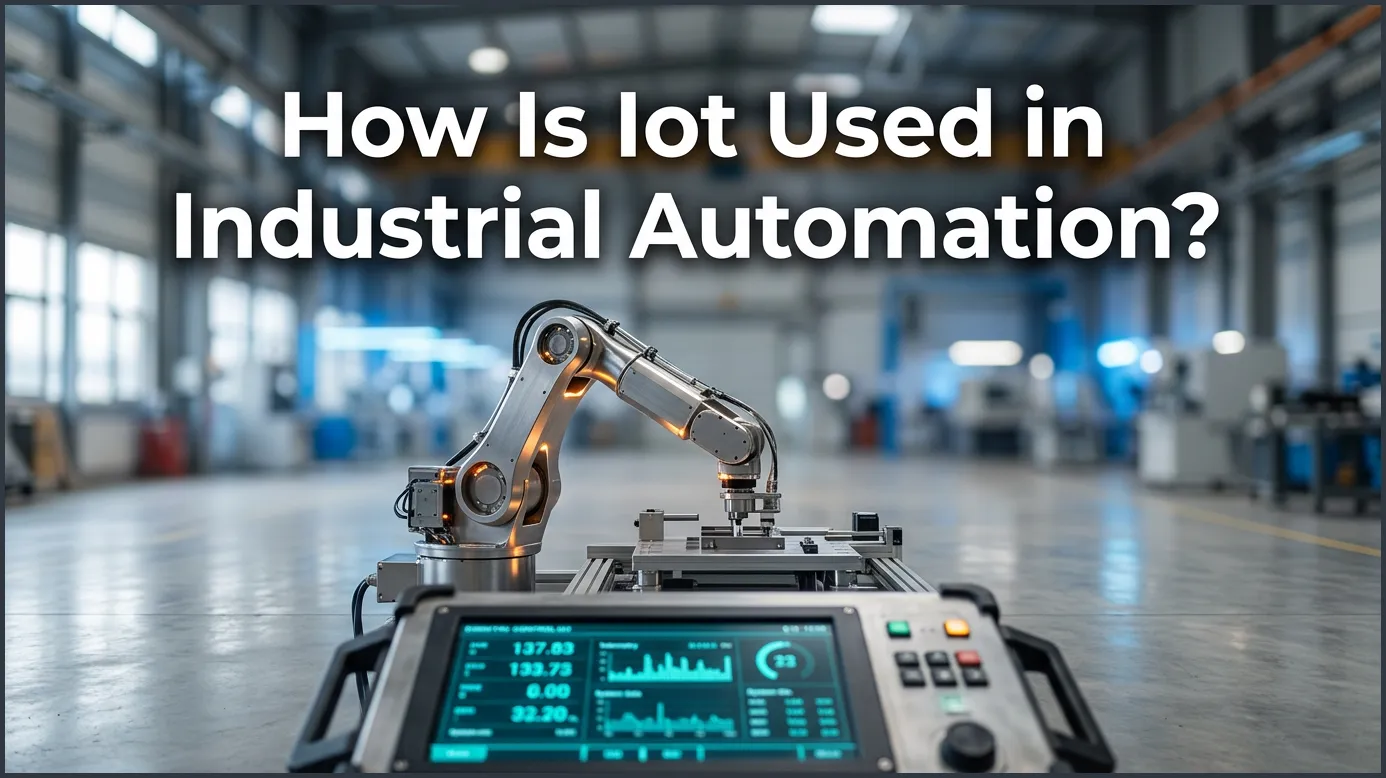
Industrial automation is undergoing a massive shift thanks to the Internet of Things (IoT). By connecting physical machines to smart digital networks, businesses can track operations in real-time, predict equipment failures before they happen, and drastically reduce manual errors. Ultimately, this integration creates highly efficient, self-optimizing factories that save time and lower operational costs.
Imagine walking into a busy factory. The air is filled with the rhythmic hum of heavy machinery. Suddenly, a small screen on a conveyor belt flashes yellow. Without a single human touching it, the machine slows down its speed, orders its own replacement part, and sends an alert to a technician’s smartphone. This is not magic. It is the power of connected technology in action.
For decades, factories relied on manual checks and scheduled maintenance. Today, the game has changed completely. Many business leaders wonder: How Is IoT Used in Industrial Automation? It is a great question because the answer is reshaping how we make everyday products. From the cars we drive to the food we eat, smart technology plays a silent but vital role in production.
In this guide, we will break down the incredible ways the Internet of Things (IoT) is changing the industrial world. We will look at real-world examples, explore key benefits, and share practical tips to help you understand this exciting digital shift.
Key Takeaways
- Real-Time Monitoring: Smart sensors collect constant operational data, allowing managers to track machine performance instantly.
- Predictive Maintenance: IoT devices spot early warning signs of equipment wear, reducing unexpected downtime and saving repair costs.
- Higher Productivity: Automated tasks reduce human errors and streamline workflows, which leads to much faster production lines.
- Improved Worker Safety: Wearable IoT tech and environmental sensors keep track of dangerous conditions to protect factory workers.
- Better Resource Management: Energy tracking systems optimize power use, helping companies cut utility bills and meet sustainability goals.
📑 Table of Contents
1. Real-Time Equipment Monitoring
At the heart of any modern factory is the need to know what is happening right now. In the past, managers had to wait for daily or weekly reports to see how machines were performing. Today, things are very different.
The Power of Smart Sensors
Industrial machines are now fitted with tiny, highly sensitive devices called smart sensors. These sensors act like the eyes and ears of the factory. They constantly measure things like temperature, vibration, speed, and pressure. By gathering this data, they paint a clear picture of how a machine is running.
Instant Data at Your Fingertips
These sensors send information over wireless networks directly to a central database. Managers can view this data on a simple dashboard from anywhere in the world. This immediate access to information is one of the main ways IoT in industrial automation helps businesses stay agile. If a machine starts running too hot, the system flags it instantly. This allows workers to fix the issue before it ruins a batch of products.
2. Smart Predictive Maintenance
One of the biggest headaches for any factory owner is unexpected downtime. When a machine breaks down, the entire assembly line stops. This costs companies thousands of dollars every single minute.
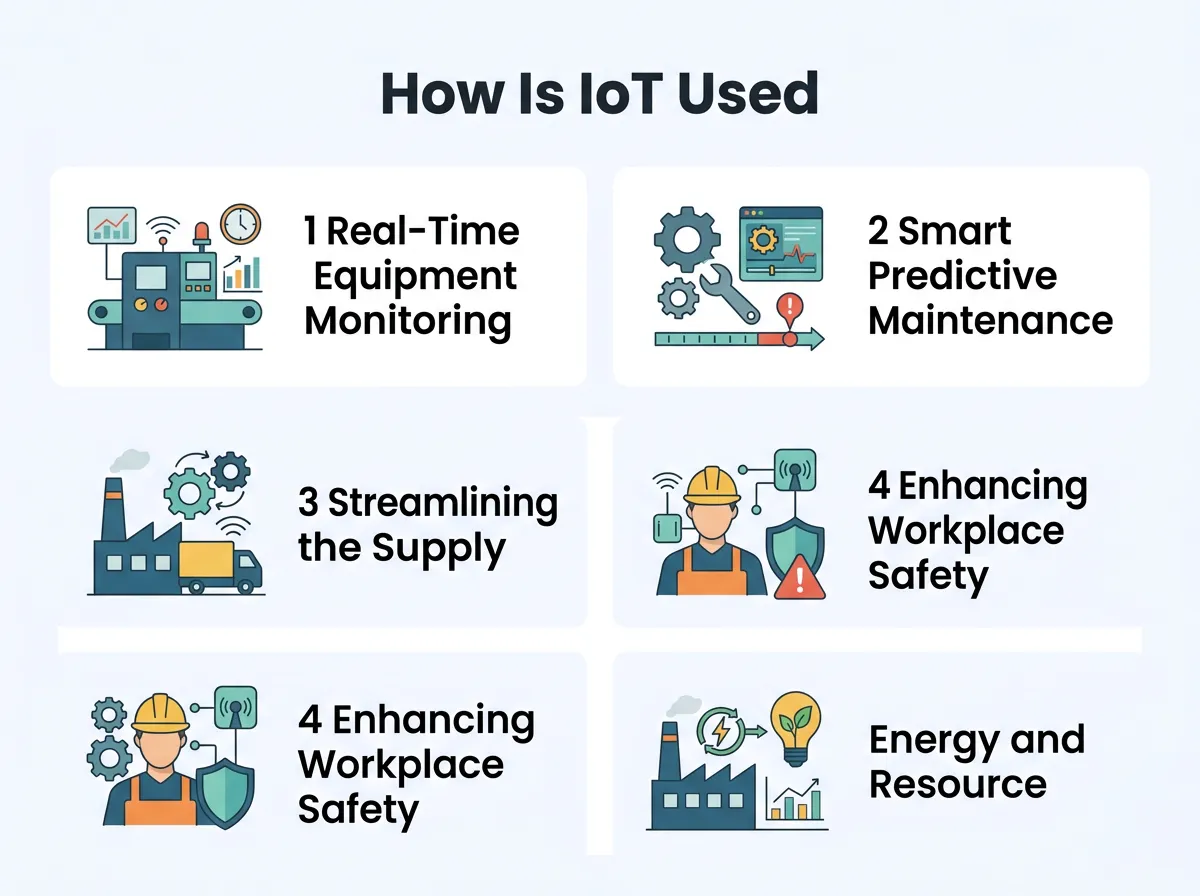
How Is IoT Used in Industrial Automation? — key points at a glance
Catching Problems Early
Traditional maintenance is often done on a set schedule, like changing the oil in your car every six months. But what if the machine needs help sooner? Or what if you are replacing parts that are still perfectly fine? This is where predictive maintenance comes in. IoT devices track the health of a machine in real time. They can spot tiny, microscopic changes in vibration that human workers would never notice.
Saving Time and Money
By analyzing these small changes, smart software can predict exactly when a part is going to fail. This allows teams to schedule repairs during planned break times, such as overnight or on weekends. Using smart solutions for predictive maintenance in industrial settings keeps operations running smoothly. It saves businesses a massive amount of money on spare parts and emergency repairs.
3. Streamlining the Supply Chain
Industrial automation does not stop at the factory walls. It also covers how raw materials arrive and how finished goods leave the warehouse. Managing this complex flow of goods is much easier with connected technology.
Tracking Assets with Precision
IoT devices like GPS trackers and RFID tags let companies follow shipments in real time. Managers no longer have to guess when a shipment of steel or plastic will arrive. They can see exactly where the delivery truck is on a map. This precise tracking helps factories plan their production schedules with incredible accuracy.
Smarter Inventory Control
Inside the warehouse, smart shelves can weigh inventory automatically. If the weight drops below a certain level, the system knows that supplies are running low. It can automatically send an order to the supplier for more materials. This hands-free approach keeps stock levels perfect. It means factories never run out of materials or waste space storing too much extra inventory.
4. Enhancing Workplace Safety
Factories can be dangerous places. Heavy machines, hot surfaces, and toxic chemicals pose constant risks to workers. Fortunately, safety is another area where modern smart technology shines.
Wearable Technology for Workers
Today, factory workers can wear smart helmets, wristbands, and vests. These wearable devices have built-in sensors that track vital signs like heart rate and body temperature. If a worker gets too hot or tired, the system can send an alert telling them to take a break. Wearables can also detect if a worker falls, instantly sending their exact location to emergency teams.
Hazard Detection Systems
In addition to wearables, static sensors can monitor the factory air. They can detect leaks of invisible, odorless gases long before human senses can. When a leak is found, the system can sound alarms, flash warning lights, and even shut down ventilation systems to contain the hazard. This quick action protects human lives and keeps the workplace safe.
5. Energy and Resource Management
Running a large industrial plant requires a massive amount of power. High electricity and water bills can quickly eat into a company’s profits. This is why energy efficiency is a major focus for modern businesses.
Monitoring Utility Usage
So, how is IoT used in industrial automation to cut down on utility bills? Smart meters can track how much electricity, water, and gas each machine uses. By looking at this data, managers can find “energy hogs”—machines that consume too much power. They can also see if machines are left running when they should be turned off.
Reducing the Carbon Footprint
Once these problems are found, automated systems can fix them. For example, the system can automatically dim the factory lights when natural sunlight is bright enough. It can also put idle machines into a low-power standby mode. These small changes add up to big savings. To learn more about how smart systems optimize energy, you can read about modern research on industrial internet of things integration.
6. Practical Tips for Getting Started
If you want to bring this technology into your own business, the process might seem scary. However, you do not have to change everything overnight. Here are some simple, practical steps to get you started.
Start Small and Scale Up
You do not need to build a fully smart factory on day one. Instead, choose one small problem to solve. For example, you could put sensors on your most expensive machine to monitor its temperature. Once you see the benefits and get comfortable with the data, you can add more sensors to other parts of your factory.
Focus on Cybersecurity
Because IoT devices connect to the internet, they can be vulnerable to hackers. It is vital to protect your network. Always change the default passwords on your devices, keep your software updated, and use secure Wi-Fi networks. Investing in cybersecurity from the very start will save you from major headaches down the road.
Conclusion
The question of “How Is IoT Used in Industrial Automation?” has many answers, but they all lead to one place: a smarter, safer, and more efficient future. By connecting physical tools to digital networks, companies can monitor their equipment, prevent costly breakdowns, protect their staff, and save valuable energy.
The transition to smart manufacturing is no longer a luxury for the distant future. It is happening right now. Businesses that embrace this technology today will lead the market tomorrow. Whether you are a small business owner or simply a tech enthusiast, keeping an eye on these developments is the key to staying ahead in a rapidly changing world.
Frequently Asked Questions
What is the difference between IoT and IIoT?
IoT refers to general connected devices used in homes or everyday life, like smart thermostats. IIoT stands for the Industrial Internet of Things, which focuses specifically on high-precision sensors and machinery used in factories and power plants.
Is IoT in industrial automation expensive to set up?
While the initial setup costs for smart sensors and software can be high, the long-term savings are massive. Most businesses recover their investment quickly by reducing machine downtime and lowering energy bills.
How does IoT improve factory safety?
IoT improves safety by using wearable devices that monitor worker vitals and detect sudden falls. Environmental sensors also check for dangerous gas leaks or extreme temperatures, warning workers before accidents happen.
Can old factory machines be connected to IoT?
Yes, older machines do not need to be replaced to use this technology. You can easily retro-fit legacy equipment with external smart sensors to track vibration, temperature, and power usage.
Does IoT in automation replace human workers?
No, IoT is designed to assist human workers rather than replace them entirely. It automates repetitive tasks and collects data, allowing employees to focus on more skilled duties like maintenance, problem-solving, and management.
What are the cybersecurity risks of industrial IoT?
Connecting factory machines to the internet makes them potential targets for cyberattacks. Businesses must secure their networks by using strong passwords, encrypting data, and regularly updating device software.
