


Internet of Things (IoT) projects connect physical devices to the internet to automate tasks and gather data. These projects range from simple smart home setups, like automated plant watering, to complex industrial automation and smart agriculture systems. Building these projects helps you learn coding, hardware integration, and data analytics while solving real-world problems.
Imagine walking into your home after a long day at work. The front door unlocks automatically as you approach. The living room lights turn on, casting a warm, welcoming glow. In the kitchen, a fresh pot of coffee begins to brew, triggered by your arrival. None of this requires you to lift a finger or press a button. This is not a scene from a science fiction movie. It is the real-world power of connected technology.
Today, devices of all shapes and sizes connect to the web. They talk to each other, gather data, and make our daily lives much easier. If you are a student, a hobbyist, or an aspiring developer, you might wonder: What Are Some Internet of Things Projects? Whether you want to learn coding or make your life easier, building these systems is a great way to start.
This comprehensive guide will explore some of the most exciting and practical ideas you can build today. We will look at projects for beginners, smart home setups, farming systems, and business solutions. By the end, you will have plenty of inspiration to start your own tech journey.
Key Takeaways
- Beginner-Friendly Options: Smart weather stations and automated plant watering systems are great starting points for learning.
- Smart Home Focus: Home automation remains the most popular and practical area for custom IoT development.
- Industrial and Agricultural Impact: IoT projects improve crop yields and factory efficiency through real-time environmental monitoring.
- Essential Hardware: Most DIY builds rely on affordable microcontrollers like Arduino, Raspberry Pi, or the ESP8266.
- Skills Learned: Working on these projects builds valuable, real-world skills in coding, electronics, and cloud data management.
📑 Table of Contents
Beginner-Friendly IoT Projects
Starting out with electronics can feel a bit scary. But you do not need a degree in engineering to build your first connected device. Let us look at some simple builds that use cheap parts and basic code. They are perfect for learning the basics of hardware and software integration.
Smart Weather Station
A smart weather station is an excellent first build for any beginner. For this project, you use a small sensor like the DHT11 to measure temperature and humidity in your room. Next, you connect this sensor to an ESP8266 Wi-Fi board. You can write a simple program to send this data to a free cloud service. Then, you can see your room’s temperature on your phone from anywhere in the world. To find step-by-step guides for these starter builds, check out this list of practical DIY IoT projects.
Automated Plant Watering System
Do you often forget to water your house plants? This project is the perfect solution. It uses a soil moisture sensor, a tiny water pump, and a microcontroller. The sensor monitors the soil. When the soil gets dry, the sensor tells the controller. The controller then turns on the pump for a few seconds. It keeps your plants green without any effort from you. This project teaches you how sensors and physical motors work together.
Smart Home IoT Projects
Smart homes are very popular right now. These projects focus on comfort, convenience, and safety in your living space. They can also help you save money on electricity bills.
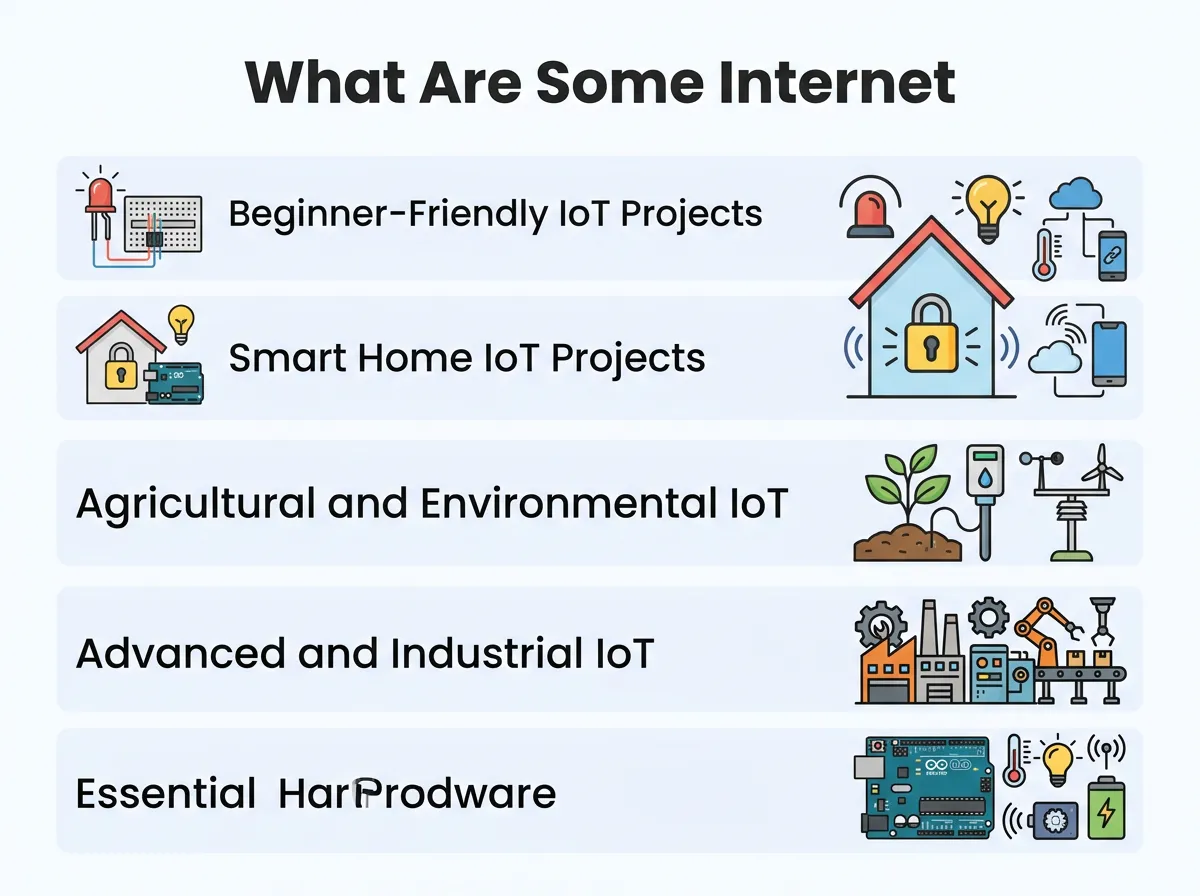
What Are Some Internet of Things Projects? — key points at a glance
Smart Home Lighting
You can control your lights with your voice or your phone. Using smart relays, you can turn regular lamps into smart lights. You can also program them to dim at night or turn off when you leave the house. This saves energy and sets a nice mood. It is a highly practical upgrade for any bedroom or living room.
Smart Security Camera and Door Lock
Safety is a top priority for everyone. You can build a custom home security system with a Raspberry Pi and a camera module. This setup can use facial recognition to unlock your front door. If an unknown face appears at your door, the system sends an alert to your phone. It can even upload the photo to a secure online drive. If you want to dive deeper into the code behind these security systems, you can browse open-source repositories on GitHub IoT project pages.
Agricultural and Environmental IoT Projects
The power of connected devices goes far beyond our living rooms. It is changing how we grow our food and protect our natural environment.
Smart Agriculture Monitoring
Farmers use smart sensors to check large fields of crops. These sensors measure soil health, sunlight, and air quality. This data helps farmers know exactly when to water or fertilize their fields. It saves water, protects the soil, and increases crop yields. It is a massive step forward for sustainable farming.
Air Quality Monitor
Air pollution is a major health issue in many cities. You can build a portable monitor to measure dust, gas, and smoke levels in the air. This project is great for classrooms. It helps people see the invisible changes in the air they breathe every day. You can even map the data online to show pollution hot spots in your neighborhood.
Advanced and Industrial IoT Projects
Large companies use connected devices to save millions of dollars. These systems must be highly secure and able to work in tough conditions.
Asset Tracking and Fleet Management
Shipping companies need to know where their trucks and cargo are at all times. GPS trackers linked to the cloud provide real-time location updates. Sensors also monitor the temperature of frozen goods during shipping. If a truck’s fridge fails, the manager gets an alert instantly. This prevents food from spoiling. If you are interested in commercial applications, you can explore some of the top IoT business ideas.
Predictive Maintenance
Machines in factories occasionally break down. This stops work and costs companies a lot of money. Vibration and heat sensors can predict when a machine is about to fail. Workers can then fix the machine before it breaks. This keeps the factory running smoothly and safely. For a broader overview of how these commercial and academic systems are designed, look at this guide on enterprise-level IoT systems.
Essential Hardware for Your Projects
To build any project, you need the right tools. Let us look at the basic building blocks you will need to get started.
Microcontrollers and Single-Board Computers
Arduino is great for simple sensor projects because it is cheap and easy to use. Raspberry Pi is like a tiny, powerful computer. It is perfect for complex tasks like video streaming or image recognition. ESP8266 and ESP32 boards are very popular because they are cheap and have built-in Wi-Fi.
Sensors and Actuators
Sensors are the eyes and ears of your project. They read the physical world around them. You will use sensors for temperature, motion, and light. Actuators are the muscles. They do the physical work, like turning on a light, opening a valve, or spinning a motor.
How to Choose and Start Your First Project
Are you ready to build? When you first ask, “What Are Some Internet of Things Projects I can build?”, the choice can feel overwhelming. Follow these simple steps to start without getting stressed.
Define Your Goals
Start small. Do not try to build a fully smart house on your first weekend. Choose a simple task, like turning on a single LED light with your phone. Once you get that working, you can move on to harder tasks.
Gather Your Materials
Buy an IoT starter kit. These kits are great because they include a controller board, wires, breadboards, and many different sensors. They are much cheaper than buying every part one by one.
Join the Online Community
You will run into bugs in your code. Your hardware might not work on the first try. Do not worry because this is a normal part of learning. Online forums, video tutorials, and local maker groups are full of friendly people who want to help you succeed.
Conclusion
Building connected devices is a fantastic way to learn about modern technology. It teaches you how the hardware and software around us work. From simple plant waterers to advanced industrial trackers, the possibilities are endless. So, what are you waiting for? Pick a project, grab your tools, and start building today!
Frequently Asked Questions
What are the best IoT projects for beginners?
Smart weather stations and automatic plant watering systems are ideal for beginners. They use simple sensors, require basic coding, and use cheap hardware like Arduino or ESP8266.
What programming languages are used in IoT?
C and C++ are the most common languages for programming microcontrollers. Python is also highly popular, especially for complex projects running on a Raspberry Pi.
Do I need to know how to code to build an IoT project?
You do not need to be an expert, as many beginner guides provide pre-written code you can copy. However, learning basic programming will help you customize your projects and fix errors.
Which hardware is best for starting with IoT?
The ESP8266 or ESP32 boards are excellent because they are very cheap and have built-in Wi-Fi. Arduino is great for simple sensor tasks, while Raspberry Pi is best for heavy processing.
How does security work in IoT projects?
Security involves protecting the data sent between your device and the cloud. You can secure your projects by using encrypted connections, updating device passwords, and keeping your software up to date.
Can I make money from building IoT projects?
Yes, many successful commercial products started as simple DIY projects. You can turn your ideas into a business by focusing on solving specific problems in smart homes, farming, or logistics.
