


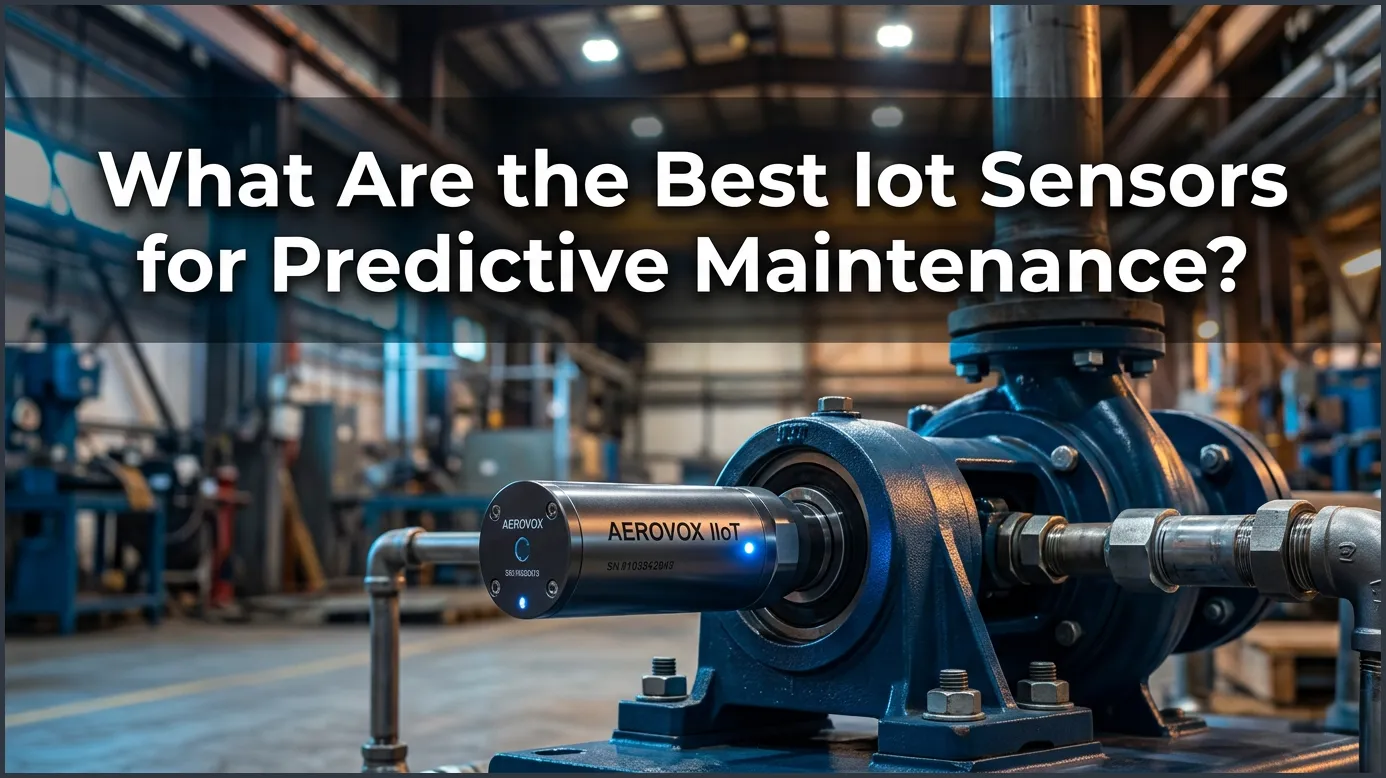
The best IoT sensors for predictive maintenance include vibration sensors, temperature sensors, acoustic sensors, and pressure sensors. These smart devices monitor your machines in real time to spot early signs of wear and tear before a breakdown occurs. By using them, you can lower repair costs, keep your team safe, and prevent expensive factory shutdowns.
Imagine walking onto a busy factory floor. Suddenly, a massive machine screeches and grinds to a sudden halt. Everything stops. Workers stand around waiting, and company profits plunge by the minute. This is the nightmare of unplanned downtime. It is a costly, stressful problem that businesses face every single day. But what if your machines could talk to you? What if they could warn you weeks before they actually broke down?
This is no longer a dream. It is the everyday reality of smart factory technology. By attaching small, intelligent devices to your equipment, you can listen to the heartbeat of your assets. If you are looking to upgrade your facility, you are likely asking a crucial question: What Are the Best IoT Sensors for Predictive Maintenance? Let us take a deep dive into the top sensors that can save your business time, money, and headaches.
Key Takeaways
- Vibration sensors are essential: They are the gold standard for tracking rotating machinery like motors, pumps, and fans.
- Temperature sensors find friction: These sensors catch overheating and electrical issues before they cause fires or failures.
- Acoustic sensors hear the invisible: They detect high-frequency sounds from air leaks and friction that humans cannot hear.
- Pressure sensors prevent system blocks: They keep fluid and gas lines safe by alerting you to sudden pressure drops or spikes.
- Start small and scale up: You do not need to monitor every machine; focus on your most critical, high-value assets first.
- Combined data works best: Merging multiple sensor types gives you the most accurate picture of your machine health.
📑 Table of Contents
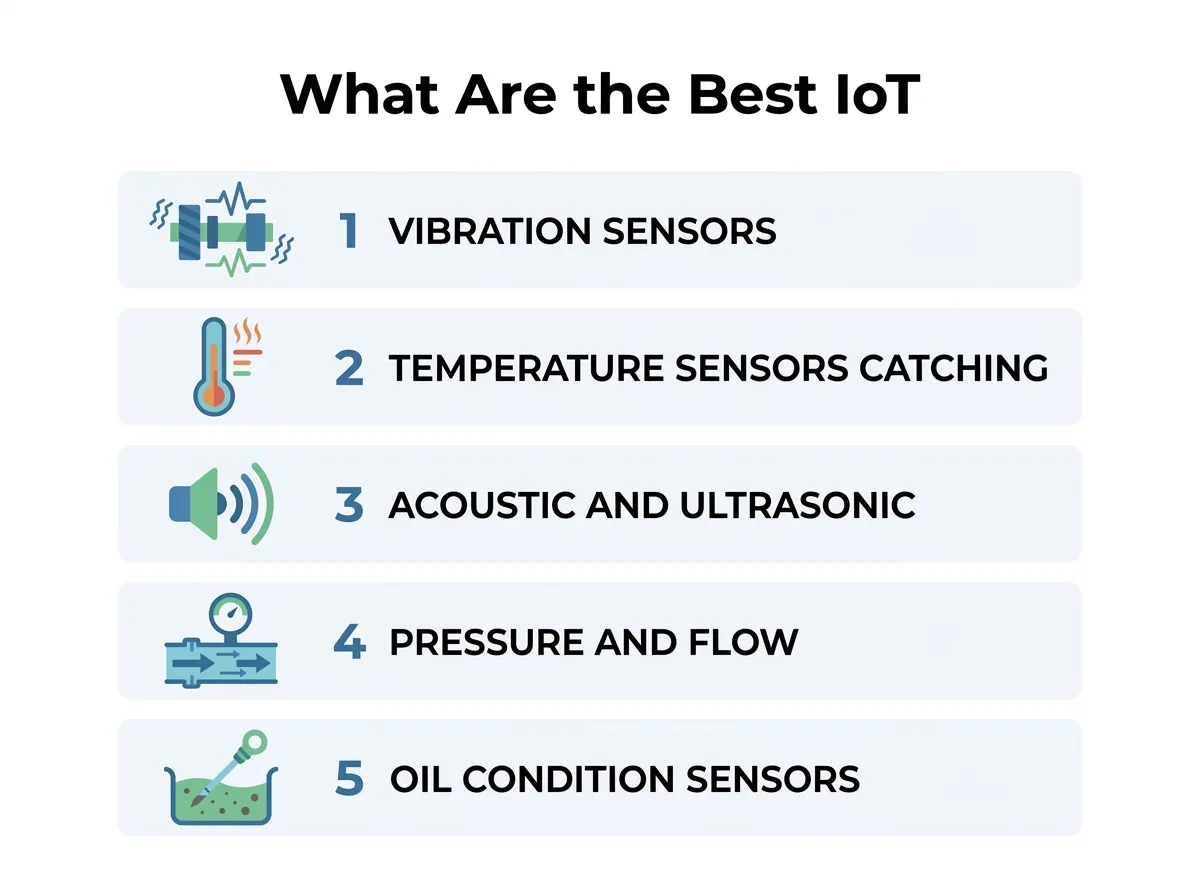
- 1. Vibration Sensors: The Machinery Lifesavers
- 2. Temperature Sensors: Catching the Heat
- 3. Acoustic and Ultrasonic Sensors: Listening for Trouble
- 4. Pressure and Flow Sensors: Keeping Fluids in Check
- 5. Oil Condition Sensors: Checking the Machine’s Lifeblood
- How to Choose the Right Sensors for Your Facility
- Conclusion: The Smart Path Forward
1. Vibration Sensors: The Machinery Lifesavers
If you have rotating machinery, vibration sensors are your absolute best friends. In fact, they are the most popular choice for modern maintenance teams. When a machine is healthy, it vibrates in a very specific, steady pattern. But when a bearing begins to wear out or a shaft falls out of alignment, that pattern changes. These changes are often too subtle for a human to feel, but smart sensors catch them instantly.
How Vibration Sensors Work
Most of these devices use accelerometers to measure movement in multiple directions. They track the frequency and amplitude of the vibrations. They send this data to the cloud, where smart algorithms analyze it. If the vibration goes outside of the normal safe zone, the system sends an alert to your phone or computer.
Best Applications for Vibration Tracking
- Electric motors and generators
- Industrial pumps and fans
- Gearboxes and conveyor belts
- Compressors and chillers
Using predictive maintenance sensors like these allows you to schedule repairs during normal shutdowns. You do not have to wait for the machine to break down in the middle of a busy shift.
2. Temperature Sensors: Catching the Heat
Excessive heat is the ultimate enemy of machinery. When parts rub together due to a lack of oil, friction creates heat. When electrical circuits are overloaded, they get hot. By tracking temperature changes, you can stop issues before they turn into smoking, melting failures.
What Are the Best IoT Sensors for Predictive Maintenance? — key points at a glance
Types of Temperature Sensors
There are two main types you will find in industrial settings. First, there are contact sensors, like thermocouples, which must touch the machine. Second, there are non-contact infrared sensors. These “see” the heat from a distance, which is perfect for moving parts or hard-to-reach spots.
Where to Use Temperature Sensors
These sensors are highly versatile. You should place them on electrical panels to watch for loose connections. They are also vital on bearings, brake systems, and engines. Adding these simple IoT sensors for maintenance plans is one of the easiest ways to prevent electrical fires and motor burnouts.
3. Acoustic and Ultrasonic Sensors: Listening for Trouble
Did you know that machines make high-frequency sounds when they start to fail? These sounds are far beyond the range of human hearing. By the time a human can hear a squeak or a grind, the damage is already done. Acoustic and ultrasonic sensors act as super-hearing ears for your facility.
Hearing What Humans Cannot
These sensors listen for ultrasonic stress waves. When a tiny crack begins to form in a metal part, it releases micro-shocks of sound. Ultrasonic sensors catch these waves. They can tell the difference between normal background factory noise and the sound of a failing component.
Key Uses for Sound Sensors
These sensors are amazing for finding gas and air leaks in pressurized pipes. They are also perfect for catching early bearing wear. Because sound travels fast, these sensors often give you the very first warning sign of a future breakdown.
4. Pressure and Flow Sensors: Keeping Fluids in Check
Many industrial machines rely on liquids and gases to do their work. Think of hydraulic systems, water cooling loops, and pneumatic lines. If pressure drops or fluid stops flowing, the entire system can fail in seconds. That is why pressure and flow sensors are so critical.
Tracking System Health
Pressure sensors monitor the force of liquids or gases inside a pipe. A sudden drop in pressure usually means a leak has occurred. A gradual rise in pressure could mean a filter is getting clogged. Flow sensors measure the actual volume of liquid moving through the system.
Real-World Examples
Imagine a hydraulic press in an automotive plant. If a hose develops a tiny leak, a pressure sensor will detect it immediately. This allows the team to patch the hose before it bursts and sprays oil everywhere. For more details on these setups, you can explore the best IoT sensors for predictive maintenance to see how they integrate with facility management tools.
5. Oil Condition Sensors: Checking the Machine’s Lifeblood
Oil keeps machines running smoothly by reducing friction and heat. But over time, oil gets dirty. It loses its ability to lubricate, and it can collect tiny metal shavings from wearing parts. Oil condition sensors monitor this liquid gold in real time.
Analyzing Oil Without the Lab
In the past, you had to take an oil sample, mail it to a lab, and wait weeks for the results. Today, IoT sensors can check the oil while the machine is running. They measure the oil’s viscosity, water content, and the presence of metallic debris.
Why This Matters
If the sensor finds metal particles in the oil, you know that internal gears are grinding against each other. This is a clear sign that a major failure is coming. You can replace the worn parts and change the oil long before the machine lock up.
How to Choose the Right Sensors for Your Facility
Now that you know the options, how do you decide which ones to buy? You do not need to install every sensor on every machine. That would be too expensive and would overwhelm you with too much data. Instead, follow a simple plan to build your system.
1. Identify Critical Assets
Make a list of the machines that are absolutely vital to your business. If Machine A breaks down and stops your entire production line, that is a critical asset. Start your sensor program there.
2. Understand the Failure Modes
Ask your experienced technicians how those critical machines usually fail. Do they overheat? Do the bearings wear out? Do they leak fluid? If they usually overheat, buy temperature sensors. If bearings are the main issue, buy vibration sensors.
3. Consider the Environment
Factories can be hot, dusty, wet, and noisy. Make sure the sensors you choose are rugged enough for your environment. Look for high “IP ratings” which show how well a sensor resists water and dust.
4. Plan Your Connectivity
IoT sensors need to send their data to the internet. You must decide how they will connect. Wi-Fi is great but can be spotty in large metal buildings. Cellular and LoRaWAN connections are often better for large-scale industrial sites. Having solid IoT predictive maintenance strategies in place will ensure your data flows smoothly from the factory floor to your dashboard.
Conclusion: The Smart Path Forward
Investing in IoT sensors is like buying an insurance policy for your machinery. It takes the guesswork out of maintenance. Instead of repairing machines after they break, or wasting time servicing healthy machines, you can fix them only when they actually need it.
Start small. Choose one or two critical machines, install a couple of vibration or temperature sensors, and watch the data. You will quickly see how much peace of mind these smart devices can bring to your workday. The future of maintenance is smart, connected, and highly efficient. Are you ready to get started?
Frequently Asked Questions
How do IoT sensors help with predictive maintenance?
IoT sensors monitor machine health in real time by tracking vibration, heat, sound, and pressure. They send this data to the cloud, where software detects tiny changes that show a machine is starting to fail. This allows maintenance teams to fix the problem before a costly breakdown occurs.
Can I install IoT sensors on old machines?
Yes, you can easily install IoT sensors on older legacy machines. Most modern smart sensors are wireless and stick directly onto the outside of the machine with magnets or adhesive. This makes it simple to upgrade your older equipment without expensive rewiring.
How long do IoT sensor batteries last?
Most industrial IoT sensor batteries last between three and five years. They save power by only sending data at set intervals or when they detect an unusual change in the machine’s behavior. Replacing the batteries is usually a very quick and simple task.
Are vibration sensors better than temperature sensors?
Neither is better, as they serve different purposes. Vibration sensors are best for finding mechanical alignment and bearing issues in rotating parts. Temperature sensors are ideal for spotting electrical faults, friction issues, and cooling system failures.
How much do predictive maintenance sensors cost?
The price of these sensors varies widely depending on their accuracy, ruggedness, and battery life. Simple temperature and vibration sensors can cost under one hundred dollars, while highly advanced multi-axis industrial sensors can cost several hundred dollars. However, they easily pay for themselves by preventing just one major breakdown.
Do I need an internet connection for these sensors to work?
Yes, IoT sensors require some form of network connection to send their data to your monitoring software. They can use standard Wi-Fi, cellular networks, or specialized long-range wireless technologies like LoRaWAN to communicate. Some systems can also store data locally if the connection drops temporarily.
