

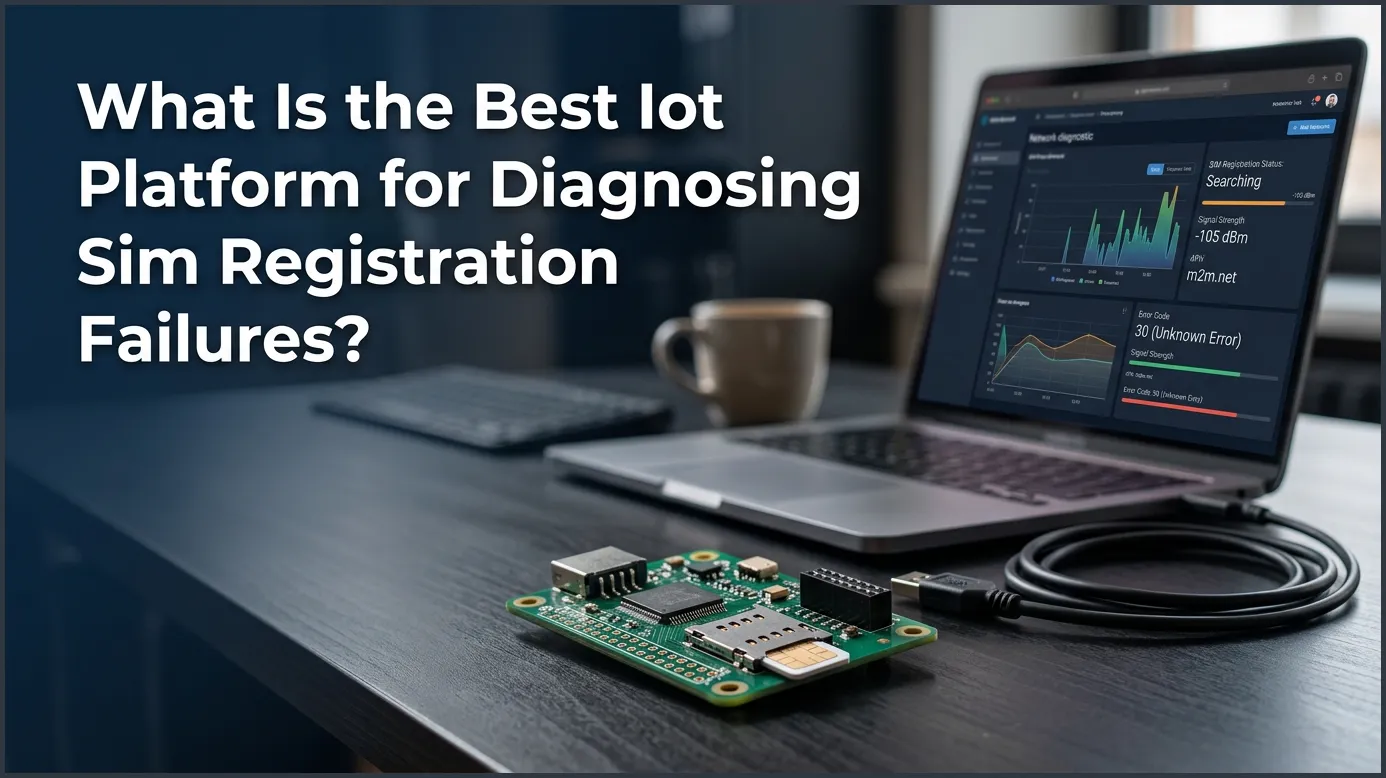
To diagnose SIM registration failures quickly, the best IoT platform is a modern Connectivity Management Platform (CMP) like floLIVE, Hologram, or Cisco Jasper. These platforms offer real-time diagnostic tools, deep network visibility, and detailed event logging to pinpoint exactly why a SIM card cannot connect. Choosing a platform with localized profile switching and advanced APIs is key to keeping your IoT devices online and healthy.
Imagine launching a smart fleet of delivery trackers. Everything is ready, but suddenly, fifty devices in a new region won’t connect. They just sit there, blinking silently in the dark. Your team starts scrambling. Is it a hardware issue? A weak signal? Or did the local carrier block the SIM cards? Without the right tools, you are essentially flying blind in a massive storm.
This stressful scenario brings us to a critical question: What Is the Best IoT Platform for Diagnosing SIM Registration Failures? In the fast-moving world of cellular IoT, you cannot afford to wait days for a local carrier to reply to a support ticket. You need immediate, actionable answers to get your devices back online.
In this guide, we will dive deep into the world of Connectivity Management Platforms (CMPs). We will explore why these annoying failures happen, what tools you need to fix them, and which platforms stand out from the crowd. By the end, you will know exactly how to choose the right partner to keep your devices connected, healthy, and happy.
Key Takeaways
- Real-Time Visibility is Crucial: The best platforms offer live signaling logs and detailed error codes to pinpoint why registration failed.
- Top Contenders: Industry-leading platforms like floLIVE, Hologram, and Cisco Jasper offer the strongest toolsets for diagnostic deep-dives.
- Common Failure Causes: SIM registration failures usually stem from incorrect APN settings, signal issues, or carrier blacklist blocks.
- Importance of APIs: Robust APIs allow developers to automate diagnostics and trigger self-healing protocols directly from their own software.
- Local Profile Switching: Platforms with eUICC capability can bypass local network blocks by switching carrier profiles on the fly.
- Proactive Alerting: Choosing a platform with automatic notifications helps teams resolve connection drops before they impact customers.
📑 Table of Contents
Why Do SIM Registration Failures Happen?
Before we look at the platforms, we need to understand the enemy. SIM registration is the digital handshake between your device and the cellular network. If this handshake fails, your device cannot send or receive data. It becomes an expensive paperweight.
The Usual Suspects
First, there are incorrect Access Point Name (APN) settings. If the APN is wrong, the network will reject the device. Second, you might have weak signal strength or high local interference. Third, the local carrier might block your SIM card due to permanent roaming restrictions. These are just some of the common IoT connectivity problems and how to solve them before they hurt your business operations.
The Role of Cellular Handshakes
During a handshake, your device shares its unique ID with the local cell tower. The tower checks this ID with the main network database. If the database does not recognize the ID, or if there is a billing issue, the connection is refused. Without a good platform, you will only see that the device is “offline.” You won’t know why.
Essential Features for Debugging SIM Issues
To fix these issues, you cannot rely on simple “online/offline” status lights. You need a platform that gives you a deep, clear look into the network’s inner workings. Here are the must-have features you should look for.
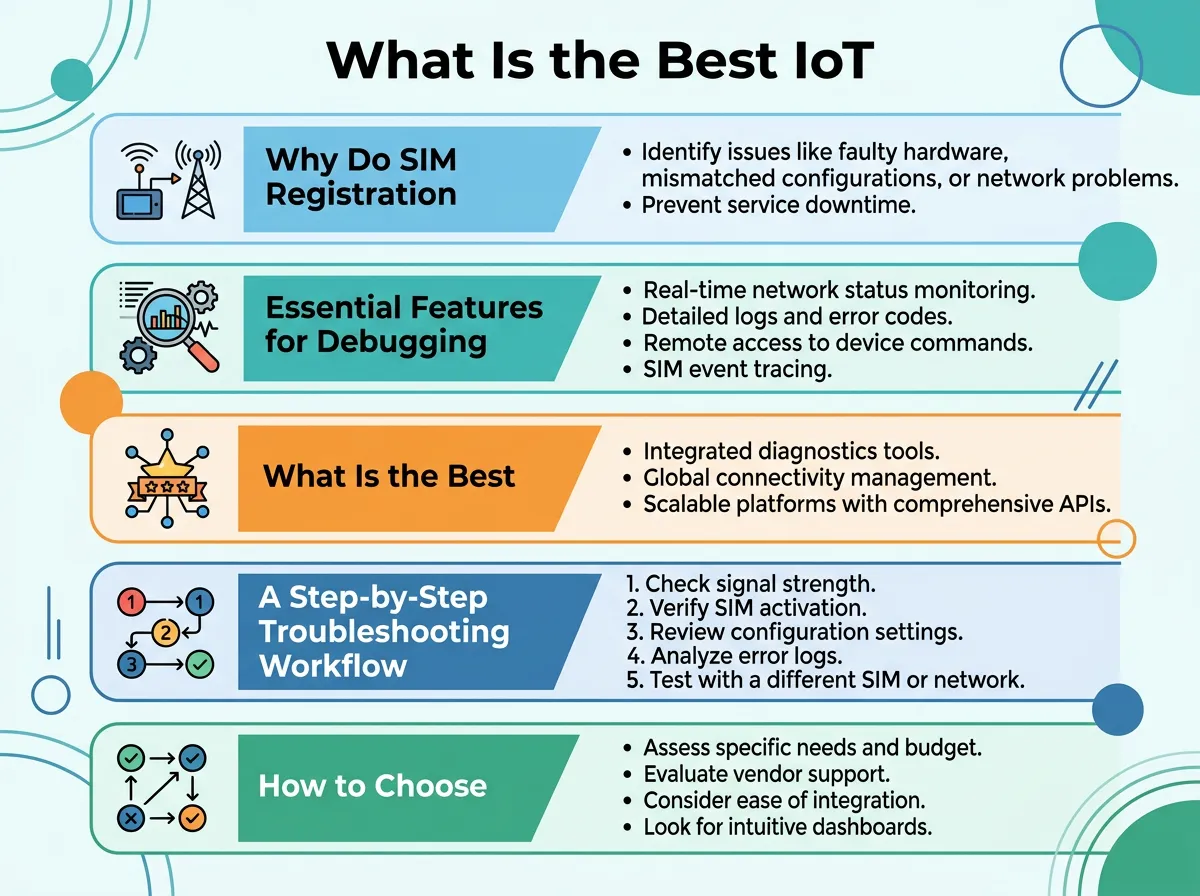
What Is the Best IoT Platform for Diagnosing SIM Registration Failures? — key points at a glance
Live Signaling Logs
You need to see the exact messages flying between your SIM card and the cell tower. Live signaling logs show you these messages in real time. If a carrier rejects a connection, the log will show the exact step where the handshake failed. This saves your engineering team hours of guessing.
Detailed Diagnostic Codes
Standard platforms might just tell you “Connection Failed.” A great platform gives you the exact 3GPP error code. For example, code #19 tells you the mobile station is temporarily blocked. Code #15 means there is no suitable cell in the tracking area. Knowing these codes makes troubleshooting a breeze.
Powerful APIs for Automation
If you manage thousands of devices, you cannot check each one manually. You need robust APIs. These allow your own software to trigger automated diagnostics the moment a device goes offline. Your system can automatically attempt to reset the connection or switch profiles without human intervention.
What Is the Best IoT Platform for Diagnosing SIM Registration Failures?
Not all platforms are created equal. Let us compare the top contenders to see which one rules the diagnostic kingdom.
floLIVE: The Diagnostic Powerhouse
When it comes to deep-dive diagnostics, floLIVE is a massive standout. Because they own a global, cloud-native core network, they have access to data that other providers simply cannot see. They offer real-time signaling traces directly from the network core. This means you do not have to wait for a local carrier to send you logs. You can see the handshake fail in real time on your dashboard. According to recent industry reports, next-gen connectivity management platforms like floLIVE are changing the game by solving both business and deep technical issues on a single screen.
Hologram: The Developer’s Favorite
Hologram is famous for its clean, user-friendly interface and developer-first design. Their dashboard makes it very easy to view the lifecycle of a SIM card. They offer detailed session histories and clear error logs. If you want to understand the main differences between cellular IoT providers and their differences, it often comes down to this level of dashboard usability and diagnostic depth. Hologram makes complex network data easy to read for engineers and support staff alike.
Cisco IoT Control Center (Jasper)
Cisco Jasper is the giant of the industry. It is highly reliable and packed with enterprise features. Its “Rule Engine” is incredibly strong. You can set up complex rules to automatically diagnose and reboot devices that fail to register. However, it can sometimes feel a bit complex for smaller teams, and getting raw, real-time signaling traces can be more difficult than with cloud-native platforms.
A Step-by-Step Troubleshooting Workflow
Let us walk through how you would actually use a modern platform to solve a real failure. This shows the power of having the right tools at your fingertips.
Step 1: Detect the Drop
Your platform sends an automated alert. A device in Chicago has failed to register three times in a row. You receive an email or a Slack notification instantly.
Step 2: Check the Core Network Logs
You open your dashboard and look at the live signaling traces. You see the device attempting to attach to the network, but it receives a “Reject Cause #11” (PLMN not allowed).
Step 3: Identify the Root Cause
This code means the device is trying to connect to a network that your SIM card is not allowed to use. This often happens if the primary carrier has lost coverage and the device is trying to roam onto an unauthorized network.
Step 4: Resolve and Verify
Using your platform’s portal, you force a profile switch to a local carrier that has active roaming agreements in that area. You watch the live log. The device sends an attach request, receives an accept message, and goes green. Problem solved in five minutes.
How to Choose the Right Platform for Your Team
Every IoT project has unique needs. To find your perfect match, you should use a structured evaluation process. A solid IoT service provider checklist can help you evaluate key criteria like global coverage, security, and developer support. Here are a few simple questions to ask before you buy.
Key Questions to Ask
- Does the platform offer real-time signaling logs?
- Can I access these logs via API to automate my workflow?
- Does the platform support eUICC for remote profile switching when a carrier fails completely?
- How easy is it for our customer support team to read the error messages?
Conclusion
SIM registration failures are an inevitable part of the cellular IoT world. But they do not have to ground your business. When looking for the best tool, remember that visibility is key. By choosing a modern, cloud-native IoT platform with real-time signaling visibility and deep diagnostic tools, you can turn a multi-day engineering headache into a simple, five-minute fix. Look for platforms that prioritize transparency, usability, and automation to keep your devices connected and your customers happy.
Frequently Asked Questions
What does a SIM registration failure actually mean?
A SIM registration failure means your IoT device is unable to establish a connection with the local cellular network. This prevents the device from sending or receiving any data, often caused by incorrect settings, weak coverage, or carrier blocks.
Can I diagnose SIM registration issues without an IoT platform?
It is extremely difficult to diagnose these issues without a dedicated platform. Without one, you would have to pull physical device logs manually or call carrier support teams, which can take days or weeks. A platform gives you instant, remote visibility into the network status.
What is a 3GPP error code?
A 3GPP error code is a standardized technical message sent by cellular networks to explain why a connection failed. These codes tell you exact details, such as whether a device has an invalid SIM or if the network is temporarily congested.
How does eUICC help with registration failures?
eUICC allows you to download new carrier profiles to your SIM card over the air. If a specific local network blocks your SIM or goes down, you can switch to a different carrier profile instantly to restore connection.
Is Cisco Jasper suitable for small businesses?
Cisco Jasper is highly powerful and reliable, but it is typically built and priced for larger enterprise customers. Smaller businesses might find cloud-native platforms like Hologram or floLIVE easier to set up and manage.
What is the most common cause of SIM registration failure?
The most common cause is an incorrect Access Point Name (APN) configuration on the device. Other frequent culprits include poor local signal strength, network roaming restrictions, and inactive SIM profiles on the carrier’s side.
