


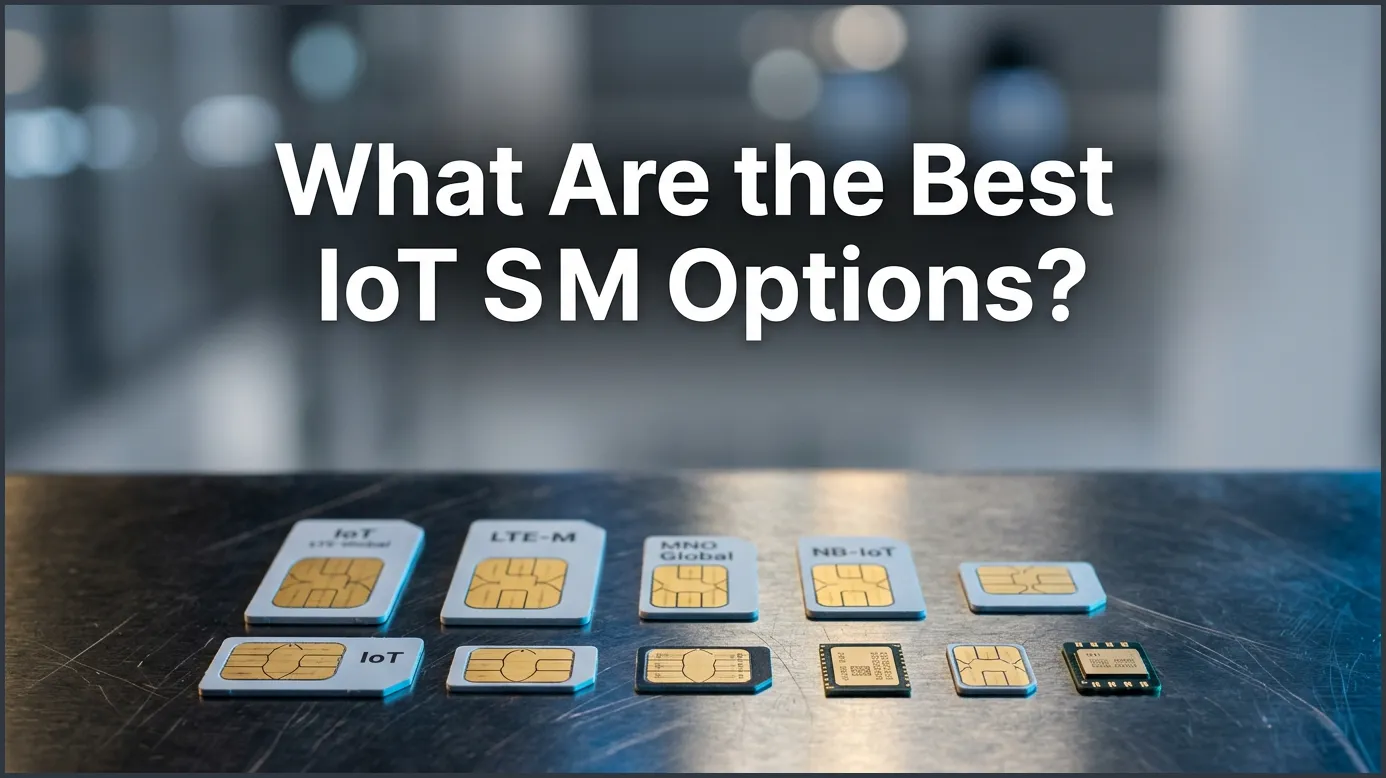
Finding the right connectivity for your smart devices is crucial for business success. The best IoT SIM options offer global multi-carrier coverage, robust security, and flexible form factors like eSIMs to keep your hardware online anywhere. Choosing a provider with a centralized management platform ensures your deployment scales smoothly and cost-effectively.
Imagine putting hundreds of smart sensors on a farm. Suddenly, half of them stop working. The cellular signal is too weak. Or imagine your delivery trucks crossing borders. You get a huge roaming bill the next day. These are real problems for businesses today. This is why picking the right network partner is so important. The success of any connected project rests on the small, durable piece of tech powering its network connection.
As you plan your next project, you might wonder, What Are the Best IoT SIM Options? available on the market today. Finding the right answer is not just about picking the cheapest data plan. It is about understanding coverage, physical durability, remote management, and security. In this guide, we will break down everything you need to know to make an easy choice, comparing the top options and explaining the key technologies that make them work.
Key Takeaways
- Global Coverage is Key: Choose SIMs that support multi-network roaming to avoid dead zones.
- eSIM and eUICC Tech: These modern formats let you switch carriers remotely without replacing physical cards.
- Security First: Look for features like private APNs and VPN support to keep your IoT data safe from hackers.
- Management Platforms: A unified platform helps you track data usage, activate lines, and manage costs easily.
- Form Factors Matter: Select industrial-grade or soldered SIMs (MFF2) for harsh environmental conditions.
- Flexible Pricing: Opt for pay-as-you-go or pooled data plans to prevent unexpected billing overages.
📑 Table of Contents
Understanding IoT SIM Cards vs. Consumer SIMs
Before we look at specific brands, let us understand why you cannot use standard smartphone SIM cards for your business. Consumer SIMs are built for high-speed, single-user activities. These include streaming video, browsing social media, and making calls. They tie your device to one network provider. They also use contracts that do not scale well for hundreds of devices.
In contrast, Internet of Things (IoT) SIM cards are designed for machine-to-machine (M2M) communication. They transmit small bits of data over long intervals. They must stay active for years without physical maintenance. Also, they support multi-carrier roaming. If one network tower goes down, the SIM switches to another network automatically. This keeps your devices online all the time.
Crucial Features of the Best IoT SIMs
To understand What Are the Best IoT SIM Options? for your project, you must look at technical features. The right choice depends on your hardware, physical environment, and location.
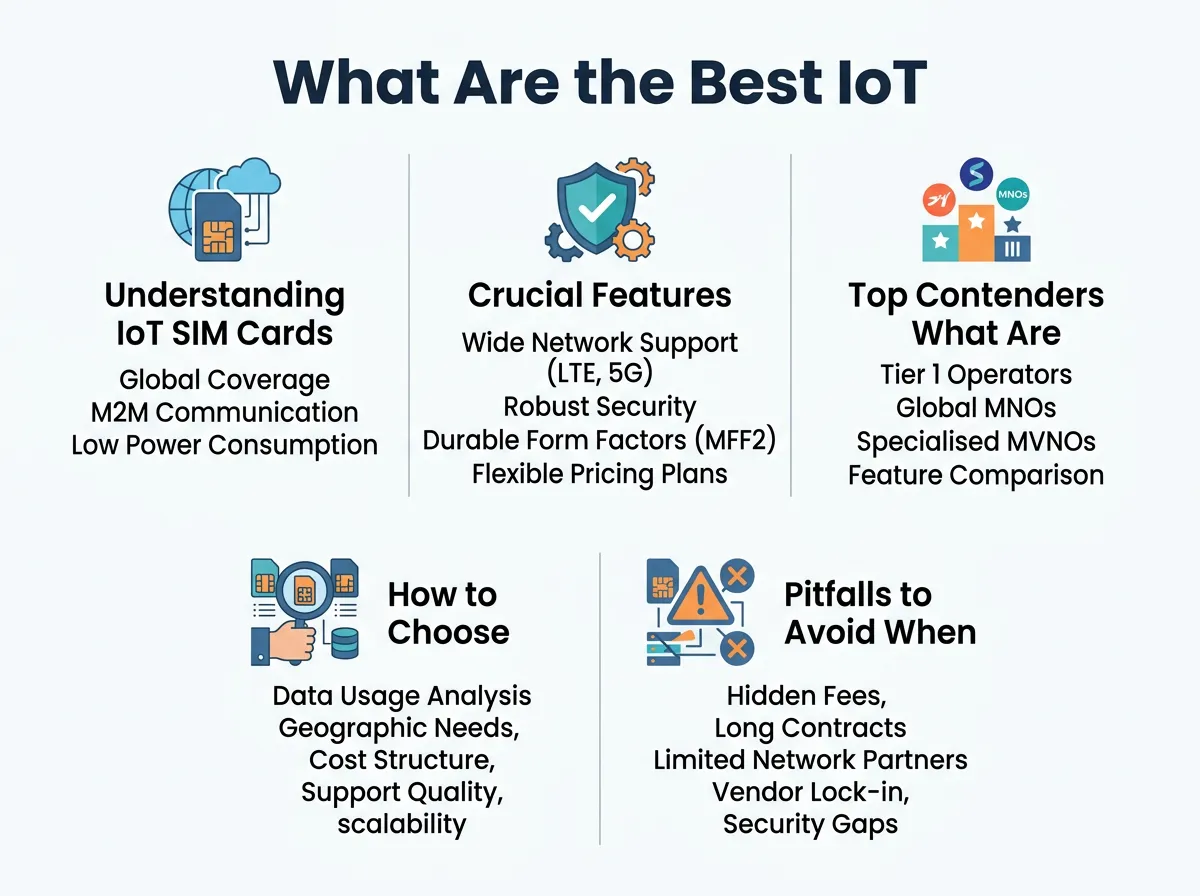
What Are the Best IoT SIM Options? — key points at a glance
1. Form Factors and Durability
IoT devices work in many different places. Some sit inside cool offices. Others are on cargo ships in the ocean or buried in soil. Because of this, you must pick the right physical card size. You can find more detail in this helpful guide to IoT SIM card types which explains the differences between standard plastic cards and industrial-grade options.
- Standard SIMs: These come in Mini (2FF), Micro (3FF), and Nano (4FF) sizes. They work well for devices in dry, safe indoor spaces.
- Industrial SIMs: These plastic cards are hardened to survive extreme heat, cold, moisture, and vibration.
- Embedded SIMs (MFF2): These are tiny chips soldered directly onto the device’s circuit board. They offer the highest level of physical security and durability.
2. eUICC Capabilities
In the past, switching carrier networks meant swapping out thousands of physical cards. For modern businesses, this is too slow and costly. The best modern options use eUICC (Embedded Universal Integrated Circuit Card) technology. This software standard lets you change network profiles over-the-air. You do not have to touch the device physically. It keeps your hardware investment safe for years to come.
3. Management Software
Managing thousands of devices is hard without the right tools. A great IoT SIM provider gives you a clean software platform. This dashboard lets you activate cards, pause service, track data, and set up billing alerts. Good management platforms help you spot malfunctioning devices that use too much data before they run up huge costs.
Top Contenders: What Are the Best IoT SIM Options Today?
Now that you know what features to look for, let us explore some of the top-performing providers in the industry. Different companies specialize in different regions and business sizes.
1. Multi-Carrier Global Providers
If your devices travel across borders, you need global coverage. Providers like Simbase offer great flexibility with pay-as-you-go pricing models. For instance, if you are operating in Europe, looking at specific IoT SIM card options in the UK can help you find localized coverage that keeps data costs low while maintaining great reliability.
Another excellent option is Things Mobile. Known for its easy-to-use platform, you can explore Things Mobile business plans to get access to multi-network coverage in over 165 countries. This makes it a smart choice for logistics, tracking, and smart agricultural devices that cross borders frequently.
2. Tier-1 Telecom Giants
For large enterprise rollouts, major telecom carriers offer dedicated IoT divisions. Companies like Deutsche Telekom, Vodafone, and AT&T provide highly secure, robust networks. However, these giants often require long-term contracts and larger minimum orders, making them less ideal for small startups but great for established enterprises.
How to Choose the Right Option for Your Project
When trying to figure out What Are the Best IoT SIM Options? for your business, ask yourself a few guiding questions. Creating a simple checklist can save you time and money.
First, analyze your data needs. Do your devices send small, simple text-based data, or do they stream live video? If you use very little data, look for pooled plans. These plans let all your devices share a single bucket of data, so you never pay for unused data on individual active lines.
Second, look at the physical locations. If you launch a product only in North America, focus on choosing an IoT SIM provider in the USA that offers strong regional coverage across major networks. If your product is destined for global export, prioritize providers with strong roaming agreements across many countries.
Pitfalls to Avoid When Selecting an IoT SIM
It is easy to make mistakes when deploying cellular hardware for the first time. Here are three common pitfalls you should avoid:
- Single-Carrier Lock-In: Relying on one network operator leaves your devices vulnerable to local tower outages. Always choose multi-carrier, roaming-enabled SIMs.
- Ignoring Platform Usability: A cheap SIM is not helpful if the management portal is confusing. You need a platform that lets you pause, activate, and monitor data in real-time.
- Neglecting Security: IoT devices are prime targets for hackers. Ensure your provider offers private APNs, static IP addresses, and secure VPN tunnels to protect your data flow.
Future-Proofing Your IoT Deployment
The cellular landscape is changing fast. With older 2G and 3G networks shutting down worldwide, you must choose modern connectivity standards like LTE-M or NB-IoT (Narrowband IoT). These technologies are designed for low-power, long-range applications. They allow device batteries to last for up to ten years while offering great signal strength through walls and underground structures.
When you ask, What Are the Best IoT SIM Options? for the future, the answer points toward eUICC-enabled LTE-M and 5G ready cards. Investing in these modern standards ensures your deployment remains active and profitable for a long time.
Conclusion
There is no single best IoT SIM card that fits every situation. The best option for your business depends on where your devices are, how much data they use, and how tough their environments are. By prioritizing multi-network coverage, clear management platforms, and modern eUICC features, you can build a reliable network that helps your business grow. Take the time to test different options with small trial batches before committing to a large rollout!
Frequently Asked Questions
Can I use a regular phone SIM card for IoT devices?
While a standard phone SIM card can work physically, it is not recommended. Phone SIMs lack industrial durability, do not support multi-carrier roaming, and have pricing plans that are too expensive for small data bursts.
What is an eSIM in IoT?
An eSIM is a tiny chip soldered directly onto your device’s circuit board. It allows you to change network providers over-the-air without physically swapping plastic cards. This makes it highly secure and perfect for deployments in tough environments.
How much data does an average IoT device use?
Most IoT devices use very little data, often less than 10 to 50 megabytes per month. However, some high-bandwidth devices like security cameras can use several gigabytes. Choosing a flexible or pooled data plan helps keep these costs predictable.
What is multi-carrier coverage?
Multi-carrier coverage allows your IoT SIM card to connect to different network providers in the same area. If one network signal becomes too weak, the SIM automatically switches to a stronger network. This ensures your devices stay online continuously.
How do I manage thousands of IoT SIM cards?
You can manage them easily using a centralized connectivity management platform provided by your vendor. These portals let you activate, pause, monitor, and set data limits for all your devices from a single dashboard.
Do IoT SIM cards work internationally?
Yes, many IoT SIM cards are designed specifically for global use. They have roaming agreements with hundreds of carriers worldwide, allowing your devices to stay connected as they cross borders without incurring massive bills.
