


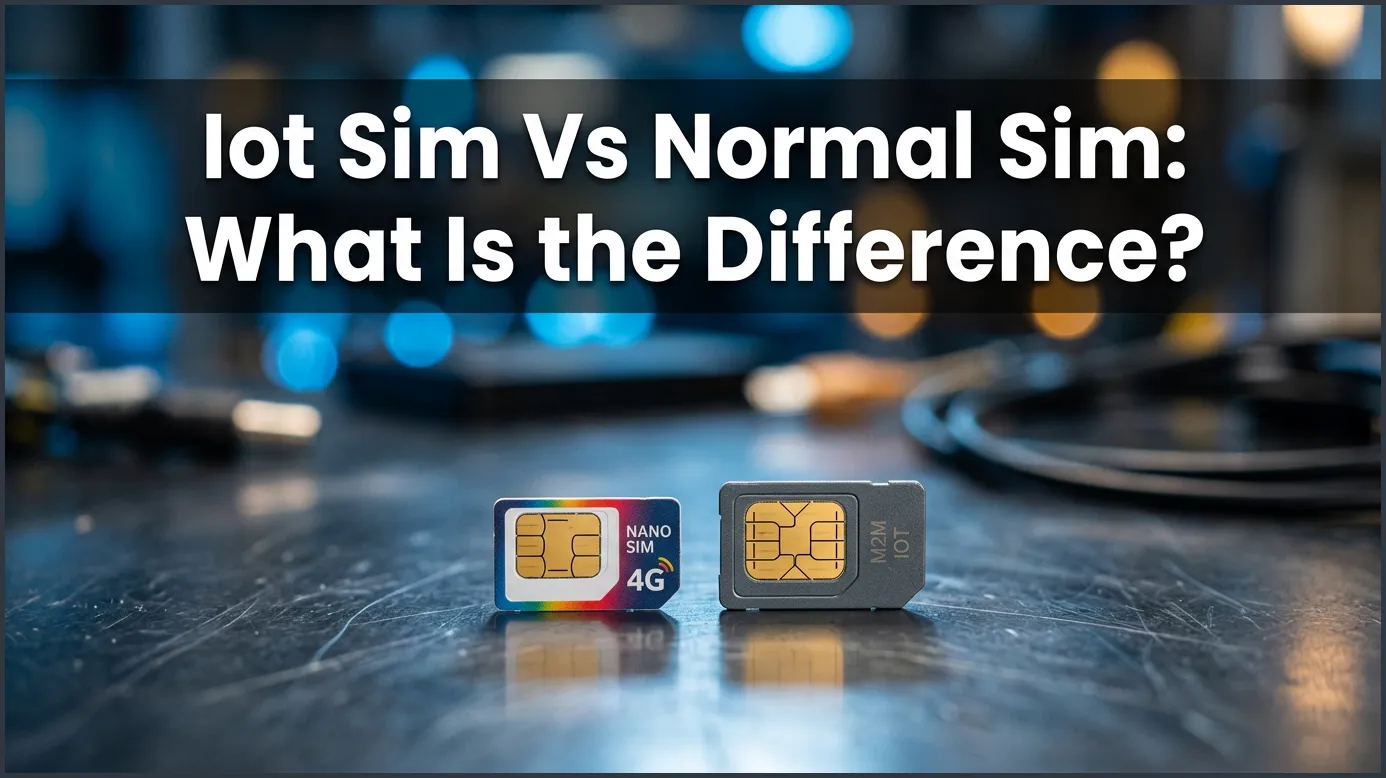
While normal SIM cards are designed for consumer devices like smartphones, IoT SIM cards are engineered for machine-to-machine communication with industrial-grade durability and global roaming capabilities. IoT SIMs offer centralized management, flexible data pooling, and enhanced security, making them ideal for smart devices, whereas normal SIMs focus on voice, SMS, and high-speed consumer data. Choosing the right one depends on your deployment scale, environmental conditions, and remote management needs.
Imagine you are building a smart system. Maybe you want to track a fleet of trucks across the country. Or perhaps you want to put sensors on water pipes deep underground. You know these devices need a wireless connection to send their data. You look at your smartphone and see the tiny plastic chip inside. It works great for your daily calls, apps, and web browsing. But will that same chip work for hundreds of remote sensors in the wild?
This is where many businesses face a crucial choice. Standard mobile chips seem cheap and easy to buy. Yet, industrial projects have very different needs than a human holding a phone. If you are planning a smart project, you might ask yourself: IoT SIM vs Normal SIM: What Is the Difference?
In this guide, we will dive deep into both options. We will look at how they work, where they shine, and why they are built so differently. By the end, you will know exactly which card fits your next big project.
Key Takeaways
- Durability: IoT SIMs are built to withstand extreme temperatures and vibration, unlike standard plastic consumer SIMs.
- Network Roaming: IoT SIMs can switch between multiple network carriers automatically to maintain a constant connection.
- Management Platform: IoT SIM cards come with centralized management platforms for monitoring thousands of devices at once.
- Data Billing: Normal SIMs use fixed monthly data plans, whereas IoT SIMs use shared data pools across all active devices.
- Lifecycle and Lifespan: IoT SIM cards can last up to 10 or 15 years, matching the long operational life of industrial machines.
📑 Table of Contents
Understanding the Basics of SIM Cards
To understand the debate, we must first look at what these chips actually do. A SIM, or Subscriber Identity Module, is a tiny computer. It stores the secure keys that let a device log onto a cellular network. Without it, your device cannot talk to the cell towers nearby.
What is a Normal SIM Card?
A normal SIM is the card you use every day. It sits inside your phone, tablet, or smart watch. Its main job is to connect you to a single mobile network. It is built for human activities. This means it prioritizes high-speed web browsing, voice calls, and text messages. It is designed to be managed by one person through a simple retail account.
What is an IoT SIM Card?
An IoT SIM card is built for machines, not humans. IoT stands for the Internet of Things. These chips do not care about phone calls or streaming videos. Instead, they focus on sending small bits of data over long distances. You can learn more about how they work by reading about the unique features of an IoT SIM card. They link smart devices like meters, cameras, and GPS trackers to the cloud. They are built for automation and can run for years without any human touch.
Physical Durability and Form Factors
Devices do not always live in cozy pockets or clean offices. Many smart machines must work in harsh spots. This is one of the biggest areas where the two chips differ.
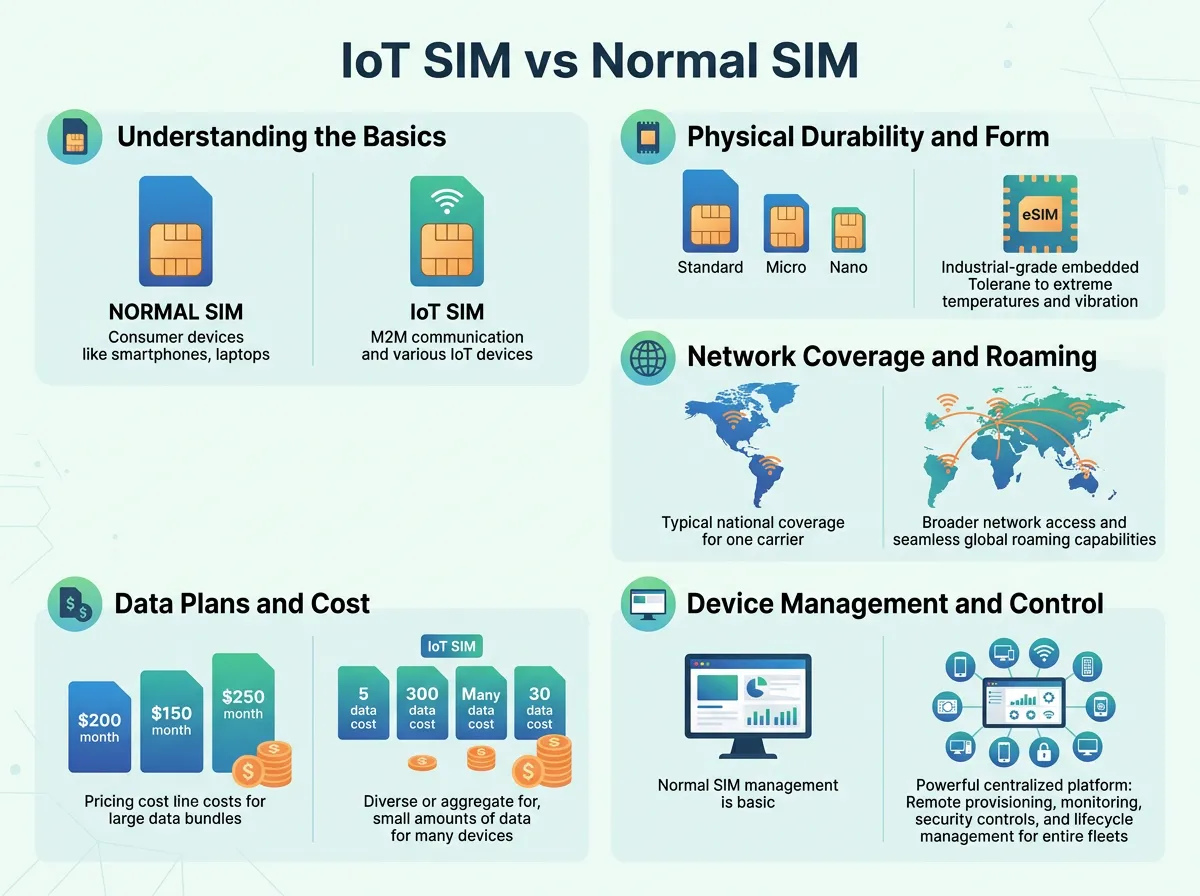
IoT SIM vs Normal SIM: What Is the Difference? — key points at a glance
Consumer Plastic vs. Industrial Grades
Normal SIMs are made of standard plastic. They work fine in normal room temperatures. But if they get too hot or too cold, they can crack or melt. They can also fail if they shake too much. This makes them a poor choice for car engines or outdoor weather stations.
IoT SIMs come in industrial grades. They use tough materials like silicon and metal. They can easily survive in temperatures from minus 40 degrees to over 105 degrees Celsius. They also resist rust, moisture, and heavy vibrations. This keeps your machines online even in the toughest environments.
Embedded SIMs (MFF2)
Have you ever dropped a tiny plastic SIM card on the floor? It is easy to lose. In the industrial world, we cannot have chips sliding out of slots. That is why many IoT projects use embedded SIMs, also known as MFF2. These are soldered directly onto the device’s circuit board during manufacturing. They cannot shake loose, and they are completely sealed against dust and water.
Network Coverage and Roaming Capabilities
If your phone loses signal in a dead zone, you might feel annoyed. But if a smart medical device or an alarm system loses signal, it can be a disaster. The way these two cards handle network coverage is vastly different.
Single-Network Limits vs. Multi-Carrier Agility
A normal SIM is tied to one specific carrier. If you buy a card from Carrier A, your phone will always try to use Carrier A. If you drive into an area with no Carrier A towers, your connection drops. You cannot easily jump to Carrier B unless you pay high roaming fees.
IoT SIMs are built for global roaming. They do not belong to just one network. Instead, they can switch between different carriers automatically. If Carrier A has a weak signal, the IoT SIM instantly jumps to Carrier B or C. This ensures your devices stay online, no matter where they travel.
Low-Power Wide-Area Networks (LPWAN)
Normal SIMs always look for the fastest network, like 4G or 5G. This uses a lot of battery power. IoT devices often run on small batteries that must last for ten years. For these devices, we use special low-power networks like NB-IoT and LTE-M. You can check out this guide on NB-IoT vs LTE-M to see how these networks differ. These networks allow IoT SIMs to send data using very little power, which keeps the device alive for years.
Data Plans and Cost Structures
How you pay for data is another major point of contrast. Using consumer billing for a business project can quickly lead to massive, unexpected bills.
The Trap of Consumer Data Billing
Normal SIM plans are made for heavy data users. They give you a large bucket of data, like 10 gigabytes per month. If you do not use it, you lose it. If you go over your limit, you get hit with big fees. This model does not work for a business with 5,000 smart meters. Each meter might only send a few kilobytes of data per day. Paying for a full phone plan for each meter would cost a fortune.
Shared Data Pools for IoT
IoT plans use shared data pools. Instead of buying individual plans, you buy one large pool of data for your entire fleet. If you have 1,000 devices and each has a 10 megabyte limit, you have a total pool of 10,000 megabytes. If one device uses more data, it borrows from a device that used less. This keeps your monthly costs stable and predictable.
Device Management and Control
Imagine having to update the settings on 500 tablets. If you use normal SIMs, you have to change the settings on each screen by hand. This is a massive waste of time.
Centralized Management Platforms
IoT SIMs solve this problem with a Connectivity Management Platform (CMP). This is a cloud portal where you can see all your active SIM cards on one screen. You can turn cards on or off with a single click. You can also track how much data each card is using in real time. If a device starts acting strange and using too much data, you can set up an alert to stop it instantly.
Security and IP Protocols
Normal SIMs use public IP addresses. This means they are open to the public internet, which makes them vulnerable to hackers. IoT SIMs use private networks. They often use private APNs (Access Point Names) and VPNs (Virtual Private Networks). This keeps your data locked in a secure tunnel between your device and your server. Hackers cannot find or access your smart devices from the outside world.
How to Choose the Right Solution for Your Project
Now that we have looked at the details, how do you decide which one to buy? It all comes down to the scale and nature of your project.
When to Use a Normal SIM
You can stick with a normal SIM if:
- You only have a couple of devices, like two work tablets.
- Your devices stay in one office with great cell coverage.
- You do not mind managing the bills manually.
- You need extremely high-speed data for things like video calls.
When to Upgrade to an IoT SIM
You must use an IoT SIM if:
- You have more than ten devices spread out over different areas.
- Your devices operate outdoors or in harsh environments.
- You need your devices to switch carriers to avoid dead zones.
- You need tight security and private IP networks.
To make the best choice, it is wise to learn how to choose the right SIM strategy for reliable IoT before launching your project.
Conclusion
Understanding “IoT SIM vs Normal SIM: What Is the Difference?” is key to any tech project’s success. While normal SIM cards are perfect for our phones, they fall short in industrial settings. IoT SIMs offer the durability, global reach, smart data billing, and central control that modern businesses need. By choosing the right card, you protect your hardware, secure your data, and save a lot of money in the long run.
Frequently Asked Questions
What happens if I use a normal SIM in an IoT device?
A normal SIM will work at first, but it may violate the carrier’s terms of service. Over time, the plastic chip can fail in extreme temperatures, and you will lack the tools to manage the device remotely.
Can an IoT SIM card make voice calls?
Most IoT SIM cards are configured only for data and SMS transmission to keep costs low. However, some special IoT plans can support voice calls if the target device requires it for emergency alerts.
What is an eSIM in the context of IoT?
An eSIM is a digital SIM that allows you to change network profiles remotely without swapping physical chips. This is highly useful for IoT deployments where devices are welded shut or located in hard-to-reach places.
Do IoT SIMs work globally?
Yes, most IoT SIMs are designed with global roaming agreements. They can automatically connect to multiple networks across different countries without requiring a physical card swap.
Are IoT SIM plans cheaper than normal mobile plans?
Yes, they are generally much cheaper for low-data use because you only pay for the exact amount of data your devices consume. They also use shared data pools to prevent expensive overage charges.
How long do industrial IoT SIMs last?
Industrial IoT SIMs are made with highly durable materials that resist heat, cold, and vibrations. They can easily last between 10 to 15 years under harsh environmental conditions.
