


The best IoT cellular data plans offer flexible pricing, global coverage, and robust security tailored to your specific device needs. Providers like Hologram, 1NCE, and Zipit Wireless lead the market by offering pay-as-you-go, flat-rate, or customized enterprise packages. Choosing the right plan depends on your data consumption, geographic reach, and fleet size.
Imagine you just designed an amazing new smart device. It could be an asset tracker for shipping crates. Maybe it is a smart environmental sensor for farms. Or perhaps it is a medical monitor that helps patients at home. You have tested the hardware, and the software works perfectly. But now, you face a massive hurdle. How will your device talk to the cloud when Wi-Fi is not an option?
This is where cellular connectivity comes into play. Choosing the wrong connection plan can lead to major headaches. You could face huge bills, or your devices might lose signal in the middle of a critical task. To keep your project on track, you must find a cellular plan that is reliable, secure, and affordable.
So, What Are the Best IoT Cellular Data Plans? The truth is, there is no single answer that fits every project. The right choice depends on where your devices are located, how much data they use, and how quickly you plan to scale. In this article, we will break down the top plans, look at key features, and help you find the perfect match for your business.
Key Takeaways
- Analyze Your Data Needs: Most IoT devices use very little data, making low-cost, low-bandwidth plans ideal.
- Prioritize Global Coverage: Look for multi-carrier SIM cards that switch networks automatically to prevent downtime.
- Understand Pricing Models: Choose between pay-as-you-go, flat-rate lifetime fees, or pooled data plans.
- Check Management Tools: A strong SIM management platform is essential for monitoring and controlling large fleets.
- Evaluate Security Features: Ensure your provider offers private APNs, VPN support, and IMEI locking.
- Test Before Buying: Always order pilot SIM cards to test network strength in your specific deployment areas.
📑 Table of Contents
Why Consumer Cell Phone Plans Fail for IoT
Some developers think they can just buy a normal SIM card from a local carrier. They might go to a retail store and sign up for a consumer phone plan. While this might work for a quick home project, it is a terrible idea for a business. Consumer plans are designed for phones, not smart devices.
High Costs for Unused Data
Consumer plans are built for streaming videos, scrolling social media, and downloading large files. They usually offer gigabytes of data. Most smart devices only need a few kilobytes or megabytes of data each month. Paying for a massive consumer plan means you are paying for data you will never use. This can drain your budget very quickly.
The Nightmare of Carrier Lock-In
If you buy a consumer SIM, you are locked into a single carrier network. If that carrier has a bad signal in a certain area, your device goes offline. IoT-specific plans solve this problem. They use multi-carrier roaming. This allows your device to switch between different networks to find the strongest signal.
Understanding Your Device’s True Data Footprint
Before comparing plans, you need to understand how much data your hardware actually uses. Every device has its own unique footprint.
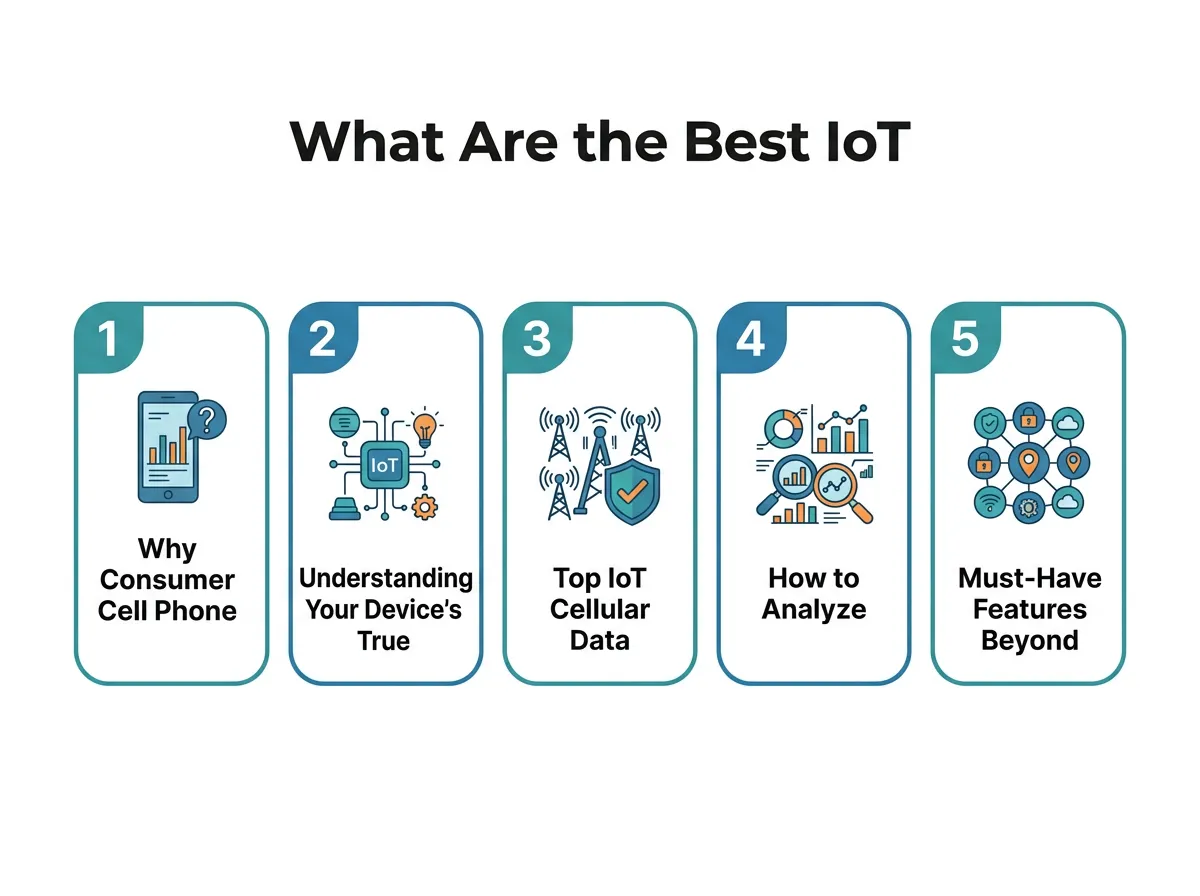
What Are the Best IoT Cellular Data Plans? — key points at a glance
Low-Bandwidth vs. High-Bandwidth Devices
Most smart devices fall into the low-bandwidth category. For example, a smart water meter might only send a tiny text message once a day. This uses very little data. For these devices, you want a plan that charges very little per month. On the other side, you have high-bandwidth devices. A live security camera or an in-vehicle Wi-Fi router needs gigabytes of data. These devices need a plan that offers bulk data at a discount.
Choosing the Right Network Technology
The type of cellular network you choose also affects your plan. Today, you have several great options:
- NB-IoT (Narrowband IoT): This network is designed for simple devices. It is slow, but it has incredible range and uses very little battery power.
- LTE-M: This is perfect for mobile devices. It can track items in transit and even supports voice data.
- 4G LTE and 5G: These are the traditional high-speed networks. Use them for video streaming, digital signs, and heavy data transfers.
Top IoT Cellular Data Providers to Consider
Now that you know your needs, let us look at some of the top providers in the market today. These companies specialize in keeping smart devices connected.
Flat-Rate and Lifetime Connectivity
If you want predictable costs, look for flat-rate plans. Some providers charge a single fee that covers your device for its entire lifespan. For example, you can look at the flat-rate IoT pricing models offered by 1NCE. This model lets you pay a one-time fee for a SIM card that includes data for up to ten years. This is highly popular for smart meters and sensors that need to stay in the field for a decade without monthly bills.
Flexible Pay-As-You-Go Options
If your devices have changing data habits, a flexible plan is a better fit. You can explore the flexible pay-as-you-go IoT plans from Hologram. Their platform allows your devices to connect to hundreds of networks worldwide. You only pay for the exact amount of data your devices actually use. This is perfect for startups and growing fleets where data use is hard to predict.
Tailored Enterprise Fleet Management
If you are deploying thousands of devices, you need more than just raw data. You need custom carrier integrations, automated billing, and heavy-duty management tools. In this scenario, you should explore enterprise cellular data options. These custom plans are designed to help large enterprises scale their operations smoothly without hitting administrative bottlenecks.
When deciding What Are the Best IoT Cellular Data Plans? for your hardware, these three companies represent the top tier of flexibility, pricing, and support.
How to Analyze and Compare Pricing Models
When you look at different plans, you will see several billing methods. Let us break down how they work so you can make an educated choice.
The Pay-As-You-Go Model
With pay-as-you-go, you pay a small monthly active fee for each SIM card. After that, you pay a set price for every megabyte of data you consume. This is highly cost-effective if your devices are often idle or if you are still in the testing phase.
The Pooled Data Model
This is often the safest model for growing businesses. With pooled data, you buy a total amount of data for your entire fleet. If you have 100 devices and each gets 10 megabytes, your pool is 1,000 megabytes. If one device uses 20 megabytes and another uses almost zero, they balance each other out. This prevents unexpected overage fees from a few rogue devices.
Global Flat-Rate Roaming
If your products cross borders, you must watch out for roaming fees. A single device traveling from the US to Canada can rack up huge bills on a standard plan. To prevent this, look for plans that offer a flat rate across multiple countries. You can read a comprehensive IoT connectivity guide to understand how modern SIM technology allows devices to roam across global networks without extra fees.
Must-Have Features Beyond the Price Tag
When asking yourself What Are the Best IoT Cellular Data Plans?, remember that price is only one part of the puzzle. The best plans also include vital software and security tools.
Multi-Network Coverage
Your devices should not rely on a single carrier. If you use a carrier-agnostic SIM card, your device can connect to multiple networks. If AT&T has a weak signal in a rural area, the SIM will automatically switch to T-Mobile or Verizon. This keeps your devices online and active.
A Centralized Management Platform
You need an easy way to manage your SIM cards. A good provider will give you a cloud dashboard. This software lets you activate new SIMs, pause inactive ones, and set data limits. It also lets you see exactly how much data each device is using in real-time.
Advanced Security Protocols
IoT devices are frequent targets for cyber threats. Your data plan should help protect them. Look for providers that offer private APNs (Access Point Names) and VPN setups. These tools ensure your data travels through a secure tunnel instead of the public internet. You should also look for IMEI locking, which links a SIM card to a specific piece of hardware. If someone steals the SIM card, they cannot use it in another device.
Practical Tips for a Successful Deployment
Before you sign a contract, use these practical tips to ensure your project succeeds.
Order a Pilot Kit First
Never buy hundreds of SIM cards without testing them in your actual hardware. Most reputable providers offer cheap or free pilot kits. Order a few SIMs and test them in different physical environments. Check how quickly they connect and how stable the connection is.
Calculate the Total Cost of Ownership
A plan that looks cheap on paper might have hidden costs. Make sure to ask about activation fees, suspension fees, and platform usage charges. Calculate the total cost of maintaining each device over its entire expected lifespan.
Choose a Partner That Scales
Your needs today will not be your needs in two years. Choose a connectivity partner that can support your growth. Ensure they have coverage in countries you want to expand to in the future. Changing your SIM cards later is incredibly expensive, so choose a long-term partner from day one.
Conclusion
Finding the right connectivity plan is essential for any smart device project. By assessing your data footprint, choosing the right network type, and looking at flexible pricing models like pooled or lifetime data, you can keep your costs low. Do not forget to prioritize security and carrier-agnostic coverage. With the right partner, your devices will stay securely connected, allowing you to focus on growing your business.
Frequently Asked Questions
Can I use a regular phone SIM card for IoT devices?
While you can use a regular consumer SIM card for testing, it is not recommended for actual deployments. Consumer plans are expensive for low-data devices and lack crucial security, multi-carrier roaming, and central management features.
What is the average data usage for an IoT device?
Average usage varies wildly based on the device type. Simple sensors might only use 10 to 100 kilobytes per month, while high-bandwidth systems like video cameras can use several gigabytes.
What is the difference between LTE-M and NB-IoT?
NB-IoT is designed for stationary devices that send tiny packets of data and need long battery life. LTE-M has higher speeds, supports voice, and is better for moving assets like vehicle trackers.
How does pooled data pricing work?
Pooled data allows you to combine the data limits of all your active SIM cards into one shared bucket. This prevents overage charges because high-use devices are balanced out by low-use devices.
What is an IMEI lock?
An IMEI lock is a security feature that binds a SIM card to the specific ID of your hardware. If someone removes the SIM card and tries to use it in another device, it will not connect to the network.
Do IoT cellular plans support global roaming?
Yes, many providers offer global IoT SIM cards that work across hundreds of countries. These SIM cards connect to local partner networks automatically, ensuring your devices stay connected without expensive roaming fees.
