


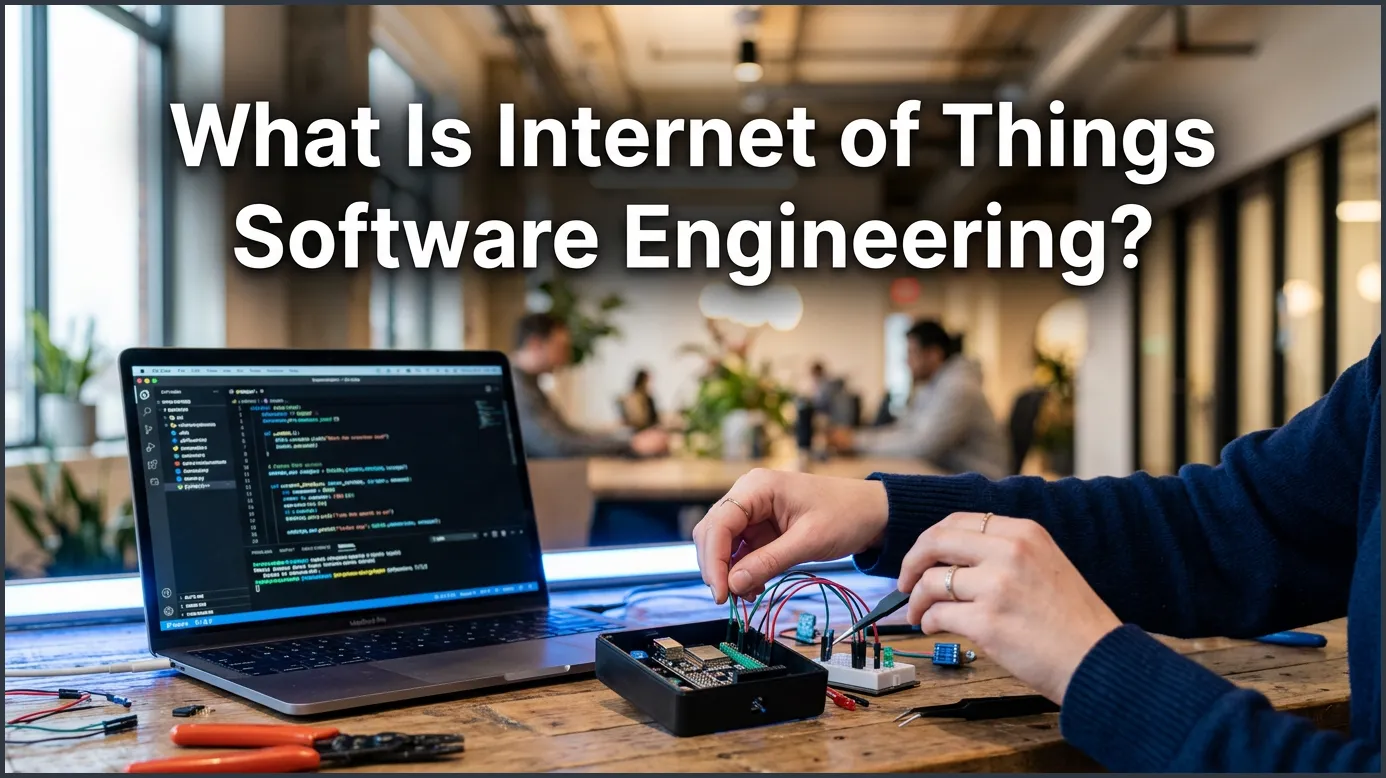
Internet of Things (IoT) software engineering is the specialized branch of computer science focused on designing, building, and maintaining software for interconnected smart devices. This unique discipline bridges the gap between hardware and cloud systems, ensuring that physical gadgets can collect, process, and share data securely. By combining embedded programming with cloud computing, these engineers make our everyday world smarter and more connected.
Imagine waking up in the morning. Your smart alarm clock rings. As soon as you turn it off, your coffee maker starts brewing. Your bedroom lights slowly turn on. Your smart watch tracks your sleep and sends a health report to your phone. All these things happen without you touching a single button. This is not a scene from a science fiction movie. It is our daily life today. We live in a world full of smart, connected gadgets that work together to make our lives easier.
But how do these gadgets talk to each other? How do they know what to do and when to do it? The secret lies behind the physical casing of the device. It is all about the specialized code that runs these systems. If you have ever wondered about this magic, you might ask: What Is Internet of Things Software Engineering? In this guide, we will explore this exciting field. We will look at what these engineers do, the tools they use, and how they shape our modern world.
Key Takeaways
- Hardware Integration: IoT software engineering bridges physical microchips with advanced cloud networks.
- Resource Constraints: Programmers must write lightweight code to save battery life and device memory.
- Specialized Languages: Languages like C, C++, and Python are central to writing efficient IoT code.
- Real-World Use: IoT software powers everything from smart home thermostats to life-saving medical devices.
- Security Focus: Keeping data encrypted and allowing easy remote updates is a primary duty of IoT engineers.
- Network Communication: Lightweight protocols like MQTT are essential for smooth device-to-device talk.
📑 Table of Contents
The Core Pillars of IoT Software Engineering
To understand this field, we must look at how it works. It is not just about writing web pages or mobile apps. It is about linking physical things to the digital world. The rise of the Internet of things has changed how we live. It requires a special kind of engineering. There are three main pillars in this area of work.
Embedded Systems
First, we have embedded systems. These are tiny computers inside physical devices. Think of your smart fridge or a fitness tracker. These devices have very small chips inside them. An IoT software engineer writes code that fits on these tiny chips. This code must run fast and use very little power.
Cloud Platforms and Networks
Second, devices need to talk to each other. They send data to the cloud. Engineers build the paths that this data travels on. They design cloud systems that can receive info from millions of devices at the same time. This requires strong network knowledge.
Data Processing and Apps
Third, the data must be useful. Once the cloud gets the data, software must process it. Engineers write programs that clean the data. They make tools that show this data on your phone screen in a clear way.
How IoT Software Engineering Differs from Traditional Software Engineering
You might wonder how this differs from normal coding. After all, code is code, right? Not quite. Building software for physical devices is very unique. When you ask, What Is Internet of Things Software Engineering?, the answer often comes down to the physical limits of hardware. In fact, a detailed research paper on IoT software engineering shows how distinct this field really is.
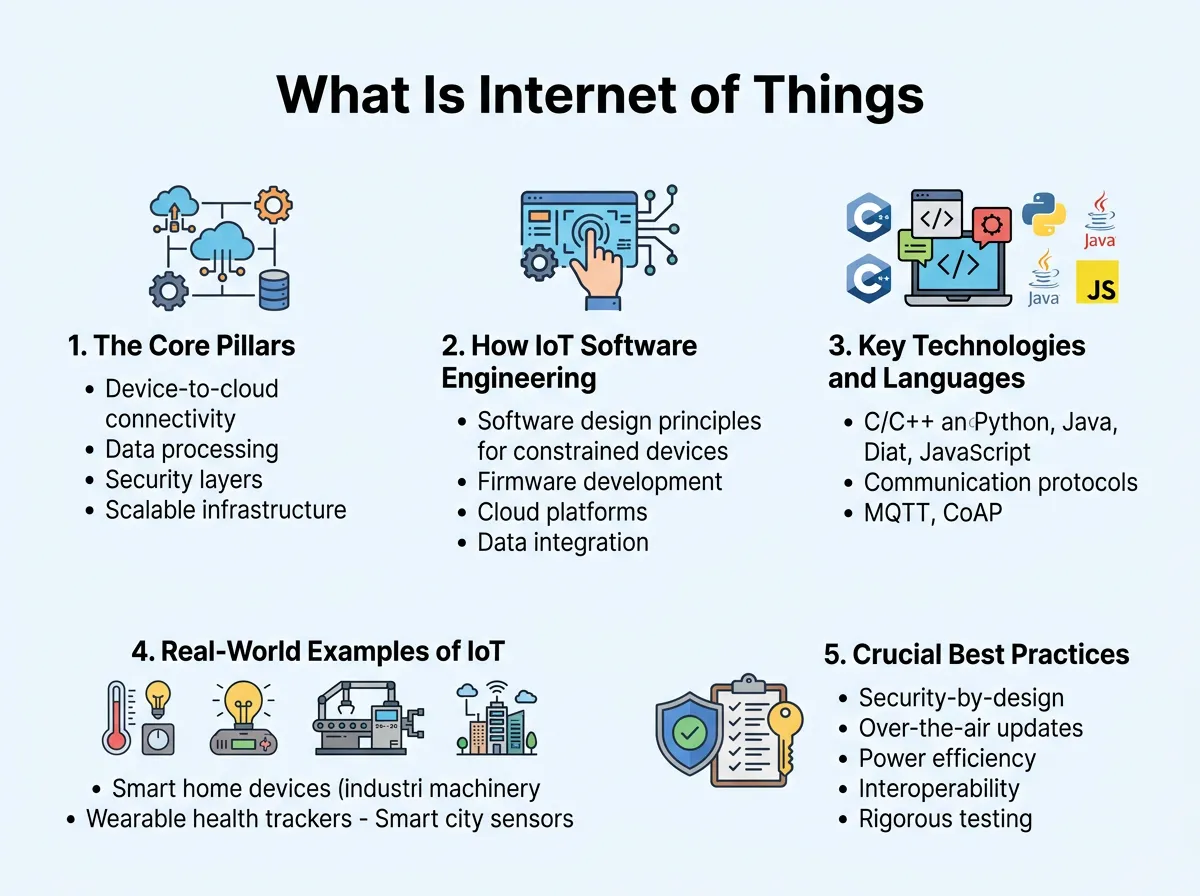
What Is Internet of Things Software Engineering? — key points at a glance
Strict Hardware Limits
Normal software runs on fast computers. If a program needs more memory, you can just add it. But IoT devices are tiny. They have very little memory and run on small batteries. If your code is too heavy, the battery will die fast. Engineers must write very clean, tight code. Every single line of code must be highly efficient.
Real-World Environments
Normal software sits in safe, climate-controlled data centers. IoT devices live in the real world. They might sit in a cold forest, a hot factory, or a moving car. They can lose their connection to the internet at any time. IoT software must know how to handle these real-world issues. It must store data when offline and sync up later when the signal returns.
Key Technologies and Languages Used in IoT
What tools do these engineers use? They use a mix of old and new tools. If you want to know more about how companies build connected tech, check out these IoT development practices to see how teams work. Here are the main tools of the trade.
Popular Programming Languages
- C and C++: These are the kings of hardware. They are fast and let developers control memory directly. Most small chips run on C or C++.
- Python: This language is great for data. It is easy to write. Engineers use it for the cloud side of IoT and for writing quick tests.
- Java and JavaScript: These are used for gateways and cloud systems. They help different devices talk to each other easily.
Crucial Communication Protocols
Devices do not use normal web protocols. They need lightweight ways to talk. They use tools like MQTT and CoAP. These protocols send very tiny messages. This saves battery life and network data.
Real-World Examples of IoT Software in Action
To see the power of this work, let us look at some real examples. You can find this technology in almost every industry today.
Smart Homes
This is the most common example. Your smart thermostat learns your daily routine. It turns down the heat when you leave for work. It warms the house before you get home. Software engineers write the rules that make this happen.
Smart Cities
Many cities now use smart trash cans. These cans have sensors. They tell the city when they are full. This means trash trucks only drive when needed, which saves money and cuts down on pollution.
Healthcare and Wearables
Pacemakers and heart monitors can now send data straight to doctors. If a patient has an issue, the doctor knows right away. This saves lives, and it is all thanks to secure IoT software.
Crucial Best Practices for IoT Software Engineers
Building these systems is hard. There are many moving parts. Here are some top tips for success in this field.
Prioritize Security First
Security is the biggest challenge in IoT. A hacker could access a smart lock or a hospital device. This is highly dangerous. Engineers must encrypt all data. They must make sure devices can update easily to patch security bugs.
Design for Offline Use
Internet connections drop all the time. Your software must not crash when this happens. It should save data on the device. Once the connection returns, it should send the saved data to the cloud.
Test with Real Hardware
You cannot test IoT software on a normal computer screen alone. You must test it on the actual device. Test it in bad weather and test it with a low battery. This is the only way to know if it truly works.
Conclusion
So, What Is Internet of Things Software Engineering? In short, it is the art of making physical things smart. It is a bridge between the physical and digital worlds. It requires a mix of hardware knowledge, cloud coding, and a deep focus on security. As our world gets smarter, the need for these skills will only grow. It is an exciting time to be in this field. These engineers are not just writing code. They are building the future of our physical world.
Frequently Asked Questions
What is Internet of Things software engineering?
It is the process of designing and building software for physical smart devices. This code helps devices collect data, connect to the cloud, and talk to other devices. It links hardware engineering with traditional computer science.
What languages are used in IoT software engineering?
C and C++ are the most common languages for small device chips because they are very fast. Python is often used for data processing and cloud tasks. Java and JavaScript are also popular for building gateways and user apps.
How does IoT software differ from normal software?
Normal software runs on fast computers with lots of memory and power. IoT software runs on tiny devices with limited battery life and small chips. It must be very lightweight and work well even when the internet drops.
Is security important in IoT software engineering?
Yes, security is a major focus because hacked devices can cause real-world harm. Engineers must encrypt data and build secure ways to update devices. Without strong security, smart locks, cameras, and medical tools can be compromised.
What are the main components of an IoT system?
An IoT system consists of physical devices with sensors, a local network connection, and a cloud platform. It also includes data processing software and a user app to view the data. All these parts must work together seamlessly.
Is IoT software engineering a good career?
Yes, it is a highly rewarding career with fast-growing demand. As more homes, cities, and factories use smart tech, companies need skilled engineers to build these systems. It offers great opportunities for those who enjoy both hardware and coding.
