


Cellular IoT SIM cards are specialized memory chips designed to connect smart machines and devices to cellular networks instead of personal phones. They offer industrial-grade durability, global roaming capabilities, and centralized management tools built specifically for businesses. These smart cards make it easy to deploy, secure, and monitor thousands of connected devices across the world.
What Are Cellular IoT SIM Cards?
Imagine a smart water meter buried deep underground. Or think about a delivery truck driving across three different countries. These devices need a reliable way to send data back home. They cannot use your home Wi-Fi network. They need a steady, strong connection that works anywhere. This is where cellular IoT SIM cards come into play.
You might wonder what makes these little chips different from the SIM card inside your smartphone. While they look similar on the outside, they do very different jobs. This article will explain what these cards are, how they work, and why they are vital for modern businesses. We will also look at the different types you can choose from and how they keep your data safe.
Key Takeaways
- Machine-to-Machine Focus: Designed specifically for smart hardware, not personal smartphones.
- Industrial Durability: Built to withstand extreme heat, freezing temperatures, and constant vibration.
- Global Coverage: Automatically switch between networks to maintain a steady connection across borders.
- Central Control: Managed through a single dashboard to monitor data usage and block threats.
- Form Factor Variety: Available as removable plastic cards or soldered chips for extra security.
📑 Table of Contents
The Core Difference: IoT SIMs vs. Consumer SIMs
Your phone uses a standard SIM card to make calls, send texts, and browse the web. These consumer cards are great for people, but they are not made for machines. Cellular IoT SIM cards are designed specifically for the Internet of Things (IoT). To understand more about this technology, you can check out this guide to IoT SIM cards to see how they change the game for businesses.
Built for Machines, Not Humans
Your personal phone plan has features like unlimited social media or high-speed video streaming. A smart machine does not need those things. A smart water sensor only sends small bits of data once a day. A security camera might send a steady stream of video but no voice calls. Cellular IoT SIM cards use custom data plans. These plans match the exact needs of the machine. They save money because you do not pay for voice minutes or heavy text packages.
Lifespan and Extreme Durability
People change their mobile phones every few years. Because of this, consumer SIM cards are made of simple plastic. They do not need to last forever. They can fail if they get too hot or too cold. On the other hand, cellular IoT SIM cards often live inside machines for ten years or more. They can withstand extreme heat, freezing winter temperatures, and constant shaking inside heavy trucks. To understand this machine-to-machine connection better, you can read more about machine-to-machine SIM technology and how it supports long-lasting gear.
How Cellular IoT SIM Cards Work
At their core, these cards work much like the card in your phone. They connect to nearby cellular towers to send data. However, the way they manage these connections is much smarter.
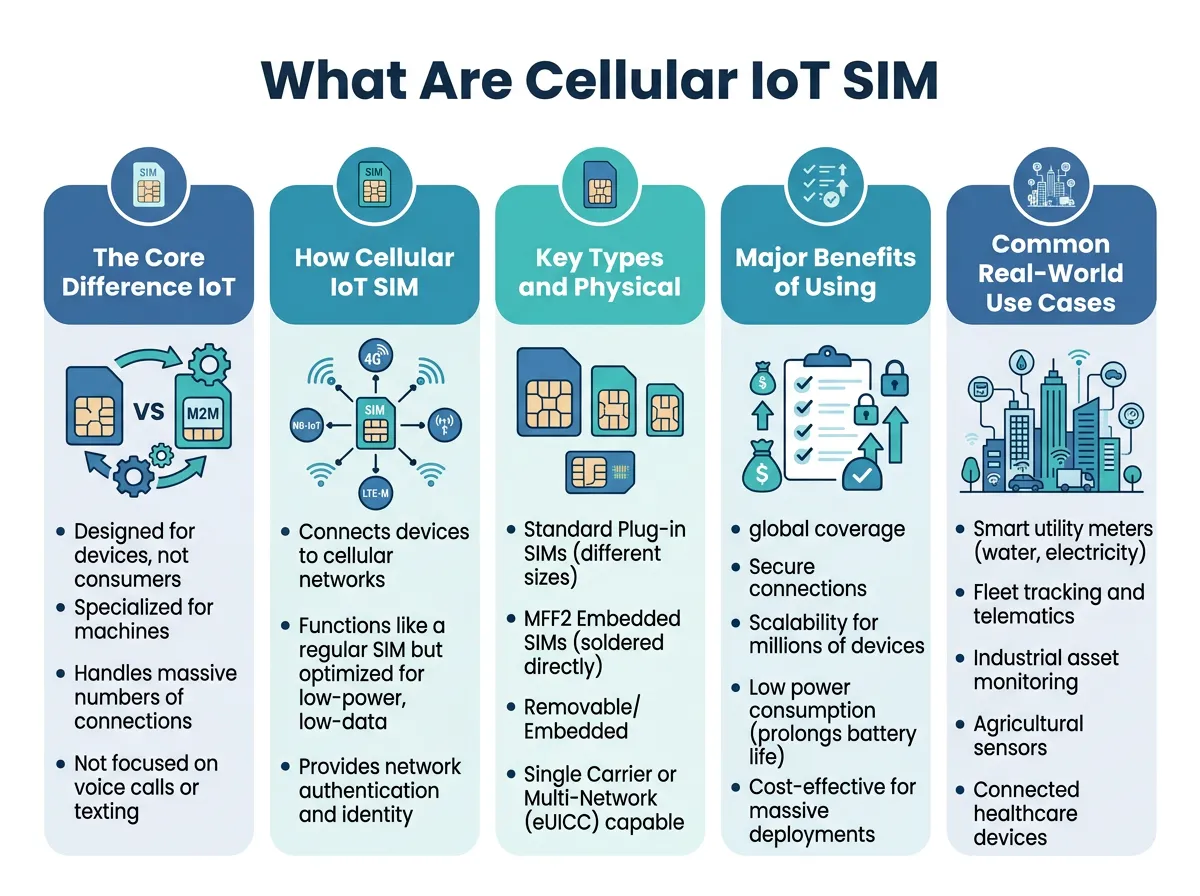
What Are Cellular IoT SIM Cards? — key points at a glance
Registering on Global Networks
When your phone loses its signal, you have to wait or search for a new network. A smart machine cannot do that. Cellular IoT SIM cards can switch networks automatically. If Network A goes down, the card moves to Network B without any human help. This means your devices stay online even in remote areas.
Constant Over-the-Air (OTA) Updates
What happens if you need to update the settings on ten thousand smart devices? You cannot go to each one and swap the card. Cellular IoT SIM cards allow operators to make changes remotely. These are called Over-the-Air (OTA) updates. With a few clicks, you can change the network profile or update security settings for every device at once.
Key Types and Physical Sizes of IoT SIMs
Just like consumer cards, these cards come in different shapes and sizes. These shapes are called form factors. Finding the right fit is key to keeping your devices safe and compact.
Standard Removable Cards (2FF, 3FF, 4FF)
You are probably familiar with these. They are the plastic cards you pop out of a larger frame. They come in mini, micro, and nano sizes. They work well for devices that are easy to access, like a tracking device on a shipping container.
Embedded SIMs (MFF2 and eSIM)
For many industrial jobs, a removable card is too risky. It can slide out of place during vibrations. It can also be stolen. To prevent this, many businesses use embedded SIMs, known as MFF2 chips. These chips are soldered directly onto the circuit board during manufacturing. There is also the eSIM, which lets you download new network profiles digitally. If you want to learn more about these options, you can read about different IoT SIM form factors and sizes to find the best match for your project.
Major Benefits of Using Cellular IoT SIMs
Why do companies choose these cards instead of standard phone plans? The benefits go far beyond just saving a few dollars.
True Global Connectivity
If you sell smart products worldwide, you cannot buy local SIM cards for every country. Cellular IoT SIM cards offer global roaming. They connect to hundreds of different networks across the globe under a single contract. This makes shipping products to foreign markets simple and stress-free.
Centralized Platform Management
When you manage thousands of devices, you need a single place to watch them all. Cellular IoT SIM cards link to a central software platform. From this dashboard, you can see how much data each device uses. You can turn off cards that look suspicious or turn on new cards instantly.
Enhanced Security Controls
Security is a major worry for any connected network. To keep things safe, these cards connect to highly secure cellular networks. They use private access points and secure IP addresses. This keeps hackers from accessing your private business data.
Pro Tip: Look for “data pool” plans. This lets all your devices share a single pool of data. If one device uses a bit more data, other devices can balance the cost. This prevents surprise fees at the end of the month.
Common Real-World Use Cases
How are these smart cards used in everyday life? Here are a few places where they make a huge difference.
Smart Fleet Management and Logistics
Trucking companies need to know where their vehicles are at all times. They also need to know the temperature of the cargo. Cellular IoT SIM cards keep the tracking devices online as the trucks move across state lines and national borders.
Remote Health Monitoring
In healthcare, a steady connection can save lives. Pacemakers and oxygen monitors use these cards to send health data to doctors. Because these cards do not rely on home Wi-Fi, they keep working even during power outages.
Smart Utilities and Agriculture
Farmers use soil sensors to measure water levels across vast fields. Utility companies use smart meters to track electricity use. These devices are often placed in remote fields or deep basements. Cellular IoT SIM cards help them send data across long distances without needing a local router.
Choosing the Right Card for Your Business
When picking a card, you should ask yourself a few simple questions. First, where will your devices be used? If they travel across borders, you need a card with strong roaming agreements. Second, what are the environmental conditions? If your devices sit in the desert or on freezing mountains, you must buy industrial-grade chips. Lastly, consider how much data your devices will send. Choosing a plan that matches your data needs will keep your costs low and predictable.
Conclusion
Connecting the world is a big task. Cellular IoT SIM cards make this task simple, reliable, and secure. They are much more than just smaller versions of phone cards. They are highly durable, smart tools built to help machines talk to each other without interruption. Whether you manage ten devices or ten thousand, these cards offer the control and reach you need to succeed. With the right setup, you can keep your business running smoothly, no matter where your devices travel.
Frequently Asked Questions
What is the main difference between an IoT SIM and a phone SIM?
An IoT SIM is built for smart machines and sends small bits of data. A phone SIM is made for people and includes voice calls, texts, and high-speed phone plans. IoT SIMs are also much more durable and can handle extreme weather conditions.
Can cellular IoT SIM cards work globally?
Yes, they can work globally. Most IoT SIM cards come with roaming agreements that let them connect to multiple networks across different countries under one plan.
What does eSIM mean in IoT?
An eSIM is an embedded SIM card that is soldered onto a device during manufacturing. It lets you change network providers digitally over the air without physically swapping the card.
Are cellular IoT SIM cards more secure than Wi-Fi?
Yes, they are generally more secure than Wi-Fi. They connect directly to private cellular networks and use built-in encryption, making it very hard for hackers to steal data.
How do I manage thousands of IoT SIM cards?
You can manage them through a centralized cloud platform. This dashboard lets you monitor data usage, turn cards on or off, and update settings remotely.
What industries use cellular IoT SIM cards?
They are used in many industries like transport, healthcare, agriculture, and utilities. Common examples include GPS fleet trackers, smart power meters, and remote health monitors.
