

Choosing the right IoT device management solution depends on your network scale, security needs, and budget. Top-tier platforms like AWS IoT, Azure IoT, and Balena offer robust tools for provisioning, monitoring, and updating devices. Finding the perfect fit ensures seamless over-the-air updates and reliable performance across your entire connected device fleet.
Imagine deploying thousands of smart sensors across a massive farm, a busy city, or a sprawling factory floor. At first, everything runs beautifully. But a few weeks in, you realize you need to update the software on every single sensor. Walking to each device with a physical cable is impossible. That is exactly where smart device management steps in to save the day.
With millions of new smart gadgets joining the internet every day, keeping track of them all is a major challenge. Businesses need a centralized way to monitor, update, and secure their hardware. If you are currently facing this challenge, you are probably asking: what are the best IoT device management solutions available today?
In this guide, we will break down the top tools on the market. We will look at their key features, what makes them stand out, and how to choose the right one for your unique business needs.
Key Takeaways
- Scalability Is Essential: The best solutions allow you to manage thousands of devices as easily as you manage ten.
- Security First: Top platforms provide robust end-to-end encryption, secure credential management, and regular security patches.
- Over-the-Air (OTA) Updates: A reliable OTA update system is critical for keeping your remote devices up to date and functional.
- Cloud Integration Matters: Choose a solution that fits seamlessly with your existing cloud providers like AWS, Google Cloud, or Microsoft Azure.
- User-Friendly Interfaces: Excellent dashboards save your development and operations teams hours of troubleshooting time.
📑 Table of Contents
Why You Need a Dedicated IoT Device Management Solution
Many companies try to build their own custom management tools when they first start out. While this might work for a dozen devices on an office desk, it quickly breaks down when you scale. Managing a fleet of smart devices involves far more than just checking if they are turned on.
The Challenge of Scale
When your fleet grows from ten devices to ten thousand, manual tracking becomes impossible. A dedicated platform automates the onboarding process. It allows you to group devices, run batch updates, and monitor performance from a single, clean dashboard.
Maintaining Security Posture
Every connected device is a potential entry point for hackers. Without automated security management, keeping up with security patches is a nightmare. The best platforms handle security keys, certificates, and encryption automatically. This keeps your data safe without slowing down your operations.
The Best IoT Device Management Solutions on the Market
The market is filled with excellent options, ranging from massive cloud ecosystems to specialized niche tools. If you want a deeper look at specific feature checklists, you can read more through top platform comparisons and reviews. Below are the top choices that dominate the industry today.
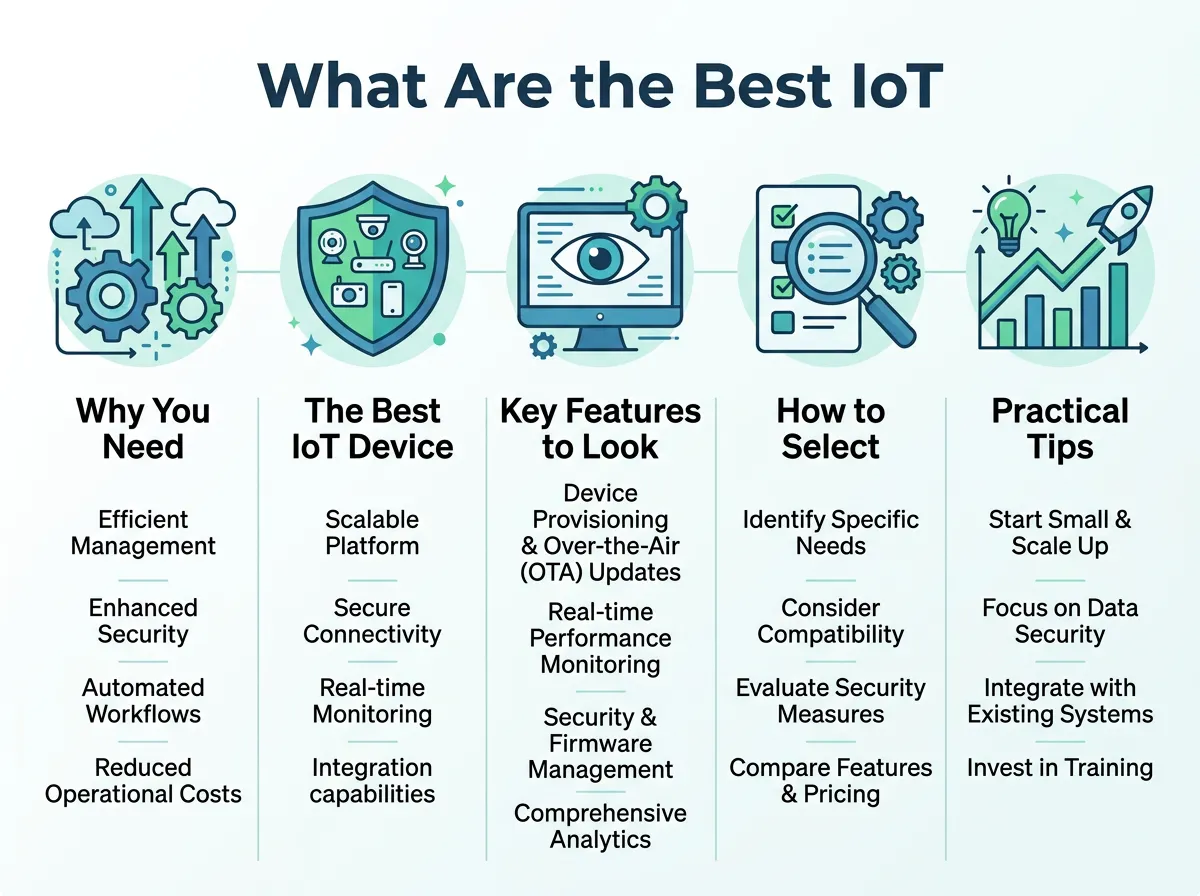
What Are the Best IoT Device Management Solutions? — key points at a glance
AWS IoT Device Management
Amazon Web Services (AWS) is a giant in the cloud space, and their IoT management tool is incredibly powerful. It is designed to help you track, monitor, and manage connected devices at scale. You can easily register new devices in bulk and organize them into neat groups.
The biggest benefit of AWS is its integration. If your company already uses AWS for cloud storage or computing, adding their IoT tools is a no-brainer. It links perfectly with AWS Lambda, DynamoDB, and their advanced machine learning tools.
Microsoft Azure IoT Hub
Microsoft Azure is another heavyweight that offers a world-class IoT management solution. Azure IoT Hub acts as a secure bi-directional communication bridge between your devices and the cloud. It is famous for its enterprise-grade security and excellent developer tools.
Azure makes it easy to create “device twins.” These are virtual models of your physical devices stored in the cloud. This allows you to track device states and update configurations even when the physical hardware is temporarily offline.
Balena Cloud
If you are working with Linux-based single-board computers, like the Raspberry Pi, Balena is an exceptional choice. Balena uses container technology, specifically Docker, to deploy code to your devices. This means you can package your application and deploy it to thousands of devices with a single command.
Balena is highly popular among developers because it simplifies the deployment workflow. It provides a beautiful web dashboard where you can see the live status of every device, view logs in real-time, and reboot hardware remotely.
Key Features to Look For
Not all management tools are built the same way. Depending on your industry, some features will be far more important than others. Here are the core features you should always look for.
Over-the-Air (OTA) Updates
An OTA update feature allows you to send new software patches and features to your devices wirelessly. A good platform will let you schedule updates for specific times, roll back failed updates automatically, and target specific groups of devices to avoid widespread downtime.
Robust Security Protocols
Security should never be an afterthought. Keeping your fleet secure requires following proven industry best practices for IoT security to shield against modern web threats. Look for platforms that offer end-to-end data encryption, unique device certificates, and multi-factor authentication for your team members.
Real-Time Monitoring and Alerts
You need to know if a device goes offline before your customers do. Look for systems that offer real-time health monitoring. The platform should send instant notifications via email, Slack, or SMS the moment a device shows signs of trouble or stops sending data.
How to Select the Perfect Fit for Your Team
With so many great options, making a final choice can feel overwhelming. To make the process easier, break down your decision into a few practical categories.
Evaluate Cloud Ecosystem Integration
Take a look at your current technology stack. If your database, website, and analytics are already hosted on Google Cloud, looking into Google Cloud IoT alternatives might be your best bet. Keeping everything in one cloud family simplifies billing and configuration. For a step-by-step decision framework, check out this comprehensive guide on selecting an IoT platform.
Assess Your In-House Developer Skills
Some platforms require deep knowledge of cloud architecture and coding. Others are more visual and user-friendly right out of the box. If you have a small team without dedicated cloud engineers, look for a platform with a simple setup process and extensive documentation.
Practical Tips for a Successful Deployment
Choosing the software is only half the battle. Implementing it successfully requires a smart strategy. Here are a few tips to keep in mind as you begin your rollout.
Run Small-Scale Pilots First
Never deploy a new management tool to your entire fleet at once. Start with a small pilot group of ten to twenty devices. Test every feature, including remote reboots and full system updates. This helps you catch bugs before they affect your entire customer base.
Establish Strict Logging Habits
When devices are deployed in remote locations, debugging is tough. Ensure your devices are configured to send detailed log files back to your management platform. This makes troubleshooting simple when a device inevitably behaves unexpectedly.
Conclusion
Managing a fleet of connected devices does not have to be a stressful task. By choosing the right IoT device management solution, you can automate updates, protect your data, and scale your business with confidence. Whether you opt for a cloud giant like AWS or a developer-friendly tool like Balena, the right platform will save your team time, money, and headaches. Take the time to test a few options with a small pilot group, and watch your smart network thrive.
Frequently Asked Questions
What is an IoT device management solution?
It is a software platform that allows businesses to track, monitor, update, and secure their fleets of connected smart devices from a single central dashboard. These tools automate complex tasks like software updates and security patch deployments.
Why are over-the-air (OTA) updates important?
OTA updates allow you to send new software and security patches to your devices wirelessly. This eliminates the need to physically connect to each device, saving massive amounts of time and labor.
Is AWS IoT Device Management expensive?
AWS uses a pay-as-you-go pricing model based on the number of devices you register and the actions you perform. While it is very cost-effective for small test fleets, costs can add up quickly as your fleet scales to millions of active devices.
Can I manage different types of hardware on one platform?
Yes, many modern device management platforms support a wide variety of hardware, operating systems, and communication protocols. This allows you to manage different brands of sensors and gateways within a single dashboard.
What is a device twin in IoT management?
A device twin is a virtual model or digital copy of a physical device stored in the cloud. It keeps track of the device’s current state, configuration, and history, even when the physical hardware is temporarily offline.
How do these platforms keep devices secure?
They use advanced security measures including end-to-end encryption, unique device certificates, secure boot procedures, and automated credential rotation. These tools ensure that only authorized devices and users can access your network.
