


Wireless sensors for IoT are small, cable-free devices that collect data from their surroundings and send it to the cloud without using wires. They serve as the eyes and ears of smart networks, helping homes, farms, and factories run automatically. These tools make it easy to monitor everything from temperature to movement in real-time from anywhere in the world.
Imagine walking into a giant greenhouse. The air is warm and moist. Nobody is walking around checking the plants with manual tools. Yet, the water system turns on the moment the soil gets dry. The fans start spinning the second the room gets too warm. How does this happen without human help? The answer lies in small, hidden gadgets that work behind the scenes. If you want to know how this digital magic works, it often leads to a simple question: what are wireless sensors for IoT?
The Internet of Things (IoT) is growing faster than ever. Every day, more devices connect to the web. They talk to each other to make our lives easier and safer. But to make smart decisions, these devices need real-time facts about the physical world. They need to know if a room is cold, if a pipe is leaking, or if a machine is vibrating too much. Wireless sensors provide this vital information, acting as the bridge between the physical world and the digital space.
In this guide, we will explore the technology behind these tiny devices. We will look at how they work, the different types you can find, and how they help businesses save money. By the end, you will see why these simple tools are so important for our connected future.
Key Takeaways
- No Wires Needed: These devices run on batteries and use radio waves, which makes them very easy to set up anywhere.
- Real-Time Tracking: They constantly collect data and send updates right away, helping you make quick decisions.
- Cost-Effective: Installing wireless systems is cheap because you do not have to buy or run long, expensive cables.
- Highly Scalable: You can easily add more sensors to your smart network as your home or business grows.
- Diverse Uses: These tools track temperature, moisture, motion, and light across many different industries.
📑 Table of Contents
Understanding the Basics: What Are Wireless Sensors for IoT?
To understand these tools, we should first break down the name. A sensor is a tool that detects changes in its environment. It might feel heat, notice movement, or measure light. The word “wireless” means the device does not need a physical cord to send this data. Instead, it uses radio waves to share what it finds. Finally, “IoT” stands for the Internet of Things, which is the vast network of physical items connected to the internet.
When we put these terms together, we get a clear picture. These gadgets are small, battery-powered tools that gather physical data and send it over the air to a central hub or cloud database. Because they have no wires, you can place them in spots where normal cables cannot reach. This freedom makes them incredibly useful for modern businesses and smart homes alike.
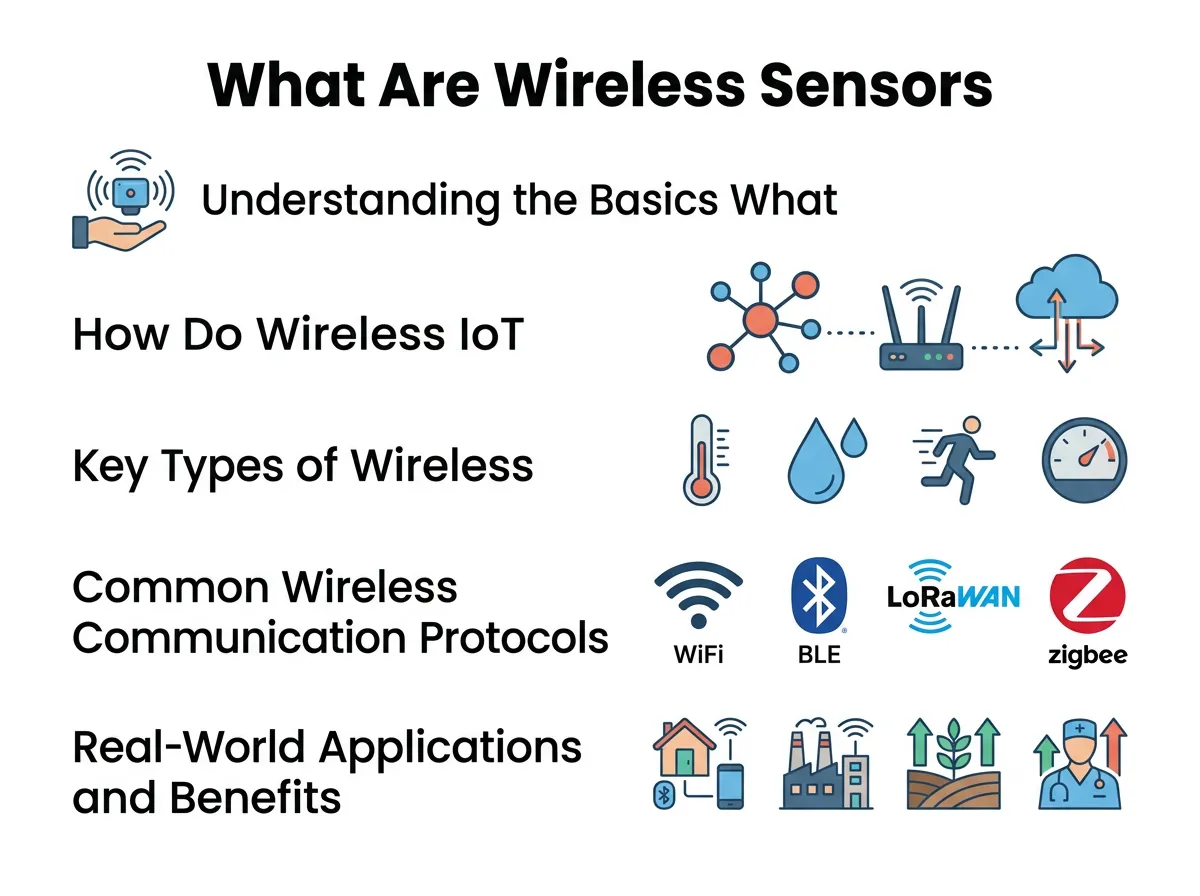
These devices do not work alone. They are part of a larger wireless sensor network that connects many points together. Each sensor acts as a node. These nodes talk to a central gateway, which sends the information to the internet. This setup allows you to view all your data on a single phone screen or computer dashboard from thousands of miles away.
How Do Wireless IoT Sensors Work?
When looking at what are wireless sensors for IoT, it helps to understand their inner workings. The process is quick and simple, but it relies on three main steps. These steps happen in a loop, over and over, every second of the day.
What Are Wireless Sensors for IoT? — key points at a glance
Sensing and Data Collection
The process starts with the physical sensor itself. The device has a special chip that reacts to the environment. For example, a temperature sensor might use a material that changes its electrical resistance when it gets hot. The device reads these small changes and turns them into digital numbers.
Processing and Wireless Transmission
Once the device has the digital numbers, a tiny computer chip inside processes the data. This chip cleans up the signal so there are no errors. Next, a small radio transmitter inside the device turns on. This transmitter sends the data through the air using radio waves. This is very similar to how your phone talks to a Wi-Fi router.
Cloud Storage and Action
The radio signal travels to a nearby hub called a gateway. The gateway collects messages from many different sensors and uploads them to the cloud. Once in the cloud, smart software looks at the data. If the data shows a problem, the software can send you an alert. It can also tell another machine to take action, like turning on a heater or locking a door.
Key Types of Wireless Sensors in Action
There are many types of IoT sensors used today. Each type has a unique job. Depending on what you want to track, you might use one or several of these devices together.
Temperature and Humidity Sensors
These are the most common sensors on the market. They measure how hot or cold an area is, as well as the moisture level in the air. They are vital for food storage, art museums, and server rooms where hot air can damage expensive computers.
Motion and Occupancy Sensors
These devices detect when people or objects move. They often use infrared light to feel body heat. Smart buildings use them to turn off lights when a room is empty. This simple trick helps businesses save a lot of money on utility bills.
Pressure and Level Sensors
These tools measure how much force is applied to a surface. They can also check the level of liquids in a tank. Water companies use them to monitor reservoirs, while gas stations use them to track fuel levels deep underground.
Common Wireless Communication Protocols
Now that we know what are wireless sensors for IoT and how they gather details, we must look at how they speak. They do not all use the same language or radio signals. Different jobs require different wireless protocols.
Wi-Fi and Bluetooth
Many people are familiar with Wi-Fi and Bluetooth. Wi-Fi is great for sending large amounts of data quickly, but it uses a lot of battery power. Bluetooth is perfect for short distances, like connecting a smart watch to your phone. It uses very little power, but it cannot send data very far.
LoRaWAN and Zigbee
For large networks, engineers often use specialized protocols. Zigbee is a great option for smart homes because it lets devices pass messages to each other like a chain. LoRaWAN is excellent for long-distance needs. It can send small bits of data over several miles, making it perfect for large farms and outdoor tracking.
Understanding these different languages is key to building a strong network. If you want to learn more about how these languages link together, you can read about wireless sensor networks in IoT and how they handle data traffic across different distances.
Real-World Applications and Benefits
Why are so many businesses asking about what are wireless sensors for IoT? The answer is simple. These devices solve real, everyday problems and make work much easier. They remove human error and speed up tasks.
In modern factories, companies use wireless IoT sensor solutions to monitor heavy machinery. These sensors can feel tiny vibrations that humans cannot detect. If a machine starts to shake slightly, the sensor sends a warning. This allows workers to fix the machine before it breaks down completely, which saves time and money.
In smart cities, wireless sensors help manage traffic and parking. Sensors placed in the road can tell a central system if a parking spot is empty. Drivers can use an app to find these open spots quickly. This reduces traffic jams and lowers pollution from idling cars. In agriculture, sensors in the soil tell farmers exactly when to water their crops, saving precious water and growing healthier food.
Overcoming the Challenges of Wireless Sensing
While these tools are amazing, they do face a few hurdles. Knowing these challenges will help you set up a better network. The main issues involve battery life, signal blockages, and security.
Since wireless sensors do not plug into a wall, they rely on batteries. If a sensor is in a hard-to-reach spot, like a high ceiling or a deep well, changing the battery is difficult. To solve this, developers make devices that use very little power. Many sensors spend most of their time in a “sleep” mode and only wake up for a split second to send data.
Another challenge is signal interference. Thick concrete walls and metal beams can block radio waves. If you plan to use these devices in a large warehouse, you must plan your layout carefully. Placing repeaters and gateways in open spaces helps keep the signal strong. Finally, because the data travels through the air, it must be encrypted. This prevents hackers from reading your private business details.
Conclusion
So, what are wireless sensors for IoT? They are the smart, silent helpers that make the connected world possible. By gathering data without the need for wires, they give us a clear view of our environment in real-time. They help us save energy, prevent machine failures, and grow crops more efficiently.
As technology gets better, these devices will become even smaller, cheaper, and smarter. They will play a key role in building the smart cities and automated factories of tomorrow. Embracing this technology today can give your business a major head start for the future.
Frequently Asked Questions
What are wireless sensors for IoT?
Wireless sensors for IoT are small, battery-powered devices that measure physical conditions like temperature, light, or motion. They send this information through the air using radio waves to a central hub connected to the internet.
How long do the batteries last in these sensors?
Battery life depends on how often the sensor sends data, but many devices last between 2 and 10 years. They save power by staying in a deep sleep mode and only waking up briefly to transmit their readings.
Can wireless sensors work through walls?
Yes, wireless signals can pass through most walls, but materials like thick concrete and heavy metal can weaken the signal. Using a mesh network or adding extra gateways can help bypass these physical barriers.
What is the difference between a wired and a wireless sensor?
Wired sensors require physical cables to receive power and send data, which makes them highly reliable but difficult to install in tight spaces. Wireless sensors use batteries and radio waves, allowing you to place them anywhere quickly and cheaply.
Do wireless sensors need a Wi-Fi connection?
No, they do not always need Wi-Fi. Many wireless sensors use alternative radio technologies like Bluetooth, Zigbee, or LoRaWAN, which are better suited for saving battery and sending data over long distances.
Are wireless IoT sensors secure?
Yes, most modern wireless sensors protect data using advanced encryption methods before sending it over the air. This ensures that unauthorized users cannot easily read or alter the information as it travels to the cloud.
