


An Internet of Things (IoT) SIM card is a specialized cellular card designed to connect smart machines and remote devices to the internet. Unlike standard phone SIMs, these cards are built for extreme durability, offer flexible network roaming, and come with advanced management software. They provide the reliable, secure, and automated data transmission that modern connected systems need to operate.
Imagine a rental scooter parked on a busy city sidewalk. A user walks up, scans a QR code with their phone, and the scooter instantly unlocks. Miles away, a water sensor deep inside an industrial farm detects a drop in moisture and automatically turns on a sprinkler system. In a local hospital, a wearable monitor sends real-time heart rate data directly to a doctor’s tablet.
How do all of these different machines talk to the internet without a human nearby to connect them to Wi-Fi? The answer lies in a tiny, powerful piece of technology. This technology is the Internet of Things SIM card. It is the quiet force that keeps our modern, connected world running smoothly day and night.
While you might be familiar with the small plastic card inside your personal smartphone, the cards used in smart devices are quite different. They are built for a completely different purpose. Let us dive into what makes this technology so unique, how it works, and why it is changing the way businesses operate across the globe.
Key Takeaways
- Built for Machines: IoT SIMs connect automated systems rather than humans, focusing on continuous data transmission.
- Superior Durability: These cards are designed to withstand extreme temperatures, vibrations, and harsh environmental conditions.
- Global Roaming: IoT SIMs can automatically switch between multiple carriers to maintain the strongest signal possible.
- Centralized Control: Businesses can monitor, manage, and update thousands of devices through a single management platform.
- Enhanced Security: They use private networks, fixed IP addresses, and secure tunnels to shield sensitive data from cyber threats.
📑 Table of Contents
What Is an Internet of Things SIM Card?
An Internet of Things SIM card is a cellular card designed to provide internet connectivity to smart devices and machines. The acronym “SIM” stands for Subscriber Identity Module. Just like the card in your phone, it holds the secure keys that identify a device on a cellular network.
However, instead of helping humans make phone calls or scroll through social media, these specialized cards focus entirely on machine-to-machine (M2M) communication. They allow devices to send and receive data automatically. You can read a detailed overview of IoT SIM cards to see how they form the backbone of modern automated systems.
These smart cards are used in everything from smart home security systems to giant cargo ships tracking shipping containers across the ocean. They are designed to be highly reliable, incredibly secure, and capable of operating without any human intervention.
Key Differences: IoT SIMs vs. Standard Consumer SIMs
At first glance, a plastic cellular card for a smart device looks identical to the one in your phone. But under the hood, they are worlds apart. Let us look at the main features that set them apart.
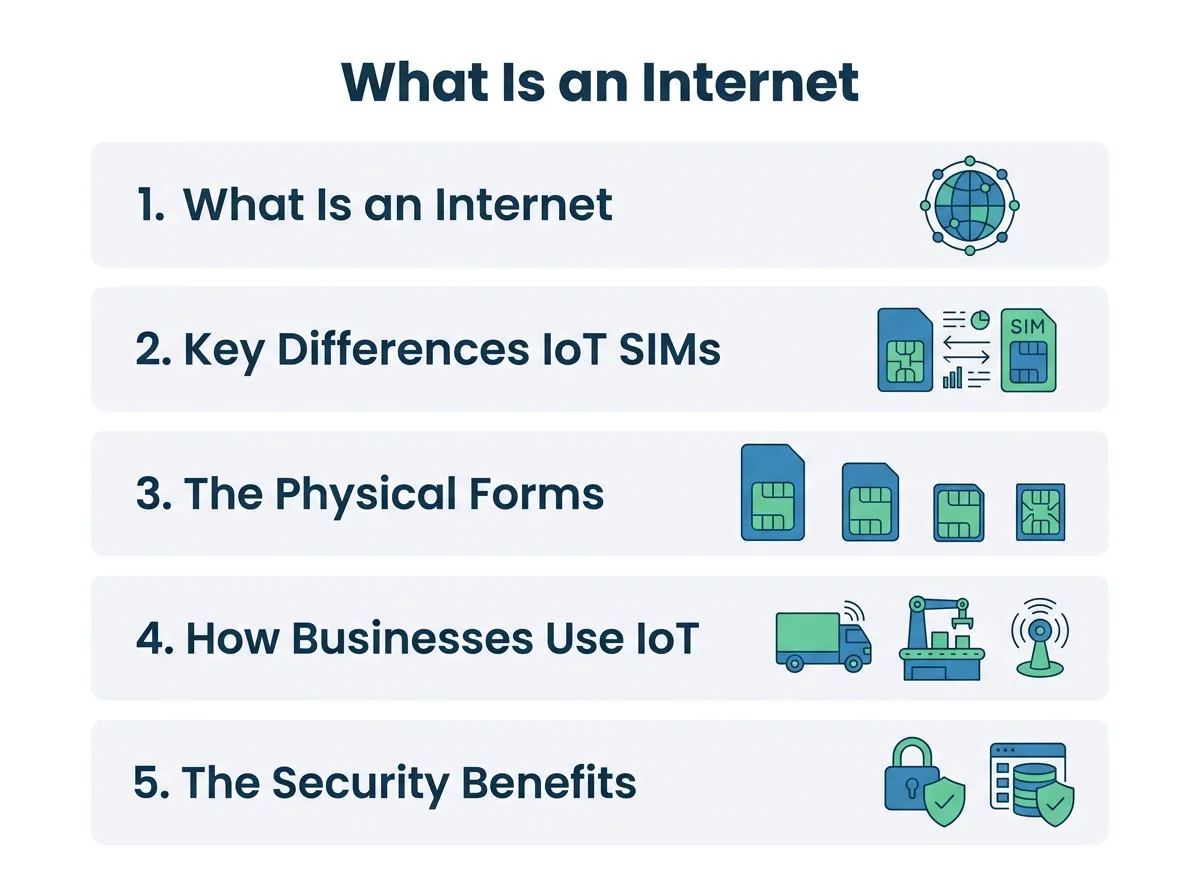
What Is an Internet of Things SIM Card? — key points at a glance
Lifespan and Physical Build
The SIM card in your smartphone is designed for a comfortable life. It stays inside a warm pocket or an air-conditioned room. If it breaks, you can easily go to a local store and get a replacement.
Smart machines do not have it so easy. They are often placed in hot engines, freezing outdoor environments, or bumpy delivery trucks. An Internet of Things SIM card is built with rugged materials. It can survive temperatures ranging from minus 40 degrees to over 105 degrees Celsius. They are also highly resistant to moisture, dust, and heavy vibrations.
Network Roaming and Coverage
If you take your personal phone to an area where your carrier has a weak signal, your service drops. You have to wait until you move closer to a cell tower.
An Internet of Things SIM card cannot afford to lose connection. If a smart medical device loses its signal, lives could be at risk. Because of this, these cards feature multi-network roaming. They can automatically scan for the strongest available cellular signal and switch carriers instantly. They do not care which network they use, as long as they stay online.
Data Plans and Cost Management
Consumer phone plans are designed for high data usage. We watch videos, download music, and browse image-heavy websites. This requires gigabytes of data every month.
In contrast, most smart devices only send tiny bits of text data. A smart utility meter might only need to send a single numeric reading once a day. Because of this, data plans for these cards are highly flexible. Businesses can pool data across thousands of devices. If one device uses slightly more data and another uses less, they balance each other out, saving the business money.
The Physical Forms of IoT SIMs
When deploying smart devices, companies can choose from a few different physical designs. You can explore the different types of IoT SIM cards to understand which format fits which device. Generally, they fall into two main categories.
Removable SIM Cards
These are the traditional plastic cards that you slide into a slot. They come in three standard sizes: Mini (2FF), Micro (3FF), and Nano (4FF). These are great for devices that are easy to access, such as office smart printers or indoor security cameras. If you ever need to change your service provider, you can manually swap the card out.
Embedded SIMs (eSIM or MFF2)
An embedded SIM is vacuum-sealed and soldered directly onto the device’s circuit board during manufacturing. It is incredibly small and cannot be removed. This design is perfect for devices that face harsh weather or constant movement, like fitness trackers or vehicle sensors. Because they are sealed inside the device, they are highly secure against physical tampering and environmental damage.
How Businesses Use IoT SIMs in the Real World
To truly understand the power of this technology, it helps to see it in action. Here are a few common ways industries use these smart cards to improve their daily operations.
Smart Fleet Tracking
Delivery companies use smart sensors to track their trucks in real-time. By placing an Internet of Things SIM card in each vehicle, managers can monitor driving speeds, engine health, and exact GPS locations. This helps companies plan faster routes, save fuel, and predict when a truck needs maintenance before it breaks down on the highway.
Modern Agriculture
Farmers are placing smart sensors directly into their soil. These small devices measure moisture levels, soil acidity, and temperature. The sensors use cellular cards to send this vital data back to a central computer. This allows farmers to water their crops only when necessary, saving valuable water and growing healthier plants.
Retail and Smart Vending
Modern vending machines do not just sit there waiting for coins. They are smart, connected kiosks. When you buy a drink, the machine uses a cellular card to process your credit card payment safely. It also alerts the beverage company when a specific drink is running low so the delivery driver knows exactly what to bring on their next visit.
The Security Benefits of IoT SIMs
Security is a major concern when connecting thousands of physical devices to the internet. Hackers often target smart devices to gain access to private corporate networks. This is why using an Internet of Things SIM card is a much safer alternative to standard mobile SIMs for commercial use.
These specialized cards do not connect directly to the public internet. Instead, they use private Access Point Names (APNs) and Virtual Private Networks (VPNs). This creates a secure, encrypted tunnel between the smart device and the company’s private servers. Even if someone physically steals the card from a device, they cannot use it to access the internet or compromise the business network.
How to Choose the Right IoT SIM Card
If you are planning to roll out smart devices for your business, choosing the right card is crucial. Here are a few quick tips to help you make the right choice:
- Check the Coverage: Make sure the provider offers multi-network coverage in all the geographic areas where your devices will travel.
- Pick the Right Form Factor: Use rugged embedded SIMs for outdoor or moving devices, and removable plastic cards for simple indoor setups.
- Look for a Good Platform: Ensure your provider offers a user-friendly software platform. You need to be able to monitor data usage, activate new cards, and pause inactive devices from a single dashboard.
- Prioritize Security: Look for features like private APNs, static IP addresses, and real-time fraud alerts to keep your data safe.
Conclusion
The Internet of Things SIM card is much more than just a piece of plastic or a tiny chip on a circuit board. It is the vital link that allows smart machines to talk, share data, and make our lives easier. By offering rugged durability, reliable global roaming, and top-tier security, these cards are helping businesses build a smarter, more connected future. Whether you are tracking a fleet of trucks, monitoring a remote farm, or running a smart retail store, the right cellular card will keep your business moving forward without interruption.
Frequently Asked Questions
Can I use a normal phone SIM card in an IoT device?
While a normal phone SIM might work temporarily, it is not recommended for business use. Consumer SIMs lack the rugged design, multi-network roaming, and advanced security management features that keep IoT devices running reliably.
What is the difference between M2M and IoT?
M2M, or machine-to-machine, refers to direct communication between two isolated machines. IoT is a broader term that connects many smart devices to a centralized cloud network, allowing for deeper data analysis and smarter automation.
How long do rugged IoT SIM cards last?
Rugged IoT SIM cards are built to last a very long time, often up to 10 or 15 years. Their durable build allows them to survive extreme heat, cold, vibrations, and moisture without breaking down.
Do IoT SIM cards support global roaming?
Yes, most IoT SIM cards are designed specifically for global roaming. They can automatically connect to multiple cellular carriers within a country or switch networks seamlessly as they cross international borders.
What is an eSIM in IoT devices?
An eSIM is a tiny SIM chip that is soldered directly onto the device’s motherboard during manufacturing. It cannot be removed, which makes the device much more durable and highly secure against physical tampering.
How are IoT SIM card data plans billed?
Unlike consumer plans that charge per phone, IoT data plans are usually billed based on a shared pool of data. This allows thousands of smart devices to share a single block of data, keeping overall costs low and predictable.
