



Internet of Things (IoT) product design is the practice of creating physical devices that connect to the internet, collect data, and talk to other systems. It brings together hardware engineering, software development, and user experience design to build smart, interactive products. By blending physical forms with digital connectivity, this field transforms everyday items into intelligent tools.
Think about your morning routine. Your alarm gently wakes you up. At the same time, your coffee maker starts to brew a fresh cup. Your home thermostat adjusts the temperature to your liking. None of this happens by magic. It happens because of smart, connected devices that talk to each other. Have you ever wondered how these devices are made? The process behind them is both complex and exciting. In this guide, we will explore the skills, challenges, and steps that go into building these modern wonders.
The world of physical products has changed forever. We no longer just build plastic and metal shells. Now, we build devices that can think, listen, and speak to the web. This blend of fields has created a brand-new way of thinking about engineering and style. Let us dive deep into this creative field and see what it takes to build the future.
Key Takeaways
- Hybrid Discipline: It combines physical industrial design with digital interface design and cloud connectivity.
- User-Centric Focus: Successful smart products must solve real problems, not just offer high-tech features for their own sake.
- Continuous Lifecycle: Unlike old-school products, smart devices can improve over time through wireless software updates.
- Security First: Designing for the cloud means protecting user data must be a priority from the very first day.
- Seamless Connectivity: Devices must use reliable wireless protocols to talk to apps, servers, and other smart tools.
📑 Table of Contents
What Is Internet of Things Product Design?
To put it simply, Internet of Things product design is the process of creating smart, connected devices. These are items that use sensors, software, and online networks to gather and share data. This field is unique because it does not stop at the physical object. It also covers the software that runs on the device, the mobile app you use to control it, and the cloud servers that store the data.
When we look at the Internet of Things as a whole, we see millions of connected nodes. Each node is a product designed by a team of experts. To make these products work, designers must think about how the physical item feels in your hand. They must also think about how fast the data travels through the air. It is a true mix of physical art and digital science.
The Core Pillars of Connected Design
Every smart device rests on a few key pillars. If you take away any of these pillars, the product falls apart. Designers must balance all of them to make a product that people love to use.
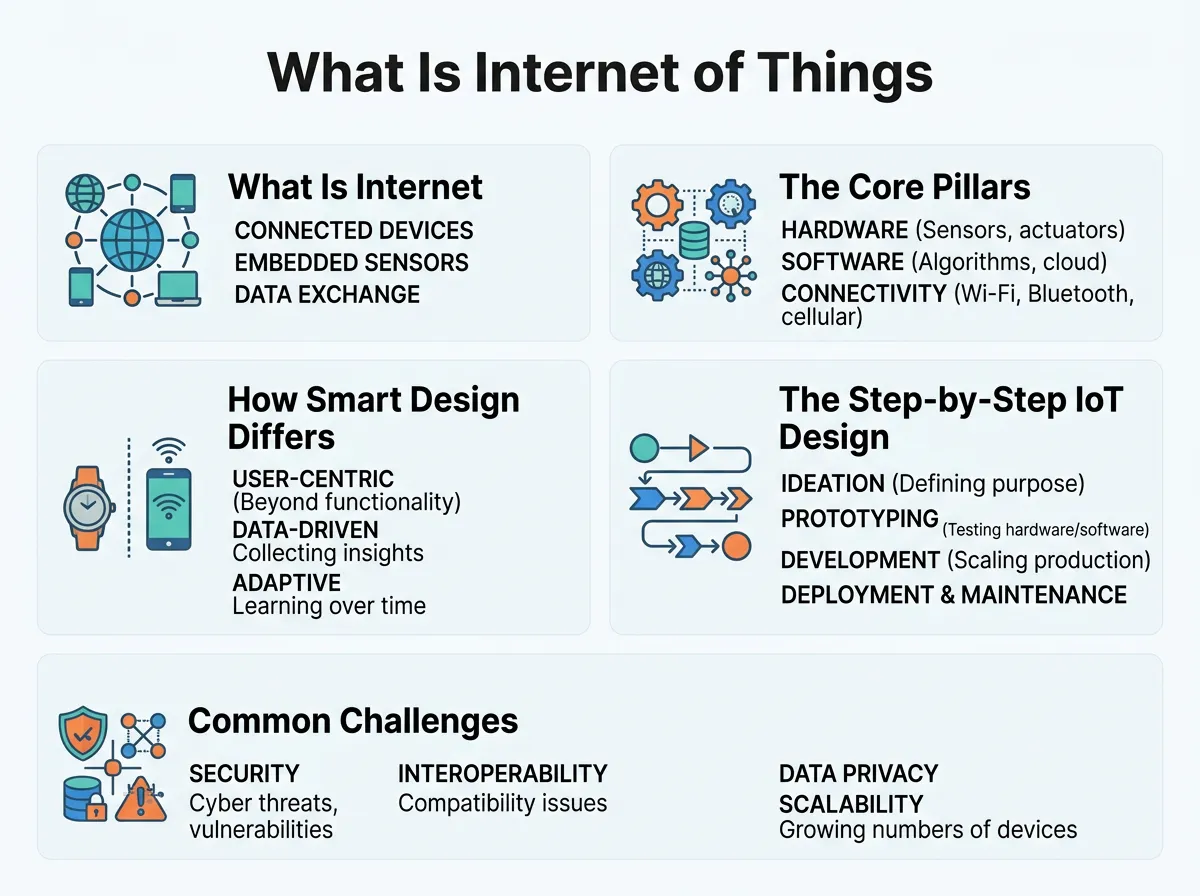
What Is Internet of Things Product Design? — key points at a glance
The Physical Hardware
This is the tangible part of the product. It is the outer shell, the buttons, and the look of the item. It also includes the internal electronics. Designers must fit batteries, sensors, and circuit boards into a small space. The product must look good, feel sturdy, and protect the fragile electronics inside from water, dust, and drops.
The Digital Interface
Most smart products do not work alone. They connect to an app on your smartphone or a web page. This is the digital interface. The interface must be clean and easy to use. Users should be able to control the physical device with a few taps on their screen. The app should also show data in a clear way, using simple charts and alerts.
Connectivity and Cloud Data
This is the invisible link. It is the bridge that connects the physical device to the digital world. Devices use wireless signals like Wi-Fi, Bluetooth, or cellular networks. This allows the device to send information to the cloud. Once the data is in the cloud, powerful computers can analyze it and send smart commands back to the device.
How Smart Design Differs from Traditional Design
In the past, designing a product was a straightforward task. If a company made a toaster, they designed the coils, the dial, and the plastic body. Once the factory shipped the toaster, the design was finished. It would never change or improve.
With smart products, the launch of the product is just the beginning. The product can change and grow over time. This makes the design process much more dynamic and complex.
Designing for a Living Product
Smart products receive regular software updates over the air. This means a designer can add new features or fix bugs long after the customer buys the item. Designers must plan for this future growth. The hardware must be strong enough to handle future software updates without slowing down.
Managing Power and Data Limits
A classic toaster plugs into the wall and has endless power. A smart watch or a fitness tracker runs on a tiny battery. Designers must find ways to save power. They must make sure the wireless chips do not drain the battery in a single day. This requires close collaboration between the hardware designers and the software coders.
The Step-by-Step IoT Design Process
Building a connected product is a team sport. It requires industrial designers, electrical engineers, software developers, and user experience experts. They all follow a structured IoT product development process to go from a simple idea to a real store shelf.
1. Research and Concept Development
Every good design starts with a problem. What does the user need? Why does this product need to be smart? Adding internet connection to an item just to make it cool is a bad idea. Designers talk to real users, map out how they will use the device, and write down the key features.
2. Hardware and Software Prototyping
Once the concept is clear, the team builds rough models. They might use 3D printing to create physical shapes. They use basic electronics boards to test the sensors. At the same time, software developers write basic code to make sure the sensors can talk to a phone app. This stage is all about trial and error.
3. Testing and Refinement
Before making thousands of units, the team must test the product in the real world. Does the Bluetooth connection drop when you walk into another room? Does the battery last as long as expected? The team uses the feedback from these tests to fix errors and polish the user experience.
Common Challenges in the IoT Space
Creating smart products is not easy. There are several unique roadblocks that design teams face during the process. Knowing these challenges early can save a lot of time and money.
Keeping User Data Secure
Security is a massive concern for connected items. If a hacker gets access to a smart camera, they can see inside a user’s home. Designers must build safety features into both the hardware and the software. This includes encrypting data and creating secure login steps for the user.
Making Devices Talk to Each Other
There are many different smart home brands. If a user buys a smart bulb from one brand, they want it to work with a smart speaker from another brand. Designers must use standard connection languages. This makes sure their products can play nice with the rest of the smart world.
Essential Tips for Design Success
To stand out in the crowded smart market, you must focus on quality and ease of use. Here are some of the most helpful tips for successful IoT product design.
- Keep the Setup Simple: If a user struggles to connect the device to their Wi-Fi, they will return it. Make the setup process quick, clear, and painless.
- Provide Clear Feedback: Use small LED lights or gentle sounds to let the user know the device is working, searching for Wi-Fi, or low on battery.
- Build for Offline Mode: Sometimes the internet goes down. Your smart product should still perform its basic tasks even when it is offline.
The Horizon of Connected Devices
What does the future hold for smart items? We are moving past basic gadgets. We are entering a world of deep automation. Devices will become smarter, smaller, and more helpful in our daily lives.
When we look at what’s on the horizon for IoT design, we see artificial intelligence playing a huge role. Future devices will not just wait for your commands. They will learn your habits and predict your needs. They will manage your energy use, monitor your health, and keep your home safe without you ever opening an app. It is a thrilling time to be a designer and a consumer.
Conclusion
At its heart, Internet of Things product design is about building bridges. It connects the physical world we touch with the digital world we use every day. It requires teamwork, deep research, and a commitment to user safety. When done right, it yields products that feel like magic, making our lives easier, safer, and more connected.
Frequently Asked Questions
What is the main goal of Internet of Things product design?
The main goal is to create physical products that use sensors and software to connect to the internet. These devices collect and exchange data to offer smart features, automate tasks, and make life easier for the user.
What roles are needed on an IoT design team?
A typical team includes industrial designers for the physical look, electrical engineers for the circuitry, and software developers for the apps and cloud connection. User experience experts also help ensure the product is easy and intuitive to use.
Why is battery life such a big challenge in IoT design?
Many smart devices are small and portable, leaving very little space for a physical battery. Designers must write efficient code and choose low-power wireless connections so the device does not need constant recharging.
How do designers keep connected products secure?
Designers secure products by using data encryption, requiring secure user passwords, and providing regular wireless security updates. They must design safety into the product from the very first sketch, rather than adding it as an afterthought.
Can smart products work without an active internet connection?
Good smart product design ensures that devices can still perform their basic physical tasks offline. While they might lose their cloud features temporarily, a smart lock should still lock and a smart thermostat should still control the temperature without Wi-Fi.
How does AI change the future of IoT design?
Artificial intelligence allows connected devices to learn from user habits and make smart decisions on their own. Instead of waiting for you to press a button on an app, future devices will predict your needs and adjust themselves automatically.
