


The best IoT SIM card depends on your device’s location, data needs, and mobility. Generally, multi-network eSIMs or eUICCs are the top choice because they connect to the strongest signal across different carriers. These smart SIM cards prevent costly downtime and make it easy to manage global fleets from a single dashboard.
Imagine a shipping company with one thousand cargo trackers. These trackers cross state lines and international borders every single day. If even a few of them lose connection, the company loses track of valuable goods. Suddenly, packages go missing, customers get upset, and profits drop. This frustrating problem is common for businesses that deploy smart devices. It is why business owners search for reliable, robust network access. When you build your smart network, you will ask: What Is the Best IoT SIM Card? This guide will help you answer that question. We will break down the features, technology, and options available to help you make the right choice.
Key Takeaways
- Multi-Network Coverage: The best IoT SIM cards switch between carriers automatically to avoid dead zones.
- Industrial Durability: MFF2 embedded SIMs are soldered directly to boards to withstand heat, cold, and vibrations.
- eUICC Flexibility: Modern eSIM technology lets you change carrier profiles remotely without physical swaps.
- Cost-Effective Data: Look for pooled data plans to share data across all devices and avoid overage fees.
- Robust Security: Top providers offer private APNs, static IPs, and VPNs to shield your data from hackers.
📑 Table of Contents
Understanding IoT SIM Cards vs. Consumer SIM Cards
Many people think all SIM cards are the same. They believe the plastic chip in their smartphone is the same as the chip inside a smart utility meter. This is a common mistake. Regular phone cards are meant for people. They offer fast speeds for watching videos and browsing the web. However, they are not built for machines.
Built for Harsh Environments
A standard phone chip sits safely inside your dry, warm pocket. An industrial smart device might sit in a frozen field, a humid engine room, or a bumpy delivery truck. The best IoT SIM card options are built to survive these tough places. They come in rugged forms. These chips can withstand extreme heat, freezing cold, and constant vibration without failing. If you use a standard plastic card in an industrial machine, it may crack or melt over time.
Specialized Data Plans and Lifespans
Consumer phone plans give you gigabytes of data each month. They expect you to pay a high monthly fee. In contrast, smart machines often send tiny bits of data. A smart water meter might only send a few kilobytes once a day. If you use consumer phone plans for these machines, you will waste a lot of money. Smart network cards offer special data plans. These plans are designed for low data use over many years. You can buy cards from business IoT solutions that offer pay-as-you-go pricing to keep your costs very low. This prevents you from paying for data you do not use.
Critical Factors to Consider When Choosing
Selecting the right chip is not just about finding the lowest price. It requires a clear understanding of your project. If you deploy devices in multiple states or countries, you need to think about coverage, network types, and management platforms. Finding the best IoT SIM card means looking at the bigger picture.
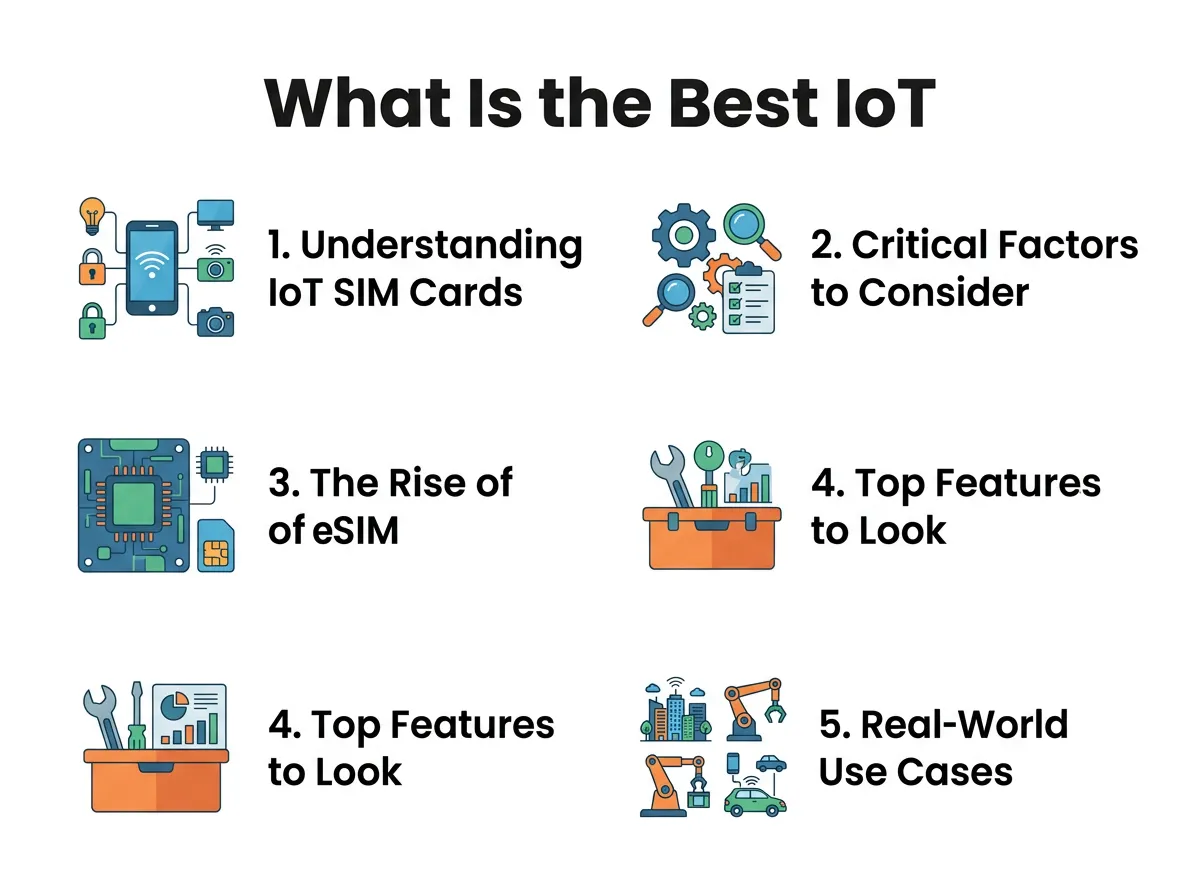
What Is the Best IoT SIM Card? — key points at a glance
Network Coverage and Roaming
If your devices move around, they need to stay online. A single network provider might have dead zones. That is why you should look for multi-network cards. These cards can connect to different carriers automatically. They always choose the strongest signal. If you want to know how to choose the best IoT SIM card, start by checking which roaming agreements the provider has. A good provider will have partnerships with hundreds of networks worldwide. This ensures your devices stay online even in remote areas.
Network Types: LTE-M, NB-IoT, and 5G
Not all cellular networks are the same. Some devices need low-power options to save battery life. Narrowband IoT (NB-IoT) is great for stationary devices like smart parking sensors. LTE-M is better for moving assets like GPS trackers. When searching for the best IoT SIM card, make sure the card supports the specific network type your hardware uses. If you are deploying in North America, you will need to pay close attention to carrier certification. You can learn more about choosing the best IoT SIM card provider in the USA to see how carrier rules differ in that region. Some carriers have strict certification steps before your device can join their network.
The Rise of eSIM and eUICC Technology
In the past, changing your network provider meant visiting every device. You had to pull out the old plastic card and slide in a new one. This task is impossible if you have thousands of sensors buried under city streets. Today, modern technology solves this issue.
What is eUICC?
The term eUICC stands for Embedded Universal Integrated Circuit Card. It is software that lets you change network profiles over the air. You do not need to touch the physical card. The best IoT SIM card models now come with eUICC capability. If a carrier raises their rates or goes out of business, you simply send a remote update to your devices. This keeps your hardware future-proof and saves your team from making field trips.
Reducing Hardware Swaps and Costs
Using eSIMs saves your business time and money. You buy the hardware once. You solder the chip directly onto your device’s circuit board. Solderable chips are much more secure than plastic cards. They cannot be easily stolen or shaken loose. They help your devices last for ten years or more without maintenance. This is the ultimate goal for any large-scale smart network project.
Top Features to Look For in a Provider
A great chip is only as good as the company behind it. When comparing options, look closely at the software platform. You need a single place to monitor and control your entire fleet of devices.
A Single Management Dashboard
Imagine logging into ten different carrier websites to check your data usage. It would be a total waste of time. The best IoT SIM card providers give you a unified dashboard. From this portal, you can activate cards, pause services, and set data limits. You can spot a malfunctioning device that is using too much data before it costs you a fortune. Having all your data in one place makes billing simple.
Robust Security Features
Smart devices are targets for hackers. A hacker could steal a SIM card from a smart sign and use it to browse the web. To prevent this, your provider must offer strong security. Look for features like private APNs (Access Point Names) and static IPs. These features ensure your devices only talk to your secure servers. They keep your data safe from prying eyes. Many providers also let you lock a SIM card to a specific device. If someone removes the card, it instantly stops working.
Real-World Use Cases
To see how these chips work, let us look at some common real-world examples. Different businesses have very different needs.
Smart Agriculture
Farmers use sensors to measure soil moisture and weather conditions. These devices sit in remote fields far from cities. They run on small batteries. For this use case, the best IoT SIM card is one that supports NB-IoT. It uses very little power. This helps the sensor battery last for five to ten years without being changed. The data is sent in small bursts, keeping the monthly cost extremely low.
Global Logistics and Asset Tracking
A shipping container travels across oceans and continents. It goes through many different countries. For logistics, the best IoT SIM card must offer seamless global roaming. It must switch networks without dropping the connection. The management platform must also track the device’s location in real-time. This helps managers predict arrival times and prevent loss.
How to Choose the Best Partner for Your Project
Before you buy thousands of chips, you should test them. Most providers offer starter kits. These kits come with a few cards and a small amount of test data. Use these kits to test the signal strength in your target areas. Test how easily the cards connect to your cloud servers. Ask about their customer support. If a network goes down at midnight, you need a partner who will answer your call.
When you ask yourself, What Is the Best IoT SIM Card?, remember that the answer depends on your unique business needs. Do not just look at the price per megabyte. Consider the long-term support, physical durability, and security features. By choosing a flexible, multi-network eSIM solution, you can keep your devices connected safely for years to come.
Frequently Asked Questions
Can I use a normal phone SIM card for my IoT device?
No, normal phone SIM cards are not ideal for IoT devices. They are designed for high data usage and do not have the rugged durability needed for harsh environments. Additionally, consumer carriers may block your line if they detect machine-to-machine traffic on a standard voice and data plan.
What is the difference between eSIM and eUICC?
An eSIM refers to the physical hardware chip that is soldered onto a circuit board. eUICC is the software technology that allows you to change and manage network operator profiles over the air. Together, they allow you to switch network providers without replacing the physical card.
What is a multi-network IoT SIM card?
A multi-network IoT SIM card is a smart card that can connect to multiple different network operators in a single country. If one operator has a weak signal or a network outage, the card automatically switches to another available network to keep the device online.
How much data does an average IoT device use?
Data usage varies wildly depending on the device. Simple sensors like smart parking meters might only use a few kilobytes per month. However, advanced devices like security cameras or connected vehicles can use several gigabytes of data each month.
What is a private APN?
A private APN (Access Point Name) is a secure gateway that connects your IoT devices directly to your private business network. It bypasses the public internet entirely, which protects your data from hackers and online threats.
Do IoT SIM cards work globally?
Yes, many IoT SIM cards are designed specifically for global roaming. They come with pre-negotiated carrier agreements that allow them to work seamlessly in hundreds of countries without extra roaming fees.
