



The best no-code IoT platform depends on your specific goals, but ThingsBoard and Thinger.io lead the pack for general use due to their visual editors and rich device management features. While ThingsBoard excels in complex enterprise setups, Thinger.io offers an easy entry point for rapid prototyping. Choosing the right tool allows you to connect devices, build dashboards, and automate workflows without writing code.
Imagine having a great idea for a smart device. Maybe you want to track your home temperature. Or maybe you want to monitor soil moisture in your backyard garden. Years ago, you would need deep programming knowledge to make this happen. You would have to write complex firmware, set up secure cloud servers, and design mobile apps from scratch. Today, all of that has changed. The rise of visual development makes it easy for anyone to create connected systems.
This massive shift brings us to an exciting question: What Is the Best No-Code IoT Platform? With so many software tools on the market, finding the right fit can feel hard. Some tools focus on beautiful charts. Others focus on managing thousands of live devices on a factory floor. In this guide, we will break down the top tools, highlight key features, and help you choose the ideal system for your next smart project.
Key Takeaways
- Fast Development: No-code platforms let you build and launch smart projects in days instead of months.
- Citizen Empowerment: These visual tools allow non-programmers to connect hardware and create full applications easily.
- Top Market Choices: ThingsBoard and Thinger.io offer the best mix of flexibility, device management, and visual design tools.
- Core Features to Look For: Always seek drag-and-drop dashboards, secure data handling, and simple automation rule engines.
- Scalability Considerations: Start with no-code for speed, but ensure your chosen tool can handle growing device fleets over time.
📑 Table of Contents
What to Look for in a No-Code IoT Tool
Before choosing a system, you must understand what makes an IoT tool great. Not all visual builders are made equal. Here are the core parts you should check when you ask: What Is the Best No-Code IoT Platform?
Drag-and-Drop Dashboards
A good visual builder must have a clean interface. You should be able to drag a widget, drop it onto a screen, and link it to your sensor data instantly. Look for platforms that offer pre-made widgets. These include dials, line charts, switches, and map trackers. This visual aspect is often the first thing people evaluate when deciding what is the best no-code IoT platform for their team.
Device Compatibility
Your platform should work with many types of hardware. Whether you use an ESP32, an Arduino, or a Raspberry Pi, your setup should be painless. Good platforms offer clear libraries or direct visual setup steps. These help your physical devices talk to the cloud in just a few clicks.
Rules and Automation Engines
An IoT system is not just about viewing data. It is about taking action. If a sensor gets too hot, your system should turn on a cooling fan automatically. Look for tools with visual rule builders. These are often called “if-this-then-that” flows. They let you link actions together with simple lines and boxes.
The Top Contenders: A Close Look
Let us look at the top platforms making waves in the market today. Each has unique strengths that help us answer: What Is the Best No-Code IoT Platform?
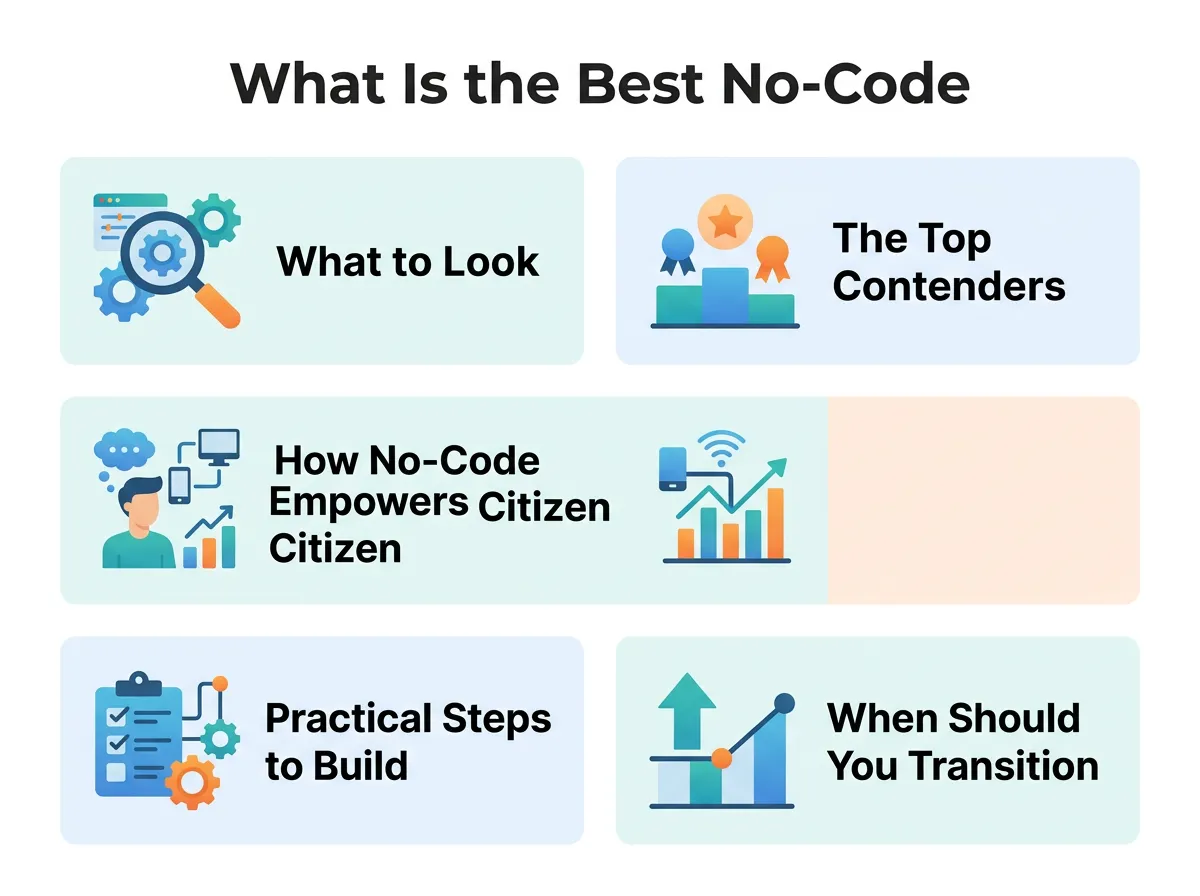
What Is the Best No-Code IoT Platform? — key points at a glance
ThingsBoard
If you want power, scale, and rich features, the ThingsBoard IoT platform is a top choice. It is an open-source system that excels at device management. It lets you collect, visualize, and process device data with ease. You can build stunning dashboards and set up complex rule nodes. While it has a slight learning curve, you can do almost everything without writing code. It is highly secure and scales well from small hobby projects to large enterprise solutions.
Thinger.io
For those who value speed and simplicity, the Thinger.io platform is an amazing option. It offers a very clean cloud console. You can connect your first device in minutes. It supports a wide range of hardware and provides ready-to-use cloud features. It is perfect if you want to deploy a quick prototype without getting lost in complex settings. The free tier is generous, making it highly accessible for makers and startups alike.
2Smart Stand Cut
Another strong player focuses heavily on rapid application development. If your main goal is to create a mobile app to control your smart gadgets, look at options that simplify the UI creation. For example, learning about building custom IoT applications visually can save you months of mobile design work. These builders let you design interfaces that run natively on phones, connecting your physical sensors directly to a user’s fingertips.
How No-Code Empowers Citizen Developers
In the past, only skilled software engineers could build IoT products. Today, we see the rise of the citizen developer. These are business experts, designers, and hobbyists who build fully functional systems using visual tools. They do not write raw code. Instead, they focus on the logic and user experience.
This change has a huge impact on businesses. Teams can test new ideas in days rather than months. There is a great article on citizen developers in the IoT space that explains this shift. It shows how companies save money and innovate faster by removing coding barriers. When asking what is the best no-code IoT platform, you must consider how well a platform supports these non-technical users. A tool is only good if your team can actually use it to solve real-world problems.
Practical Steps to Build Your First No-Code IoT App
Ready to start? Building your first system is easier than you think. Follow these simple steps to bring your smart idea to life.
Step 1: Choose Your Hardware
Start with a simple board like the ESP32. It is cheap, has built-in Wi-Fi, and works with almost every platform. Connect a simple sensor to it, like a temperature or light sensor.
Step 2: Sign Up and Connect
Pick one of the platforms we discussed and make a free account. Use their visual setup tools to link your board to your account. Most platforms will give you a unique key to put onto your device. This keeps your connection secure. This visual process shows you why finding what is the best no-code IoT platform makes hardware testing feel like play.
Step 3: Build Your Dashboard
Go to the dashboard editor on your platform. Drag a thermometer widget onto the screen. Link it to the incoming data stream from your ESP32. Watch the needle move in real-time as you warm up the sensor with your hand!
Step 4: Set Up a Rule
Create a simple automation. Tell the system: “If temperature is greater than 30 degrees, send an email.” Test it out and feel the thrill of a working smart system you built yourself.
When Should You Transition to Low-Code or Traditional Code?
No-code is amazing for speed. However, it does have limits. As your project grows, you might hit some roadblocks. Knowing these limits helps you decide what is the best no-code IoT platform for your long-term goals.
For example, if you need deeply custom data calculations, standard visual blocks might not be enough. You might need to write small scripts to process complex math. This is where low-code platforms step in. They offer visual tools but allow you to inject small snippets of JavaScript or Python when needed. If you plan to scale to millions of devices with highly custom hardware protocols, you may eventually need traditional coding. But for 90% of projects, visual builders will get you to market much faster.
Conclusion
There is no single winner when choosing what is the best no-code IoT platform. The right choice depends on your specific needs. If you need robust enterprise features and deep device management, ThingsBoard is hard to beat. If you want a fast, simple, and friendly way to connect your first sensor, Thinger.io is your best friend. For mobile-first apps, custom app builders offer great visual solutions.
The beauty of the modern world is that you do not have to choose just one forever. Most of these platforms offer free tiers. Go ahead, sign up, and start building your smart future today!
Frequently Asked Questions
What is a no-code IoT platform?
It is a cloud-based tool that lets you connect smart devices, build dashboards, and set up automations using visual menus. You do not need to write programming code to create a working system. These tools use drag-and-drop elements to make development fast and easy.
Can I use an ESP32 with no-code platforms?
Yes, almost all modern visual IoT platforms support the ESP32 out of the box. You can easily link it using pre-made templates or simple configuration steps in the web console. This makes it an ideal, low-cost hardware choice for beginners.
Is ThingsBoard free to use?
ThingsBoard offers a free, open-source community edition that you can host on your own server. They also offer paid cloud plans for those who want a managed service without server setup hassle. This makes it highly flexible for both hobbyists and businesses.
Do no-code platforms support mobile apps?
Yes, many top visual platforms offer either responsive web dashboards that work great on phones or dedicated mobile app builders. Some tools allow you to build custom, branded iOS and Android apps without coding. This lets you monitor your devices on the go.
Is my data secure on a no-code IoT platform?
Yes, reputable platforms use industry-standard encryption like HTTPS and MQTT with TLS to protect your data. They also provide secure access keys and tokens to ensure only your approved devices can communicate with your cloud account.
Can I scale a no-code IoT project to thousands of devices?
Yes, platforms like ThingsBoard are designed to scale to millions of connected devices. However, you may need to move to a paid enterprise tier to handle massive data loads smoothly. For very complex data processing, you might also want to introduce low-code elements.
