


The Internet of Things (IoT) is powered by an impressive mix of cloud giants, hardware makers, and telecom leaders. Heavyweights like Amazon, Microsoft, and Google provide the core cloud brains, while semiconductor firms like Intel and Qualcomm supply the physical chips. Together, these major companies build, secure, and maintain the complex digital highway that connects billions of smart devices worldwide.
Imagine waking up in the morning to the smell of freshly brewed coffee. Your smart coffee maker started brewing the moment your fitness tracker noticed you entered a light sleep cycle. As you walk into the kitchen, the thermostat adjusts to your preferred temperature, and your smart fridge reminds you that the milk is running low. This seamless experience is the power of the Internet of Things (IoT) in action.
But have you ever wondered how all these devices talk to each other so effortlessly? Behind this digital magic lies a vast ecosystem of software, hardware, and network providers. Building a connected world takes a massive team effort. From microchips to cloud storage, different tech giants must collaborate to keep our smart world spinning.
If you are looking to build a smart system or simply want to understand the technology powering your home, you might ask: Who are some major companies in the IoT network? In this article, we will break down the top players driving the IoT revolution. We will explore what they do, how they help, and why they matter to the future of connected tech.
Key Takeaways
- Cloud Leaders Rule Data: Tech giants like Amazon and Microsoft provide the heavy-duty cloud infrastructure needed to process massive streams of IoT data.
- Hardware Providers Build the Brains: Semiconductor companies like Intel and Qualcomm design the essential microchips that make everyday objects smart.
- Network Operators Keep Devices Talking: Telecom leaders and network giants establish the fast, reliable cellular and wireless highways for device communication.
- Industrial IoT is Driving Efficiency: Enterprise brands like Siemens and GE lead the charge in automating smart factories and massive energy grids.
- Security is the Ultimate Focus: Modern IoT networks depend heavily on advanced security layers to protect sensitive user and business data.
📑 Table of Contents
The Cloud Giants: Powering IoT Data and Storage
An IoT device is only as smart as the data it processes. Because tiny sensors cannot hold gigabytes of information, they send their data to the cloud. This is where the world’s largest tech companies step in. They provide the massive server farms and artificial intelligence tools that analyze billions of data points in real time.
Amazon Web Services (AWS) IoT
Amazon is not just an online store; it is also a massive force in the cloud computing space. AWS IoT is one of the most popular platforms in the world. It helps businesses connect billions of devices safely and quickly. AWS offers tools that allow smart devices to work even when they lose their connection to the internet. This feature, known as edge computing, is vital for remote sites like oil rigs or offshore wind farms.
Microsoft Azure IoT
Microsoft is another giant in the cloud space. Its Azure IoT suite is highly popular among large corporations. Microsoft focuses heavily on security and easy integration with existing office software. With Azure, businesses can create digital twins, which are virtual models of real-world objects. This allows a factory manager to test changes on a computer before touching a single piece of real machinery.
Google Cloud IoT
While Google recently shifted some of its direct IoT services to partners, its cloud infrastructure remains a cornerstone of the industry. Google excels in machine learning and data analytics. When you need to process complex data from millions of devices instantly, Google Cloud is often the go-to choice. You can read more about how these cloud leaders compare by exploring this detailed list of leading Internet of Things players who shape the market.
Hardware and Chipmakers: Building the Brains
Cloud software is useless without the physical hardware to run it. Every smart device needs a brain, a sensor, and a way to communicate. Semiconductor companies design the tiny silicon chips that make this possible.
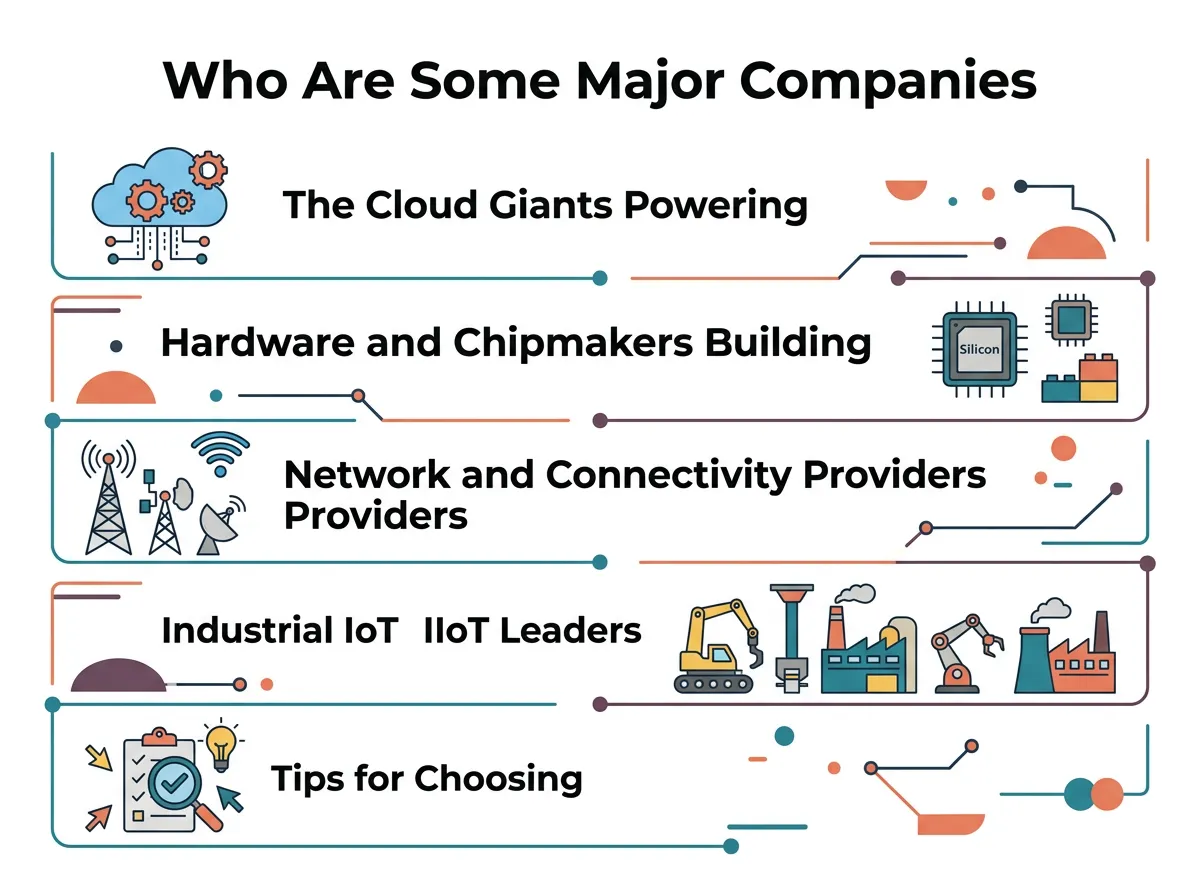
Who Are Some Major Companies in the IoT Network? — key points at a glance
Intel Corporation
Intel has been a household name in computer processors for decades. In the IoT space, Intel focus on high-performance chips. These chips are used in smart cars, retail kiosks, and industrial robots. Intel specializes in making devices smart enough to process data on-site, reducing the need to send everything back to a central cloud server.
Qualcomm
If you own a smartphone, it likely contains a Qualcomm chip. Qualcomm is a master of wireless communication. They design ultra-low-power chips that allow small sensors to connect to 5G networks. This is incredibly important for wearable devices, like smartwatches and medical monitors, which need to run for days or weeks on a single battery charge.
Texas Instruments
Texas Instruments makes the everyday analog chips and embedded processors that you rarely see but always use. Their chips are inside smart water meters, home security systems, and automotive sensors. They specialize in making highly durable hardware that can survive harsh weather and extreme temperatures.
Network and Connectivity Providers: Creating the Digital Highways
Once you have a smart device and a cloud server, you need a way to link them. This is where connectivity providers come in. They build and maintain the cellular, satellite, and Wi-Fi networks that carry our data.
Cisco Systems
Cisco is the king of networking hardware. They build the routers, switches, and firewalls that keep data moving safely. In the IoT world, Cisco helps cities manage smart traffic lights, assists utilities in tracking power grids, and secures corporate networks against hackers. They ensure that the massive flood of new smart devices does not slow down our regular internet speeds.
Telecom Giants (AT&T, Verizon, and T-Mobile)
Major cellular carriers play a massive role in IoT. With the rollout of 5G networks, these companies can support millions of connected devices in a small area. This technology enables self-driving cars to communicate with traffic signals in milliseconds, preventing accidents and reducing city traffic congestion.
Managing these billions of cellular connections is no easy task. Businesses rely on advanced IoT connectivity platforms to track their devices, manage data plans, and keep service costs low across different regions.
Industrial IoT (IIoT) Leaders: Transforming Factories
While consumer smart home gadgets get a lot of attention, the real money and impact of IoT are in the industrial sector. Heavy industries use sensors to track machinery, save energy, and keep workers safe.
Siemens
Siemens is a German engineering giant that has embraced the digital age. Their MindSphere platform is an open cloud system designed specifically for industrial businesses. Siemens uses sensors to monitor trains, gas turbines, and manufacturing plants. By tracking how machines vibrate and heat up, Siemens can predict exactly when a part will break before it actually fails.
General Electric (GE) Digital
GE Digital is another pioneer in the industrial space. Their software helps power plants, aviation companies, and utility providers operate more efficiently. For example, GE uses IoT sensors inside jet engines to analyze performance data during flights. This helps airlines plan maintenance schedules perfectly, saving millions of dollars and keeping passengers safe.
Tips for Choosing the Right IoT Partners
If you are planning to build a connected system for your own business, navigating this landscape can feel overwhelming. Here are a few simple tips to keep you on the right path:
- Define Your Goals: Do you need simple data tracking, or do you need complex real-time video analysis? Your needs will dictate whether you need a high-power chipmaker or a simple cloud setup.
- Prioritize Security: IoT devices are common targets for hackers. Always choose partners that offer end-to-end encryption and regular software updates.
- Ensure Scalability: Your network might start with ten devices, but it could grow to ten thousand. Work with platforms that can scale up seamlessly without requiring a complete system rebuild.
To find the best fit for your specific project, it helps to read reviews and research specialized enterprise IoT service providers who understand your specific industry’s regulatory and technical demands.
Conclusion: The Future of the Connected World
The Internet of Things is no longer a futuristic concept. It is a massive, thriving industry that touches almost every part of our daily lives. From the tiny microchips designed by Qualcomm to the massive cloud servers run by Amazon and Microsoft, a diverse group of tech leaders keeps our world connected.
As 5G networks grow and artificial intelligence becomes more advanced, these major companies in the IoT network will continue to push the boundaries of what is possible. By working together, they are creating a smarter, safer, and highly efficient world for all of us.
Frequently Asked Questions
Who Are Some Major Companies in the IoT Network?
The major companies in the IoT network include cloud providers like Amazon Web Services and Microsoft Azure, hardware manufacturers like Intel and Qualcomm, and network giants like Cisco. Together, these companies build the infrastructure, chips, and software that power the connected world.
What role does Amazon play in the IoT industry?
Amazon Web Services (AWS) provides the cloud infrastructure and tools that allow billions of smart devices to connect and process data. They also specialize in edge computing, which lets devices run programs and make decisions locally without an active internet connection.
Why are semiconductor companies important for IoT?
Semiconductor companies like Intel, Qualcomm, and Texas Instruments design and manufacture the microchips that serve as the brains of smart devices. Without these energy-efficient and powerful chips, devices would not have the ability to collect, process, or transmit data.
What is Industrial IoT (IIoT), and who leads it?
Industrial IoT refers to the use of smart sensors and connected machinery in factories, energy grids, and transport systems to improve efficiency. Major global engineering and software firms like Siemens and GE Digital are the primary leaders in the IIoT space.
How do telecom companies support IoT networks?
Telecom companies like AT&T, Verizon, and T-Mobile provide the cellular networks, especially 5G, that allow mobile IoT devices to communicate over long distances. They ensure that smart cars, wearable health monitors, and remote sensors remain constantly online.
How can a business choose the right IoT company to partner with?
A business should choose an IoT partner based on its specific project goals, security standards, and scalability needs. It is best to look for established companies that offer end-to-end data encryption and platforms that can grow alongside your business.
