


Finding the right cellular connectivity is vital for keeping smart devices connected across borders. The best global IoT SIM cards offer automatic multi-network switching, low-cost data plans, and robust management platforms. Providers like emnify, Onomondo, and Things Mobile offer the best coverage and security for global businesses.
Imagine you run a global shipping business. You have smart sensors on hundreds of cargo boxes. These boxes travel by train, ship, and truck. They cross many borders. They must send temperature and location updates in real-time. If a sensor loses its connection, you lose eyes on your cargo. This can cause costly delays or spoiled goods. It is a common problem for many smart projects. That is why business owners ask: What Are the Best Global IoT SIM Cards? They need a simple, reliable way to keep their devices online anywhere in the world. This article will guide you through the top choices, key features, and practical tips.
Smart devices do not work like standard cell phones. A phone user can search for a signal if their service drops. A smart sensor on a shipping container cannot do that. It must find a network on its own. It has to connect fast and stay connected. It also needs to avoid high roaming fees when it crosses borders. Let us look at the best options on the market today and how they can help your business grow.
Key Takeaways
- Automatic Network Switching: The best global IoT SIM cards switch networks automatically to prevent dropped connections.
- Centralized Management: Top providers offer a single cloud platform to manage all your SIM cards in real-time.
- Flexible Form Factors: You can choose between standard plastic SIMs, micro SIMs, nano SIMs, or embedded eSIMs.
- Robust Security: Top services secure your data using private APNs and VPNs to keep it off the public internet.
- Global Compliance: Leading brands help you bypass strict local roaming laws in countries like Brazil and Turkey.
📑 Table of Contents
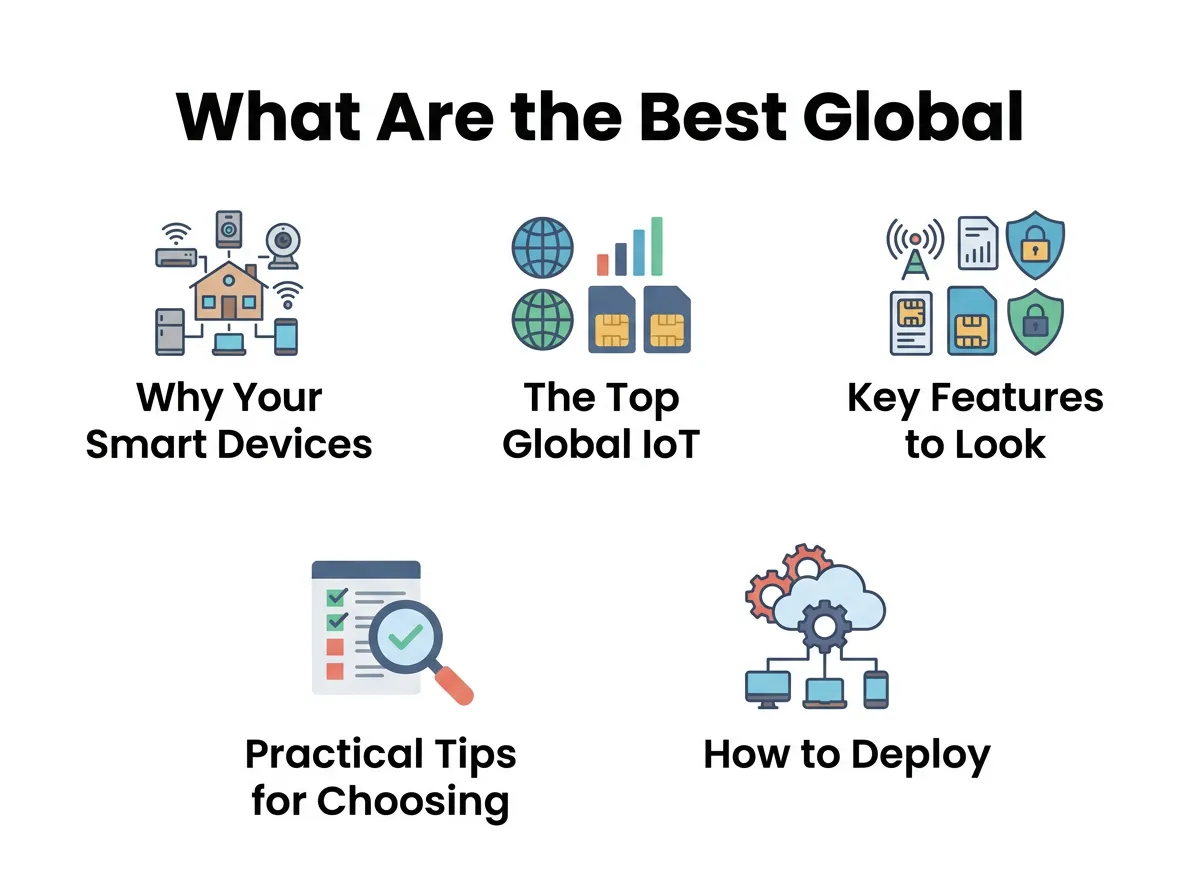
Why Your Smart Devices Need a Global IoT SIM Card
Traditional SIM cards are built for local use. When they go abroad, they pay high roaming rates. They also get lower priority on foreign networks. This can lead to slow speeds and dropped connections. Global IoT SIMs are different. They are designed from the ground up for roaming. They have special deals with hundreds of carriers worldwide. This means they get local rates and fast speeds wherever they go.
Understanding Global Roaming vs Local Networks
A standard SIM card connects to one main home network. When you travel, it roams on partner networks. This is fine for a holiday, but bad for business. If the partner network is weak, your device goes offline. A global IoT SIM does not have a single home network. Instead, it treats many networks as its home. This gives your devices better coverage and faster speeds at a fraction of the cost.
The Power of Multi-Network Auto-Switching
One carrier never has perfect coverage everywhere. If your device only connects to one network, it will find dead zones. A true global IoT SIM can switch carriers automatically. If Network A drops, the SIM connects to Network B. This keeps your uptime close to 100%. If you want to dive deeper into this tech, you can read more about how a multi-network SIM for IoT keeps devices online.
The Top Global IoT SIM Card Providers
Let us look at the best companies in this space. Each provider has unique strengths. The right one for you depends on your budget, your data needs, and where your devices will travel.
What Are the Best Global IoT SIM Cards? — key points at a glance
emnify: Best for Cloud Integration and Security
This provider is great for cloud-native projects. They integrate directly with platforms like AWS and Azure. With emnify IoT SIM cards, you get a powerful portal. You can manage your data, see device locations, and set security rules in real-time. They offer great coverage across over 180 countries. Their platform is very easy to use, even for beginners.
Onomondo: Best for Redesigning the SIM Core
Onomondo has redesigned how SIM cards talk to networks. Instead of using third-party roaming hubs, they built their own core network. This means Onomondo’s global IoT SIM offers lower latency and better battery life for your devices. It is an excellent choice if your devices need to send data fast and use very little power. They also offer great toolsets for developers.
Things Mobile: Best for Low-Cost and Pay-As-You-Go
If you run a small business or have a low-budget project, check out Things Mobile business plans. They offer flexible, pay-as-you-go options. There are no fixed monthly fees. You only pay for the data you use. Their network spans over 165 countries and supports more than 350 roaming partners. This makes them a very cost-effective choice for small deployments.
Key Features to Look For in an IoT SIM
When comparing options, keep these key features in mind. They will make managing your devices much easier in the long run.
Robust Management Platforms
You need a way to track your SIM cards. A good platform lets you activate, pause, or block SIMs with one click. You can also set alerts for high data use. This prevents unexpected bill shocks. Look for a platform that has a clean, easy-to-use dashboard.
Flexible Form Factors and eSIM
IoT SIMs come in different shapes and sizes. You can get standard plastic SIMs in mini, micro, or nano sizes. You can also get embedded SIMs (known as MFF2). These are soldered directly onto the device circuit board. They are perfect for rugged environments because they resist heat, dust, and vibration.
Security and Private APN Support
IoT devices are common targets for hackers. Look for providers that offer private APNs (Access Point Names) and VPN setups. This keeps your device data off the public internet. It ensures your private business data stays safe during transit.
Practical Tips for Choosing Your Provider
How do you choose the right provider for your project? Follow these simple steps to make the best choice.
Assess Your Data Needs
Do your devices send small text reports or stream high-definition video? Security cameras need gigabytes of data. Smart utility meters only need a few kilobytes. Choose a plan that matches your data usage. Do not pay for high-speed data if your devices only send tiny text files.
Test the Hardware in the Field
Never buy thousands of SIMs without testing them first. Order a few sample SIM cards. Put them in your devices. Test them in the actual locations where your products will be used. This will help you find any coverage issues before you spend a lot of money.
Look at the True Total Cost of Ownership (TCO)
Some providers offer very cheap SIM cards but charge high monthly platform fees. Others charge more for the SIM card but have no monthly fees. Be sure to calculate the total cost over one, three, and five years. This will help you find the true cheapest option.
How to Deploy and Manage Your IoT SIMs Successfully
Managing a successful deployment takes planning. Start small. Roll out your devices in phases. This lets you catch any bugs before they affect all your customers. Use APIs to automate your tasks. For example, you can set your system to activate a SIM automatically when a customer turns on a device.
You should also keep your firmware updated over the air (FOTA). This lets you patch security flaws and improve performance without having to physically collect the devices. Good lifecycle management saves you time and money.
Conclusion
Finding the best global IoT SIM card is all about balance. You need to weigh cost, coverage, and security features. Providers like emnify, Onomondo, and Things Mobile offer great solutions for different business needs. By choosing a reliable partner, you can ensure your smart devices stay connected anywhere in the world. This lets you focus on growing your business instead of worrying about dropped signals.
Frequently Asked Questions
What is a global IoT SIM card?
A global IoT SIM card is a special memory card designed for smart devices. It connects to multiple cellular networks worldwide to ensure continuous data transmission. Unlike standard phone SIMs, it is optimized for low-power use, remote management, and global roaming without high fees.
How does a multi-network IoT SIM work?
A multi-network IoT SIM can connect to many different cellular carriers in a single country. If the current network signal drops, the SIM automatically switches to another available network. This keeps the smart device online and prevents dead zones from interrupting your business.
Can I use a regular phone SIM card for IoT devices?
You can use a regular phone SIM, but it is not recommended. Regular SIMs do not support multi-network switching, lack remote management tools, and charge high roaming fees. They are also not rugged enough to survive extreme heat, cold, or vibrations.
What is an eSIM in IoT?
An eSIM, or embedded SIM, is a chip that is soldered directly onto a device’s circuit board during manufacturing. It cannot be removed physically. It allows you to change network profiles over-the-air, making it ideal for devices deployed in remote or harsh environments.
How much data do IoT devices usually use?
Data usage varies wildly depending on the device. Smart water meters might only use a few kilobytes of data per month to send text reports. On the other hand, live security cameras can easily use several gigabytes of data every single day.
Are global IoT SIM cards secure?
Yes, global IoT SIM cards are highly secure. They support private APNs, VPNs, and fixed IP addresses to keep your data off the public internet. This prevents hackers from accessing your smart devices and stealing sensitive business information.
