

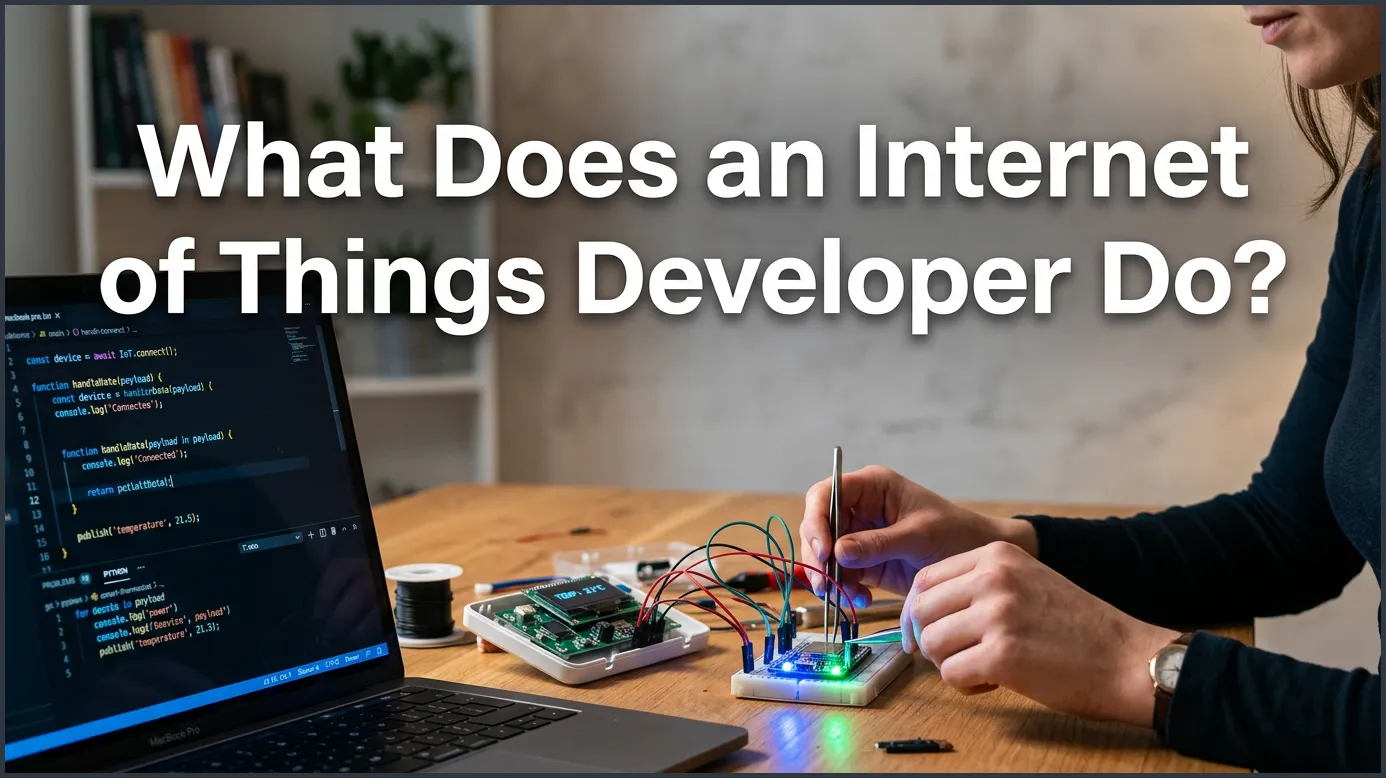
An Internet of Things (IoT) developer designs, builds, and manages smart devices that connect to the internet. They work with both hardware and software to help physical objects—like smart fridges, wearable fitness trackers, and industrial sensors—share data seamlessly. This unique role bridges the gap between physical engineering and cloud software development.
Imagine waking up to your favorite song. As you open your eyes, your window blinds roll up. Down the hall, the kitchen coffee pot starts to brew. Your smart watch tracks your sleep and sends a report to your phone. All of this happens without you touching a single button. It feels like magic, but it is actually the result of smart engineering. It is all thanks to a growing network of smart devices.
But who builds this network? Who makes sure these devices can talk to each other safely? That is where a special kind of programmer comes in. If you have ever wondered, “What Does an Internet of Things Developer Do?” you are in the right place. In this guide, we will explore their daily tasks, key skills, and the tools they use. We will also look at how you can start your own career in this exciting field.
The world of connected tech is growing fast. Every year, millions of new smart devices enter our homes and workplaces. Understanding the role of the creators behind this technology is the first step to joining this exciting industry. Let us dive in and see how they turn physical objects into smart systems.
Key Takeaways
- Bridging hardware and software: IoT developers write code that helps physical devices talk to computer systems.
- Multi-disciplinary skills: They need a mix of skills, including embedded systems, cloud computing, and cybersecurity.
- High demand: As smart devices grow more popular, businesses in every industry are hiring IoT experts.
- Data-driven focus: A big part of the job is managing how data flows from sensors to the cloud.
- Diverse career paths: You can work on consumer gadgets, smart cities, or heavy industrial machinery.
- Securing connections: Ensuring device safety against cyber threats is a vital daily responsibility.
📑 Table of Contents
Understanding the Role: What Does an Internet of Things Developer Do?
To truly understand this job, we must first look at the technology itself. The Internet of things is a massive network of physical items. These items use sensors and software to share data over the internet. So, what does an Internet of Things developer do to make this happen?
The Bridge Between Hardware and Software
These developers do not just write computer programs. They also work with physical gadgets. They write the code that tells a microchip how to read a sensor. For example, they might write code for a smart thermostat. The code tells the thermostat to read the room temperature. Then, it tells the heater to turn on if the room is too cold. This requires a deep understanding of both physical gear and digital systems.
Data Collection and Security
Smart devices produce a lot of data. An IoT developer must manage this data. They design systems that collect information and send it to the cloud. They must also keep this data safe. Security is a huge part of the job. Since devices are connected to the web, they can be hacked. Developers use encryption to protect user privacy. They make sure only safe, verified systems can talk to the devices. To learn more about the technology behind these systems, you can read how experts define the internet of things and its business uses.
The Core Skills You Need to Succeed
This job is unique. It requires a mix of different skills. You cannot just learn one programming language and stop there. You need to know how hardware and software work together.
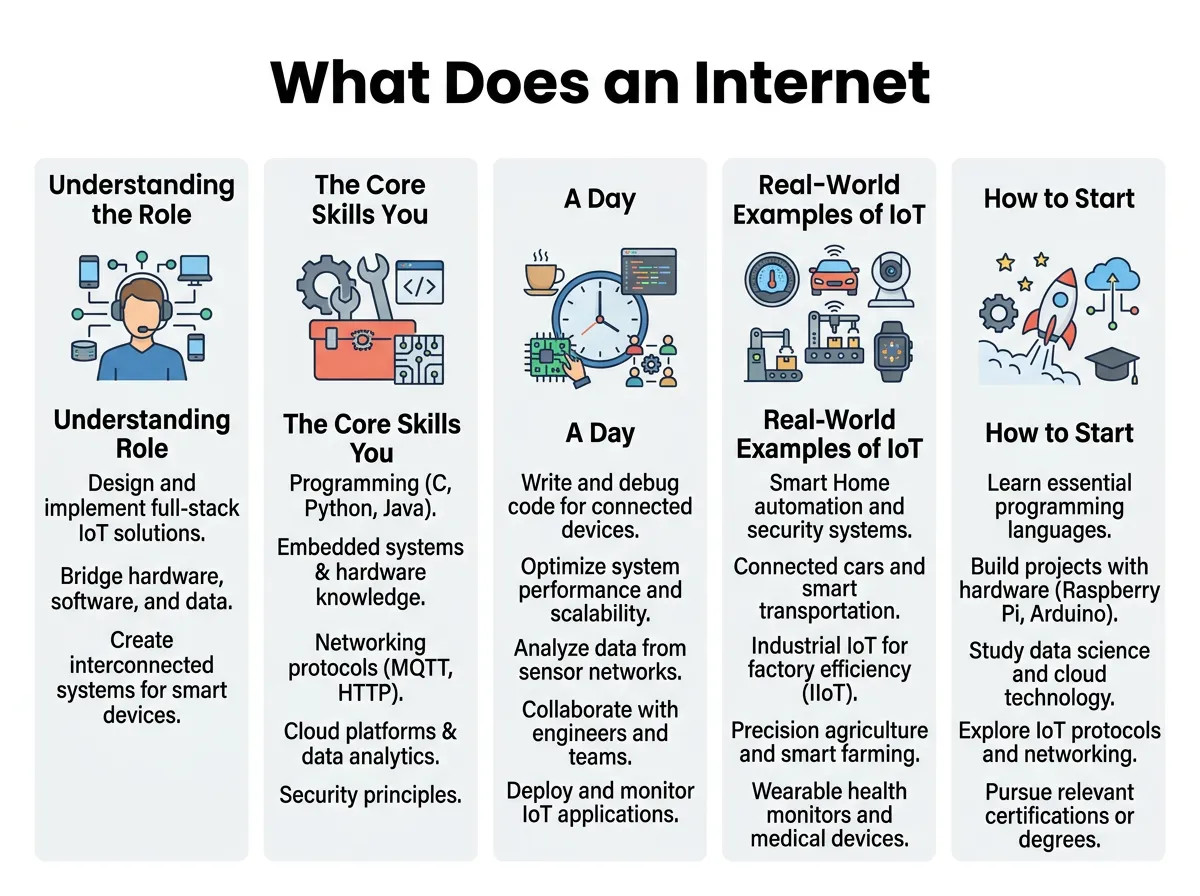
What Does an Internet of Things Developer Do? — key points at a glance
Programming Languages
To write code for tiny chips, you need the right tools. Most developers use languages like C and C++. These languages are fast and do not use a lot of memory. This is perfect for small devices with tiny batteries. For cloud systems and apps, they might use Python or Java. Python is great for handling data and is very easy to read.
Hardware and Firmware Knowledge
You need to know how circuits work. Developers often work with microcontrollers like Arduino or Raspberry Pi. They need to know how to connect sensors to these boards. They must also write firmware. Firmware is the permanent software programmed into a device’s memory. It tells the hardware how to boot up and run.
Cloud Computing and Networking
Once a device collects data, it must send it somewhere. Developers use wireless tech like Wi-Fi, Bluetooth, and cellular networks. They also use cloud platforms like AWS or Microsoft Azure. These platforms store and analyze the data. Knowing how to link a device to the cloud is a vital skill.
A Day in the Life of an IoT Developer
What does a typical workday look like? It varies a lot depending on the project. Some days are spent writing code, while others are spent testing physical parts.
Collaborating and Designing
No one builds a smart system alone. Developers work with hardware designers, web developers, and product managers. In the morning, they might meet to plan a new feature. They talk about what the device needs to do. They also discuss how to keep the device cost low.
Writing Code and Testing
After planning, the coding begins. A developer might spend hours writing code for a new sensor. After writing the code, they must test it. This often involves physical testing. They might plug a device into a computer and monitor its power use. They check if the chip gets too hot. They also test what happens if the Wi-Fi signal drops.
Practical Tip for Beginners
If you want to practice, buy a cheap starter kit. An Arduino starter kit is very cheap. It comes with a board, lights, and sensors. You can write your first lines of code to make a light blink. This hands-on practice is the best way to learn how hardware reacts to software.
Real-World Examples of IoT in Action
We see smart tech everywhere today. Here are some of the most common ways these developers change our world.
Smart Homes and Wearables
This is the most famous example. Smart TVs, smart bulbs, and voice assistants are in millions of homes. Fitness trackers on our wrists are also smart devices. Developers write the code that tracks your steps and syncs the data to your phone app.
Industrial IoT (IIoT)
Factories use smart tech to track machines. Sensors can feel if a machine is vibrating too much. This warns workers before the machine breaks down. It saves companies a lot of time and money. This field is huge and pays very well.
Smart Cities
Many cities use smart sensors to manage traffic. They can adjust traffic lights based on how many cars are on the road. They also use smart trash cans. These cans tell the city when they are full so trucks only stop when needed.
How to Start Your Journey in IoT
If this sounds exciting, you might want to start your own path. The good news is that there are many ways to learn.
Education and Courses
Many people start with a degree in computer science or electrical engineering. But you can also learn on your own. There are many online bootcamps and classes. If you want to start learning, you can read about becoming an IoT specialist to plan your education.
Building Side Projects
The best way to show your skills is to build things. Create a smart plant watering system. Or build a weather station for your home. Put these projects on GitHub. This acts as your digital resume. You can also follow a step-by-step guide on how to become an IoT developer to get more ideas.
Conclusion
The tech world is changing fast, and smart devices are here to stay. Now you know the answer to the question: What Does an Internet of Things Developer Do? They are the creative minds that connect our physical world to the digital realm. They mix hardware, coding, and cloud tools to build things that make our lives easier, safer, and more fun.
Whether you want to build wearable health tech or design smart cities, this career offers endless paths. It is a rewarding job that lets you see your code affect the real world. If you love to tinker with gadgets and write code, this might be the perfect job for you. Grab a starter kit and begin your journey today!
Frequently Asked Questions
Do I need a college degree to become an IoT developer?
No, you do not strictly need a degree to enter this field. While many developers have degrees in computer science or engineering, you can also learn through online courses, bootcamps, and hands-on personal projects. Showing a strong portfolio of working projects is often more important to employers than a diploma.
What programming languages should I learn first?
You should start by learning C or C++, as they are the primary languages used to program hardware microcontrollers. After that, learning Python is highly recommended because it is widely used for data analysis, cloud integration, and backend development. Java and JavaScript are also very useful for building companion apps.
Is IoT development hard to learn?
It can be challenging because it combines two different worlds: physical hardware and digital software. However, you can make it easier by starting with simple, beginner-friendly tools like Arduino. As you build small projects, your understanding of electronic circuits and coding will grow naturally over time.
What is the difference between an IoT developer and a standard software developer?
A standard software developer usually writes code that runs on computers, phones, or web servers. An IoT developer writes code that interacts directly with physical hardware, sensors, and microchips. They must understand electrical circuits and wireless communication protocols in addition to standard coding practices.
Do IoT developers work with hardware?
Yes, they work with physical hardware components on a regular basis. They frequently use microcontrollers, wire up sensors, and test physical prototypes to ensure the software runs correctly on the device. While they may not design the chips from scratch, they must understand how the hardware operates.
Is there a high demand for IoT developers?
Yes, the demand for these professionals is growing rapidly as more industries adopt smart technology. Companies in healthcare, agriculture, manufacturing, and automotive sectors are constantly looking for experts to connect their products to the web. This makes it a very stable and profitable career path for the future.
