


The best IoT SIM with multi-network support is one that offers seamless, unsteered roaming across multiple local carriers to prevent dropped connections. Top-tier providers like FloLive, Onomondo, and Things Mobile lead the market by providing automated network switching, global coverage, and unified billing. Choosing the right option depends on your specific geographic needs, data usage, and fleet management requirements.
Imagine you run a fleet of delivery trucks. They travel across state lines daily. Suddenly, one truck goes silent on the map. It entered a cellular dead zone. This simple gap in coverage can disrupt your entire supply chain. It frustrates your customers. It also costs you money.
In the world of the Internet of Things (IoT), constant connection is vital. If your devices lose signal, they cannot do their jobs. This brings us to a crucial question. What Is the Best IoT SIM With Multi-Network Support? In this guide, we will explore how these smart SIM cards keep your devices connected. We will look at top features, compare top providers, and help you choose the perfect option for your unique business needs.
Key Takeaways
- Unsteered Roaming is Crucial: True multi-network SIMs should connect to the strongest available signal without forcing a specific carrier.
- Global vs. Regional Needs: Choose a provider that matches your physical deployment footprint to avoid high roaming fees.
- eSIM/eUICC Technology: This standard lets you update carrier profiles over the air, saving time and physical swap costs.
- Centralized Management: A good SIM provider offers a robust management platform to monitor data usage in real-time.
- Security First: Look for features like private APNs and VPN support to keep your IoT device data secure.
📑 Table of Contents
What Is a Multi-Network IoT SIM Card?
A standard SIM card in your phone connects to one main network. If you lose that signal, you lose your connection. A multi-network IoT SIM is different. It is built to connect to multiple cellular carriers. It can switch between networks automatically.
How Multi-Network SIMs Work
These SIM cards hold profiles for different carriers. When your device moves, the SIM looks for the strongest available signal. It behaves like a guest on many networks. If Carrier A has a weak signal, the SIM switches to Carrier B. This happens in seconds. Your device stays online without any manual work. It is seamless and highly reliable.
Steered vs. Unsteered Roaming
Not all multi-network SIMs are equal. Some use steered roaming. This means the SIM will always try to connect to a preferred partner network first. It does this even if that partner has a weak signal. This can slow down your data. On the other hand, unsteered roaming is much better. An unsteered SIM always connects to the strongest network available. It does not care about carrier preferences. For critical business tasks, you should always look for unsteered options. To learn more about how these options keep your devices online, you can read about the mechanics of multi-network SIMs and how they handle carrier switching.
Key Features of the Best Multi-Network IoT SIMs
To find the absolute best SIM, you must look beyond basic coverage. You need features that make managing your devices easy and cost-effective.
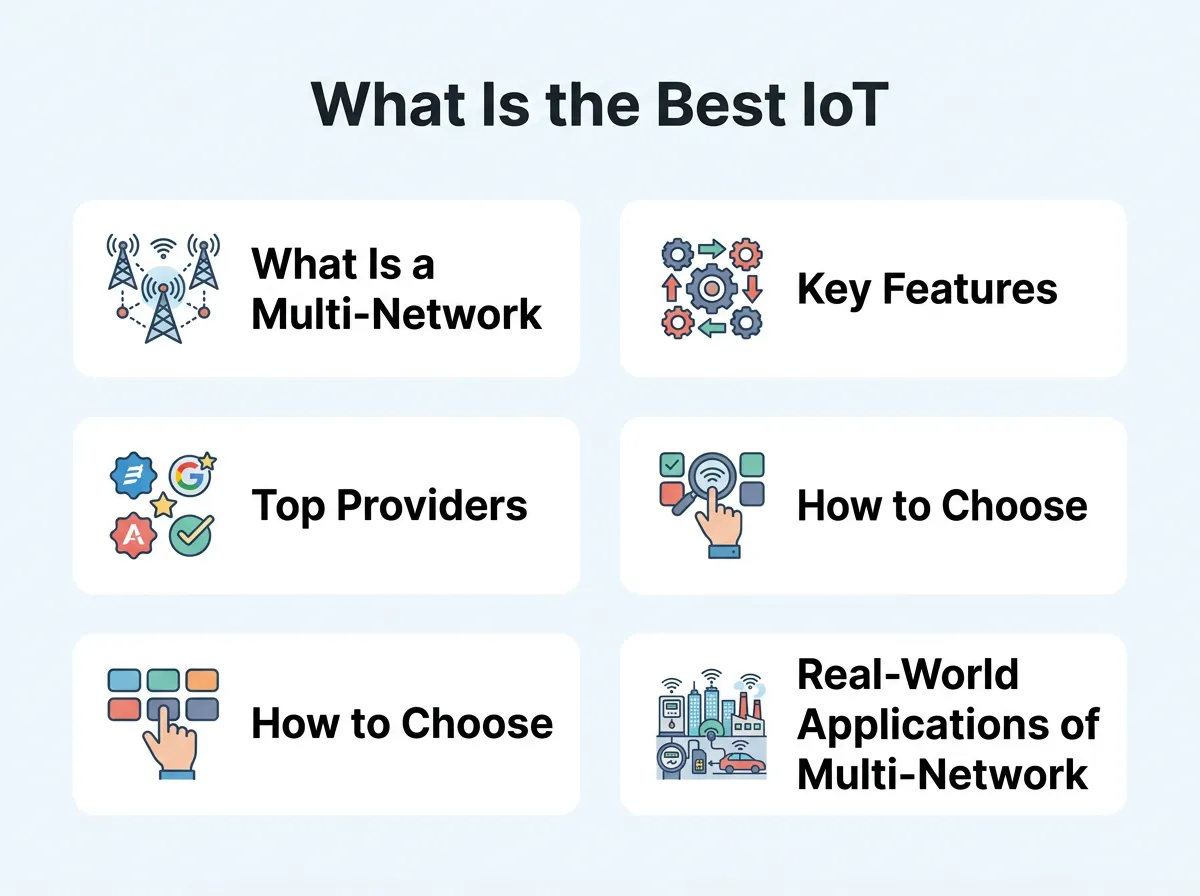
What Is the Best IoT SIM With Multi-Network Support? — key points at a glance
The Power of eUICC Technology
Older SIM cards are locked to a single carrier. If you want to change providers, you have to physically swap the card. This is a nightmare if you have thousands of devices in the field. Enter eUICC (Embedded Universal Integrated Circuit Card). Often called eSIM, this technology lets you update carrier profiles over the air. You can push new software updates to change your network list. This future-proofs your hardware and saves you massive operational costs.
Centralized Connectivity Platforms
You cannot manage hundreds of devices manually. The best IoT SIM providers offer a unified management platform. This platform lets you see all your devices in one place. You can monitor data usage in real-time. You can also set alerts for high usage, block specific devices, and troubleshoot connection issues from your office desk.
Top Providers in the IoT SIM Market
Many companies offer multi-network support. However, a few stand out from the crowd. Let us look at some of the industry leaders.
FloLive: Global Reach and Local Performance
FloLive offers a highly advanced global cellular network. They provide local connectivity in many countries through a single SIM card. This reduces latency and keeps costs low. Their solution is perfect for companies that need high-speed data across different continents. If you want to dive deeper into their specific offerings, check out the guide on the best multi-network SIM for IoT by FloLive. They explain how localized IMSI switching keeps devices active worldwide.
Onomondo: Redefining Cellular IoT
Onomondo has built a completely virtualized mobile core. This means they do not rely on traditional roaming agreements. They give you direct access to over 700 networks globally. Their platform offers deep visibility into your data packets. This makes troubleshooting extremely easy. You can learn more about their unique network architecture by reading the Onomondo multi-network SIM card guide, which explains their cloud-based approach to cellular connectivity.
Things Mobile: Perfect for Small and Medium Businesses
If you are just starting out, Things Mobile is a fantastic choice. They offer excellent multi-network coverage with no fixed costs. You only pay for the data you actually use. Their user-friendly portal makes it easy to manage a handful of devices or a growing fleet. For businesses looking to scale efficiently, you can explore their tailored business options on the Things Mobile business portal.
How to Choose the Right Provider for Your Business
Every IoT project is unique. The best SIM for a smart utility meter might not work for a self-driving delivery robot. Here is how to make the right choice.
Analyzing Your Coverage Footprint
Where will your devices physically sit? If they stay in one region, you do not need global coverage. You just need a SIM that supports the top local carriers. However, if your products ship worldwide, global roaming is a must. Make sure your provider has solid agreements in every destination country.
Pricing Models and Hidden Fees
IoT data plans can be tricky. Some providers charge a flat monthly fee. Others charge per megabyte. Look out for hidden fees. These can include activation fees, platform fees, and high overage costs. Choose a provider with transparent, scalable pricing that fits your budget.
Real-World Applications of Multi-Network IoT SIMs
How do these smart SIM cards perform in the real world? Let us look at a few common scenarios.
Fleet Management and Logistics
Trucks travel through rural areas, deep valleys, and busy cities. A single carrier cannot cover all these zones. Multi-network SIMs keep GPS trackers online constantly. This allows fleet managers to optimize routes in real-time. It also ensures safety alerts are sent instantly.
Smart Agriculture and Remote Monitoring
Farms are often located far away from urban centers. Cellular signals can be weak and spotty. Smart soil sensors and weather stations rely on multi-network SIMs. They connect to whatever tower is closest. This allows farmers to receive crucial environmental data without interruption.
Healthcare and Patient Monitoring
Medical devices save lives. Wearable heart monitors must send data to doctors in real-time. If a patient lives in an area with poor coverage, a multi-network SIM is a literal lifesaver. It switches carriers automatically to ensure the medical alert gets through.
Best Practices for Deploying Multi-Network IoT SIMs
Deploying your new SIM cards requires a bit of planning. Follow these quick tips to ensure a smooth rollout.
Security and Private APNs
Security should never be an afterthought. Ask your provider for a Private APN (Access Point Name). This creates a private tunnel for your data. It keeps your device traffic separate from the public internet. This protects your devices from hackers and unauthorized access.
Regular Audits and Usage Alerts
Set up automated alerts on your management platform. If a device suddenly starts using too much data, you need to know immediately. This could mean a software bug or a security breach. Regular audits of your data usage will keep your bills predictable and low.
Conclusion
Finding the right connectivity solution does not have to be stressful. The answer to “What Is the Best IoT SIM With Multi-Network Support?” depends on your business scale, location, and data needs. Look for providers that offer unsteered roaming, eUICC technology, and transparent management tools. By choosing a partner like FloLive, Onomondo, or Things Mobile, you can keep your devices online, protect your data, and scale your business with total confidence.
Frequently Asked Questions
What is an unsteered multi-network SIM?
An unsteered multi-network SIM connects automatically to the strongest available cellular signal. It does not prioritize any specific carrier, ensuring your device always gets the best possible connection.
Can I use a regular phone SIM card for IoT devices?
While you can use a phone SIM, it is not recommended for professional business use. Phone SIMs usually lack multi-network switching, centralized management platforms, and robust security features needed for IoT fleets.
What is eUICC in IoT SIMs?
eUICC is a technology that allows you to change carrier profiles over the air without changing the physical SIM card. This makes it easy to switch network providers and future-proof your hardware deployments.
Are multi-network SIM cards more expensive?
They can have slightly higher upfront costs, but they often save money in the long run. By preventing connection drops and reducing physical replacements, they cut operational costs significantly.
Do multi-network SIMs work internationally?
Yes, most multi-network SIMs are designed for international roaming. They partner with hundreds of carriers worldwide to keep your devices connected as they cross borders.
How do I manage a large number of IoT SIM cards?
You can manage them through a centralized Connectivity Management Platform (CMP) provided by your carrier. This software lets you track data usage, activate or deactivate cards, and set automated alerts in real-time.
